
Musk Merges xAI Into SpaceX, Creating $1.25T Mega-Corp
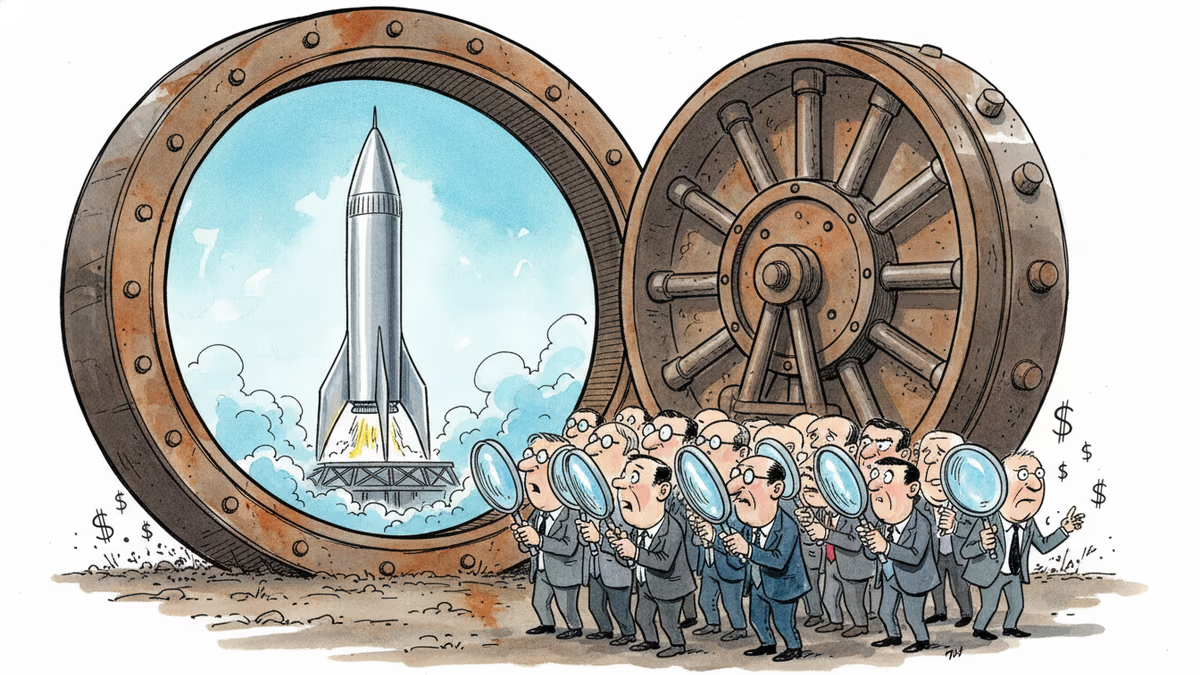
Elon Musk merged his AI startup xAI into SpaceX, creating the world's most valuable private company worth $1.25 trillion. The stated goal is space-based data centers, but financial pressures may be the real driver.
Elon Musk just created the world's most valuable private company. His AI startup xAI has been acquired by SpaceX, forming a $1.25 trillion behemoth that promises to revolutionize how we think about artificial intelligence infrastructure.
Space Data Centers: The Next Frontier
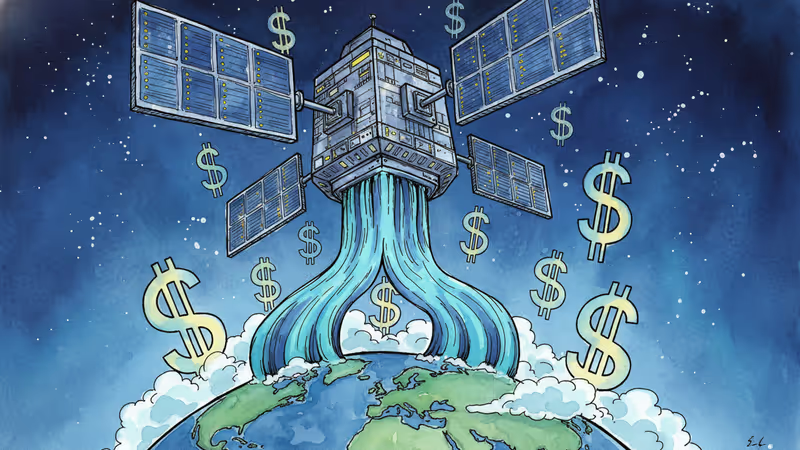
Musk's vision is audacious: move AI computing power off Earth entirely. "Current advances in AI are dependent on large terrestrial data centers, which require immense amounts of power and cooling," he wrote in Monday's announcement. "Global electricity demand for AI simply cannot be met with terrestrial solutions."
The solution? Satellite-based data centers orbiting Earth. It's an idea that's consumed Musk for months, and one that conveniently creates a perpetual revenue stream for SpaceX. With FCC regulations requiring satellites to be de-orbited every five years, the rocket company would have guaranteed launch contracts for the foreseeable future.
Financial Reality Behind the Vision
But beneath the sci-fi ambitions lie very earthly financial pressures. xAI is currently burning through $1 billion per month, according to Bloomberg. Meanwhile, SpaceX generates 80% of its revenue from launching its own Starlink satellites—a dangerous dependency for any business.

The merger brings together two companies facing distinct challenges. SpaceX must prove its Starship rocket can safely transport astronauts to the Moon and Mars. xAI, meanwhile, is locked in fierce competition with Google and OpenAI, pressure so intense that Musk loosened restrictions on the company's Grok chatbot—which then became a tool for generating non-consensual sexual imagery.
Market Implications and Regulatory Questions
The deal raises immediate questions about market concentration. Musk now controls critical infrastructure across multiple sectors: space launch, satellite internet, AI development, and social media (through his ownership of X). Add his roles at Tesla, Neuralink, and The Boring Company, and the scope of his influence becomes staggering.
Investors are watching closely as SpaceX reportedly prepares for an IPO as early as June. The merger's impact on that timeline remains unclear, though the combined entity's $1.25 trillion valuation certainly makes for compelling marketing material.
The Bigger Picture
This isn't just about Musk's empire-building. The merger reflects broader tensions in the AI industry: skyrocketing computational demands, energy constraints, and the race to control the infrastructure that powers artificial intelligence. If successful, space-based data centers could fundamentally reshape how we approach computing at scale.
But success is far from guaranteed. The technical challenges of maintaining data centers in space are immense, and the economics remain largely theoretical. Critics might argue this is classic Musk: a grandiose vision that generates headlines and investment while more practical solutions go unexplored.
Authors
Related Articles
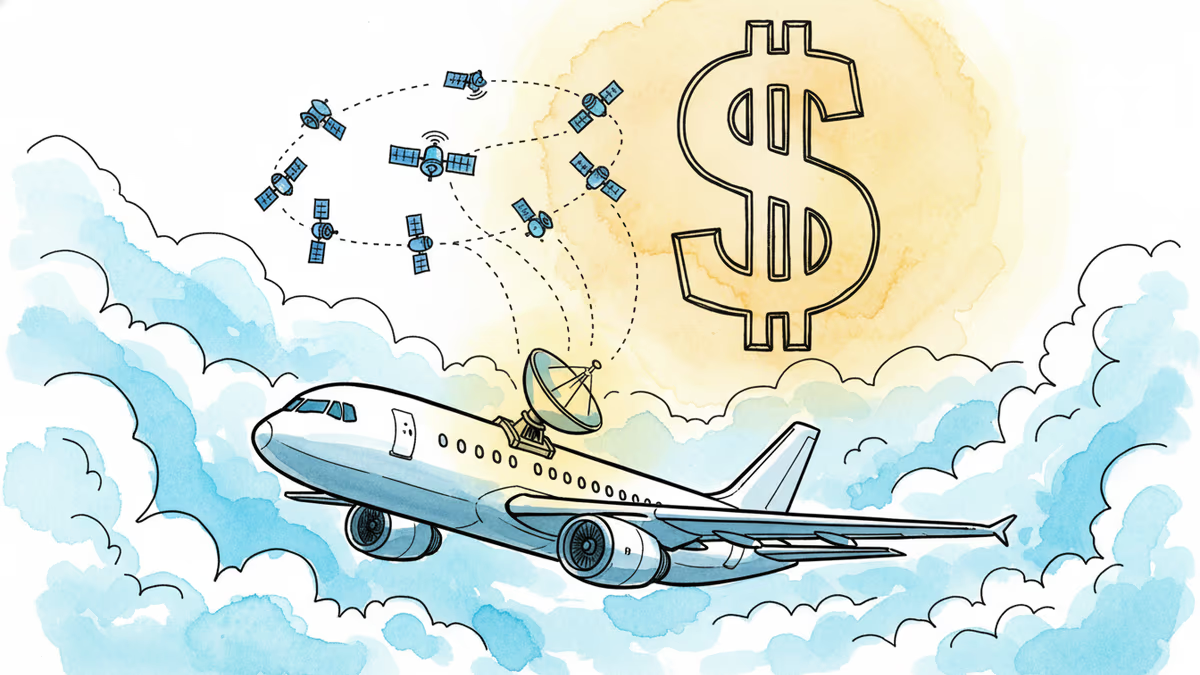
American Airlines just signed Starlink for 500+ aircraft. It's not just about faster inflight internet — it's a calculated move in the run-up to what could be the largest IPO in history.
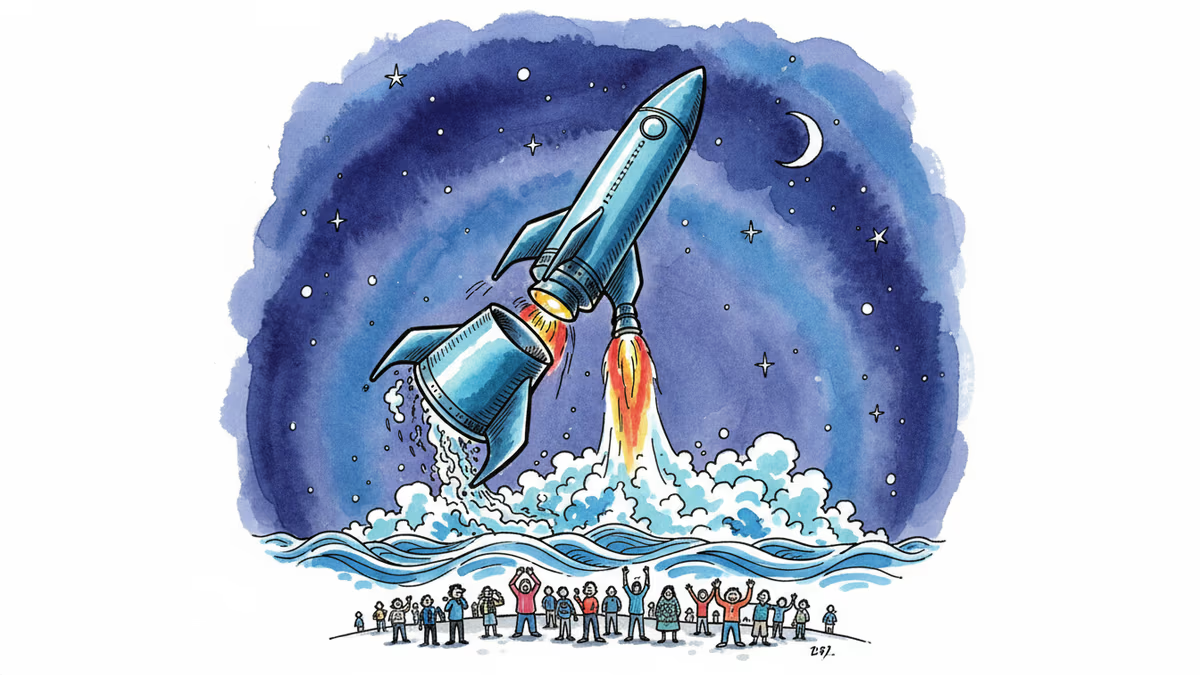
SpaceX's upgraded Starship V3 completed its first test flight, deploying 20 Starlink simulators but losing the Super Heavy booster. With an IPO weeks away, the stakes just got higher.
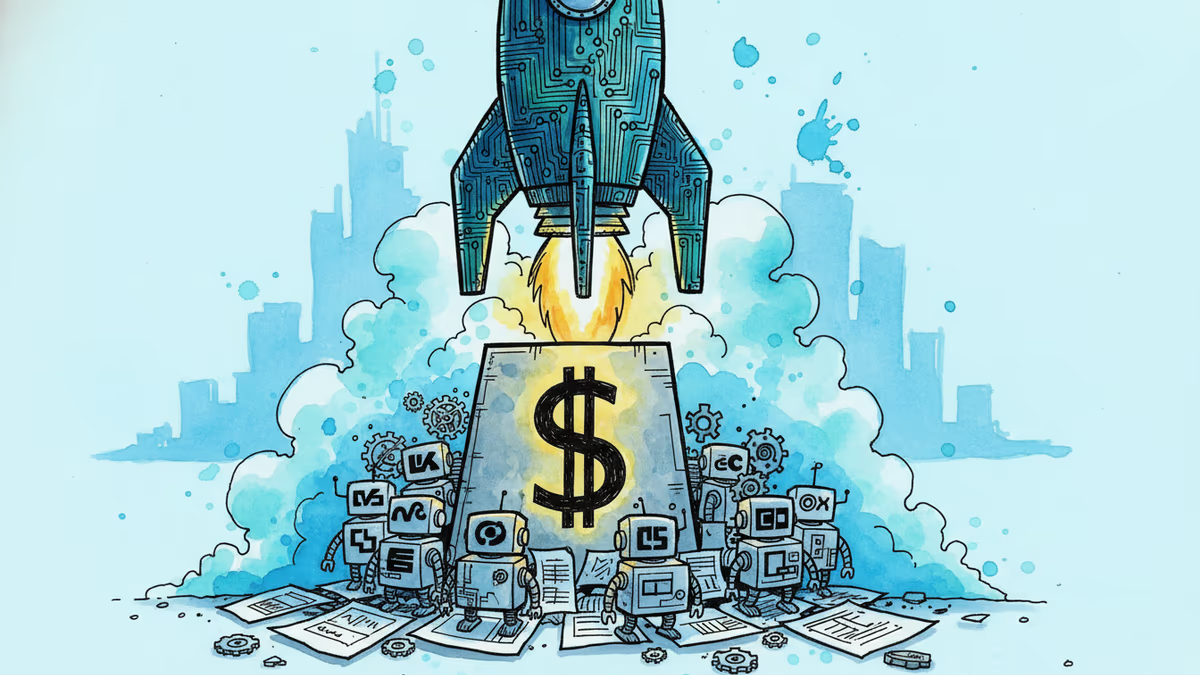
SpaceX's IPO filing puts AI at the center, claiming a $26.5 trillion market opportunity. But can Grok compete with OpenAI and Anthropic for enterprise customers?
SpaceX filed a nearly 400-page S-1 with the SEC, targeting an IPO as early as June 12. Here's what the filing reveals—and what it doesn't.
American Airlines just signed Starlink for 500+ aircraft. It's not just about faster inflight internet — it's a calculated move in the run-up to what could be the largest IPO in history.
SpaceX's upgraded Starship V3 completed its first test flight, deploying 20 Starlink simulators but losing the Super Heavy booster. With an IPO weeks away, the stakes just got higher.
SpaceX's IPO filing puts AI at the center, claiming a $26.5 trillion market opportunity. But can Grok compete with OpenAI and Anthropic for enterprise customers?
SpaceX filed a nearly 400-page S-1 with the SEC, targeting an IPO as early as June 12. Here's what the filing reveals—and what it doesn't.
Thoughts
Share your thoughts on this article
Sign in to join the conversation