
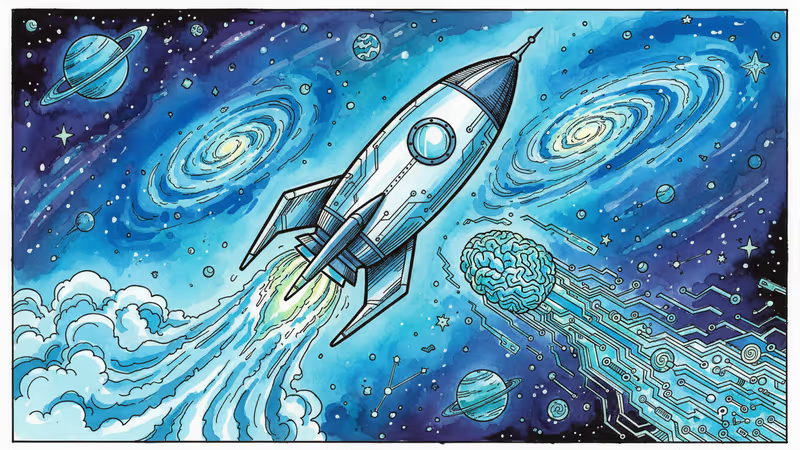
Musk Merges Space and AI in Bold Vertical Integration Play
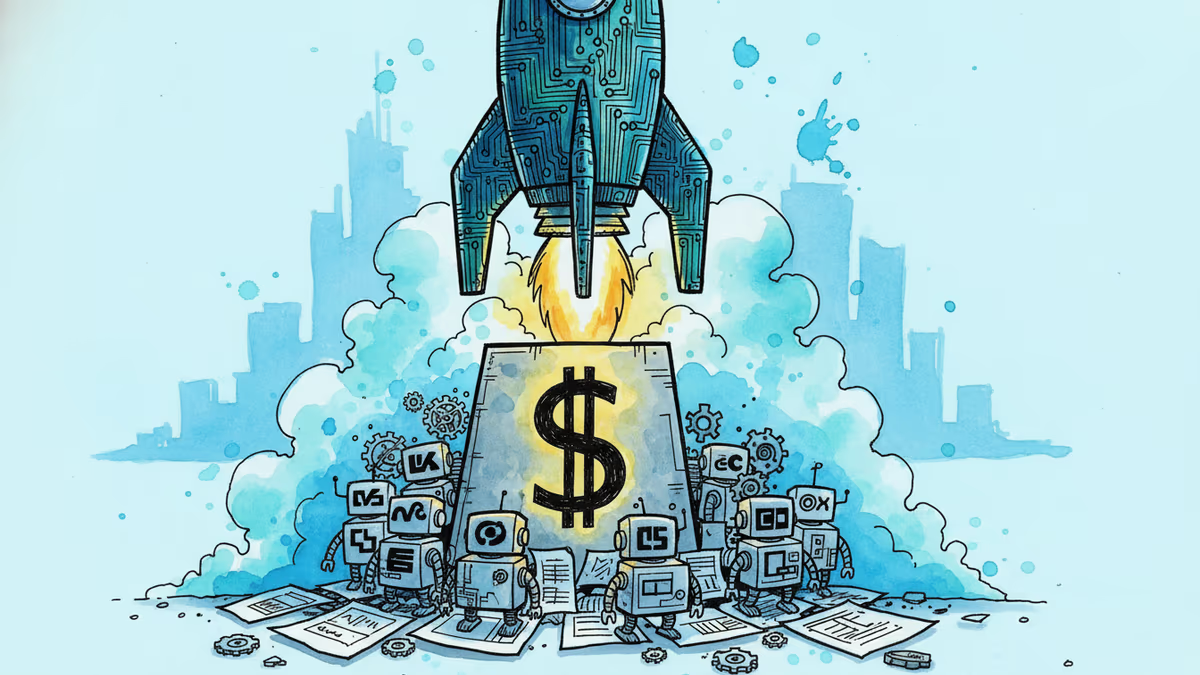
SpaceX acquires xAI in Musk's ambitious move to combine space exploration with artificial intelligence, creating a vertically integrated innovation powerhouse.
Elon Musk just made his biggest bet yet on the convergence of humanity's two most ambitious frontiers. SpaceX officially announced Monday it's acquiring xAI, Musk's AI venture, in a move that brings rockets and artificial intelligence under one roof for the first time.
This isn't just corporate consolidation. It's Musk's vision of creating what he calls "the most ambitious, vertically-integrated innovation engine on (and off) Earth."
The Vertical Integration Gamble
SpaceX described the acquisition as uniting AI, rockets, space-based internet, direct-to-mobile communications, and real-time information platforms into a single ecosystem. The company's statement bordered on the philosophical, talking about "scaling to make a sentient sun to understand the Universe and extend the light of consciousness to the stars."
Stripped of the cosmic rhetoric, this means SpaceX plans to deeply integrate AI into space operations. Think autonomous spacecraft that can adapt to unexpected situations, AI-powered mission planning, and perhaps most intriguingly, space-based AI systems that could operate independently of Earth.
The risk is real. SpaceX is arguably Musk's most successful venture, with a proven track record of revolutionizing space launch costs and winning NASA contracts. xAI, launched in 2023, remains largely speculative despite raising significant funding. Merging a winner with a wildcard is classic Musk—bold, risky, and potentially transformative.
Why This Matters Beyond Space
Musk's move signals something bigger than just another corporate acquisition. It suggests the future belongs not to companies that excel in single domains, but to those that can orchestrate multiple cutting-edge technologies simultaneously.

Consider the implications: SpaceX'sStarlink satellite network could become the backbone for global AI services, providing low-latency connectivity for real-time AI applications anywhere on Earth. Conversely, AI could optimize everything from rocket trajectories to satellite positioning, potentially reducing costs and improving performance across SpaceX's entire operation.
This integration could also accelerate space exploration itself. AI systems that can learn and adapt in real-time could handle the complexities of Mars missions or asteroid mining operations that would be impossible to control from Earth due to communication delays.
The Competitive Response
Musk's consolidation will likely force competitors to reconsider their own strategies. Amazon'sBlue Origin and AWS already work together, but not with this level of integration. Google's space initiatives and DeepMind could see closer collaboration. Even traditional aerospace giants like Boeing and Lockheed Martin might need to forge stronger AI partnerships.
The move also puts pressure on pure-play AI companies. If space becomes a major platform for AI deployment and testing, companies without space assets might find themselves at a disadvantage. The universe, literally, could become the next competitive battlefield for AI supremacy.
For investors, this creates a new category of risk and opportunity. Space-AI integration could unlock massive new markets—from autonomous space mining to AI-powered climate monitoring from orbit. But it also means betting on technologies that are largely unproven at scale.
The Regulatory Wild Card
One factor that could complicate Musk's vision: regulation. SpaceX already operates under intense government oversight due to national security implications. Adding AI to the mix could attract additional scrutiny, especially as governments worldwide grapple with AI governance.
The combination of space assets and advanced AI could raise questions about dual-use technologies, data privacy for global communications, and the concentration of critical infrastructure in private hands. Regulators who are already struggling to keep pace with AI development now have to consider its implications in the ultimate high ground: space.
Authors
Related Articles
Samsung and SK unveiled a chip and AI investment package worth thousands of trillions of won on June 29. The headline number swings wildly by outlet, but the real contest isn't capital — it's water and power.
American Airlines just signed Starlink for 500+ aircraft. It's not just about faster inflight internet — it's a calculated move in the run-up to what could be the largest IPO in history.
SpaceX's upgraded Starship V3 completed its first test flight, deploying 20 Starlink simulators but losing the Super Heavy booster. With an IPO weeks away, the stakes just got higher.
SpaceX's IPO filing puts AI at the center, claiming a $26.5 trillion market opportunity. But can Grok compete with OpenAI and Anthropic for enterprise customers?
Samsung and SK unveiled a chip and AI investment package worth thousands of trillions of won on June 29. The headline number swings wildly by outlet, but the real contest isn't capital — it's water and power.
American Airlines just signed Starlink for 500+ aircraft. It's not just about faster inflight internet — it's a calculated move in the run-up to what could be the largest IPO in history.
SpaceX's upgraded Starship V3 completed its first test flight, deploying 20 Starlink simulators but losing the Super Heavy booster. With an IPO weeks away, the stakes just got higher.
SpaceX's IPO filing puts AI at the center, claiming a $26.5 trillion market opportunity. But can Grok compete with OpenAI and Anthropic for enterprise customers?
Thoughts
Share your thoughts on this article
Sign in to join the conversation