
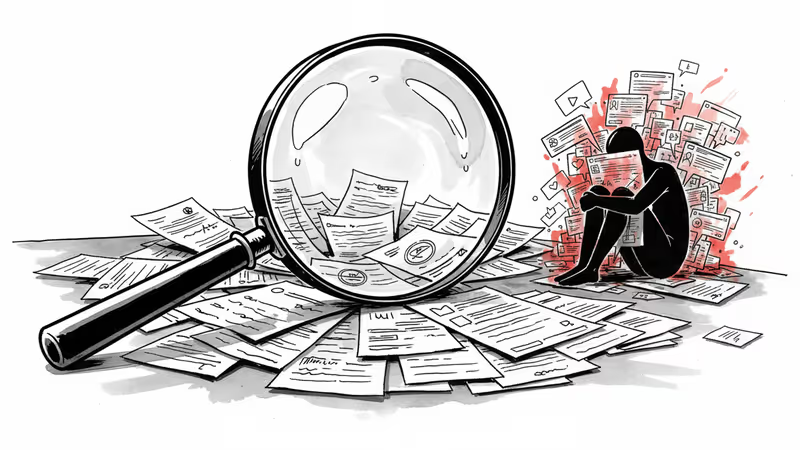
Musk's Name Appears 1,500 Times in Epstein Files – His Defense Doesn't Add Up
Elon Musk's name appears 1,500 times in newly released Jeffrey Epstein documents. Despite his claims of minimal contact, emails show ongoing correspondence in 2012-2013
1,500 times. That's how often Elon Musk's name appears in the Department of Justice's latest release of Jeffrey Epstein documents – the largest trove to date. Among millions of files spanning years of investigations, the Tesla CEO's presence was far more prominent than anyone expected.
Musk wasted no time responding on his platform X, claiming he had "very little correspondence" with Epstein and "declined repeated invitations" to visit the disgraced financier's island. But the emails tell a different story.
When Words Don't Match Evidence
The documents reveal ongoing communication between Musk and Epstein during 2012 and 2013. This wasn't a brief, chance encounter – it was sustained contact over multiple years. One email even shows Musk making some kind of request to Epstein, though the specifics remain unclear.
This timeline contradicts Musk's narrative of minimal interaction. How does "very little correspondence" square with 1,500 mentions in federal documents? The math doesn't add up.
Jeffrey Epstein, the billionaire who died in federal custody in 2019 while awaiting trial on sex trafficking charges, maintained an extensive network of powerful contacts. Each document release sends shockwaves through elite circles, and this one is no exception.
The Credibility Question

Musk built his public persona on disruption and transparency. He's the CEO who tweets market-moving statements, who promises to make X a bastion of free speech, who positions himself as someone who speaks truth to power. But when uncomfortable truths about his own past emerge, how does that square with his public image?
The disconnect between his claims and the documentary evidence raises broader questions about accountability among tech leaders. In an era where CEOs are brands unto themselves, personal credibility directly impacts corporate value.
Market Implications
Tesla shareholders are watching closely. Musk's personal controversies have moved markets before – his $44 billion acquisition of Twitter (now X) sparked months of volatility in Tesla stock. This Epstein connection introduces a new category of reputational risk.
The timing is particularly sensitive. Tesla faces increasing competition in the EV market, while Musk's other ventures – SpaceX, Neuralink, and X – all depend heavily on his personal brand and public trust.
The Broader Pattern
This isn't Musk's first time addressing uncomfortable associations. He's previously had to distance himself from various controversies, often using X as his primary defense platform. But there's something different about documentary evidence versus social media rebuttals.
The Epstein files represent a test case for how we evaluate powerful figures when their public statements conflict with official records. In an age of information abundance, which sources do we trust?
Authors
Related Articles
The Musk vs. Altman OpenAI trial opened with a jury selection crisis. Prospective jurors called Musk a 'world-class jerk' on official court forms. What does that tell us?
Elon Musk confirmed on Tesla's Q1 2026 earnings call that Hardware 3 vehicles will never receive unsupervised Full Self-Driving — locking out millions who paid for the feature.
Tesla expanded its driverless robotaxi to Dallas and Houston, even after reporting 14 crashes in Austin. What does this tell us about how autonomous vehicles actually get built?
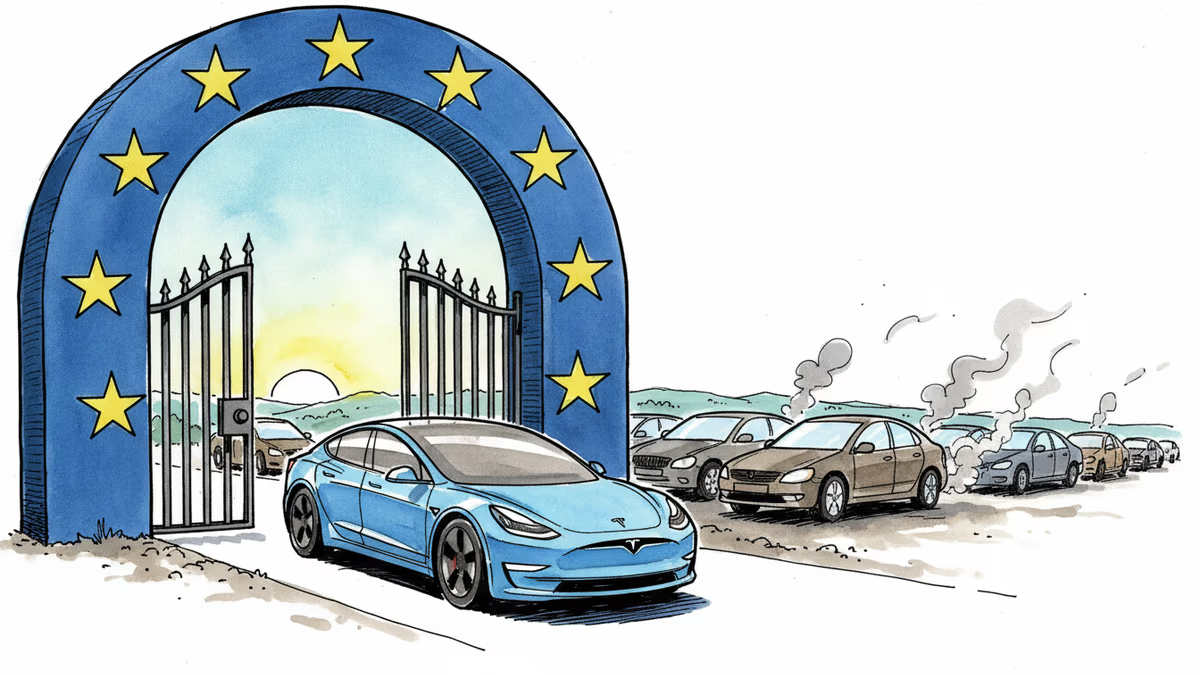
The Netherlands became the first European country to officially approve Tesla's FSD Supervised. With EU's type-approval framework, this could ripple across 27 member states fast.
The Musk vs. Altman OpenAI trial opened with a jury selection crisis. Prospective jurors called Musk a 'world-class jerk' on official court forms. What does that tell us?
Elon Musk confirmed on Tesla's Q1 2026 earnings call that Hardware 3 vehicles will never receive unsupervised Full Self-Driving — locking out millions who paid for the feature.
Tesla expanded its driverless robotaxi to Dallas and Houston, even after reporting 14 crashes in Austin. What does this tell us about how autonomous vehicles actually get built?
The Netherlands became the first European country to officially approve Tesla's FSD Supervised. With EU's type-approval framework, this could ripple across 27 member states fast.
Thoughts
Share your thoughts on this article
Sign in to join the conversation