
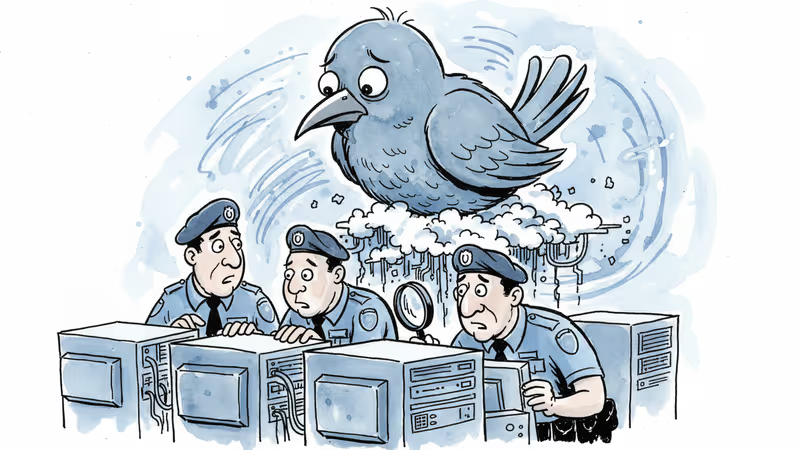
French Police Raid X Office, Summon Musk Over Child Abuse Material Claims
French prosecutors search X's Paris office and summon Elon Musk for questioning over alleged child sexual abuse material, Holocaust denial, and data violations. A turning point for platform regulation?
French prosecutors just summoned Elon Musk and X executives for questioning on April 20th, following a raid on the platform's Paris office. What started as a data extraction investigation has exploded into something far more serious—allegations involving child sexual abuse material and Holocaust denial.
From Data Breach to CSAM: How We Got Here
Tuesday's raid by French police and Europol wasn't exactly a surprise. The investigation began in 2025 over allegations of "fraudulent extraction of data" by an organized group. But prosecutors have now expanded their probe to include complicity in possession and distribution of child sexual abuse material, privacy violations, and Holocaust denial.
The timing isn't coincidental. X and Musk have faced mounting criticism for allowing their Grok AI to generate nonconsensual imagery—including child abuse material—of real people. Since Musk bought the platform in 2022 and loosened content moderation policies, X has become a lightning rod for regulatory action worldwide.
Linda Yaccarino, the former CEO now heading eMed, will also face questioning alongside unnamed X staffers. Neither X nor eMed responded to requests for comment—a silence that speaks volumes given the gravity of the allegations.
The Jurisdiction Dilemma
"The Public Prosecutor's Office's objective is ultimately to ensure platform X's compliance with French law, given that it operates within the national territory," said Maylis De Roeck, spokesperson for the Paris prosecutor's office. That single sentence captures the fundamental challenge facing global platforms today.
Every country wants digital sovereignty over platforms operating within their borders. The EU has its Digital Services Act, the UK has its Online Safety Act, and even traditionally hands-off jurisdictions are tightening the screws. For platforms like X, Meta, and TikTok, this creates an impossible puzzle: how do you satisfy conflicting legal requirements across dozens of countries?

The French case is particularly significant because it targets the platform owner directly. Previous regulatory actions typically focused on fines and service restrictions. Summoning Musk personally sends a different message entirely.
The Content Moderation Paradox
This case highlights the central paradox of content moderation at scale. Everyone agrees that child sexual abuse material and Holocaust denial should be banned. But who decides where to draw the lines? And how do you moderate billions of posts without either over-censoring legitimate speech or missing harmful content?
Musk has consistently championed "free speech absolutism," arguing that open dialogue—even uncomfortable dialogue—serves society better than censorship. Critics counter that this philosophy provides cover for genuinely harmful content and creates safe havens for bad actors.
The Grok AI controversy adds another layer of complexity. When AI tools can generate realistic but fake imagery of anyone, including children, traditional content moderation approaches break down. How do you moderate content that's simultaneously artificial and abusive?
What This Means for Users and Investors
For everyday users, this investigation signals that the "Wild West" era of social media might be ending. Expect stricter content policies, more aggressive automated moderation, and potentially fragmented experiences as platforms customize features for different jurisdictions.
Investors should pay attention too. Regulatory compliance costs are skyrocketing across the tech sector. Meta spent over $13 billion on safety and security in 2023 alone. Smaller platforms without similar resources may struggle to keep up.
The investigation also raises questions about X's long-term viability. Since Musk's acquisition, the platform has lost significant advertising revenue and faced multiple regulatory challenges. Can it survive sustained legal pressure from major jurisdictions?
Authors
Related Articles
SpaceX's IPO filing puts AI at the center, claiming a $26.5 trillion market opportunity. But can Grok compete with OpenAI and Anthropic for enterprise customers?
SpaceX filed a nearly 400-page S-1 with the SEC, targeting an IPO as early as June 12. Here's what the filing reveals—and what it doesn't.
SpaceX has filed its S-1 with the SEC, targeting the Nasdaq under ticker SPCX. With $18.67B in revenue but a $4.9B loss, the IPO forces investors to answer one hard question.
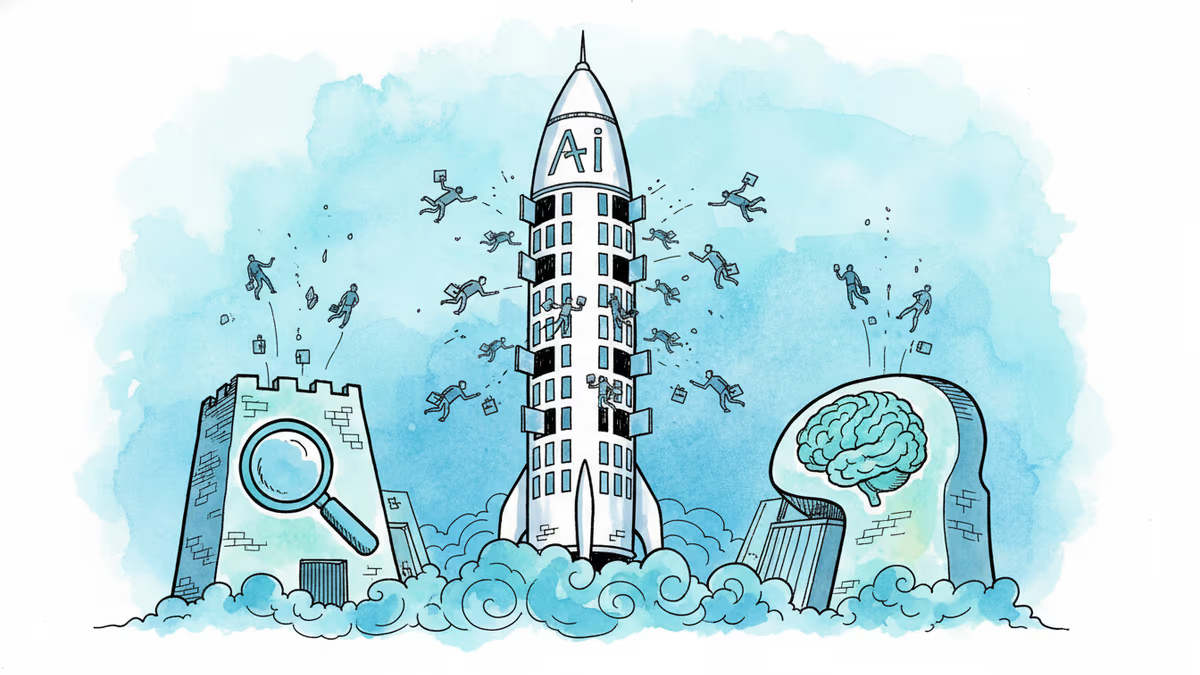
Over 50 researchers and engineers have left SpaceXAI since February's merger. With the pre-training team nearly gutted, questions mount about whether Musk's AI ambitions can survive his management style.
SpaceX's IPO filing puts AI at the center, claiming a $26.5 trillion market opportunity. But can Grok compete with OpenAI and Anthropic for enterprise customers?
SpaceX filed a nearly 400-page S-1 with the SEC, targeting an IPO as early as June 12. Here's what the filing reveals—and what it doesn't.
SpaceX has filed its S-1 with the SEC, targeting the Nasdaq under ticker SPCX. With $18.67B in revenue but a $4.9B loss, the IPO forces investors to answer one hard question.
Over 50 researchers and engineers have left SpaceXAI since February's merger. With the pre-training team nearly gutted, questions mount about whether Musk's AI ambitions can survive his management style.
Thoughts
Share your thoughts on this article
Sign in to join the conversation