

Social Cost of Carbon ocean damages reach $2 trillion in new Scripps study
A new Scripps study reveals the Social Cost of Carbon (SCC) is double previous estimates, totaling $2 trillion annually when including ocean damages.
The global bill for climate change just doubled. Scientists found that greenhouse gas emissions cost us twice as much as previously thought, thanks to a first-of-its-kind assessment that finally puts a price tag on our oceans.
New Social Cost of Carbon Assessments Include Ocean Damage
According to a study from the Scripps Institution of Oceanography at UC San Diego, the Social Cost of Carbon (SCC)—a critical metric used to quantify economic harm from climate change—has been significantly underestimated. For the first time, researchers included damages to marine environments, revealing that global coral loss, fisheries disruption, and coastal infrastructure destruction cost nearly $2 trillion annually.

For decades, we’ve been estimating the economic cost of climate change while effectively assigning a value of zero to the ocean. Ocean loss is not just an environmental issue, but a central part of the economic story of climate change.
Redefining Climate Finance and Investment
This discovery fundamentally shifts how we measure climate finance. While past models focused heavily on land-based agriculture and energy, this new data suggests that protecting the 'Blue Economy' isn't just a charitable act—it's a financial necessity. Investors and policymakers now have a concrete reason to accelerate funding for marine restoration and resilient coastal infrastructure.
Authors
Related Articles
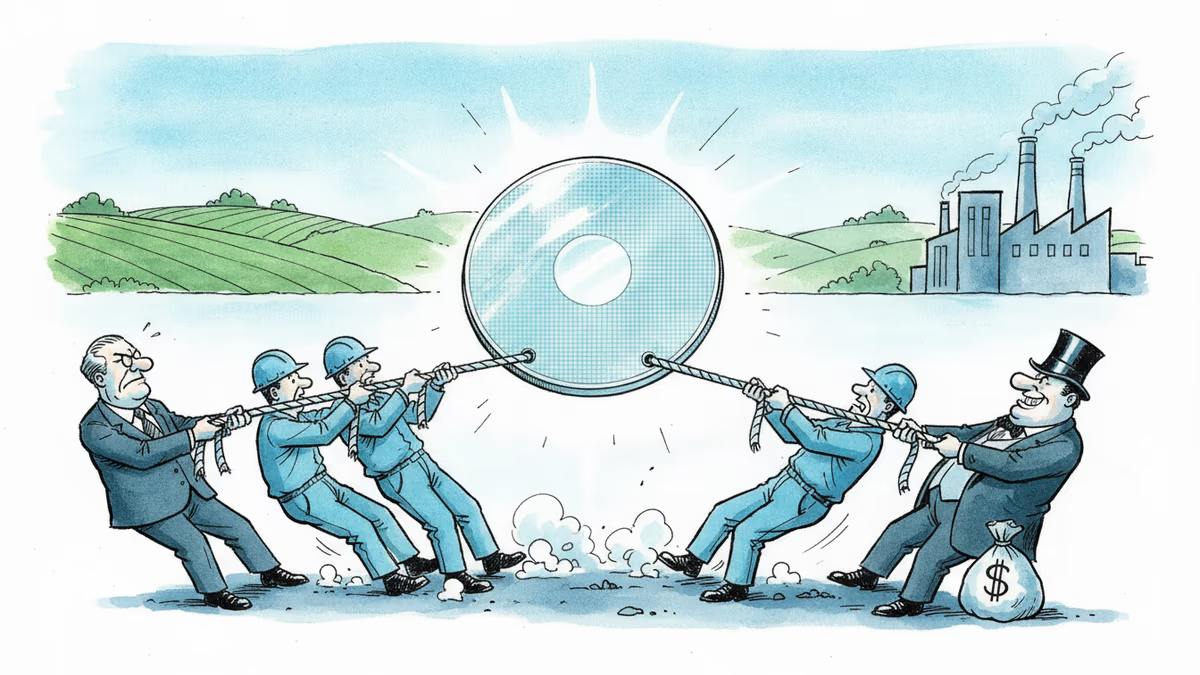
Samsung Electronics' union branch revealed that 84% of survey respondents oppose the government's roughly $290 billion (₩400 trillion) semiconductor megaproject in Gwangju. Government, management, the union and shareholders are all reading the same national project in sharply different ways.

Nvidia shipped roughly a billion RISC-V cores in 2024, then announced it would run CUDA on the open standard. We break down how royalty-free instruction sets and open software stacks are trying to route around CUDA's lock-in. Part 2 of the Semiconductor Sovereignty series.

US AI-chip export controls split into three layers in the first half of 2026 — January easing, a May crackdown on circumvention, and a pending bill. Nvidia erased China from its guidance and still posted a record $81.6 billion quarter. A look at the export policy that both shields and cages it.
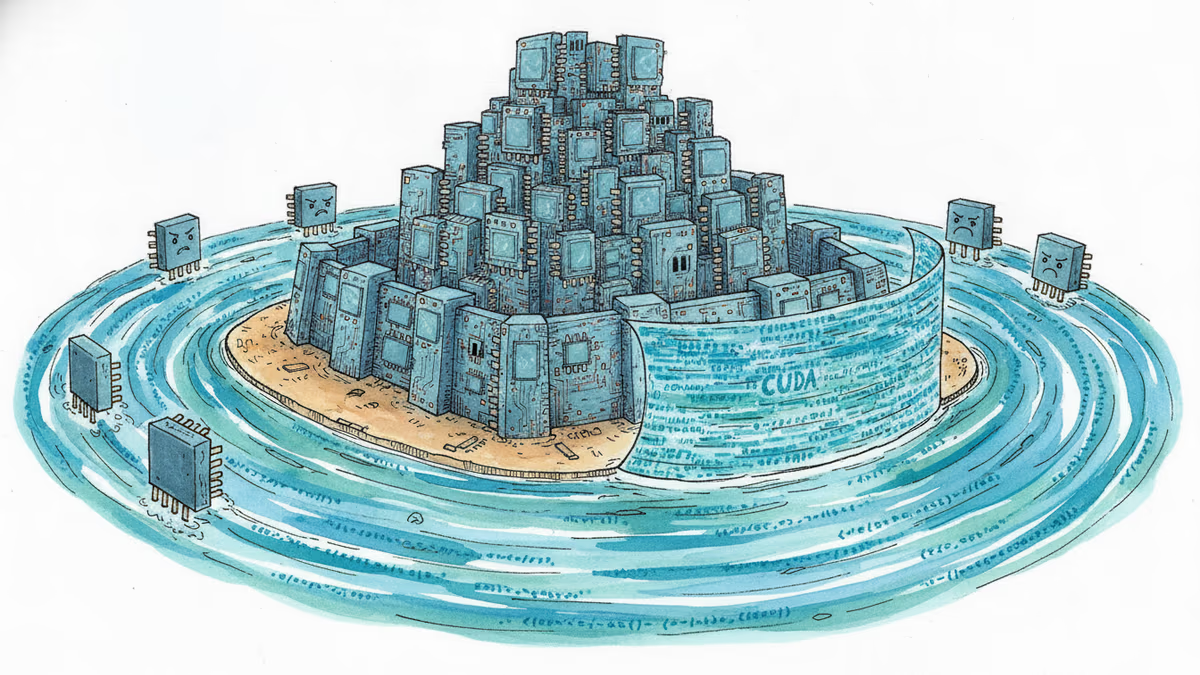
AMD's MI325X matches or beats Nvidia on memory and bandwidth — yet Nvidia's 86-92% share holds. The real moat is CUDA, 20 years in the making. Part 1 of 4.
Samsung Electronics' union branch revealed that 84% of survey respondents oppose the government's roughly $290 billion (₩400 trillion) semiconductor megaproject in Gwangju. Government, management, the union and shareholders are all reading the same national project in sharply different ways.
Nvidia shipped roughly a billion RISC-V cores in 2024, then announced it would run CUDA on the open standard. We break down how royalty-free instruction sets and open software stacks are trying to route around CUDA's lock-in. Part 2 of the Semiconductor Sovereignty series.
US AI-chip export controls split into three layers in the first half of 2026 — January easing, a May crackdown on circumvention, and a pending bill. Nvidia erased China from its guidance and still posted a record $81.6 billion quarter. A look at the export policy that both shields and cages it.
AMD's MI325X matches or beats Nvidia on memory and bandwidth — yet Nvidia's 86-92% share holds. The real moat is CUDA, 20 years in the making. Part 1 of 4.
Thoughts
Share your thoughts on this article
Sign in to join the conversation