

Robinhood's $658M Fund Flop: Why Retail Investors Said No
Robinhood's startup fund raised only 66% of its $1B target and dropped 16% on debut. Meanwhile, Destiny Tech100 trades at 33% premium. What went wrong?
$1 Billion Dream Becomes $658 Million Reality
Robinhood's bold bet on democratizing startup investing just hit a wall. The company that revolutionized commission-free trading launched Robinhood Ventures Fund I with an ambitious $1 billion target. Reality check: it raised $658.4 million—just 66% of its goal.
Worse? The fund's shares opened at $25 and closed Friday at $21, a brutal 16% drop on debut day. For a company that built its reputation on making investing accessible to everyone, this lukewarm reception stings.
The fund holds stakes in eight buzzy startups including Databricks, Stripe, Mercor, and Oura. These aren't nobodies—they're some of Silicon Valley's most valuable private companies. So why did retail investors shrug?
The Tale of Two Funds
Compare this to Destiny Tech100, another fund targeting retail investors with startup exposure. When it went public in March 2024, shares surged 86% on day one, from a $4.84 reference price to $9.00 at close.
Today, Destiny Tech100 trades at $26.61—a whopping 33% premium to its actual net asset value of $19.97. Translation: investors are so eager to own it, they're paying $1.33 for every $1 of underlying value.
The difference? Destiny Tech100 holds stakes in the companies retail investors actually want: SpaceX, OpenAI, and Discord. Robinhood's fund? It's missing the household names that get people excited.
The OpenAI Problem

Robinhood knows this. The company's CFO told Axios they're "eyeing exposure to OpenAI." Sarah Pinto, president of Robinhood Ventures, says they plan to expand to "15 to 20 of the best late-stage growth companies out there."
But here's the catch: getting into these companies is brutally difficult. A startup's cap table—the official record of who owns equity—is more exclusive than a Manhattan country club. You need either:
- A direct invitation from the company, or
- Permission to buy shares from existing investors
"It's very difficult to get into any of these companies, and the investment rounds are very expensive," Pinto admitted. If Robinhood, with all its Silicon Valley connections, struggles with access, imagine the barriers facing individual investors.
What Retail Really Wants
The market has spoken, and its message is clear: retail investors don't just want any startup exposure—they want the moonshots. They want the next Tesla, the next Google, the companies that could 10x their investment.
Databricks and Stripe are excellent companies with solid growth prospects. But they don't capture imagination the way SpaceX (literally shooting for Mars) or OpenAI (potentially revolutionizing everything) do.
This reveals a fundamental tension in "democratizing" private markets. The most democratic approach would give everyone equal access to all opportunities. But the most desirable opportunities remain the most exclusive.
The Bigger Picture
Robinhood's struggle highlights three uncomfortable truths about retail investing:
- Brand loyalty has limits - Even Robinhood's massive user base won't buy just anything
- Access ≠ Appeal - Making something available doesn't make it attractive
- FOMO drives decisions - Investors want what they can't have, not what they can
This matters beyond just one fund. As more platforms try to bring private market investing to retail—from EquityZen to Forge to traditional brokers adding private market access—they'll face the same challenge: how do you democratize markets where the best opportunities are inherently undemocratic?
Authors
Related Articles

Samsung Electronics' union branch revealed that 84% of survey respondents oppose the government's roughly $290 billion (₩400 trillion) semiconductor megaproject in Gwangju. Government, management, the union and shareholders are all reading the same national project in sharply different ways.
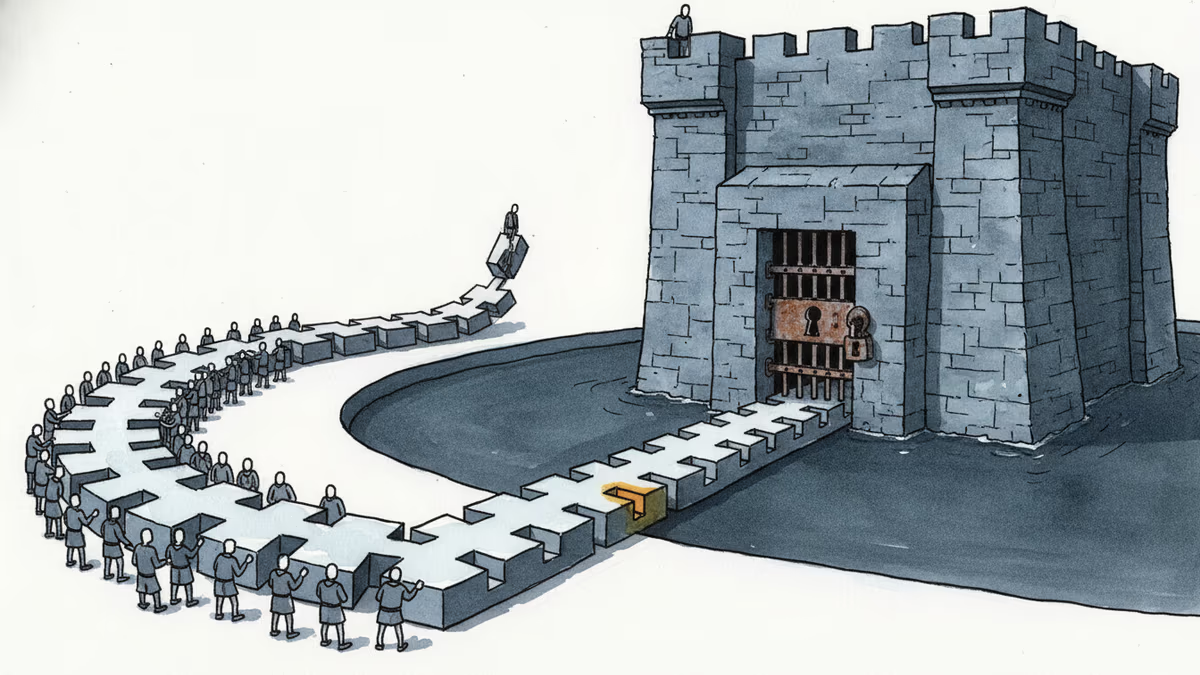
Nvidia shipped roughly a billion RISC-V cores in 2024, then announced it would run CUDA on the open standard. We break down how royalty-free instruction sets and open software stacks are trying to route around CUDA's lock-in. Part 2 of the Semiconductor Sovereignty series.
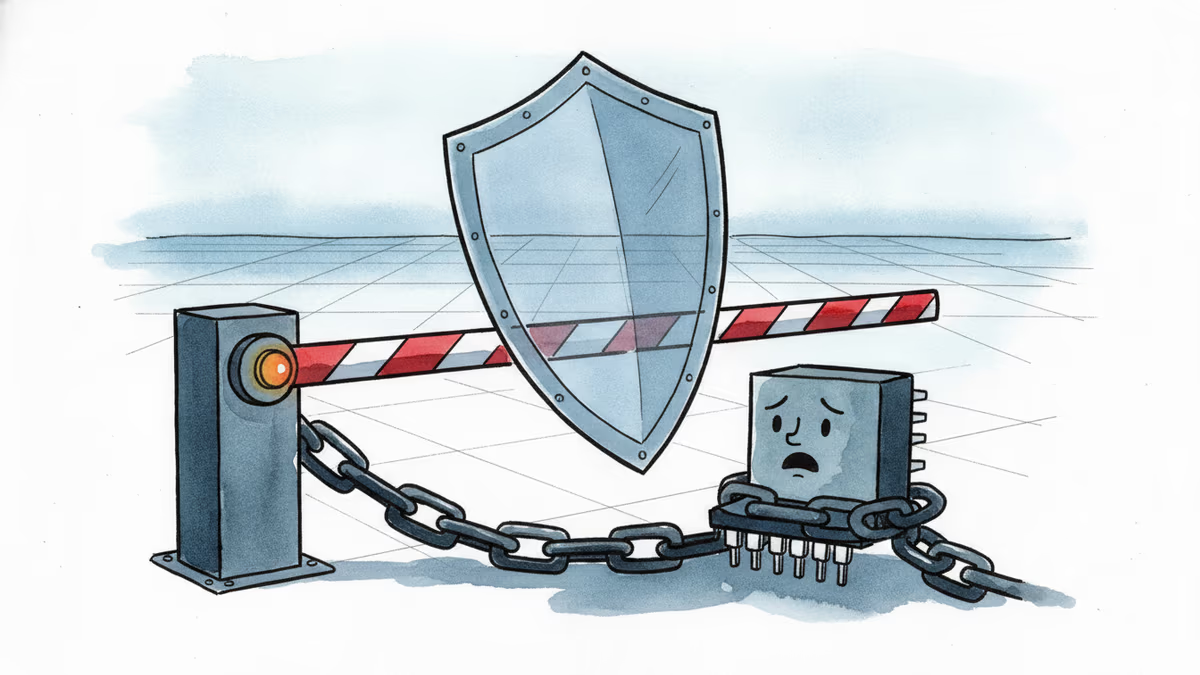
US AI-chip export controls split into three layers in the first half of 2026 — January easing, a May crackdown on circumvention, and a pending bill. Nvidia erased China from its guidance and still posted a record $81.6 billion quarter. A look at the export policy that both shields and cages it.
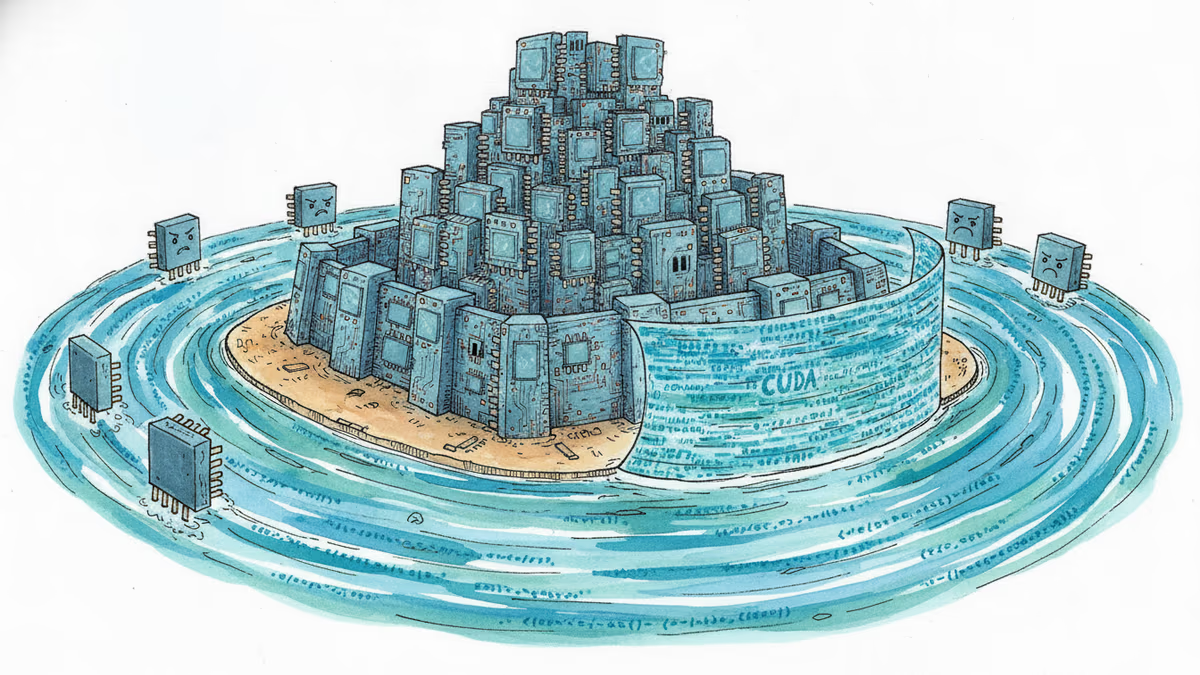
AMD's MI325X matches or beats Nvidia on memory and bandwidth — yet Nvidia's 86-92% share holds. The real moat is CUDA, 20 years in the making. Part 1 of 4.
Samsung Electronics' union branch revealed that 84% of survey respondents oppose the government's roughly $290 billion (₩400 trillion) semiconductor megaproject in Gwangju. Government, management, the union and shareholders are all reading the same national project in sharply different ways.
Nvidia shipped roughly a billion RISC-V cores in 2024, then announced it would run CUDA on the open standard. We break down how royalty-free instruction sets and open software stacks are trying to route around CUDA's lock-in. Part 2 of the Semiconductor Sovereignty series.
US AI-chip export controls split into three layers in the first half of 2026 — January easing, a May crackdown on circumvention, and a pending bill. Nvidia erased China from its guidance and still posted a record $81.6 billion quarter. A look at the export policy that both shields and cages it.
AMD's MI325X matches or beats Nvidia on memory and bandwidth — yet Nvidia's 86-92% share holds. The real moat is CUDA, 20 years in the making. Part 1 of 4.
Thoughts
Share your thoughts on this article
Sign in to join the conversation