

WWII Chemical Weapons Still Burning Fishermen 80 Years Later
US dumped 17,000 tons of chemical weapons in Atlantic until 1970. Now commercial fishing crews are getting hospitalized with mustard gas burns when these munitions surface in their nets.
When Your Catch Burns Back
A New Jersey fisherman needed skin grafts after hauling in his nets. The culprit wasn't a shark or jellyfish—it was a World War II mustard gas shell that had been sitting on the ocean floor for eight decades.
This week, the CDC reported at least three incidents between 2016 and 2023 where commercial fishing crews off New Jersey accidentally dredged up chemical warfare munitions (CWMs). Six crew members suffered mustard agent exposure, resulting in blistering chemical burns on skin and mucous membranes.
The most severe case required hospitalization at a burn center with skin grafting and physical therapy. Another crew member spent the night in an emergency department with respiratory distress and second-degree burns.
The Ocean's Toxic Legacy
Until 1970, the US military dumped an estimated 17,000 tons of unused chemical weapons from both World Wars into the Atlantic Ocean. What seemed like a safe disposal method at the time has created an underwater minefield that continues to threaten commercial fishing operations decades later.

Mustard gas doesn't simply disappear in seawater. Even diluted, it causes immediate blistering burns on contact and can severely damage respiratory systems when inhaled. The chemical's persistence means these decades-old munitions remain dangerous.
Experts believe thousands of tons of chemical weapons still lie scattered across the Atlantic seabed. Nobody knows exactly where or how much.
Three Perspectives, No Easy Solutions
Fishing industry representatives are demanding action. "Our crews are playing Russian roulette every time they go out," says the New Jersey Commercial Fishermen's Association. They want hazard zones clearly marked and compensation systems established for affected workers.
Government agencies face an impossible choice. Publishing munition locations could help terrorists while keeping them secret continues endangering innocent fishermen. The Department of Defense maintains that "immediate reporting upon discovery remains the best current protocol," while expressing regret for past disposal decisions.
Environmental groups push for comprehensive solutions. The Ocean Conservancy argues for full seafloor surveys and systematic recovery operations: "The ocean isn't a dumping ground. We need to clean up these underwater time bombs before more people get hurt."
Authors
Related Articles
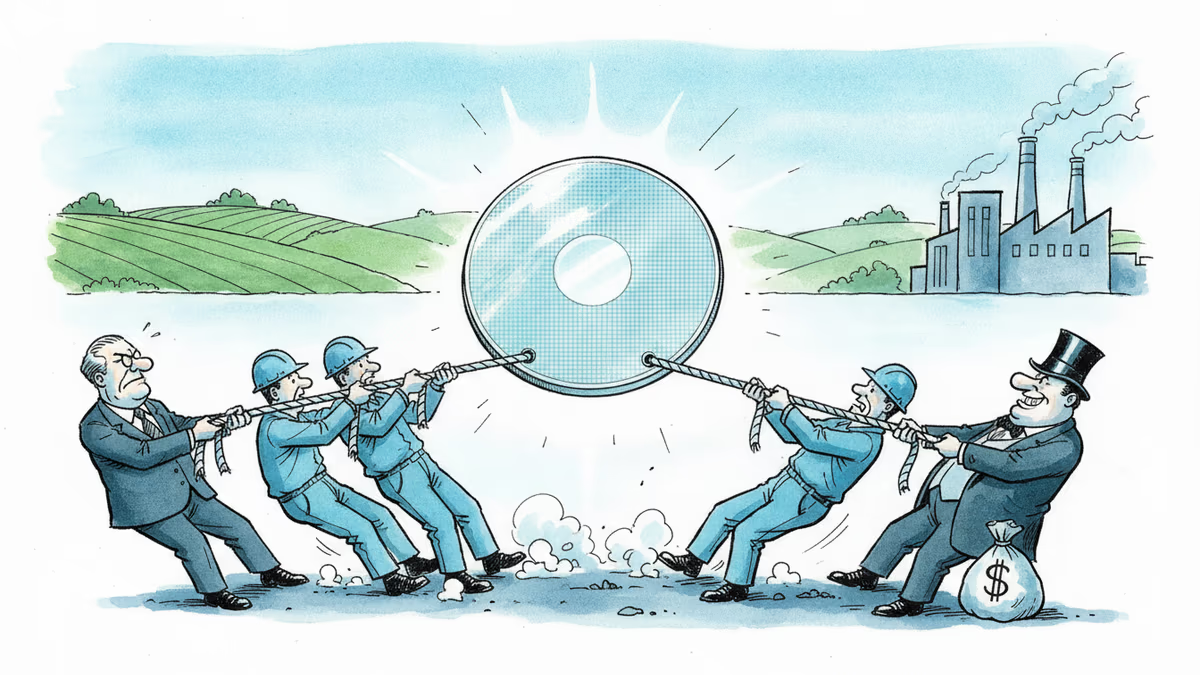
Samsung Electronics' union branch revealed that 84% of survey respondents oppose the government's roughly $290 billion (₩400 trillion) semiconductor megaproject in Gwangju. Government, management, the union and shareholders are all reading the same national project in sharply different ways.
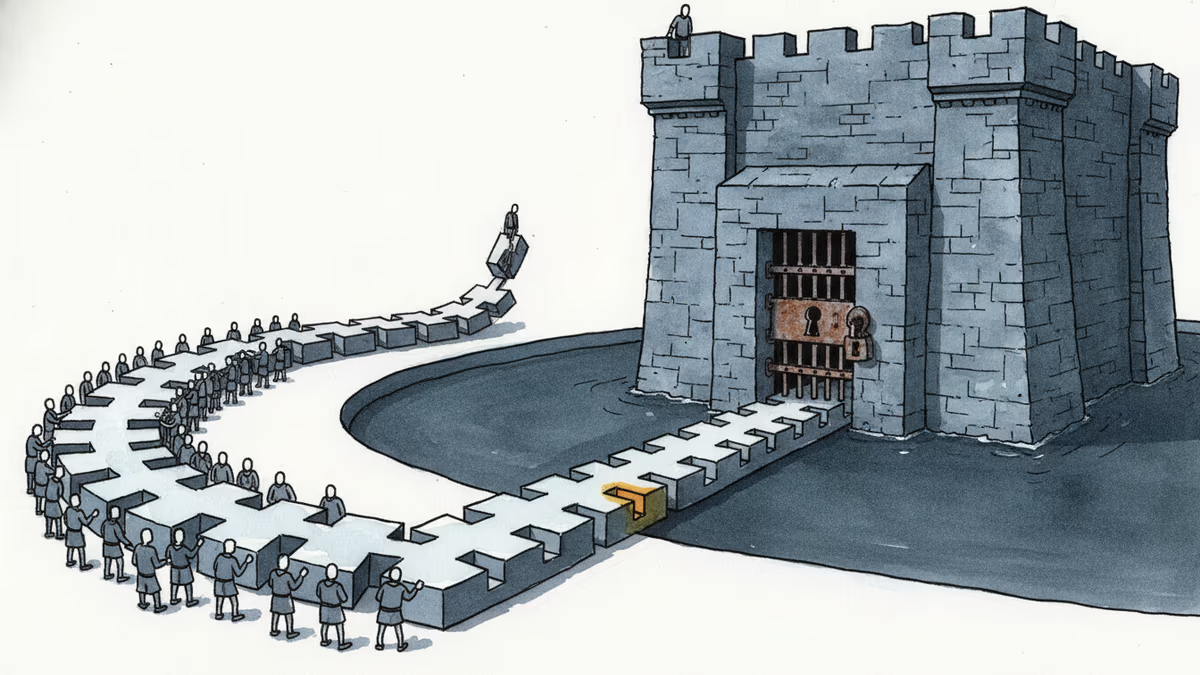
Nvidia shipped roughly a billion RISC-V cores in 2024, then announced it would run CUDA on the open standard. We break down how royalty-free instruction sets and open software stacks are trying to route around CUDA's lock-in. Part 2 of the Semiconductor Sovereignty series.
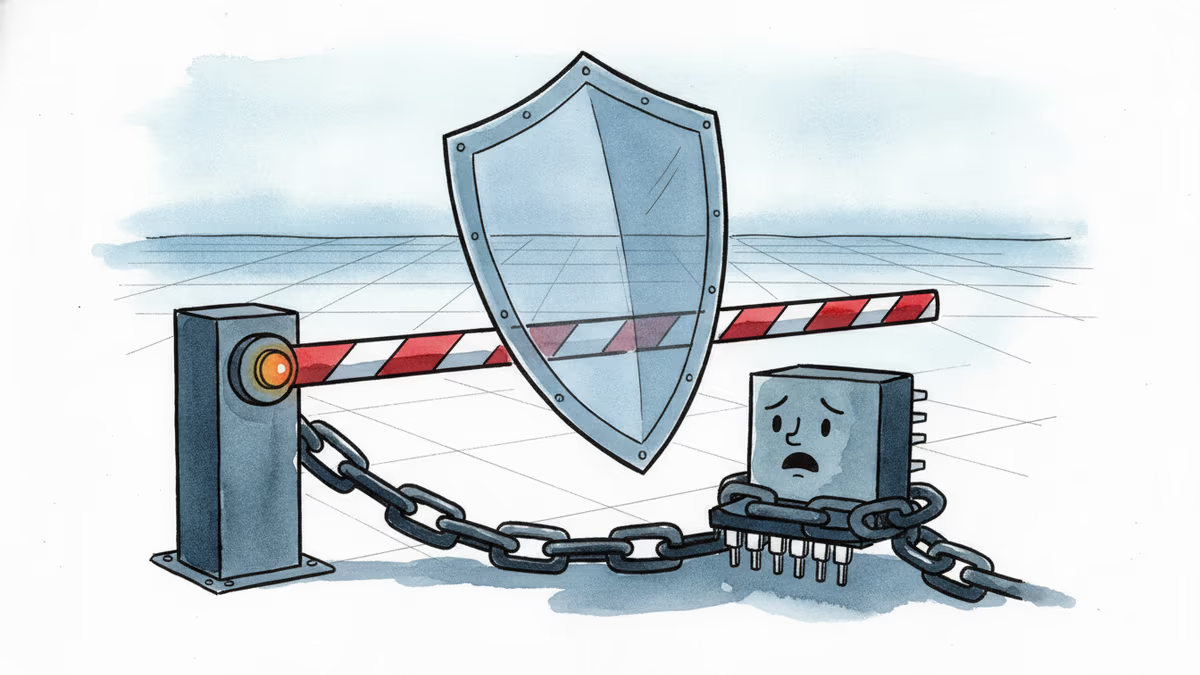
US AI-chip export controls split into three layers in the first half of 2026 — January easing, a May crackdown on circumvention, and a pending bill. Nvidia erased China from its guidance and still posted a record $81.6 billion quarter. A look at the export policy that both shields and cages it.
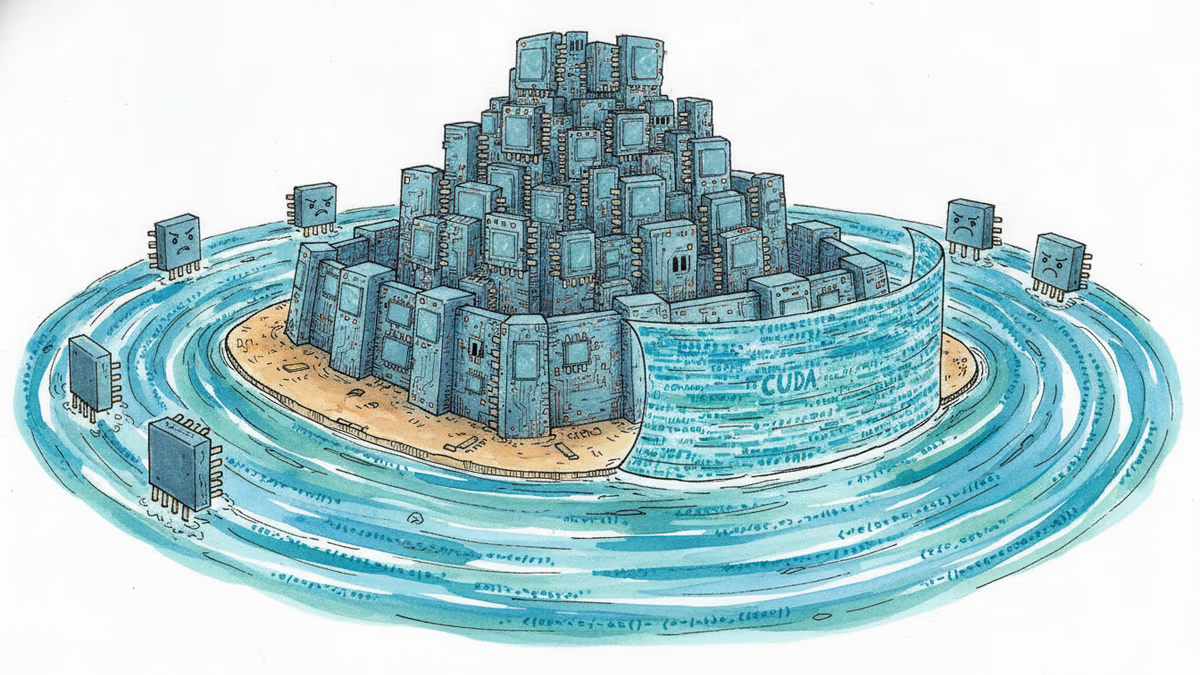
AMD's MI325X matches or beats Nvidia on memory and bandwidth — yet Nvidia's 86-92% share holds. The real moat is CUDA, 20 years in the making. Part 1 of 4.
Samsung Electronics' union branch revealed that 84% of survey respondents oppose the government's roughly $290 billion (₩400 trillion) semiconductor megaproject in Gwangju. Government, management, the union and shareholders are all reading the same national project in sharply different ways.
Nvidia shipped roughly a billion RISC-V cores in 2024, then announced it would run CUDA on the open standard. We break down how royalty-free instruction sets and open software stacks are trying to route around CUDA's lock-in. Part 2 of the Semiconductor Sovereignty series.
US AI-chip export controls split into three layers in the first half of 2026 — January easing, a May crackdown on circumvention, and a pending bill. Nvidia erased China from its guidance and still posted a record $81.6 billion quarter. A look at the export policy that both shields and cages it.
AMD's MI325X matches or beats Nvidia on memory and bandwidth — yet Nvidia's 86-92% share holds. The real moat is CUDA, 20 years in the making. Part 1 of 4.
Thoughts
Share your thoughts on this article
Sign in to join the conversation