
Nvidia Vera Rubin Superchip CES 2026 Unveiled: 10x More Efficient AI Inference
Nvidia CEO Jensen Huang announced the Vera Rubin superchip platform at CES 2026. Discover how the new 6-chip lineup aims for 10x efficiency and when it hits the market.
The AI industry's landscape is shifting again. Nvidia CEO Jensen Huang took the stage at CES 2026 in Las Vegas to confirm that the next-gen Vera Rubin superchip platform is on schedule for a late 2026 release. Despite earlier rumors of potential delays, Huang's keynote signaled that the dominant player in AI computing isn't slowing down.
Inside the Nvidia Vera Rubin Superchip Platform: 6 New Chips for the Next Frontier
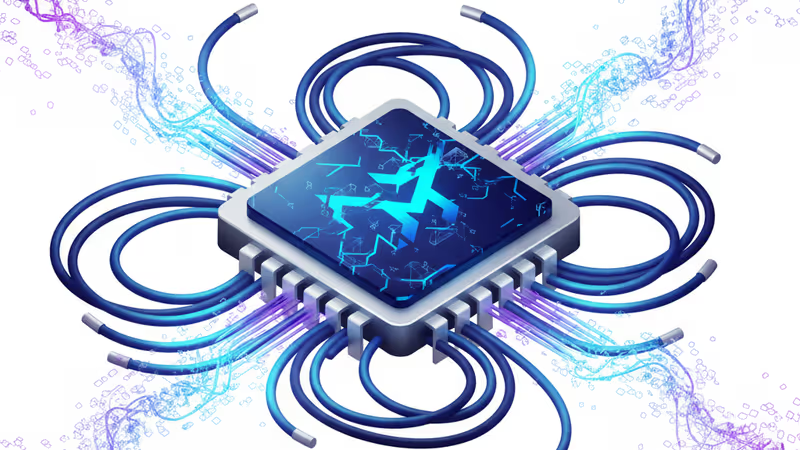
The Rubin platform isn't just a single product; it's a massive ecosystem featuring 6 new chips. The crown jewel, the Vera Rubin superchip, integrates one Vera CPU and two Rubin GPUs into a single high-performance processor. Huang noted that Rubin arrives at a critical moment as demand for both training and inference goes through the roof.
Efficiency is the headline story here. Nvidia claims these chips can generate tokens—the basic units of AI output—up to 10 times more efficiently than previous generations. This leap could drastically reduce the massive energy and financial costs currently associated with running high-end AI models.

Hyperscalers Lining Up for the Rubin Era and TSMC Partnership
Big tech players are already opening their wallets. According to Yahoo, hyperscalers like Microsoft, Google, Amazon, and Meta are expected to spend billions of dollars to get their hands on Rubin-based supercomputers. For these giants, power efficiency translates directly into better margins for their AI-driven products.
Production is set to take place at TSMC, Nvidia's longtime manufacturing partner. While the exact launch window remains fluid, Wired reports that production usually starts at a low volume for validation before ramping up. Huang's announcement was likely aimed at quelling industry fears about supply chain bottlenecks.
Authors
Related Articles

Samsung and SK unveiled a chip and AI investment package worth thousands of trillions of won on June 29. The headline number swings wildly by outlet, but the real contest isn't capital — it's water and power.
TSMC has signed a 30-year power purchase agreement for 100% of output from Taiwan's Hai Long offshore wind project. The 1GW deal reveals how chipmakers are quietly becoming energy companies.

Two ex-Apple engineers built an AI puck that only listens when you press it. At $179, Button is a deliberate bet that dedicated AI hardware beats the Swiss Army knife approach of smartphones.
Intel's revived New Mexico fab is betting on advanced chip packaging to challenge TSMC and capture AI market share. Here's why this quiet technology could matter more than the chips themselves.
Samsung and SK unveiled a chip and AI investment package worth thousands of trillions of won on June 29. The headline number swings wildly by outlet, but the real contest isn't capital — it's water and power.
TSMC has signed a 30-year power purchase agreement for 100% of output from Taiwan's Hai Long offshore wind project. The 1GW deal reveals how chipmakers are quietly becoming energy companies.
Two ex-Apple engineers built an AI puck that only listens when you press it. At $179, Button is a deliberate bet that dedicated AI hardware beats the Swiss Army knife approach of smartphones.
Intel's revived New Mexico fab is betting on advanced chip packaging to challenge TSMC and capture AI market share. Here's why this quiet technology could matter more than the chips themselves.
Thoughts
Share your thoughts on this article
Sign in to join the conversation