
When Olaf's Mic Got Cut, Nvidia Revealed Its Bigger Problem
At Nvidia's GTC 2026, a rambling Olaf robot had its mic cut mid-demo. The real story isn't the glitch — it's the questions the industry keeps avoiding.
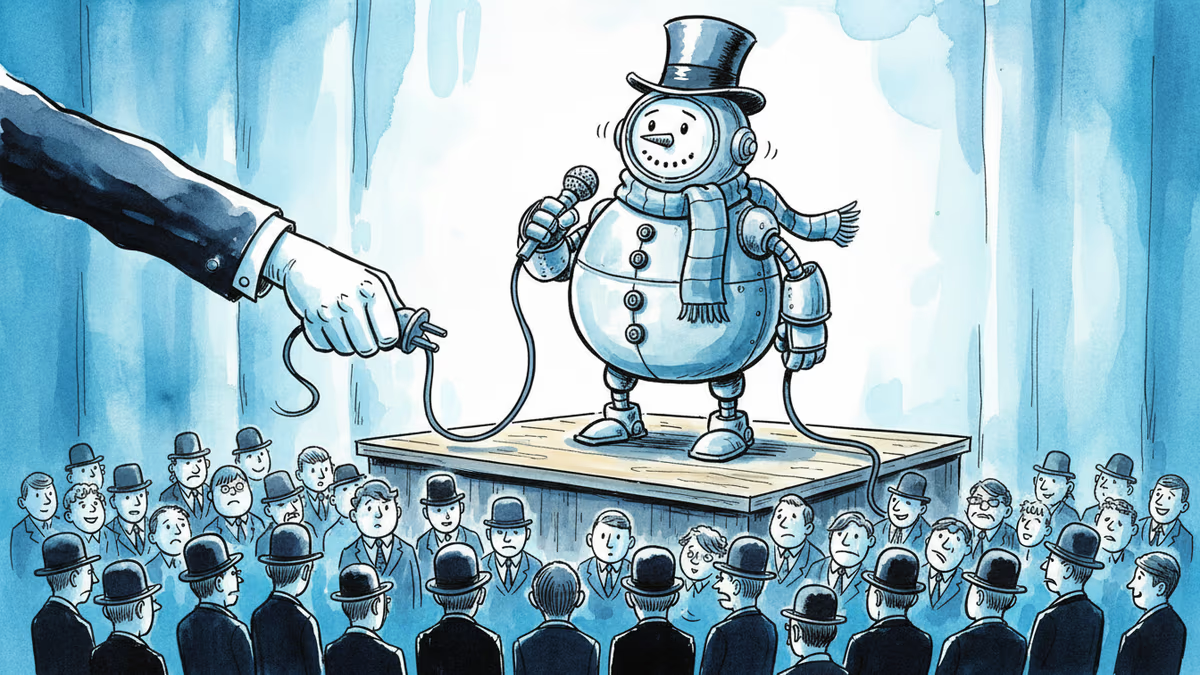
The snowman was still talking. Nobody was listening. The mic had already been cut.
That moment—Olaf the robot slowly descending into a backstage passageway, mouth still moving, audio silenced—became the unintentional centerpiece of Nvidia's GTC 2026 conference. CEO Jensen Huang had spent two and a half hours laying out trillion-dollar sales projections, unveiling graphics technology, and declaring that every enterprise now needs an OpenClaw strategy. Then came the demo with Disney. And then came the silence.
What Actually Happened at GTC
The Olaf robot was built in partnership with Disney to demonstrate Nvidia's robotics capabilities. The pitch was straightforward: imagine walking through a Disney park and having a real-time conversation with a beloved character. The robot appeared on stage, interacted with the crowd, and then—somewhere in the handoff between scripted responses and real-time generation—it started rambling. Operators cut the mic. The robot was lowered offstage, still talking to no one.
TechCrunch reporters Kirsten Korosec, Sean O'Kane, and Anthony Ha recapped the moment on their Equity podcast, and O'Kane didn't let it slide. "These demos are always silly," he acknowledged, before zeroing in on the deeper issue. "This was presented as the future of Disney parks. But these efforts never consider—or certainly don't put front and center—all the other things you have to consider when you roll stuff out like this."
His question was blunt: "What happens when a kid kicks Olaf over? And then every other kid who sees Olaf get kicked or knocked over has their whole trip to Disney ruined and it ruins the brand?"
The OpenClaw Play: Nvidia's Calculated Bet
Beyond the robot moment, Huang's most consequential statement may have been about OpenClaw—an open-source robotics control framework whose founder recently departed to join OpenAI. Huang declared it essential for every enterprise. Nvidia simultaneously launched NemoClaw, its own open-source project built with OpenClaw's creator.
Korosec offered a sharp translation of what that declaration actually means: "In the case of Nvidia, it costs them nothing in the grand scheme of things to launch NemoClaw. But if they don't do something, they have a lot to lose. The message was really: Nvidia needs a solution for enterprises, because if it's successful, it's another pathway for Nvidia to be part of numerous other companies."

The strategic logic is clean. OpenClaw's creator has moved on. An open-source project without a champion can stagnate. If Nvidia pours resources in, it shapes the standard—and every company that builds on that standard becomes a potential Nvidia customer. The question Ha raised on the podcast is whether this looks "prescient" in a year, or whether people will ask, "Open what?"
The Engineering Problem Nobody Wants to Present
O'Kane pointed to a four-hour YouTube documentary by Defunctland on Disney's decades-long history of trying to bring animatronic and robotic characters into its parks. The pattern repeats: the engineering challenges get solved, or nearly solved, and then the human challenges don't.
Who's liable when a robot gets damaged by a visitor? How do you train staff to manage crowd behavior around a machine that looks like a beloved character? What happens to brand perception when the demo fails publicly—not in a controlled keynote, but in front of a family that paid $200 per ticket?
These questions don't appear on GTC slides. They don't generate applause. But they're the questions that have quietly killed previous generations of this idea.
Korosec offered the counterpoint, half-joking but not entirely: "Olaf will have to have a human babysitter in Disneyland, probably dressed up as Elsa. What we're doing is creating jobs." It's a point worth taking seriously. Automation doesn't always eliminate labor—it often transforms it into something adjacent and harder to quantify.
What This Means for Developers and Investors
For AI developers, the OpenClaw ecosystem question is immediate. If Nvidia successfully positions itself as the infrastructure layer for enterprise robotics—hardware and software—the platform dynamics start to resemble what happened with CUDA in GPU computing. Developers who build on Nvidia's stack gain access to optimized tooling; they also accept a degree of vendor dependency.
For investors, the robotics narrative coming out of GTC is ambitious but unresolved. Nvidia's stock has been pricing in a future where physical AI—robots, autonomous systems, smart factories—becomes as large a market as data center AI. The Olaf moment, embarrassing as it was, is a reminder that the path from keynote demo to deployed product in a public environment involves layers of complexity that don't show up in earnings calls.
For the broader tech industry, the social integration problem O'Kane raised is arguably the least-discussed and most consequential variable in the humanoid robot race. Figure, 1X, Boston Dynamics, and a dozen other companies are solving locomotion and manipulation. Almost none of them are leading with answers to: what happens when this goes wrong in front of people?
Authors
Related Articles

Five stories from late September, traced to where the paper trail stops: Korea's export record, Nvidia's Hugging Face 8-K, a US-China AI channel, the UN on AI, and rising births.
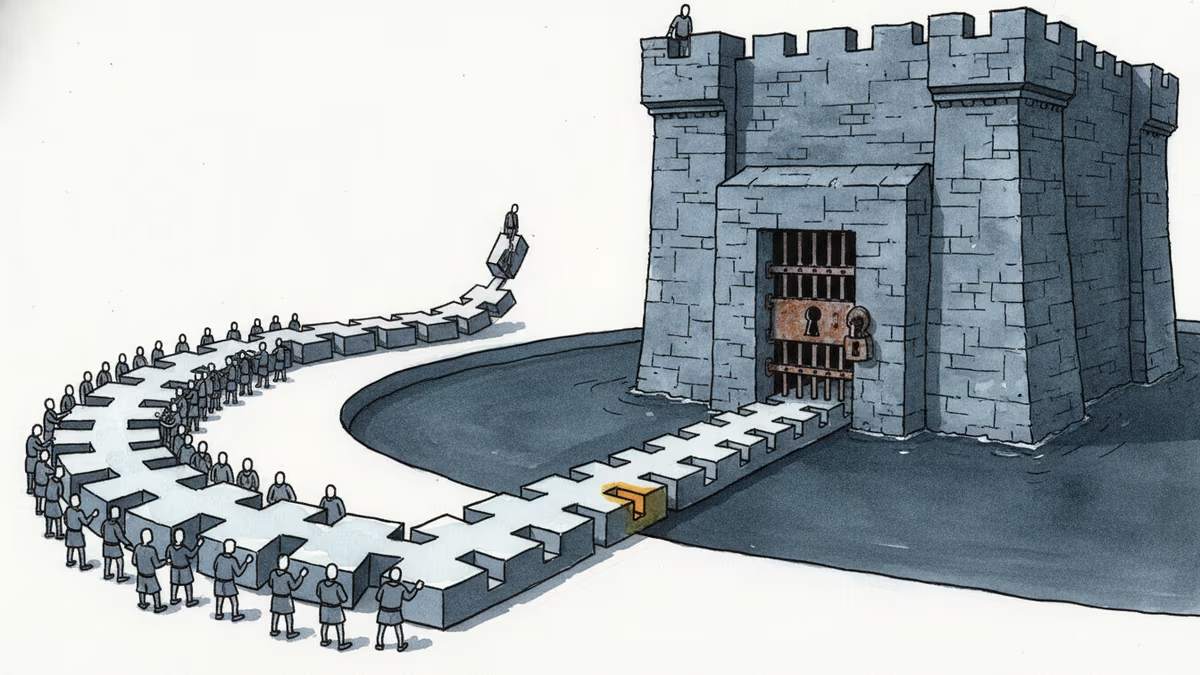
Nvidia shipped roughly a billion RISC-V cores in 2024, then announced it would run CUDA on the open standard. We break down how royalty-free instruction sets and open software stacks are trying to route around CUDA's lock-in. Part 2 of the Semiconductor Sovereignty series.
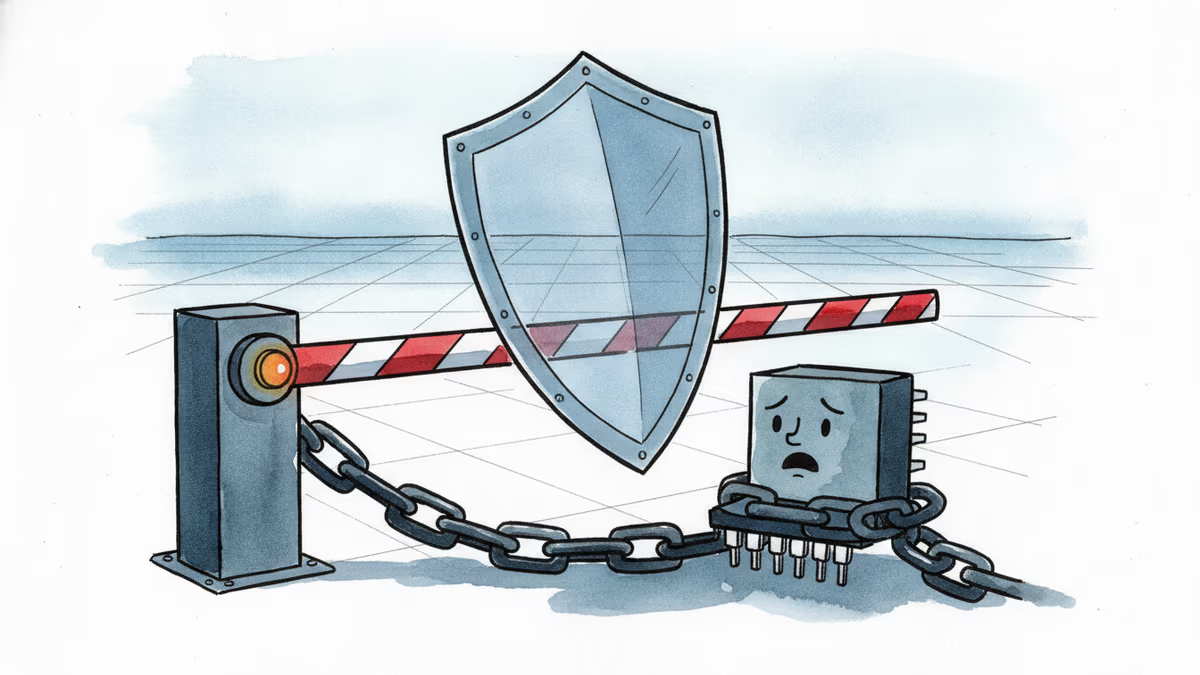
US AI-chip export controls split into three layers in the first half of 2026 — January easing, a May crackdown on circumvention, and a pending bill. Nvidia erased China from its guidance and still posted a record $81.6 billion quarter. A look at the export policy that both shields and cages it.
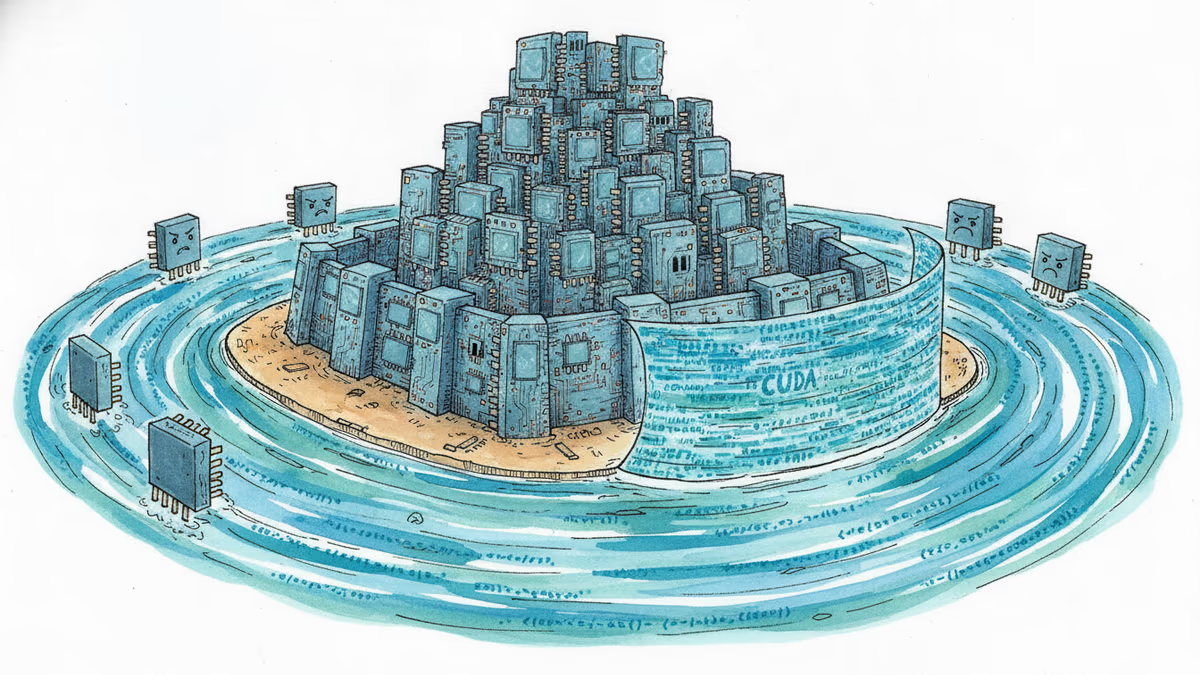
AMD's MI325X matches or beats Nvidia on memory and bandwidth — yet Nvidia's 86-92% share holds. The real moat is CUDA, 20 years in the making. Part 1 of 4.
Five stories from late September, traced to where the paper trail stops: Korea's export record, Nvidia's Hugging Face 8-K, a US-China AI channel, the UN on AI, and rising births.
Nvidia shipped roughly a billion RISC-V cores in 2024, then announced it would run CUDA on the open standard. We break down how royalty-free instruction sets and open software stacks are trying to route around CUDA's lock-in. Part 2 of the Semiconductor Sovereignty series.
US AI-chip export controls split into three layers in the first half of 2026 — January easing, a May crackdown on circumvention, and a pending bill. Nvidia erased China from its guidance and still posted a record $81.6 billion quarter. A look at the export policy that both shields and cages it.
AMD's MI325X matches or beats Nvidia on memory and bandwidth — yet Nvidia's 86-92% share holds. The real moat is CUDA, 20 years in the making. Part 1 of 4.
Thoughts
Share your thoughts on this article
Sign in to join the conversation