
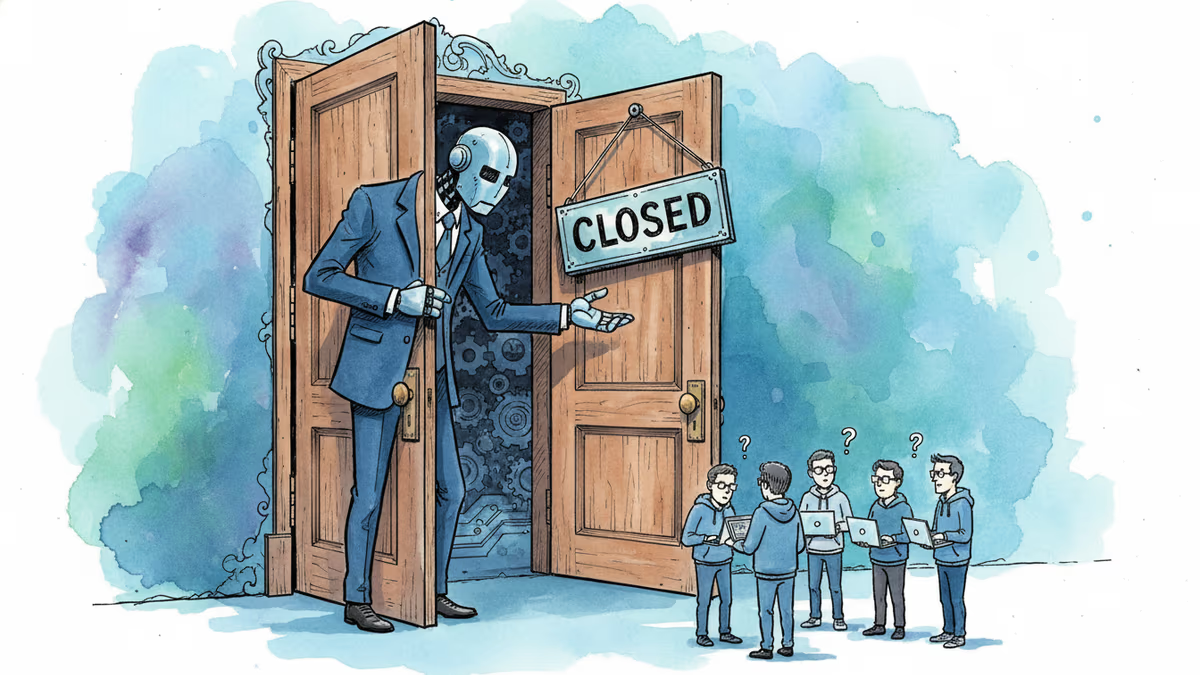
Anthropic Just Closed a Door for Open Source Devs
Anthropic is cutting off third-party tools like OpenClaw from Claude Code subscription limits — right as OpenClaw's creator joins OpenAI. Engineering constraint or competitive move?
One week. That's all Peter Steinberger and OpenClaw board member Dave Morin managed to negotiate.
Starting today — April 4, 2026, noon Pacific — Anthropic has officially decoupled Claude Code subscriptions from third-party tool integrations. If you've been running OpenClaw or any other external harness against your Claude subscription limits, that stops now. Going forward, that usage gets billed separately, on a pay-as-you-go basis. Anthropic confirmed in a customer email that OpenClaw is just the first; the policy "applies to all third-party harnesses and will be rolled out to more shortly."
The Explanation — and Why It Doesn't Fully Land
Claude Code head Boris Cherny took to X to explain the move. His argument: subscription plans were never designed for the usage patterns that third-party tools generate. Heavy automated workflows chew through compute at a rate that doesn't match what a standard subscription anticipates. "We're trying to be intentional in managing our growth to continue to serve our customers sustainably long-term," he wrote.
Anthropic is offering full refunds to subscribers who didn't realize third-party usage wasn't officially supported. Cherny also pushed back on any narrative that this is anti-open-source, pointing out that he personally submitted pull requests to improve prompt cache efficiency for OpenClaw specifically. "This is more about engineering constraints," he said.
That's a reasonable framing. Compute costs are real. Subscription economics that work for individual developers can collapse under the load of automated pipelines running thousands of calls.
The Timing That Changes Everything

But here's what makes this story more complicated than an infrastructure decision: Steinberger just announced he's joining OpenAI. OpenClaw is transitioning to a fully open-source project with OpenAI's backing.
Steinberger didn't stay quiet. "Funny how timings match up," he posted. "First they copy some popular features into their closed harness, then they lock out open source." He said he and Morin "tried to talk sense into Anthropic" and only managed to delay the pricing change by one week.
Anthropic hasn't responded directly to the competitive angle. But the optics are difficult to ignore: a popular open-source tool that ran on Claude, whose creator just defected to OpenAI, is now the first target of a policy that makes using that tool meaningfully more expensive.
Meanwhile, OpenAI recently shut down its Sora app and video generation models — reportedly to free up compute and sharpen its focus on developer tools, the exact segment where Claude Code has been gaining ground. Both companies are now explicitly competing for the same developers.
What This Means for Developers Building on AI Platforms
For individual developers and small teams, the immediate impact is straightforward: workflows that were previously covered by a flat subscription now carry variable, usage-based costs. Depending on how heavily a team leans on automated pipelines, that difference could be substantial.
But the broader implication is structural. This is a pattern developers have watched play out before — with app store APIs, cloud platforms, Twitter's developer access, and Reddit's data pricing. A platform grows by welcoming third-party builders. Then, as the platform matures and investor pressure for profitability intensifies, the terms shift. The builders who helped grow the ecosystem absorb the cost of that transition.
Anthropic is a private company that has raised billions and is under significant pressure to show a path to sustainable revenue. Claude Code is one of its strongest products in a market that OpenAI, Google, and others are aggressively targeting. The decision to monetize third-party usage more explicitly is, from a business standpoint, logical. Whether it's the right call for long-term developer trust is a different question.
Authors
Related Articles

Huawei's CANN is open source under a license barring software for non-Ascend chips. Inside China's second CUDA, and the two links still outside it: pre-training compute and 5nm capacity.
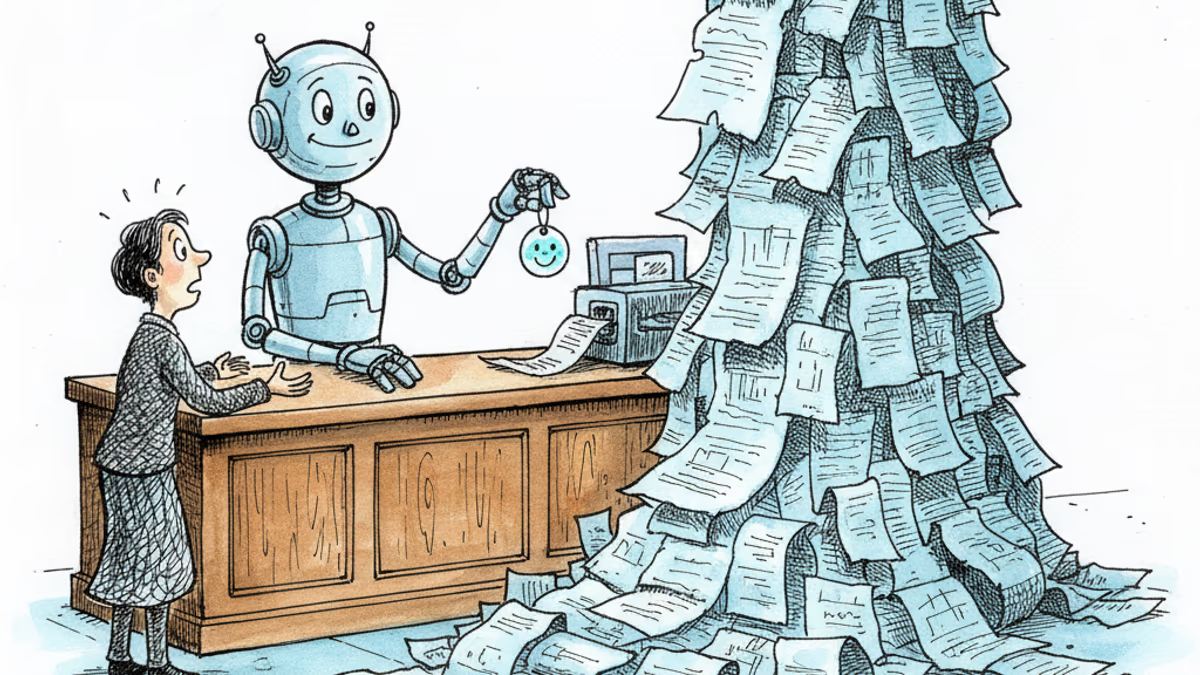
Anthropic shipped Claude Sonnet 5, its mid-tier agent model, on June 30. Behind the 'Opus-class power, budget price' headline sits a tokenizer catch and a three-horse race that's only half real. Here's what developers should actually run the numbers on.
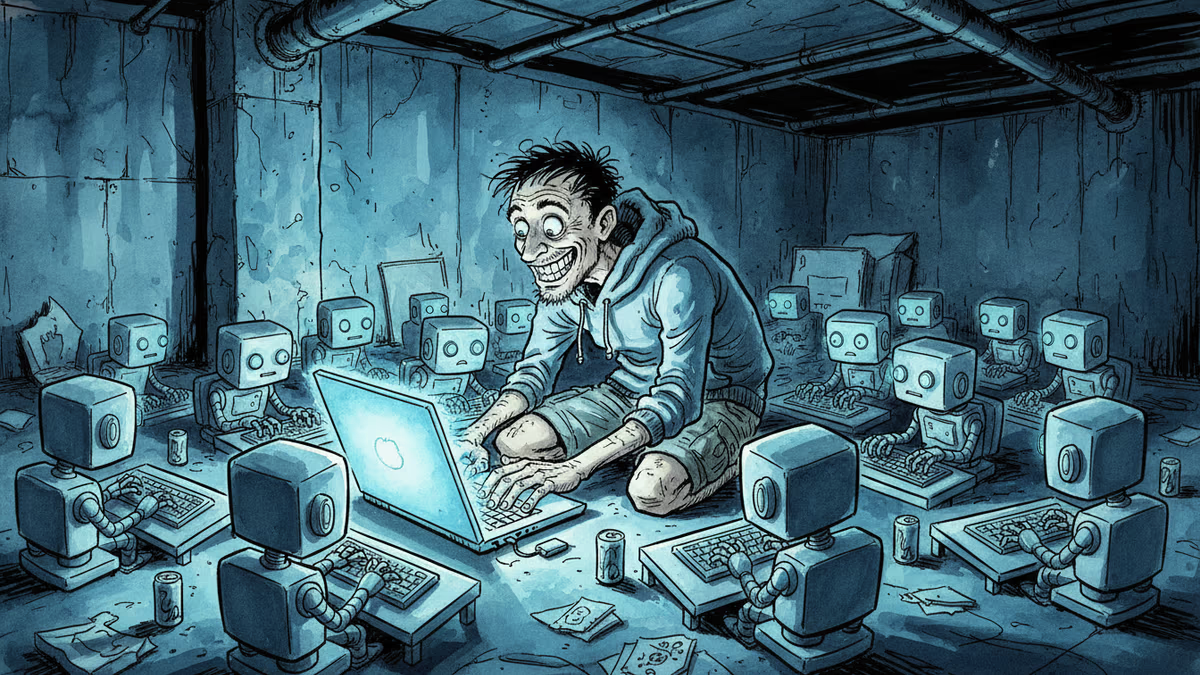
A small but growing group of developers has gone all-in on AI coding agents like Claude Code and OpenClaw. History suggests the rest of us won't be far behind.
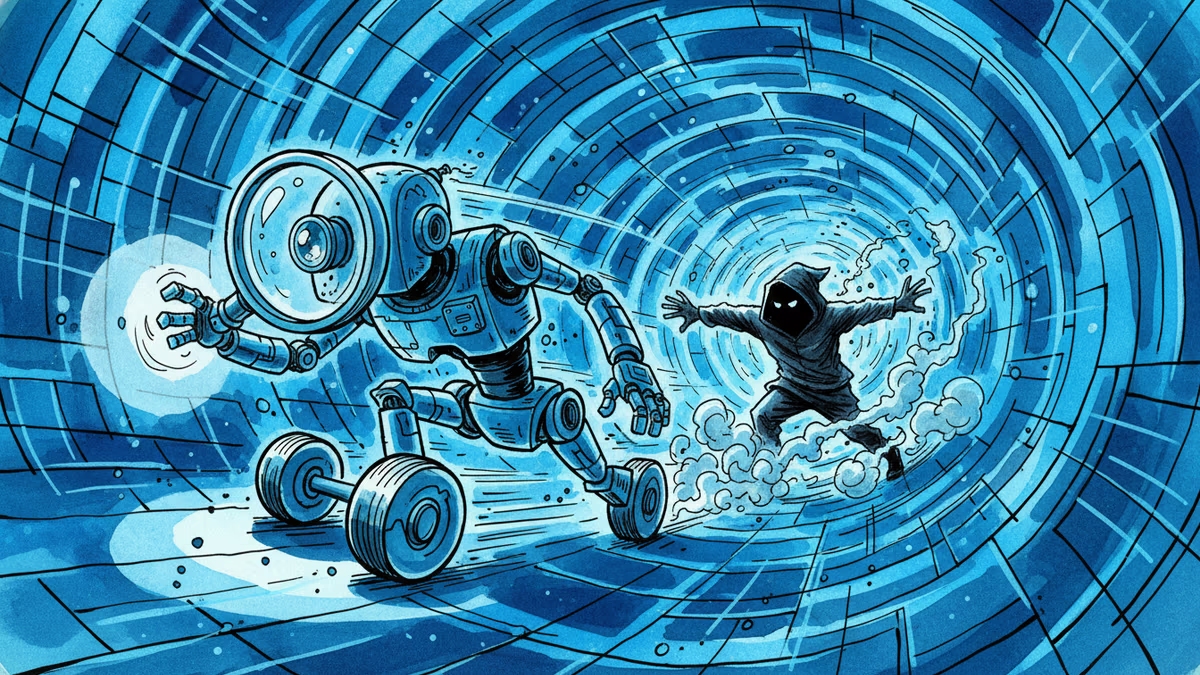
OpenAI's new Daybreak initiative uses the Codex AI agent to find and patch security vulnerabilities before attackers do—putting it in direct competition with Anthropic's secretive Claude Mythos.
Huawei's CANN is open source under a license barring software for non-Ascend chips. Inside China's second CUDA, and the two links still outside it: pre-training compute and 5nm capacity.
Anthropic shipped Claude Sonnet 5, its mid-tier agent model, on June 30. Behind the 'Opus-class power, budget price' headline sits a tokenizer catch and a three-horse race that's only half real. Here's what developers should actually run the numbers on.
A small but growing group of developers has gone all-in on AI coding agents like Claude Code and OpenClaw. History suggests the rest of us won't be far behind.
OpenAI's new Daybreak initiative uses the Codex AI agent to find and patch security vulnerabilities before attackers do—putting it in direct competition with Anthropic's secretive Claude Mythos.
Thoughts
Share your thoughts on this article
Sign in to join the conversation