

Why Nvidia Is Really Pulling Back from OpenAI and Anthropic
Jensen Huang says no more investments in OpenAI and Anthropic after their IPOs. But the real story involves circular funding, Pentagon conflicts, and a $70 billion reduction in commitments.
A $100 Billion Promise That Became $30 Billion
At a Morgan Stanley conference in San Francisco, Nvidia CEO Jensen Huang dropped a bombshell: no more investments in OpenAI or Anthropic once they go public. His reasoning seemed straightforward—IPOs close the investment window.
But the numbers tell a different story. Nvidia's promised $100 billion investment in OpenAI from September shrunk to $30 billion in last week's funding round. That's a 70% reduction. For a company supposedly bullish on AI's future, that's a dramatic pullback.
The Circular Money Machine
MIT Sloan professor Michael Cusumano called Nvidia's investment strategy "kind of a wash." The setup was almost comical: Nvidia invests $100 billion in OpenAI, then OpenAI spends $100 billion buying Nvidia chips.
This circular funding raised bubble concerns across Silicon Valley. Critics questioned whether real value was being created or if companies were just inflating their balance sheets. For Nvidia, which controls 80% of the AI chip market, these complex investment structures seemed unnecessary.
Pentagon vs. Peace: Partners Pull Apart

The real drama unfolded behind closed doors. Last month, the Trump administration blacklisted Anthropic after the company refused to allow its models for autonomous weapons or mass domestic surveillance. Federal agencies and military contractors were barred from using Claude.
Anthropic CEO Dario Amodei had already thrown shade at Nvidia during Davos, comparing U.S. chip sales to approved Chinese customers to "selling nuclear weapons to North Korea." Ouch.
Meanwhile, OpenAI struck a Pentagon deal within hours of Anthropic's blacklisting. The market responded immediately: Claude shot to #1 on the U.S. App Store, overtaking ChatGPT within 24 hours.
The Complicated Web of AI Partnerships
Nvidia now holds stakes in two companies pulling in opposite directions—one aligned with the Defense Department, the other blacklisted by it. This isn't just awkward; it's strategically untenable.
The chip giant's "ecosystem expansion" strategy, as Huang described it, works when partners move in the same direction. When they don't, the investments become liabilities rather than assets.
Beyond the IPO Excuse
Huang's stated reason—that IPOs close investment opportunities—doesn't align with how late-stage private investing actually works. Firms regularly pile into companies right up to their public debuts.
What's more likely is that Nvidia recognized the complexity trap it had walked into. When your business partners are at war with each other—literally, in the case of defense contracts—continued investment becomes a zero-sum game.
Authors
Related Articles

Nvidia shipped roughly a billion RISC-V cores in 2024, then announced it would run CUDA on the open standard. We break down how royalty-free instruction sets and open software stacks are trying to route around CUDA's lock-in. Part 2 of the Semiconductor Sovereignty series.
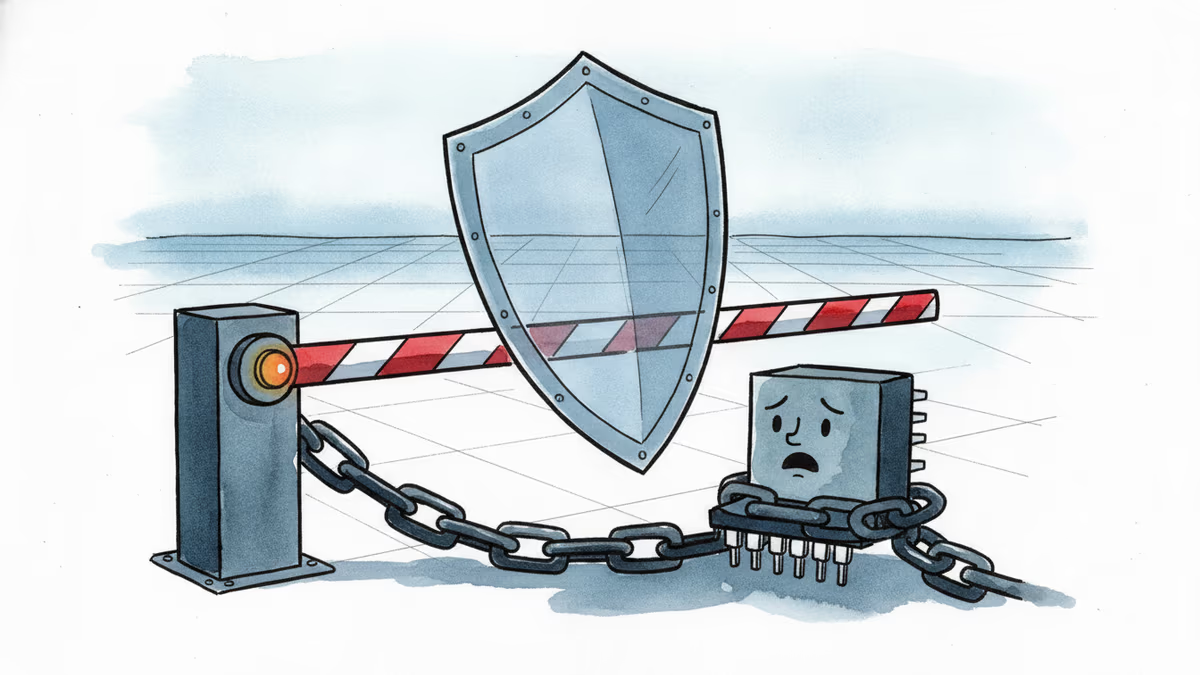
US AI-chip export controls split into three layers in the first half of 2026 — January easing, a May crackdown on circumvention, and a pending bill. Nvidia erased China from its guidance and still posted a record $81.6 billion quarter. A look at the export policy that both shields and cages it.
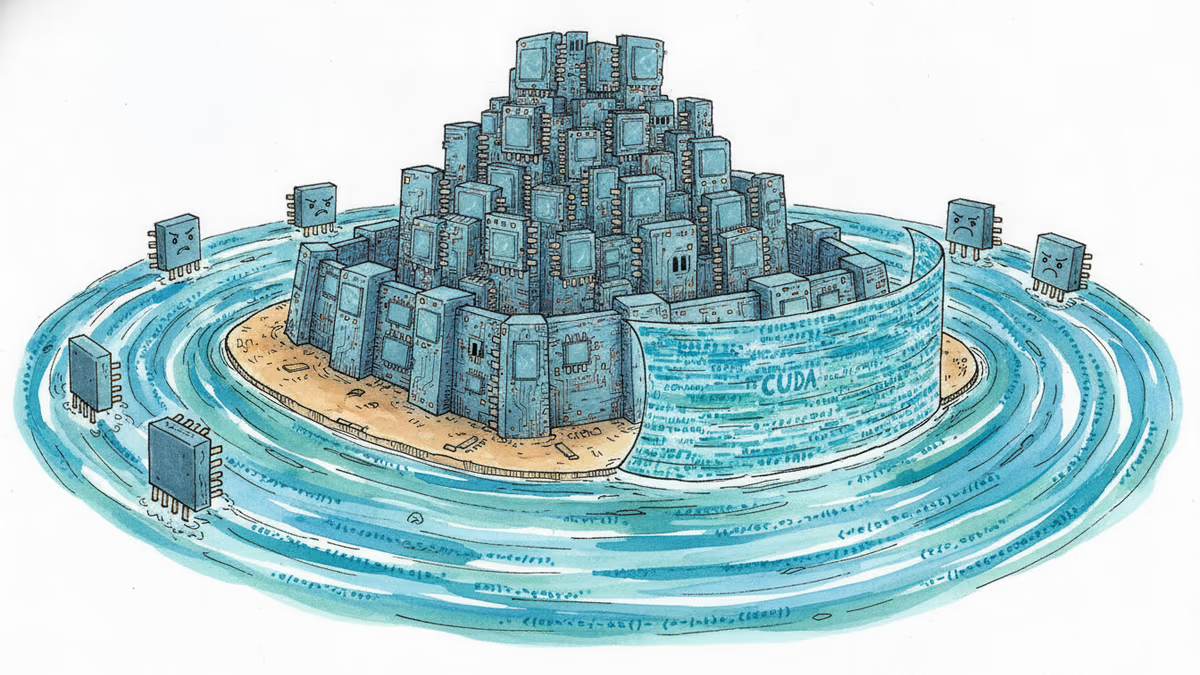
AMD's MI325X matches or beats Nvidia on memory and bandwidth — yet Nvidia's 86-92% share holds. The real moat is CUDA, 20 years in the making. Part 1 of 4.

Anthropic shipped Claude Sonnet 5, its mid-tier agent model, on June 30. Behind the 'Opus-class power, budget price' headline sits a tokenizer catch and a three-horse race that's only half real. Here's what developers should actually run the numbers on.
Nvidia shipped roughly a billion RISC-V cores in 2024, then announced it would run CUDA on the open standard. We break down how royalty-free instruction sets and open software stacks are trying to route around CUDA's lock-in. Part 2 of the Semiconductor Sovereignty series.
US AI-chip export controls split into three layers in the first half of 2026 — January easing, a May crackdown on circumvention, and a pending bill. Nvidia erased China from its guidance and still posted a record $81.6 billion quarter. A look at the export policy that both shields and cages it.
AMD's MI325X matches or beats Nvidia on memory and bandwidth — yet Nvidia's 86-92% share holds. The real moat is CUDA, 20 years in the making. Part 1 of 4.
Anthropic shipped Claude Sonnet 5, its mid-tier agent model, on June 30. Behind the 'Opus-class power, budget price' headline sits a tokenizer catch and a three-horse race that's only half real. Here's what developers should actually run the numbers on.
Thoughts
Share your thoughts on this article
Sign in to join the conversation