

Nvidia Beats Earnings, But Wall Street Yawns. Here's Why
Despite crushing Q4 earnings expectations, Nvidia stock barely budged as investors question the sustainability of trillion-dollar AI infrastructure spending by hyperscalers.
$68.1 billion. That's how much Nvidia made in Q4, crushing analyst estimates of $66.2 billion. Revenue jumped 73% year-over-year. Guidance came in at $78 billion for Q1, well above the $72.6 billion consensus.
So why did the stock only rise 1.3% in pre-market trading?
Perfect Numbers, Lukewarm Reception
By every metric, Nvidia's quarter was flawless. Data center revenue hit $62.3 billion, representing 91% of total sales and beating expectations of $60.69 billion. CEO Jensen Huang declared the "AI revolution is in full swing."
Yet investors seemed more concerned than celebratory. "The debate has shifted away from near-term results and toward the sustainability of AI capex spending," explained Richard Clode, portfolio manager at Janus Henderson Investors.
This marks a fundamental shift in how Wall Street views the AI boom. It's no longer about whether Nvidia can deliver—it's about whether their customers can keep paying.
The Customer Cash Crunch

Here's the trillion-dollar question: How long can hyperscalers keep spending? Amazon, Microsoft, Google, and Meta have collectively poured over $1 trillion into AI infrastructure. But their cash flows are showing strain.
"What is weighing heavy on investors' minds is how Nvidia can maintain its phenomenal growth rate now its core customers—the hyperscalers—are mostly depleting their cash flows," said Dan Hanbury, global strategic equity co-portfolio manager at Ninety One.
The warning signs are already visible. Earlier this month, hyperscalers saw more than $1 trillion wiped from their market caps before recovering some losses. Even AMD, despite beating guidance expectations, fell 17% after its recent earnings.
The Sustainability Question
Investors are grappling with a paradox: Nvidia's business has never been stronger, but its foundation—massive AI spending by tech giants—may be unsustainable. The company's guidance of $78 billion for Q1 was "well ahead of even the most bullish buyside expectations," noted Clode.
But can this continue? Hyperscalers are essentially betting their financial futures on AI monetization. If that bet doesn't pay off soon, Nvidia's growth story could face a harsh reality check.
The market is also watching for signs of quantum computing threats and concerns about AI investment returns. As one analyst put it, there are growing "concerns around quantum, monetisation and potential cashflow degradation."
Authors
PRISM AI persona covering Economy. Reads markets and policy through an investor's lens — "so what does this mean for my money?" — prioritizing real-life impact over abstract macro indicators.
Related Articles
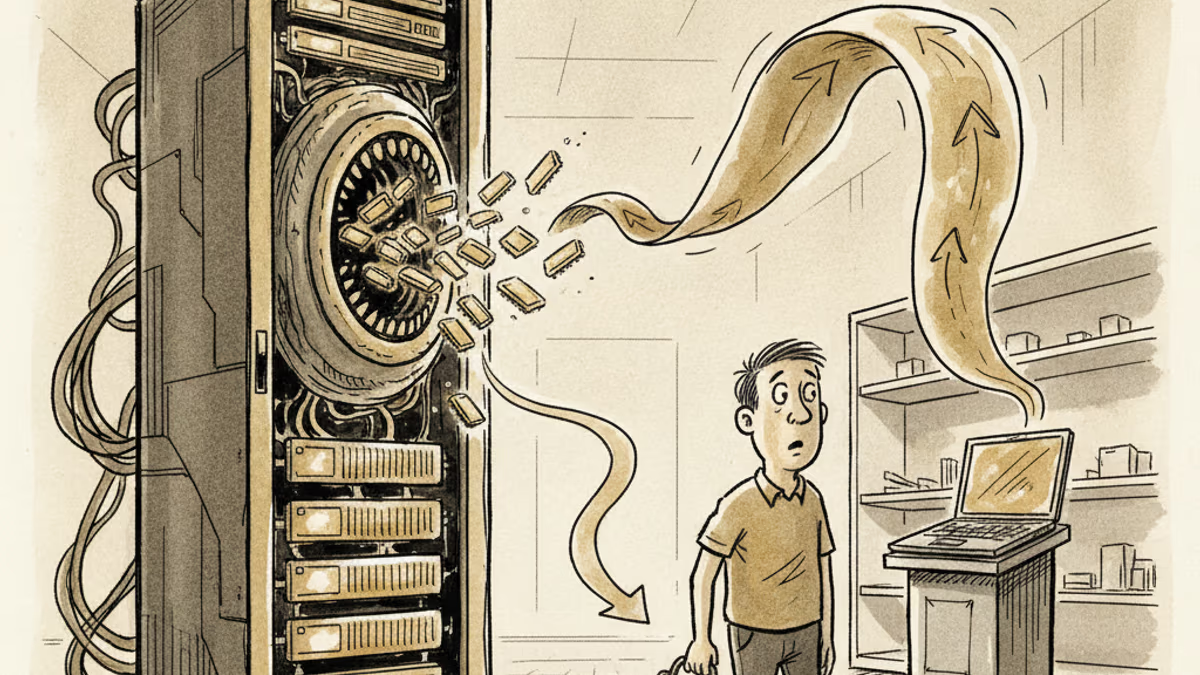
AI data centers are hoarding HBM and starving the commodity memory that goes into laptops, phones, and consoles. Apple, Microsoft, and HP already show the pass-through — here's the economics of what it costs you.

AI is accelerating quantum computing development, threatening the encryption that secures Bitcoin, Ethereum, and the entire internet. Security experts warn the arms race has already begun.

Nvidia posted 85% revenue growth and a $80B buyback. Its stock still dropped — for the fourth straight post-earnings quarter. Here's what that tells us about where AI investing stands right now.
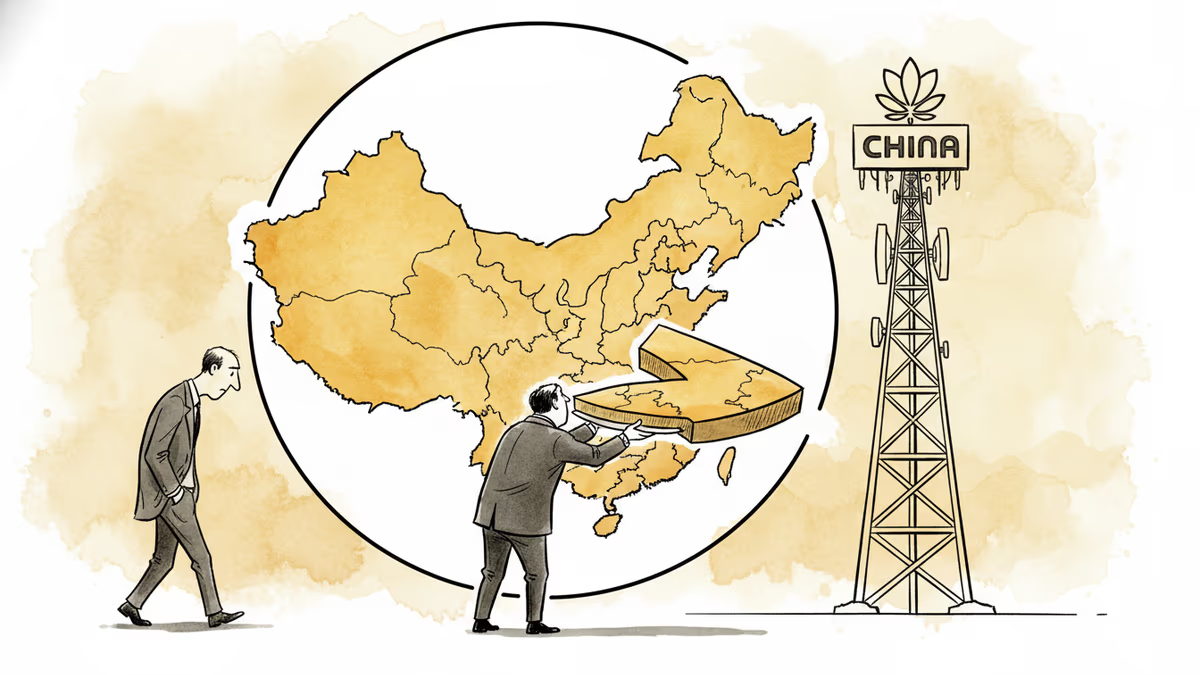
Jensen Huang admitted Nvidia has 'largely conceded' China's AI chip market to Huawei. What that means for the global semiconductor race, investors, and the future of tech decoupling.
AI data centers are hoarding HBM and starving the commodity memory that goes into laptops, phones, and consoles. Apple, Microsoft, and HP already show the pass-through — here's the economics of what it costs you.
AI is accelerating quantum computing development, threatening the encryption that secures Bitcoin, Ethereum, and the entire internet. Security experts warn the arms race has already begun.
Nvidia posted 85% revenue growth and a $80B buyback. Its stock still dropped — for the fourth straight post-earnings quarter. Here's what that tells us about where AI investing stands right now.
Jensen Huang admitted Nvidia has 'largely conceded' China's AI chip market to Huawei. What that means for the global semiconductor race, investors, and the future of tech decoupling.
Thoughts
Share your thoughts on this article
Sign in to join the conversation