

Why Notion AI Agent V3 Ditched Complex Code for Plain English
Discover how Notion AI Agent V3 achieved a massive performance boost by replacing complex data modeling with plain text and markdown. Insights from AI Lead Ryan Nystrom.
Complexity was the enemy of progress. When Notion first started experimenting with LLMs, they went heavy on advanced code generation and rigid schemas. It didn't work. Now, the team has pivoted to a startlingly simple approach: talking to AI like a human. Ryan Nystrom, Notion's AI engineering lead, says this "rewiring" is exactly what led to their most successful AI launch ever.
How Notion Rewired its AI Agent Architecture
Engineers are trained to love deterministic systems, but LLMs thrive on intuition. Nystrom's team abandoned "pretty complicated rendering" like JSON or XML in favor of Markdown. By representing Notion pages as plain text, they allowed the model to read, search, and edit content just as a person would. The results were immediate. Released in September 2025, Notion V3 and its customizable AI agents have seen usage patterns that Nystrom calls a "step function improvement."

The 150,000 Token Sweet Spot
More data isn't always better. The team discovered that stuffing the context window leads to a "slippery slope" of latency and inaccuracy. They found the golden ratio at 100,000 to 150,000 tokens. Beyond this, the model's performance degrades significantly. To keep the AI sharp, they also limited the "menu" of tools available to the agents, preventing the paradox of choice that often confuses complex models.
Authors
Related Articles
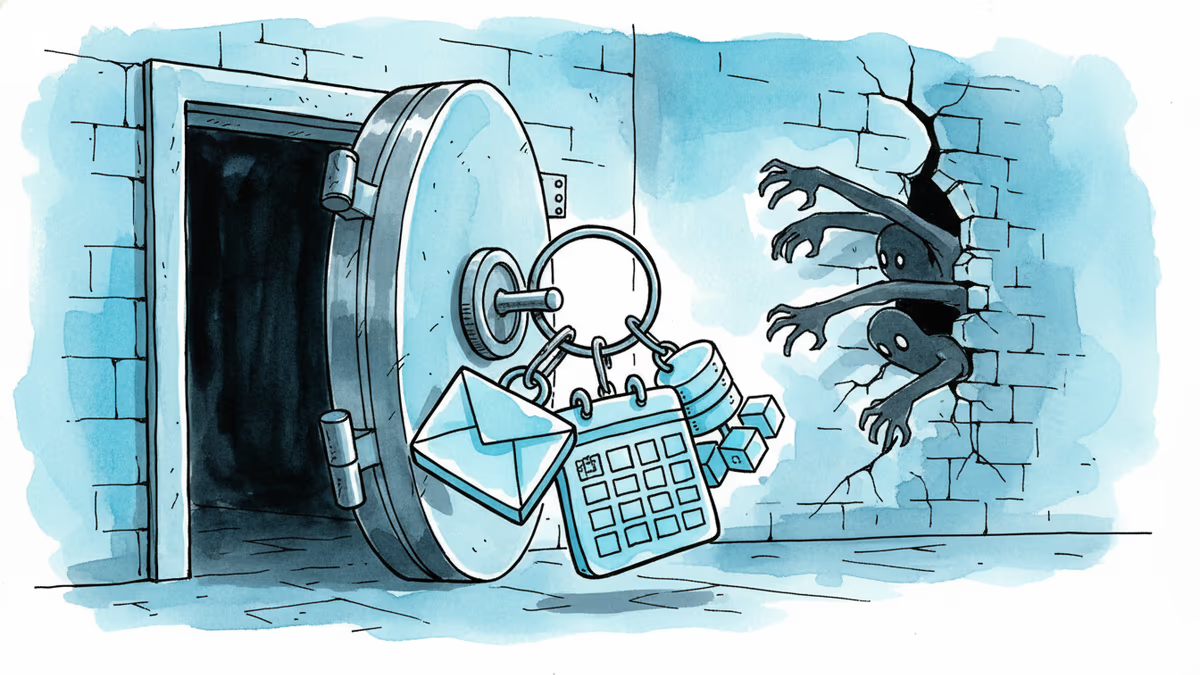
A critical vulnerability in Starlette—downloaded 325 million times per week—puts millions of AI agent servers at risk, exposing stored credentials for email, databases, and third-party services.

A small but growing group of developers has gone all-in on AI coding agents like Claude Code and OpenClaw. History suggests the rest of us won't be far behind.
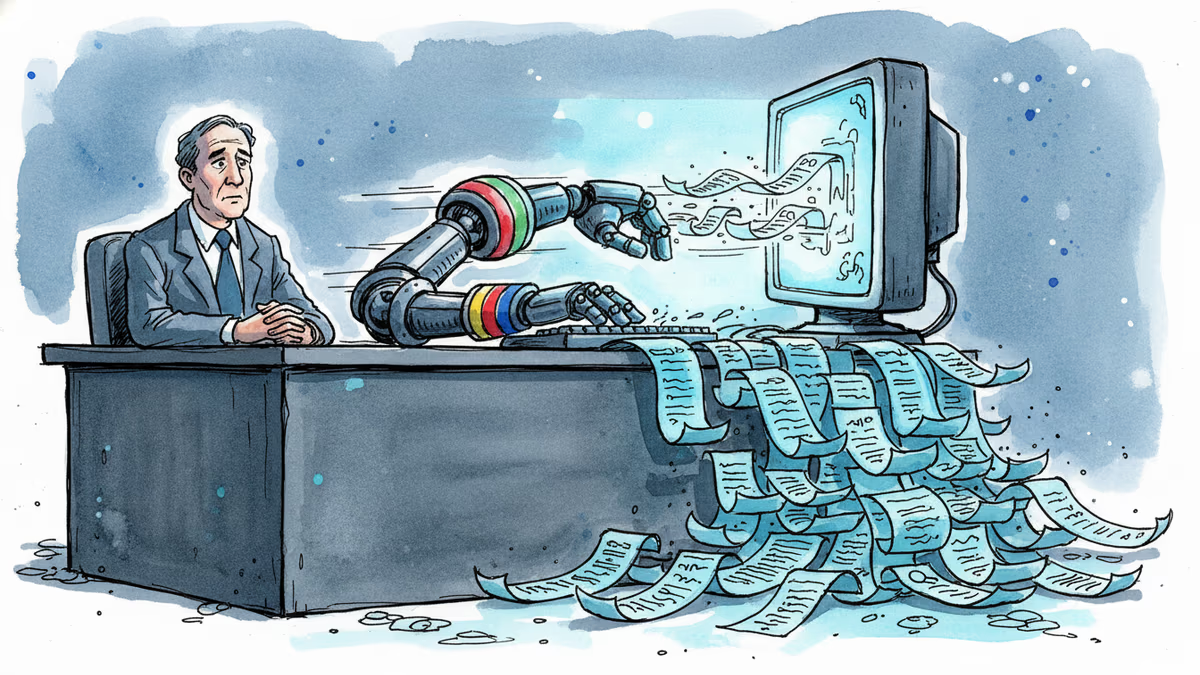
Google is building AI agents that search the web proactively, without user prompting. That's not just a product update — it's a fundamental shift in who controls the information you receive.

OpenAI has reorganized for the second time in a month, merging ChatGPT and Codex into a single agentic platform under president Greg Brockman's unified product leadership.
A critical vulnerability in Starlette—downloaded 325 million times per week—puts millions of AI agent servers at risk, exposing stored credentials for email, databases, and third-party services.
A small but growing group of developers has gone all-in on AI coding agents like Claude Code and OpenClaw. History suggests the rest of us won't be far behind.
Google is building AI agents that search the web proactively, without user prompting. That's not just a product update — it's a fundamental shift in who controls the information you receive.
OpenAI has reorganized for the second time in a month, merging ChatGPT and Codex into a single agentic platform under president Greg Brockman's unified product leadership.
Thoughts
Share your thoughts on this article
Sign in to join the conversation