
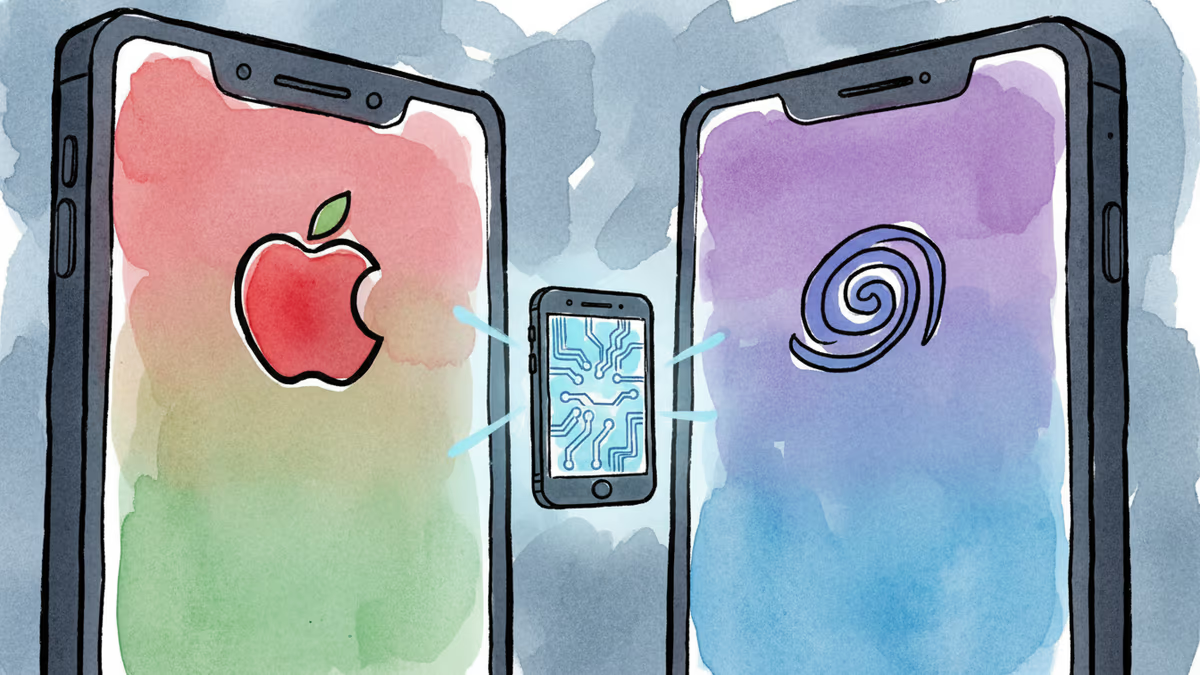
Nothing's $499 Gamble: Can Gimmicks Beat Giants?
Nothing launches Phone (4a) Pro in the US for $499, but without carrier partnerships, the UK company still faces an uphill battle against established players.
$499 and Still No US Carriers: Nothing's Uphill Battle
Google's Pixel 10a hits shelves today, Apple announced its iPhone 17e this week, and now Nothing—the UK startup from OnePlus founder Carl Pei—is throwing its hat in the ring. The company unveiled the Nothing Phone (4a) and (4a) Pro in London, but after four years, it's still struggling to crack the US market.
Here's the telling detail: only the Pro model will be sold in America, exclusively through Amazon for $499. No carrier partnerships. No retail presence. For a market where 80% of consumers buy phones through carriers, this feels like playing basketball with one hand tied.
Nothing spokesperson Lewis Hopkins says they picked the model "expected to perform better," but that's corporate speak for "the US isn't our priority." The company is opening stores in Bengaluru, Tokyo, and eventually New York, but retail expansion can't fix the carrier problem.
The Glyph Strategy: Innovation or Gimmick?
Nothing's calling card remains those LED strips on the back—the Glyph lights. This time, the regular (4a) gets a simplified "Glyph Bar" while the Pro features the souped-up "Glyph Matrix" from last year's flagship. Your Uber's arrival triggers a slowly dimming light bar. Your spouse calling creates a unique flash pattern. It's undeniably cool.
But here's the question: does cool sell phones? The iPhone became dominant not because of flashy lights, but because of ecosystem lock-in. Samsung succeeded with Galaxy integration. Nothing's betting that visual distinctiveness can compete with functional ecosystems—a risky wager.

The company's also learned from mistakes. The camera bump is now 50% more durable—important since the previous Pro's camera glass cracked from a simple drop. Small improvements, but they show Nothing is listening to users.
Specs That Matter (And Don't)
The Phone (4a) Pro packs respectable hardware: Snapdragon 7 Gen 4 chipset, 50MP main camera with 3.5x optical zoom, and a 5,080mAh battery. That telephoto lens is notable—few sub-$500 phones offer proper optical zoom beyond the Pixel 10a's dual setup.
But the software support tells a different story. Nothing promises 3 Android OS upgrades and 6 years of security patches. Compare that to Google and Samsung's 7-year commitments, and you see the startup disadvantage. When consumers keep phones longer, software longevity matters more than launch-day specs.
The Headphone (a) launch is intriguing—$199 over-ears with 75-hour battery life (ANC on). Audio might be Nothing's better bet. Apple doesn't dominate headphones like it does phones, and Nothing's transparent aesthetic could carve out a niche.
The Carrier Conundrum
Nothing's US strategy reveals a fundamental misunderstanding of American phone buying. While unlocked phones work fine technically, the carrier subsidy system shapes consumer behavior. Why pay $499 upfront when you can get a "free" Galaxy A55 with a trade-in?
OnePlus faced similar challenges before partnering with T-Mobile. Google struggled until Verizon picked up the Pixel. Even Samsung needed carrier relationships to challenge Apple. Nothing seems to believe it can skip this step—a bold assumption.
The Amazon exclusivity doesn't help either. Prime members might discover the phone through recommendations, but it's hardly the same as carrier store visibility.
Authors
Related Articles

MWC 2026 showcases Honor's Robot Phone and other shape-shifting devices that challenge everything we know about mobile design. Are we ready for phones that transform themselves?
MWC 2026 promises breakthrough innovations from Xiaomi's European push to Honor's robot pivot. Here's what matters beyond the headlines.
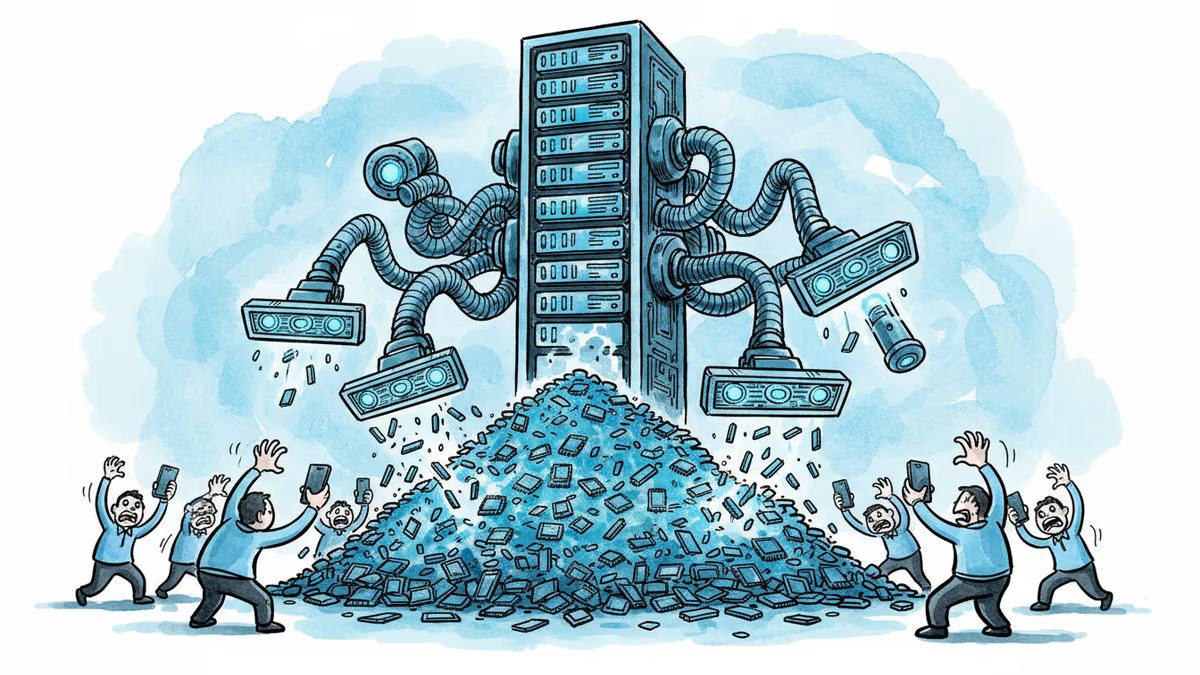
Smartphone shipments to plummet 12.9% as AI giants hoard RAM. Prices hit record $523 while memory-hungry data centers squeeze out mobile manufacturers.

AI's hunger for RAM triggers worst smartphone decline in decade. Shipments drop 12.9% as prices surge 14%. The memory wars reshape mobile forever.
MWC 2026 showcases Honor's Robot Phone and other shape-shifting devices that challenge everything we know about mobile design. Are we ready for phones that transform themselves?
MWC 2026 promises breakthrough innovations from Xiaomi's European push to Honor's robot pivot. Here's what matters beyond the headlines.
Smartphone shipments to plummet 12.9% as AI giants hoard RAM. Prices hit record $523 while memory-hungry data centers squeeze out mobile manufacturers.
AI's hunger for RAM triggers worst smartphone decline in decade. Shipments drop 12.9% as prices surge 14%. The memory wars reshape mobile forever.
Thoughts
Share your thoughts on this article
Sign in to join the conversation