
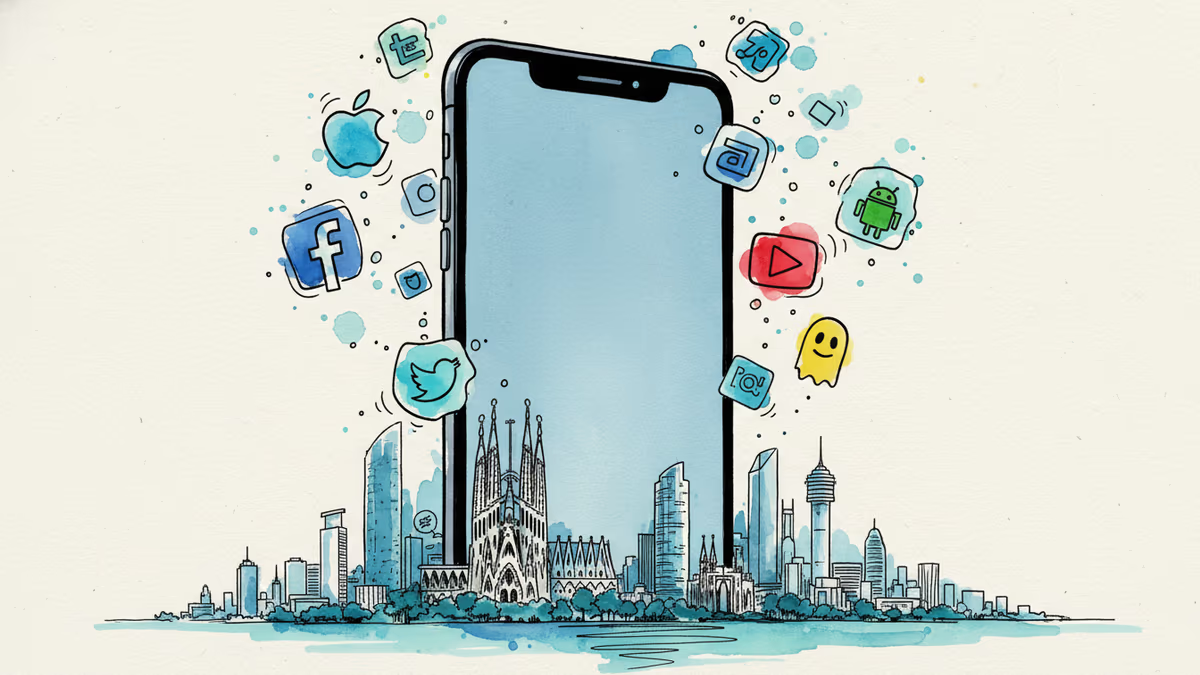
The Future of Mobile Gets Decided in Barcelona Next Week
MWC 2026 promises breakthrough innovations from Xiaomi's European push to Honor's robot pivot. Here's what matters beyond the headlines.
250,000 people are heading to Barcelona next week. Not for tourism—for Mobile World Congress 2026, the event that actually shapes what ends up in your pocket.
While CES grabs headlines with AI washing machines and concept cars, MWC is where the mobile industry makes real decisions. This year's lineup suggests we're at an inflection point.
China's European Gambit
Xiaomi is bringing its 17 series and 17 Ultra to Europe, marking a bold premium play. The company that built its reputation on "flagship killer" pricing is now pricing the 17 Ultra at €899—directly challenging Samsung's Galaxy S26.
This isn't just about one product launch. It's about Chinese brands graduating from "cheap alternative" to "legitimate choice." Honor, spun off from Huawei three years ago, is making an even bolder bet: pivoting entirely to humanoid robotics while calling its next device a "Robot Phone."
The timing isn't coincidental. As US-China tech tensions persist, European markets become crucial battlegrounds for Chinese manufacturers seeking growth beyond their home turf.
Nothing's London Gambit
Nothing is playing a different game entirely. Instead of a traditional MWC announcement, the company is teasing details about its Phone 4A before a March 5th London launch—creating a "Barcelona vs London" narrative.
For a company that's only four years old, this confidence is striking. Nothing has carved out a unique position with transparent designs and unconventional marketing, appealing to consumers tired of incremental iPhone updates and Samsung's feature bloat.

The Modular Phone Revival
Tecno is taking another swing at modular phones—a concept that's failed spectacularly before. Google's Project Ara never shipped. LG's G5 was a commercial disaster. Motorola's Moto Mods fizzled out.
So why try again? The answer might lie in sustainability concerns and right-to-repair movements gaining momentum globally. If consumers increasingly care about device longevity over constant upgrades, modular design suddenly makes sense.
But the technical challenges remain daunting: waterproofing, durability, and the inevitable thickness that comes with modular connections.
The Establishment's Response
Samsung and Google will be there with their already-announced Galaxy S26 and Pixel 10A, focusing more on B2B partnerships than consumer excitement. Apple, characteristically, is launching something the same week—but from Cupertino, not Barcelona.
This dynamic reveals something important: MWC has become less about major consumer announcements and more about industry relationship-building and B2B technology showcasing.
Beyond the Headlines
The real action happens in the oddities. Last year brought detachable camera lenses, folding laptop screens, and solar-powered handsets. None became mainstream, but elements of each filtered into products we use today.
This year's "weird" innovations—from Taara Beam's invisible light connectivity to various AI-powered accessories—might seem like science fiction. But they're testing grounds for tomorrow's mainstream features.
Authors
Related Articles

Even at the world's largest mobile trade show, the Trump phone was nowhere to be found. What does this absence reveal about politics meeting tech?
Nothing launches Phone (4a) Pro in the US for $499, but without carrier partnerships, the UK company still faces an uphill battle against established players.

MWC 2026 showcases Honor's Robot Phone and other shape-shifting devices that challenge everything we know about mobile design. Are we ready for phones that transform themselves?
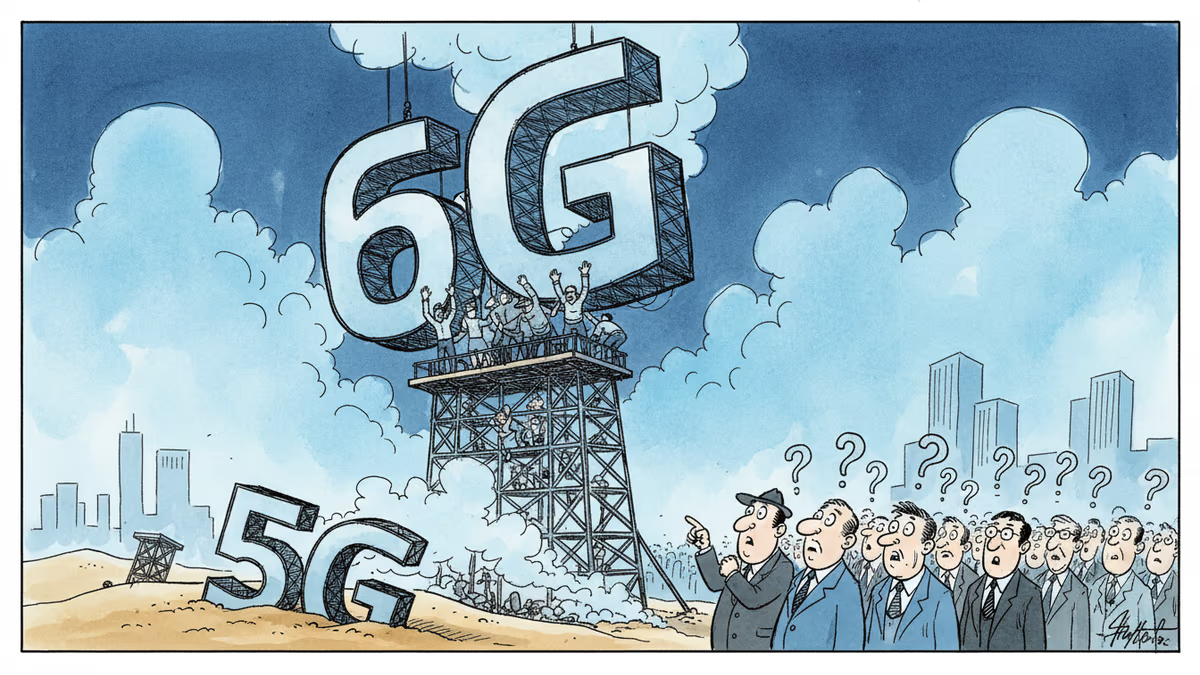
Mobile World Congress 2026 kicks off with 6G discussions, but 5G's promised revolution remains largely unfulfilled. What does the next generation really mean?
Even at the world's largest mobile trade show, the Trump phone was nowhere to be found. What does this absence reveal about politics meeting tech?
Nothing launches Phone (4a) Pro in the US for $499, but without carrier partnerships, the UK company still faces an uphill battle against established players.
MWC 2026 showcases Honor's Robot Phone and other shape-shifting devices that challenge everything we know about mobile design. Are we ready for phones that transform themselves?
Mobile World Congress 2026 kicks off with 6G discussions, but 5G's promised revolution remains largely unfulfilled. What does the next generation really mean?
Thoughts
Share your thoughts on this article
Sign in to join the conversation