
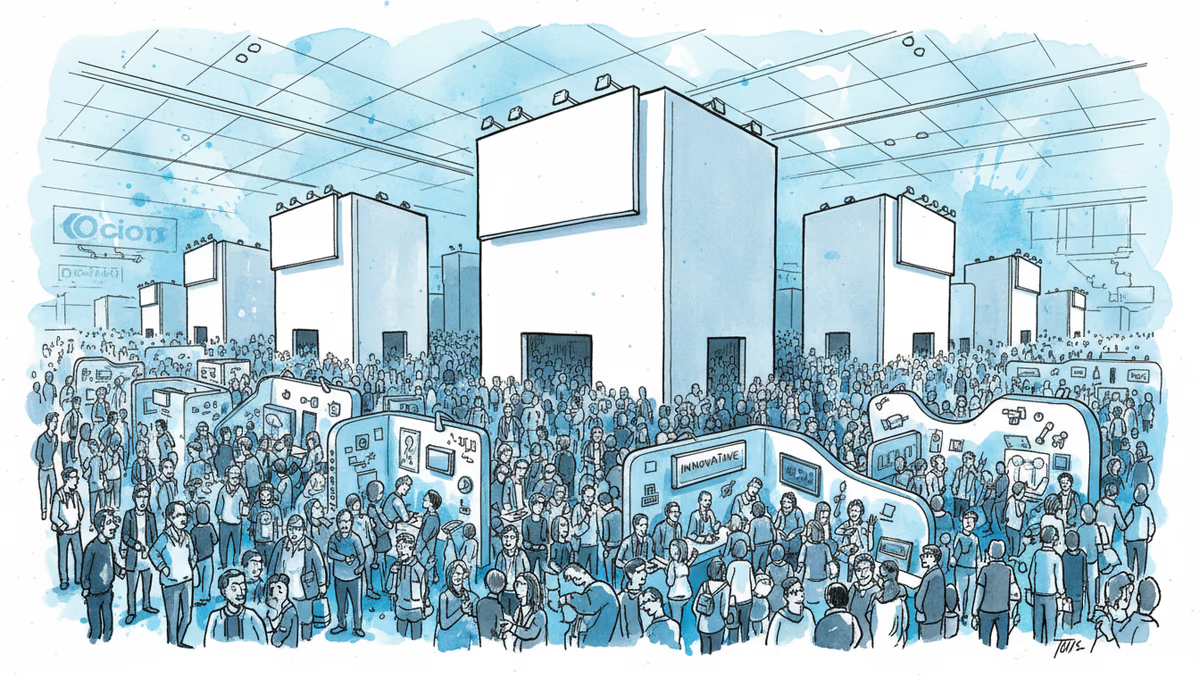
Why Mobile World Congress Matters Again When Phones Got Boring
MWC 2026 is reclaiming relevance as Chinese manufacturers and niche players drive smartphone innovation while major brands play it safe.
Remember when every February meant breathless anticipation for the next smartphone breakthrough? When Samsung, Sony, LG, and HTC turned Mobile World Congress into tech's equivalent of Fashion Week? Those days seemed over as major brands migrated to their own carefully choreographed events.
But MWC 2026 is proving the obituaries were premature. The show's just got new protagonists.
The Chinese Offensive
Honor's robot phone isn't just a concept anymore—it's actually switching on this year. Meanwhile, a wave of Chinese manufacturers are treating MWC as their global coming-out party. These aren't the budget knockoff brands of a decade ago. They're the companies pushing boundaries that established players won't touch.
Why MWC? Simple math. While Apple and Samsung can command attention with solo acts, emerging brands need the collective energy of the world's biggest mobile showcase. For companies fighting for mindshare in Europe and beyond, MWC remains the most efficient way to reach buyers, carriers, and tech press simultaneously.
The strategy's working. Chinese brands now hold over 50% of global smartphone market share, up from just 30% five years ago.
The Specialist Revolution

Meanwhile, the "boring phone" narrative completely misses what's happening in specialized segments. Rugged device makers and battery-focused manufacturers are using MWC to showcase products that make mainstream flagships look fragile.
These aren't consumer toys. When oil rig workers need a phone that survives 2-meter drops onto concrete, or when field researchers require 22,000mAh batteries for week-long expeditions, the latest iPhone camera upgrade feels irrelevant. Companies like CAT and Blackview aren't just filling niches—they're proving there's still room for radical hardware innovation.
What This Means for the Giants
The irony is palpable. As major brands perfect incremental improvements, the real innovation is happening at the margins. Samsung's Galaxy S26 will undoubtedly be excellent, but will it be surprising? Apple's next iPhone will sell millions, but will it challenge assumptions about what phones can do?
Chinese manufacturers and specialist builders aren't constrained by the need to please everyone. They can afford to be weird, experimental, even failure-prone in ways that trillion-dollar companies can't.
The Carrier Perspective
For mobile operators, this shift creates both opportunity and headache. Diverse hardware means more options for different customer segments, but it also means supporting more devices, managing more relationships, and explaining more complexity to consumers.
European carriers, in particular, are watching Chinese brand expansion carefully. These companies offer compelling hardware at aggressive prices, but questions about long-term software support and data privacy remain.
Authors
Related Articles
Even at the world's largest mobile trade show, the Trump phone was nowhere to be found. What does this absence reveal about politics meeting tech?
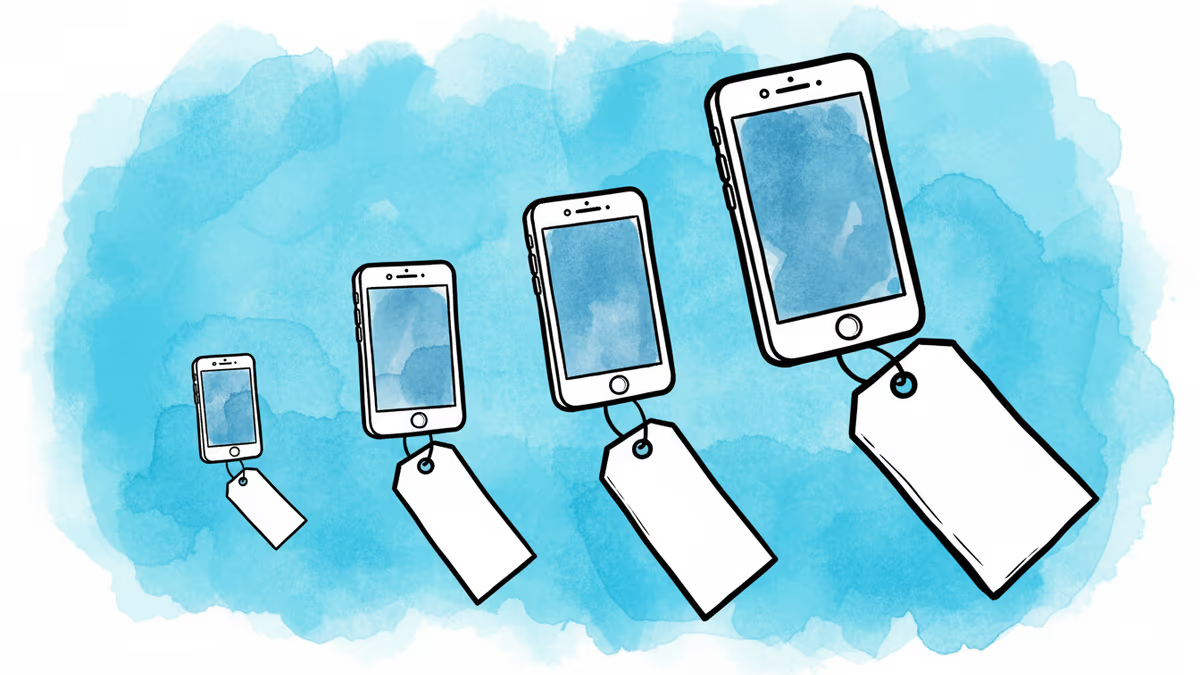
Complete breakdown of iPhone 17 series with 5 models from $599-$1,199. Analysis of Apple's new Air model strategy and what it means for smartphone market competition.
iPhone 17E starts at $599 with 256GB storage and MagSafe compatibility. How Apple's budget push threatens Samsung and Chinese brands in the competitive mid-range market.
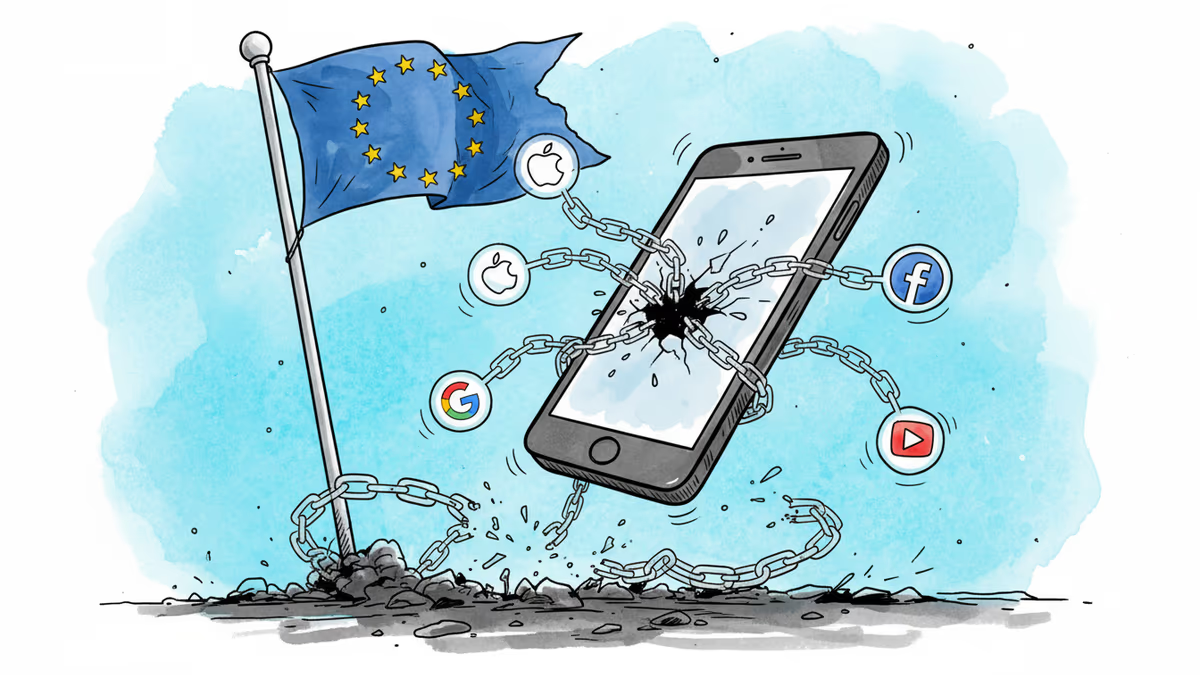
After 13 years, Finland's Jolla launches new smartphone with Linux-based OS, no Google services. 10,000 pre-orders signal growing demand for digital sovereignty in post-Trump tech landscape.
Even at the world's largest mobile trade show, the Trump phone was nowhere to be found. What does this absence reveal about politics meeting tech?
Complete breakdown of iPhone 17 series with 5 models from $599-$1,199. Analysis of Apple's new Air model strategy and what it means for smartphone market competition.
iPhone 17E starts at $599 with 256GB storage and MagSafe compatibility. How Apple's budget push threatens Samsung and Chinese brands in the competitive mid-range market.
After 13 years, Finland's Jolla launches new smartphone with Linux-based OS, no Google services. 10,000 pre-orders signal growing demand for digital sovereignty in post-Trump tech landscape.
Thoughts
Share your thoughts on this article
Sign in to join the conversation