
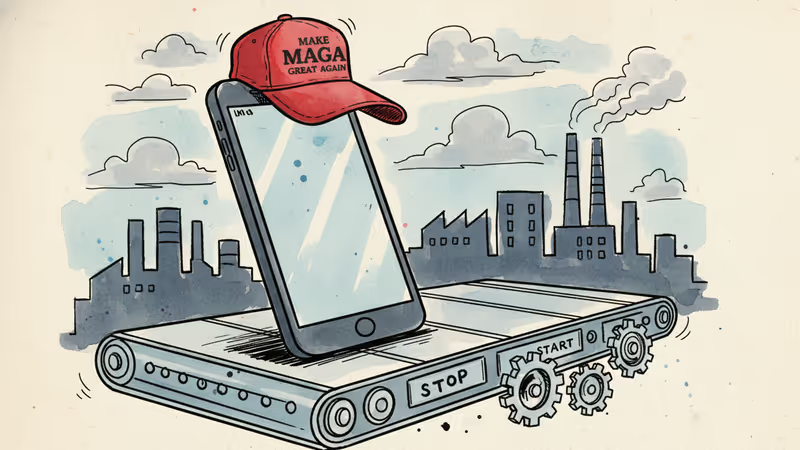
The Trump Phone Is Real (Maybe) - Inside the Year-Long Delay
Trump Mobile executives finally show their T1 phone after months of silence, revealing why specs keep changing and when it might actually launch.
After over a year of delays and radio silence, the Trump phone has finally been seen - sort of. Not in person, but through a pixelated video call that felt more like a tech support session than a product demo.
The Verge managed to pin down Trump Mobile executives Don Hendrickson and Eric Thomas for an hour-long interview, where they showed off their T1 phone and explained why it's taken so long to reach market. The short answer? Everything that could go wrong, did.
A Phone That Keeps Changing
The T1's specs have been a moving target since day one. What started as a premium flagship has morphed into something closer to a mid-range device. The executives blame supply chain issues and market conditions, but the constant revisions suggest deeper problems.
The most obvious change is visual - gone is the prominent T1 logo, replaced by a more generic smartphone design. This isn't just aesthetics; it's about manufacturing costs and mass production capabilities. "We want to make it accessible to more people at a reasonable price," Thomas explained, which sounds like corporate speak for "we had to cut corners."
Hardware specs have been downgraded multiple times. What was once positioned as a premium device now sits firmly in mid-tier territory. For a phone trading on the Trump brand's luxury associations, this presents an interesting contradiction.
The Political Branding Dilemma

Here's the central challenge: how do you build a mainstream tech product around a polarizing political figure? Trump Mobile needs to appeal beyond the MAGA base to achieve meaningful sales numbers, but the brand name itself limits that reach.
App store access remains questionable. Both Google Play and the Apple App Store could potentially restrict distribution, forcing users toward alternative app markets with limited selection. Major carriers might also hesitate to stock the device in their retail locations.
The executives talk about building "our own ecosystem," but they're still dependent on Android as the underlying operating system. Creating a truly independent platform would require billions in investment and years of development - resources Trump Mobile clearly lacks.
Market Reality Check
The smartphone market is notoriously difficult for newcomers. Samsung and Apple control over 70% of global sales, with Chinese manufacturers like Xiaomi and Oppo fighting for scraps. Political branding might generate initial buzz, but it won't sustain long-term sales without competitive features and pricing.
Trump's core supporters skew older and less tech-savvy - not exactly the demographic driving smartphone innovation. Meanwhile, younger consumers who do drive tech adoption are less likely to embrace politically branded devices.
The executives claim they're targeting a mid-2026 launch, but given the year-plus delay already, skepticism is warranted. Each postponement erodes credibility and gives competitors more time to advance.
The answer might determine whether political branding becomes a viable strategy for tech products - or remains a cautionary tale.
Authors
Related Articles
Even at the world's largest mobile trade show, the Trump phone was nowhere to be found. What does this absence reveal about politics meeting tech?
Complete breakdown of iPhone 17 series with 5 models from $599-$1,199. Analysis of Apple's new Air model strategy and what it means for smartphone market competition.
iPhone 17E starts at $599 with 256GB storage and MagSafe compatibility. How Apple's budget push threatens Samsung and Chinese brands in the competitive mid-range market.
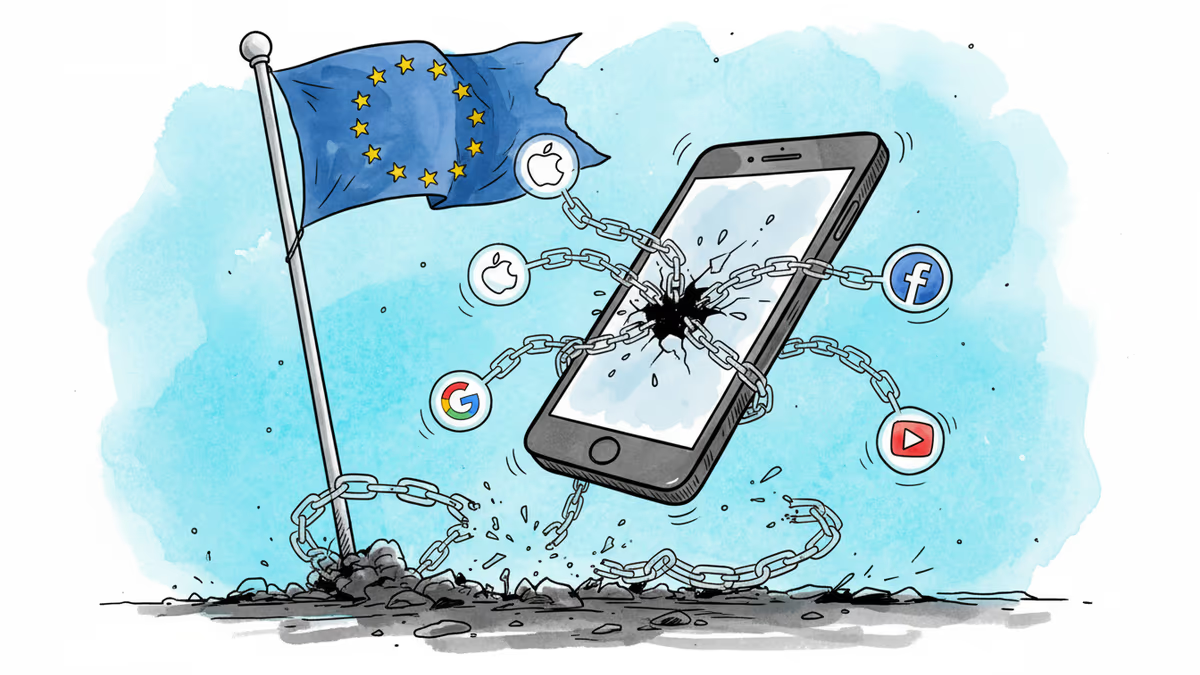
After 13 years, Finland's Jolla launches new smartphone with Linux-based OS, no Google services. 10,000 pre-orders signal growing demand for digital sovereignty in post-Trump tech landscape.
Even at the world's largest mobile trade show, the Trump phone was nowhere to be found. What does this absence reveal about politics meeting tech?
Complete breakdown of iPhone 17 series with 5 models from $599-$1,199. Analysis of Apple's new Air model strategy and what it means for smartphone market competition.
iPhone 17E starts at $599 with 256GB storage and MagSafe compatibility. How Apple's budget push threatens Samsung and Chinese brands in the competitive mid-range market.
After 13 years, Finland's Jolla launches new smartphone with Linux-based OS, no Google services. 10,000 pre-orders signal growing demand for digital sovereignty in post-Trump tech landscape.
Thoughts
Share your thoughts on this article
Sign in to join the conversation