
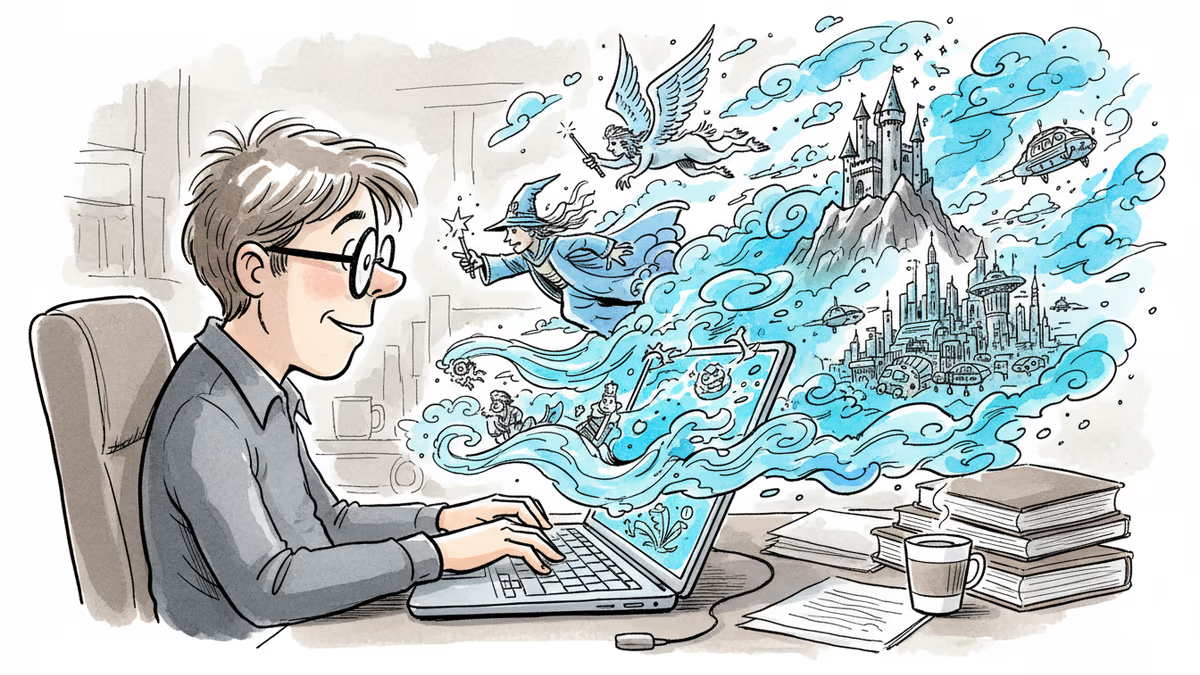
Your Notes Just Became Movies: Google's Latest AI Breakthrough
Google NotebookLM now transforms text notes into fully animated cinematic videos using multiple AI models. A game-changer for content creation or threat to creative industries?
When 10 Minutes of Typing Becomes 10 Minutes of Cinema
Google just crossed a line that seemed impossible 12 months ago. NotebookLM can now transform your research notes into fully animated "cinematic" videos. We're not talking about glorified slideshows anymore—this is AI directing, animating, and producing complete visual stories.
The upgraded video overview feature combines multiple Google AI models, including Gemini 3, Nano Banana Pro, and Veo 3. According to Google, Gemini "determines the best narrative, visual style and format, and even refines its own work to ensure consistency." Translation: AI is now the director, cinematographer, and editor rolled into one.
Content Creators: Excited or Terrified?
The response from the creator economy has been split down the middle. TikTok educators are already experimenting, with some reporting they can now produce 5x more content in the same timeframe. "I used to spend 8 hours editing a 15-minute explainer video," says Sarah Chen, an educational content creator. "Now I spend 2 hours writing better scripts."

But video editors aren't celebrating. The Motion Picture Editors Guild has called for "urgent discussions about AI's role in post-production." Freelance editor Marcus Rodriguez puts it bluntly: "We're watching our industry get automated in real-time."
The Bigger Picture: Who Controls the Story?
This isn't just about efficiency—it's about narrative control. When AI determines "the best narrative structure," whose storytelling conventions is it following? Early users report the system favors Western, Hollywood-style pacing and visual metaphors.
Netflix and Disney are reportedly testing similar internal tools. If major studios can generate hundreds of animated shorts daily, what happens to independent animators? What about cultural diversity in storytelling when algorithms optimize for "engagement"?
The democratization argument is compelling: anyone can now create professional-looking content. But democratization often leads to homogenization. Will we get 1,000 unique voices or 1,000 variations of the same AI-optimized formula?
Authors
Related Articles
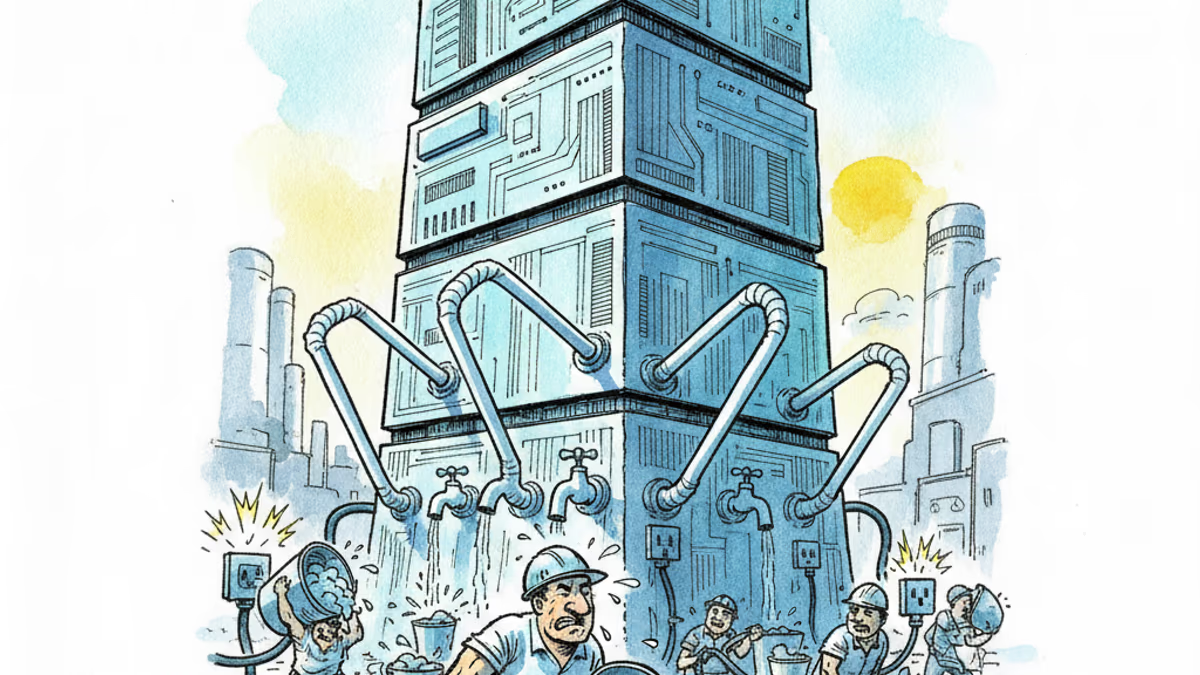
Samsung and SK unveiled a chip and AI investment package worth thousands of trillions of won on June 29. The headline number swings wildly by outlet, but the real contest isn't capital — it's water and power.
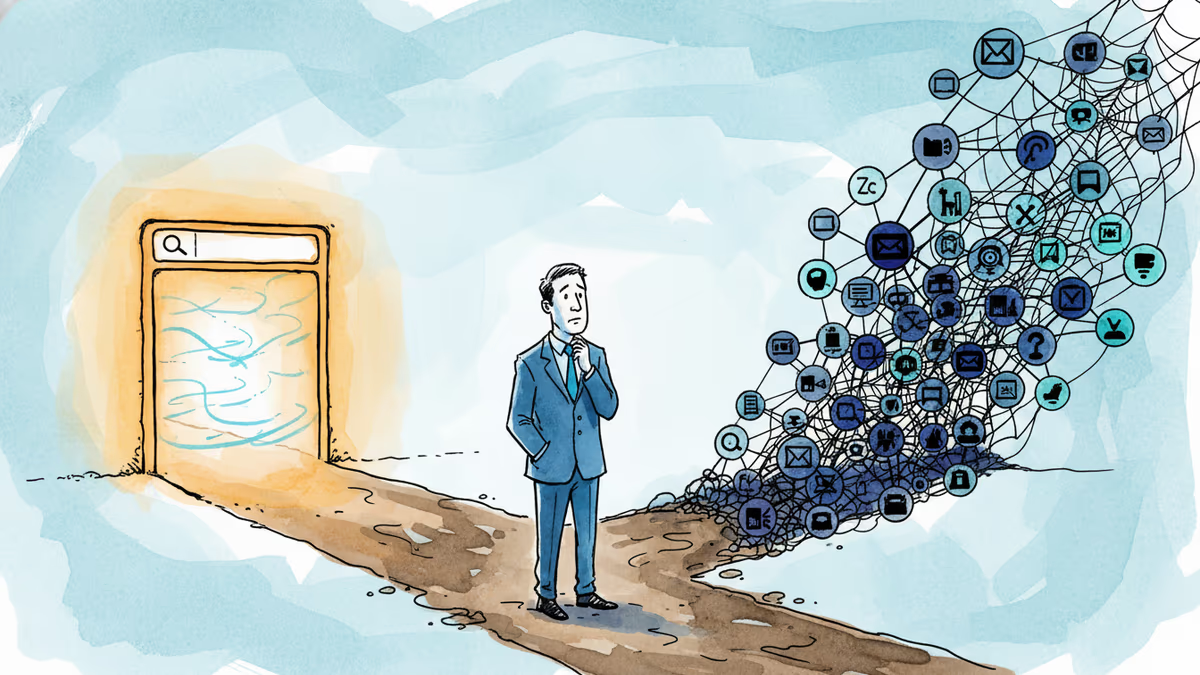
In a post-Google I/O interview, Sundar Pichai acknowledged flawed search results, real AI anxiety, and an AGI timeline that makes the label irrelevant. Here's what he said — and what it means.
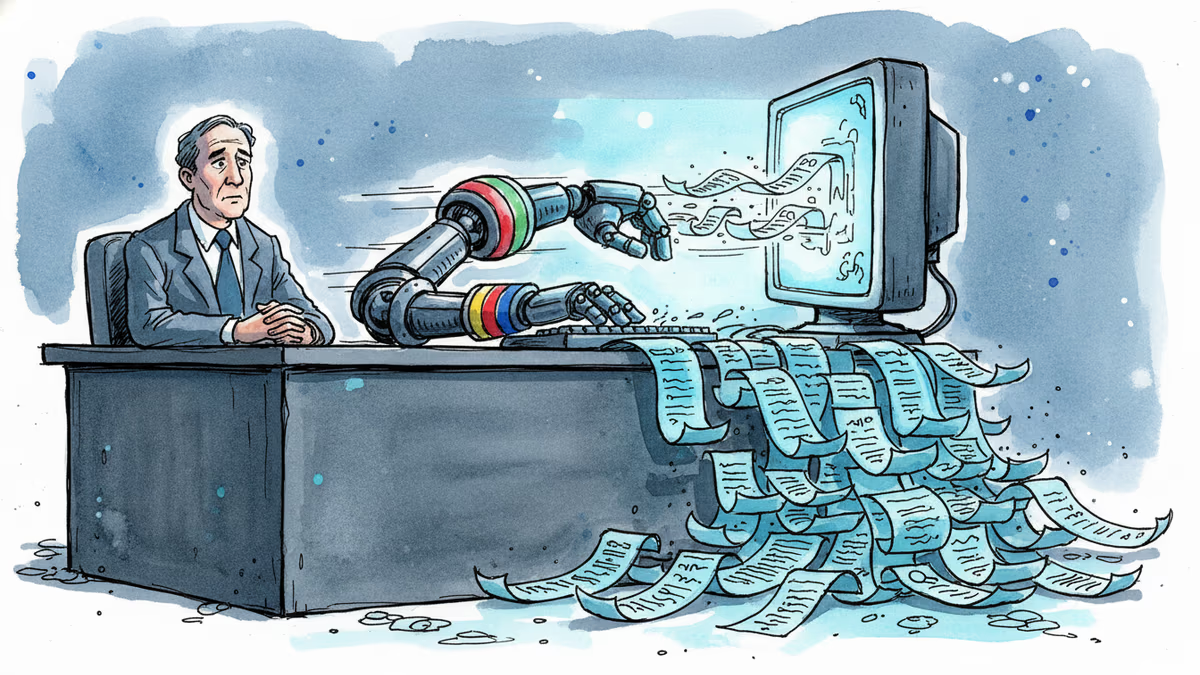
Google is building AI agents that search the web proactively, without user prompting. That's not just a product update — it's a fundamental shift in who controls the information you receive.
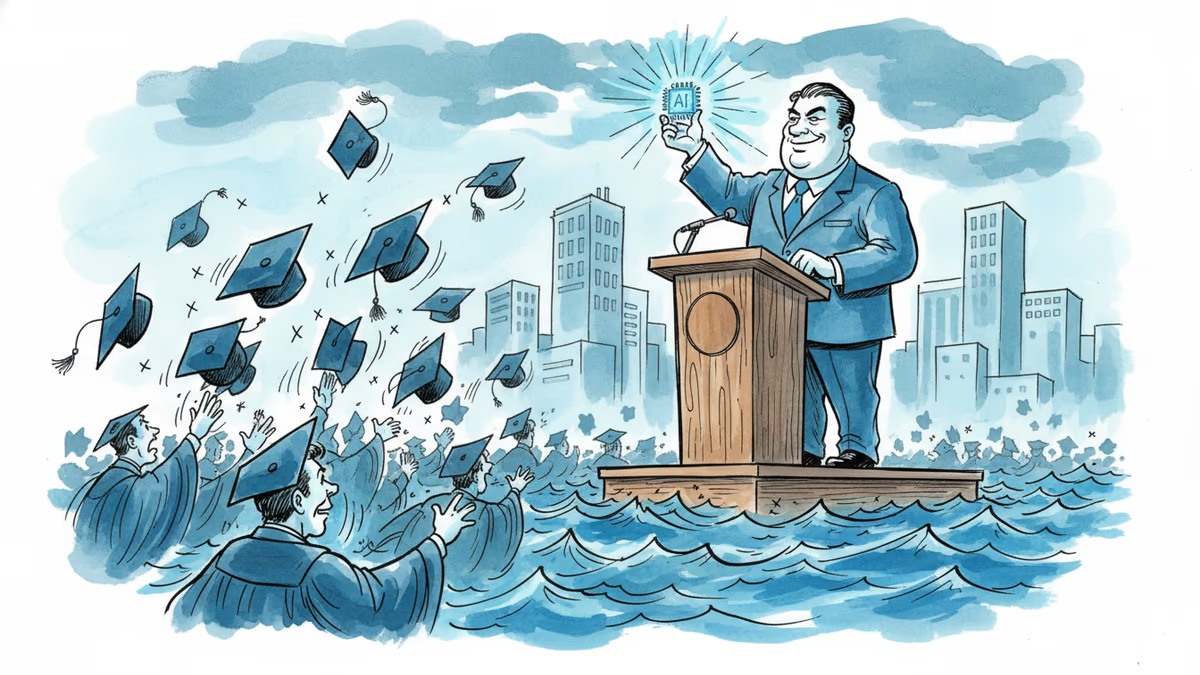
Viral videos show 2026 graduates jeering executives who praise AI at commencement ceremonies. It's not just rudeness — it's a signal about who pays for technological optimism.
Samsung and SK unveiled a chip and AI investment package worth thousands of trillions of won on June 29. The headline number swings wildly by outlet, but the real contest isn't capital — it's water and power.
In a post-Google I/O interview, Sundar Pichai acknowledged flawed search results, real AI anxiety, and an AGI timeline that makes the label irrelevant. Here's what he said — and what it means.
Google is building AI agents that search the web proactively, without user prompting. That's not just a product update — it's a fundamental shift in who controls the information you receive.
Viral videos show 2026 graduates jeering executives who praise AI at commencement ceremonies. It's not just rudeness — it's a signal about who pays for technological optimism.
Thoughts
Share your thoughts on this article
Sign in to join the conversation