
Apple AI Wearable Pin 2027: Cupertino Prepares to Counter OpenAI Hardware
Apple is reportedly developing an AI wearable pin for a 2027 release. Featuring two cameras and three mics, it aims to compete with OpenAI's upcoming hardware in the post-iPhone era.
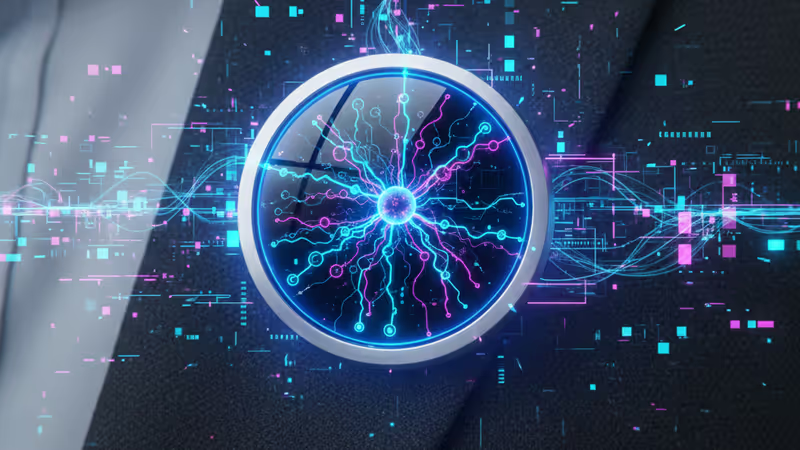
The post-smartphone era is moving out of your pocket and onto your lapel. Apple is reportedly developing a new AI pin, signaling a direct confrontation with OpenAI in the burgeoning AI hardware market.
Apple AI Wearable Pin 2027 Development and Specs
According to a report from The Information, the rumored device is a thin, circular disc made of aluminum and glass. Engineers are aiming for a size similar to an AirTag, though it's expected to be slightly thicker. The hardware includes two cameras—one standard and one wide-angle—along with three microphones, a physical button, and a speaker to facilitate seamless AI interaction.

| Category | Details |
|---|---|
| Target Release | 2027 |
| Launch Volume | 20 million units |
| Core Sensors | 2 Cameras, 3 Microphones |
| Design | Aluminum-and-glass circular shell |
The Race Against OpenAI and Market History
This news follows OpenAI's recent announcement regarding its intent to ship its first device by the second half of 2026. While Apple is accelerating development to stay competitive, it faces the shadow of Humane AI, a startup founded by Apple alums that recently collapsed after its own AI pin failed to gain traction.
Authors
Related Articles
Xreal's Project Aura debuted at Google I/O with OLED displays, hand tracking, and an IPO on the horizon. The industry has burned billions for a decade. So why does it feel like something has actually shifted?

OpenAI has reorganized for the second time in a month, merging ChatGPT and Codex into a single agentic platform under president Greg Brockman's unified product leadership.

After two weeks of witnesses calling him a liar, OpenAI CEO Sam Altman testified in his own defense, claiming Elon Musk tried to kill the company twice.

Sam Nelson, 19, died after following ChatGPT's advice to mix Kratom and Xanax. His parents are suing OpenAI for wrongful death, raising urgent questions about AI trust, liability, and design.
Xreal's Project Aura debuted at Google I/O with OLED displays, hand tracking, and an IPO on the horizon. The industry has burned billions for a decade. So why does it feel like something has actually shifted?
OpenAI has reorganized for the second time in a month, merging ChatGPT and Codex into a single agentic platform under president Greg Brockman's unified product leadership.
After two weeks of witnesses calling him a liar, OpenAI CEO Sam Altman testified in his own defense, claiming Elon Musk tried to kill the company twice.
Sam Nelson, 19, died after following ChatGPT's advice to mix Kratom and Xanax. His parents are suing OpenAI for wrongful death, raising urgent questions about AI trust, liability, and design.
Thoughts
Share your thoughts on this article
Sign in to join the conversation