
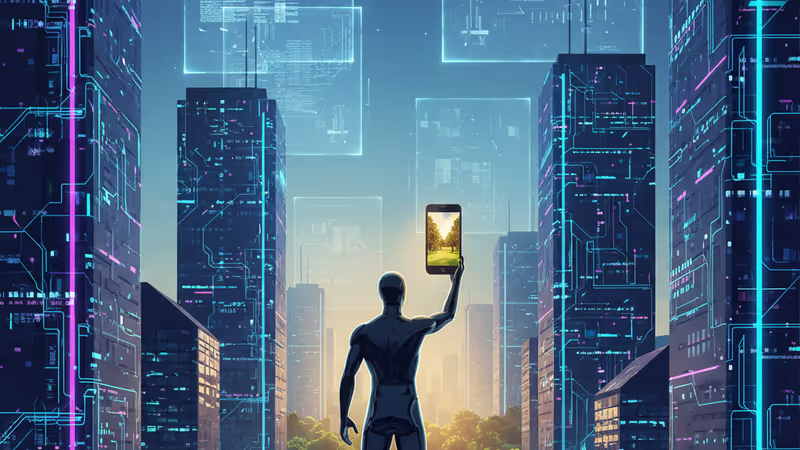
The 2016 Social Media Nostalgia Trap: Longing for a Pre-AI Internet
Discover why 5.2 million people are participating in the 2016 social media nostalgia trend on Instagram. Explore the contrast between the romanticized past and the reality of a pre-AI internet.
We hated 2016 while we lived it, but now we're obsessed with it. A 2016-themed "Add Yours" sticker has taken over Instagram, racking up over 5.2 million responses. On Spotify, user-generated 2016 playlists have surged by 790% since the start of the year, as users romanticize what they now call "the last good year."
The Rise of 2016 Social Media Nostalgia
According to TechCrunch, this isn't just a simple trip down memory lane. It's a reaction to the current state of the web. In 2016, "doomscrolling" wasn't a household term, and Twitter was still called Twitter. It was the summer of Pokémon Go, a moment before "The Algorithm" and "enshitification" reached a point of no return.

However, history tells a grimmer story. The actual year was marred by Brexit, the Zika virus, and intense political dread. Meme librarian Amanda Brennan recalls that back then, the internet was widely viewed as a chaotic mess. The current obsession conveniently skips over the anxiety that was palpable at the time.
Escaping the AI-Infested Present
For the younger generation, 2016 represents a digital era that felt more human. Google worked reliably, deepfakes were easy to spot, and teachers didn't have to scan every essay for ChatGPT hallmarks. As AI increasingly encroaches on every online interaction, the "nerdy" and community-driven internet of a decade ago looks like a lost paradise.
Authors
Related Articles
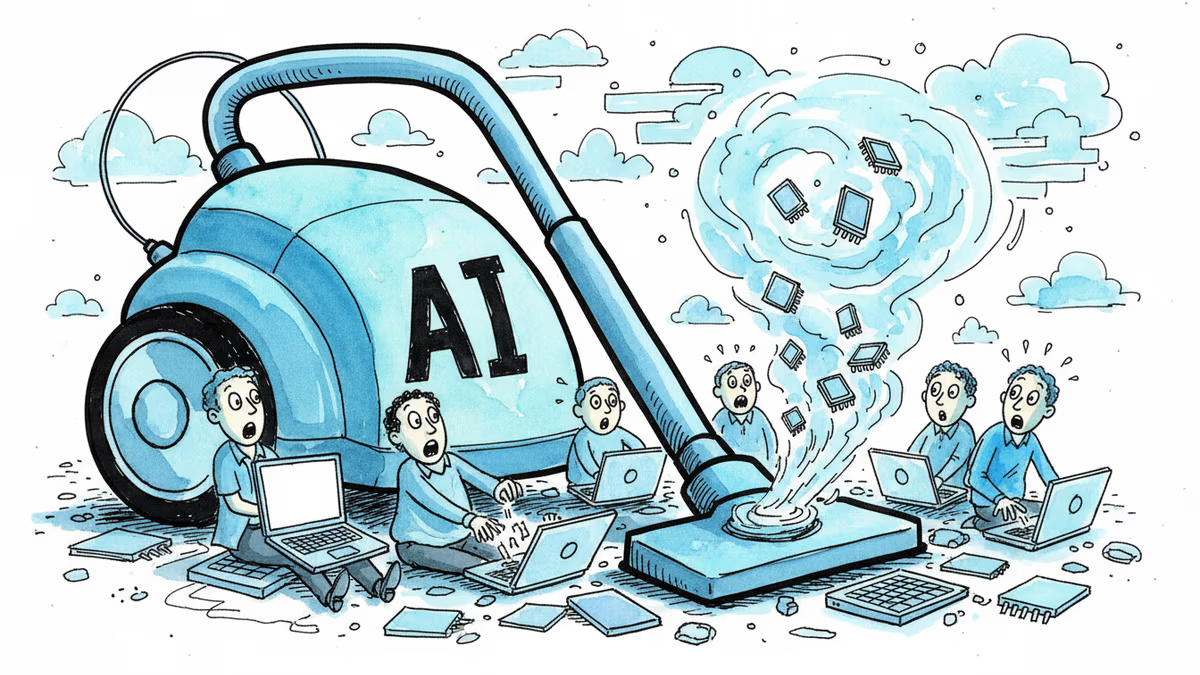
Apple's new MacBook Pro costs up to $400 more due to RAM shortages caused by AI data center demand, signaling broader tech industry pricing shifts ahead.
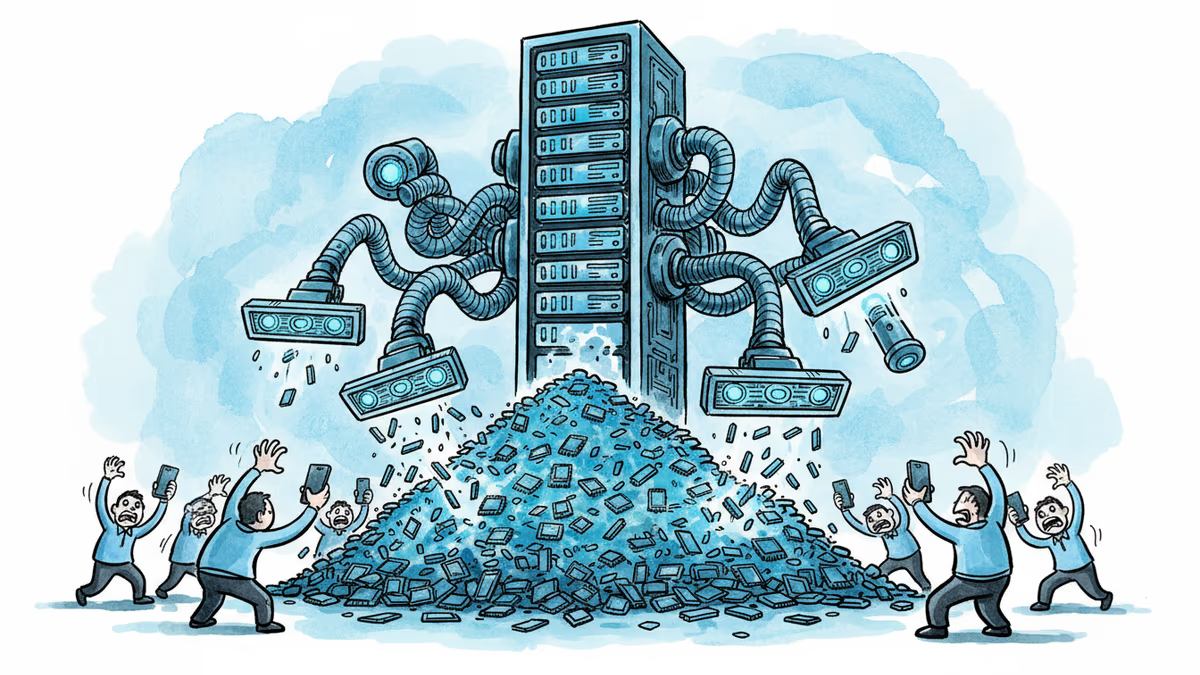
Smartphone shipments to plummet 12.9% as AI giants hoard RAM. Prices hit record $523 while memory-hungry data centers squeeze out mobile manufacturers.
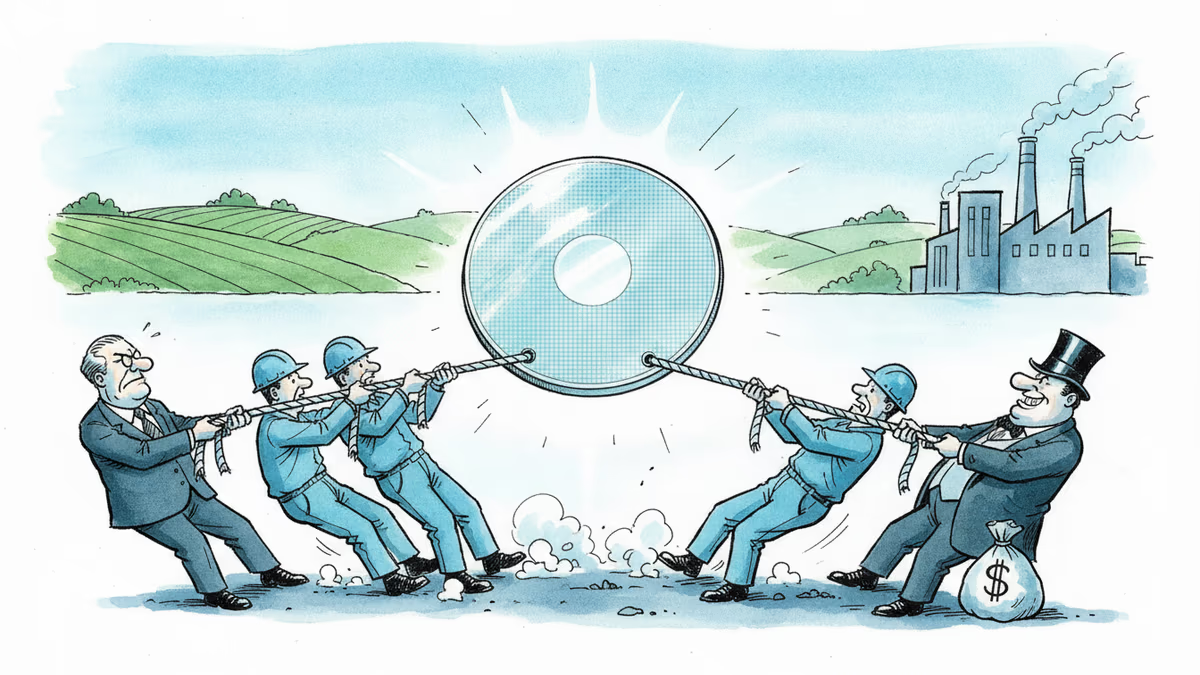
Samsung Electronics' union branch revealed that 84% of survey respondents oppose the government's roughly $290 billion (₩400 trillion) semiconductor megaproject in Gwangju. Government, management, the union and shareholders are all reading the same national project in sharply different ways.
Nvidia shipped roughly a billion RISC-V cores in 2024, then announced it would run CUDA on the open standard. We break down how royalty-free instruction sets and open software stacks are trying to route around CUDA's lock-in. Part 2 of the Semiconductor Sovereignty series.
Apple's new MacBook Pro costs up to $400 more due to RAM shortages caused by AI data center demand, signaling broader tech industry pricing shifts ahead.
Smartphone shipments to plummet 12.9% as AI giants hoard RAM. Prices hit record $523 while memory-hungry data centers squeeze out mobile manufacturers.
Samsung Electronics' union branch revealed that 84% of survey respondents oppose the government's roughly $290 billion (₩400 trillion) semiconductor megaproject in Gwangju. Government, management, the union and shareholders are all reading the same national project in sharply different ways.
Nvidia shipped roughly a billion RISC-V cores in 2024, then announced it would run CUDA on the open standard. We break down how royalty-free instruction sets and open software stacks are trying to route around CUDA's lock-in. Part 2 of the Semiconductor Sovereignty series.
Thoughts
Share your thoughts on this article
Sign in to join the conversation