
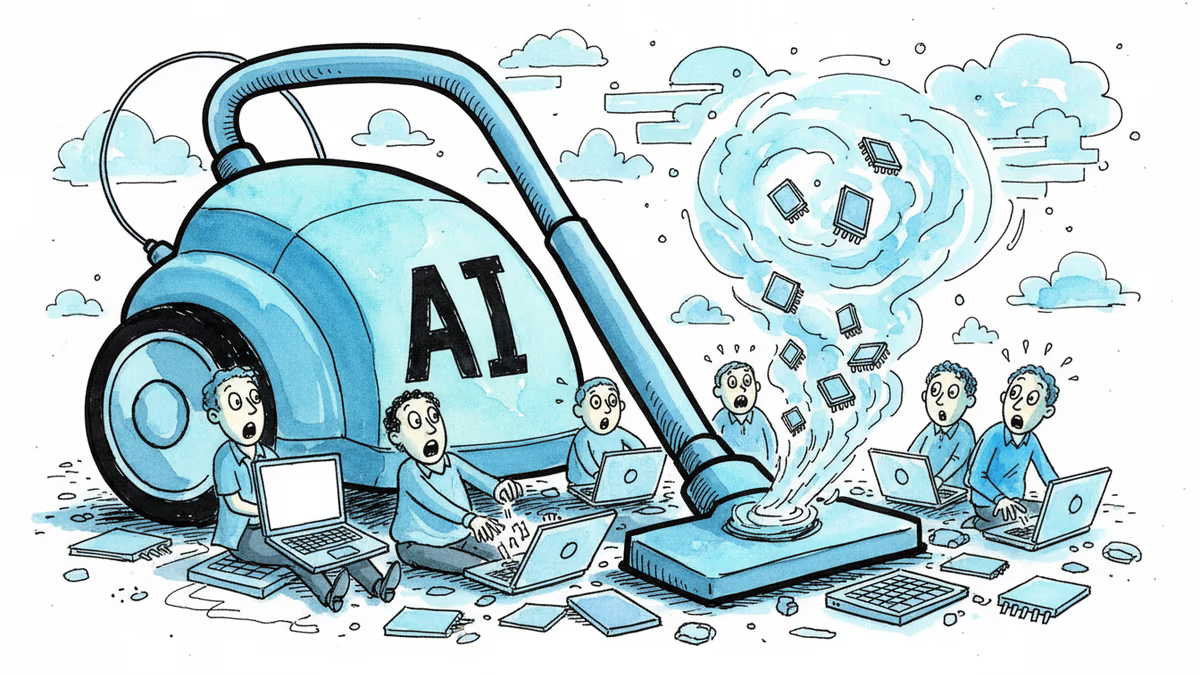
MacBook Pro Price Jump Reveals AI's Hidden Cost to Consumers
Apple's new MacBook Pro costs up to $400 more due to RAM shortages caused by AI data center demand, signaling broader tech industry pricing shifts ahead.
The $400 Sticker Shock That Reveals AI's True Cost
Apple's new MacBook Pro lineup dropped Tuesday morning with a surprise nobody wanted: prices starting at $2,199 for the 14-inch model and $2,699 for the 16-inch—jumps of $200 and $400 respectively from their predecessors. The top-tier M5 Max models now command a staggering $3,599 and $3,899.
The culprit isn't Apple's usual premium pricing strategy. It's a RAM shortage triggered by AI's voracious appetite for memory, and it's about to reshape how we think about tech pricing across the board.
When ChatGPT Crashes Your Shopping Cart
The math is stark: every AI training server consumes as much memory as hundreds of consumer devices combined. As companies race to build data centers for ChatGPT, Claude, and countless other AI services, they're outbidding traditional hardware makers for the same memory chips that power laptops and smartphones.
Memory prices have surged 30-40% in recent months, and analysts predict smartphone shipments will plummet this year as manufacturers struggle with component costs. Apple's pricing isn't just a corporate decision—it's a canary in the coal mine.
The Great Memory Land Grab

This shortage reveals something crucial about the AI economy: it's built on the same foundation as consumer electronics. Every time you chat with an AI assistant, you're competing with laptop buyers for the same scarce resources.
Samsung and other memory manufacturers are the clear winners, with stock prices soaring as demand outstrips supply. But for everyone else—from Dell to startup hardware makers—the equation is brutal: absorb the cost and kill margins, or pass it to consumers and risk losing market share.
Apple's Premium Bet vs. Everyone Else's Dilemma
Apple's response is characteristically bold: embrace the premium positioning. The company is betting that M5's "4x AI performance improvement" justifies the price jump, targeting users who need cutting-edge AI capabilities regardless of cost.
But competitors face a different reality. Microsoft has kept Surface pricing stable, gambling that enterprise buyers will prioritize cost predictability over peak performance. Smaller manufacturers are caught in the middle, unable to command Apple's premiums but equally unable to absorb component cost increases.
The Ripple Effect Nobody Saw Coming
What started as an AI revolution is becoming a hardware accessibility crisis. Students shopping for laptops, small businesses upgrading systems, and casual users wanting reliable machines are all feeling the squeeze from decisions made in Silicon Valley boardrooms.
The irony is palpable: AI promised to democratize computing power, but its resource demands are making computing hardware less accessible than ever.
Authors
Related Articles
After 15 years of fragmented mobile messaging, Apple and Google are rolling out end-to-end encrypted RCS messaging between iPhones and Android devices. Here's what changed, why it took so long, and what it means for your privacy.
Apple agreed to pay $250 million to settle claims it misled iPhone 16 buyers about Apple Intelligence features. What this means for consumers, Big Tech marketing, and the AI industry.
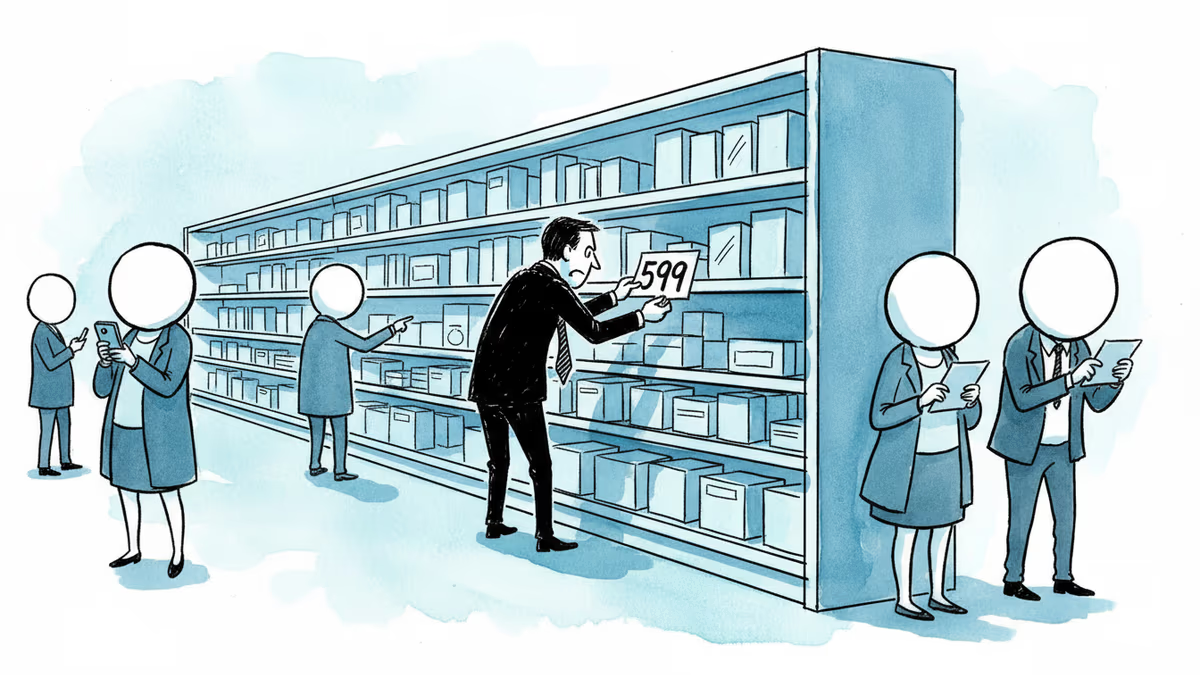
Apple quietly removed the entry-level $599 Mac Mini, raising the starting price to $799 — just one day after Tim Cook warned of chip supply constraints on the earnings call.
Apple names John Ternus, its hardware engineering chief, as the next CEO. The shift from operator to product person signals where Apple thinks its next decade of growth will come from — and raises real questions about what comes next.
After 15 years of fragmented mobile messaging, Apple and Google are rolling out end-to-end encrypted RCS messaging between iPhones and Android devices. Here's what changed, why it took so long, and what it means for your privacy.
Apple agreed to pay $250 million to settle claims it misled iPhone 16 buyers about Apple Intelligence features. What this means for consumers, Big Tech marketing, and the AI industry.
Apple quietly removed the entry-level $599 Mac Mini, raising the starting price to $799 — just one day after Tim Cook warned of chip supply constraints on the earnings call.
Apple names John Ternus, its hardware engineering chief, as the next CEO. The shift from operator to product person signals where Apple thinks its next decade of growth will come from — and raises real questions about what comes next.
Thoughts
Share your thoughts on this article
Sign in to join the conversation