
This Robot Cooks for You. Should You Let It?
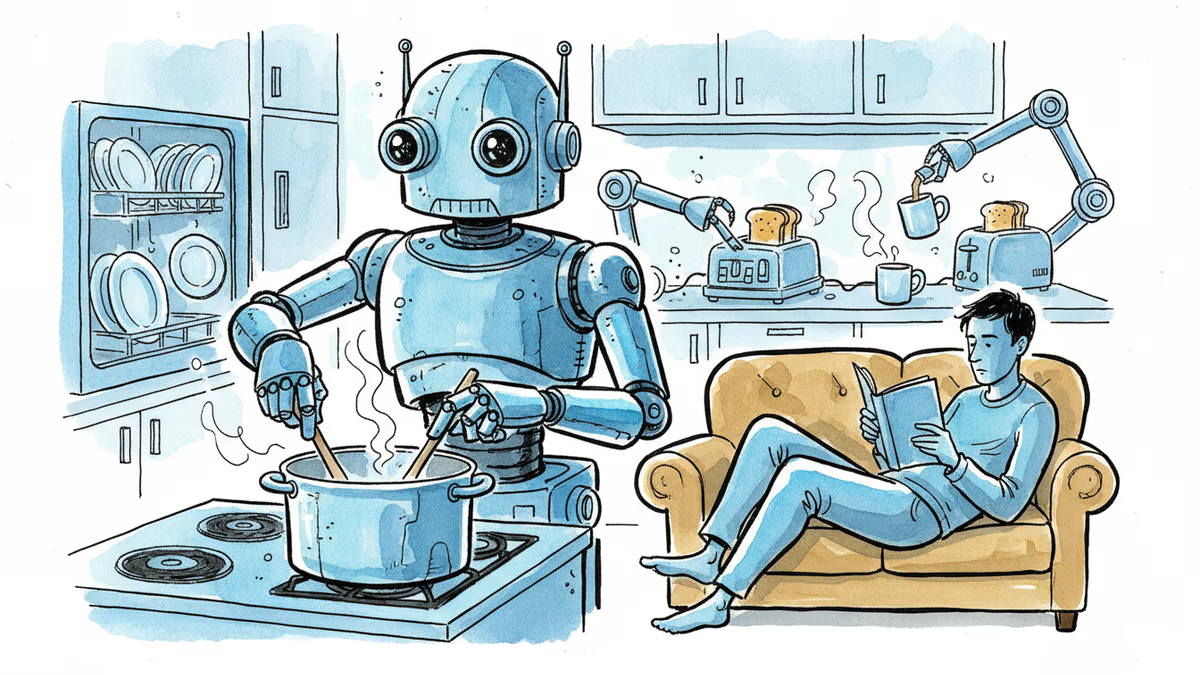
Nosh One is an AI kitchen appliance that cooks autonomously—load ingredients, pick a recipe, walk away. But does automating the kitchen solve a problem, or create new ones?
The average American spends 37 minutes a day cooking. The average person says they wish it were less. Nosh Robotics thinks it has the answer—and it comes in the form of a countertop robot that just does the cooking for you.
What Nosh One Actually Does
The pitch is straightforward: load your ingredients into the robot's tray, select a recipe on the app, and walk away. Nosh One handles the rest—dropping ingredients into the pot at the right moment, stirring, and using a built-in camera paired with AI to monitor the cooking in real time. No hovering over the stove. No guessing when to flip or stir. The app pings you when dinner is ready.
This isn't a glorified slow cooker. Where previous smart kitchen devices offered timers and temperature presets, Nosh One introduces genuine autonomy: computer vision watching the food, AI making judgment calls mid-cook, and a recipe ecosystem users can edit and schedule from their phones.
The distinction matters. Automation that removes tedium is one thing. Automation that removes decision-making is another.
Who Actually Wants This
The target user seems obvious at first: busy professionals, single-person households, anyone who eats dinner at 9pm because the day got away from them. The single-person household now represents over 28% of all US households—a market that has already shown it will pay a premium for convenience, as the meal kit industry's $11 billion valuation demonstrates.

But there's a more interesting customer lurking here: the person who wants to eat well but has given up trying. Not someone who hates cooking, but someone who's been defeated by the gap between ambition and execution. For that person, Nosh One isn't a shortcut—it's a lifeline.
The skeptics, meanwhile, will point out that cooking is precisely where human variability matters most. Salt levels, ingredient freshness, personal taste thresholds—these are the variables a camera and algorithm will struggle to navigate. A risotto that needs just a little more cream is a judgment call that lives in the hands, not in a dataset.
The Market Reading Between the Lines
For investors and industry watchers, Nosh One's launch is less about this single device and more about where the category is heading. Samsung and LG have both invested heavily in connected kitchen ecosystems—smart fridges, connected ovens, app-controlled appliances. But neither has moved aggressively into autonomous cooking as a standalone product.
If Nosh One finds traction, it signals that consumers are ready to cede more kitchen control than previously assumed. That's a meaningful data point for every appliance manufacturer watching from the sidelines. Chinese competitors like Midea and Xiaomi's ecosystem partners are already circling this space. The question isn't whether a major player enters—it's when, and whether Nosh Robotics can build enough of a recipe library and brand loyalty to survive the arrival.
The Uncomfortable Reframe
There's a version of this story where Nosh One is simply a useful appliance. There's another version where it's a symptom.
The framing of cooking as a problem to be solved is worth sitting with. For many people, the kitchen is the last room in the house where presence and attention still feel necessary—where the act of making something for someone else carries meaning. Meal kits already moved the line once, pre-portioning the labor. Nosh One moves it again, removing the execution entirely.
This isn't an argument against the product. It's a question about what we're actually optimizing for when we automate the domestic. The 37 minutes we spend cooking—are we trying to get them back, or are we trying to spend them differently?
Authors
Related Articles

The Heatbit Maxi Pro heats your room, filters your air, and mines bitcoin simultaneously. At $1,499, it's an ingenious idea with a brutal payback math. Here's the full breakdown.
Google Home now supports physical buttons for smart home automation, allowing users to control multiple devices without voice commands. The long-awaited feature puts Google on par with Amazon Alexa and Samsung SmartThings.

Wonder, the parent of Grubhub, acquires Claim to enhance its restaurant rewards program. The move brings personalized data-driven loyalty tools to 415k merchants.

Bose releases official API documentation for SoundTouch speakers ahead of their February 2026 EoL. This move allows open-source developers to keep the hardware functional.
The Heatbit Maxi Pro heats your room, filters your air, and mines bitcoin simultaneously. At $1,499, it's an ingenious idea with a brutal payback math. Here's the full breakdown.
Google Home now supports physical buttons for smart home automation, allowing users to control multiple devices without voice commands. The long-awaited feature puts Google on par with Amazon Alexa and Samsung SmartThings.
Wonder, the parent of Grubhub, acquires Claim to enhance its restaurant rewards program. The move brings personalized data-driven loyalty tools to 415k merchants.
Bose releases official API documentation for SoundTouch speakers ahead of their February 2026 EoL. This move allows open-source developers to keep the hardware functional.
Thoughts
Share your thoughts on this article
Sign in to join the conversation