

Bose SoundTouch API Release 2026: A Stay of Execution for Legacy Hardware
Bose releases official API documentation for SoundTouch speakers ahead of their February 2026 EoL. This move allows open-source developers to keep the hardware functional.
Your expensive home theater system just got a stay of execution. As the dreaded end-of-life (EoL) date approaches for the Bose SoundTouch series, Bose has unexpectedly released the official Application Programming Interface (API) documentation, offering a lifeline to thousands of smart home enthusiasts.
What the Bose SoundTouch API Release Means for Users
Bose previously announced that its SoundTouch Wi-Fi speakers and soundbars would lose their 'smart' capabilities on February 18, 2026. After this date, these premium devices were slated to lose cloud connectivity and access to the companion app. Features like Spotify integration, multi-room synchronization, and preset editing would have simply vanished, turning high-tech audio gear into basic 'dumb' speakers.

- Loss of security and software updates after Feb 18
- Discontinuation of the Framingham companion app
- Limited connectivity via AUX, HDMI, and Bluetooth
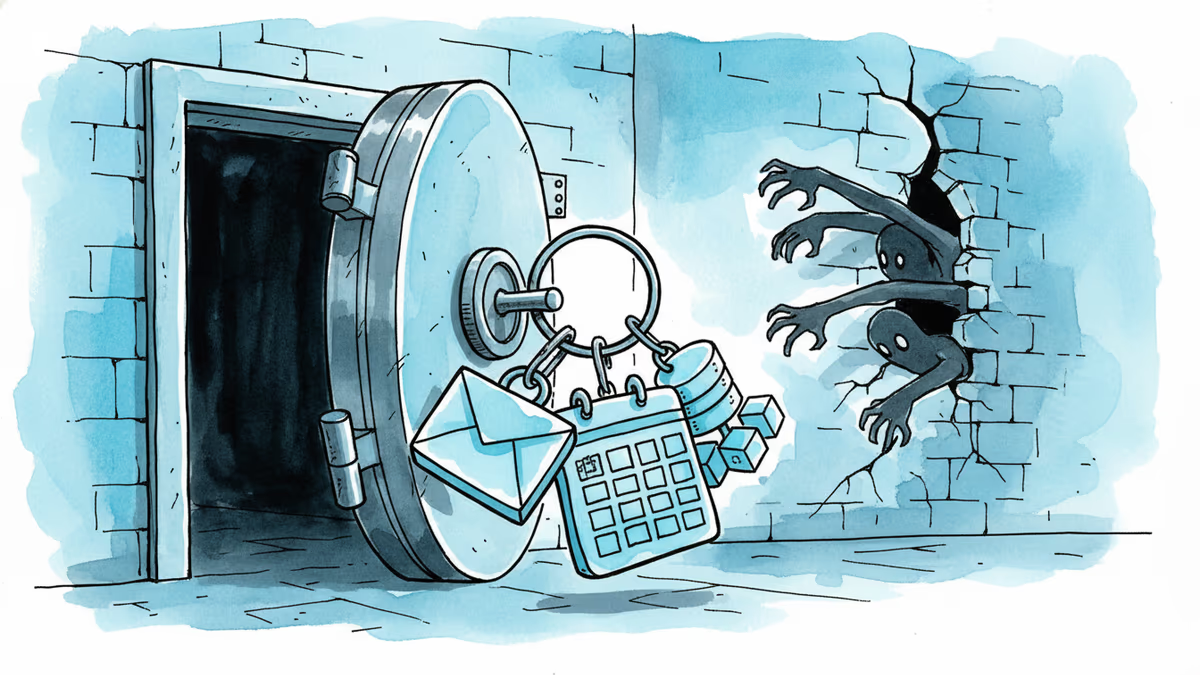
The release of the API documentation changes the narrative. By making the technical blueprints available, Bose is effectively handing the keys to the open-source community. This allows independent developers to create custom applications and integrations, ensuring these speakers can still function within modern smart home ecosystems like Home Assistant long after the manufacturer's servers go dark.
Authors
Related Articles
A critical vulnerability in Starlette—downloaded 325 million times per week—puts millions of AI agent servers at risk, exposing stored credentials for email, databases, and third-party services.

The Heatbit Maxi Pro heats your room, filters your air, and mines bitcoin simultaneously. At $1,499, it's an ingenious idea with a brutal payback math. Here's the full breakdown.

Ollama now supports Apple's MLX framework, bringing meaningfully faster local AI to Apple Silicon Macs. Here's why that matters beyond the benchmark numbers.

Malware found in LiteLLM, a core AI developer tool downloaded 3.4M times daily. A supply chain attack, credential theft, and a compliance certification scandal wrapped into one story.
A critical vulnerability in Starlette—downloaded 325 million times per week—puts millions of AI agent servers at risk, exposing stored credentials for email, databases, and third-party services.
The Heatbit Maxi Pro heats your room, filters your air, and mines bitcoin simultaneously. At $1,499, it's an ingenious idea with a brutal payback math. Here's the full breakdown.
Ollama now supports Apple's MLX framework, bringing meaningfully faster local AI to Apple Silicon Macs. Here's why that matters beyond the benchmark numbers.
Malware found in LiteLLM, a core AI developer tool downloaded 3.4M times daily. A supply chain attack, credential theft, and a compliance certification scandal wrapped into one story.
Thoughts
Share your thoughts on this article
Sign in to join the conversation