
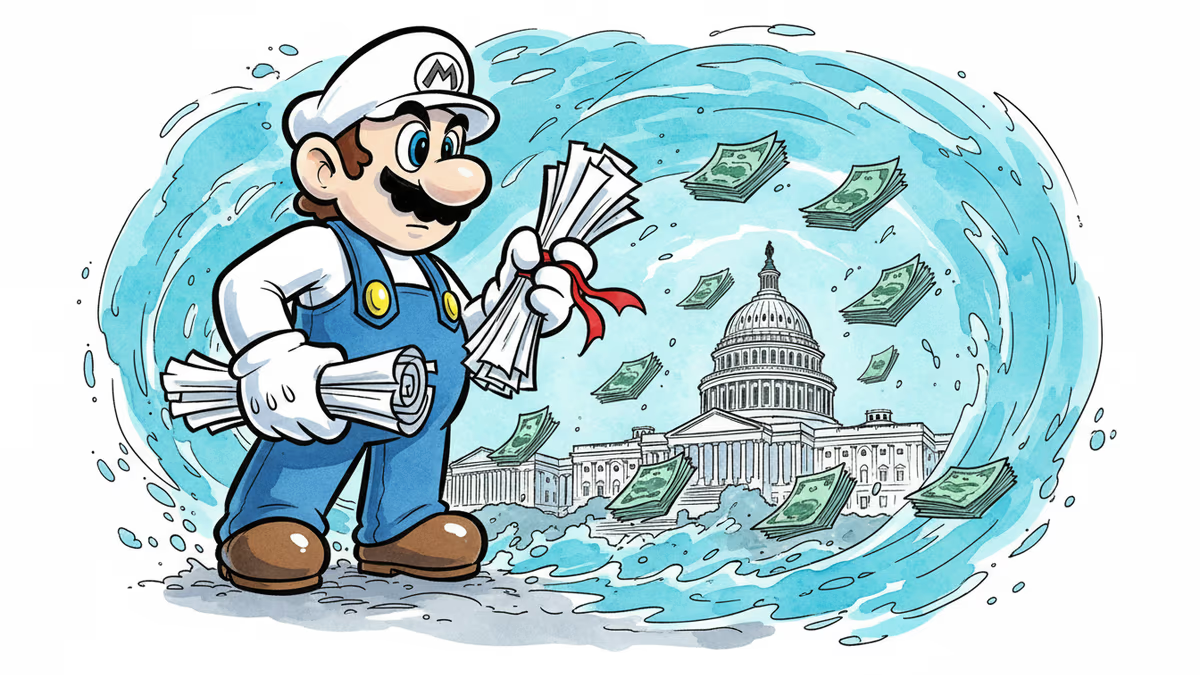
Why Nintendo Is Actually Suing the US Government
Nintendo joins 1,000+ companies suing the US government for tariff refunds after Supreme Court ruling. The legal battle reveals deeper tensions over presidential trade powers.
$200 billion. That's how much the Trump administration collected through tariffs under the International Emergency Economic Powers Act (IEEPA). Now Nintendo and over 1,000 other companies are essentially saying: "We want our money back."
On Friday, Nintendo filed a lawsuit in the U.S. Court of International Trade seeking refunds on tariffs it paid. The timing isn't coincidental—it came right after the Supreme Court struck down Trump's IEEPA tariffs as an abuse of presidential authority. Trump's response? He called the ruling "extraordinarily anti-American" and raised tariffs from 10% to 15%.
The Gaming Industry's Impossible Choice
Tariffs create a brutal math problem for console makers. Gaming hardware like the Nintendo Switch, PlayStation, and Xbox are predominantly manufactured in China and exported to the US. With 15% tariffs, companies face an impossible choice.
Raise prices and lose customers, or absorb the costs and kill margins. This is particularly painful for gaming companies that use a "razor and blade" model—selling consoles at a loss and making profits on software sales. The tariff disrupts this delicate ecosystem.
Sony and Microsoft are wrestling with the same dilemma. But Nintendo's lawsuit represents something bigger: a coordinated corporate pushback against what many see as presidential overreach.
24 States vs. Federal Power: A Constitutional Crisis

The plot thickens. 24 states have filed their own lawsuit, arguing that Trump has "once again overstepped the limits of his power" by raising tariffs after the Supreme Court ruling. This isn't just about trade—it's about the constitutional boundaries of presidential emergency powers.
The International Emergency Economic Powers Act was designed for genuine national security crises, not trade disputes. Yet it's become the go-to tool for imposing economic sanctions and tariffs. Legal scholars are watching closely, as this could reshape how future presidents wield economic power.
The Ripple Effect: Beyond Gaming
Nintendo's lawsuit is part of a larger corporate rebellion. Over 1,000 companies—from tech giants to small manufacturers—are demanding refunds. The message is clear: businesses are no longer willing to quietly absorb the costs of what they see as illegitimate tariffs.
This legal strategy could have profound implications. If successful, it would force the government to refund billions in collected tariffs and potentially constrain future presidential trade actions. It's corporate America using the courts to check executive power.
The Global Supply Chain Dilemma
For multinational companies, this creates a new category of business risk: "legal supply chain risk." It's no longer enough to optimize for cost and efficiency. Companies must now factor in the probability of tariffs being ruled illegal and the potential for government policy reversals.
Some companies are already relocating production to countries like Vietnam and India. But even "friend-shoring" isn't foolproof if presidential powers continue to expand unchecked.
Authors
Related Articles
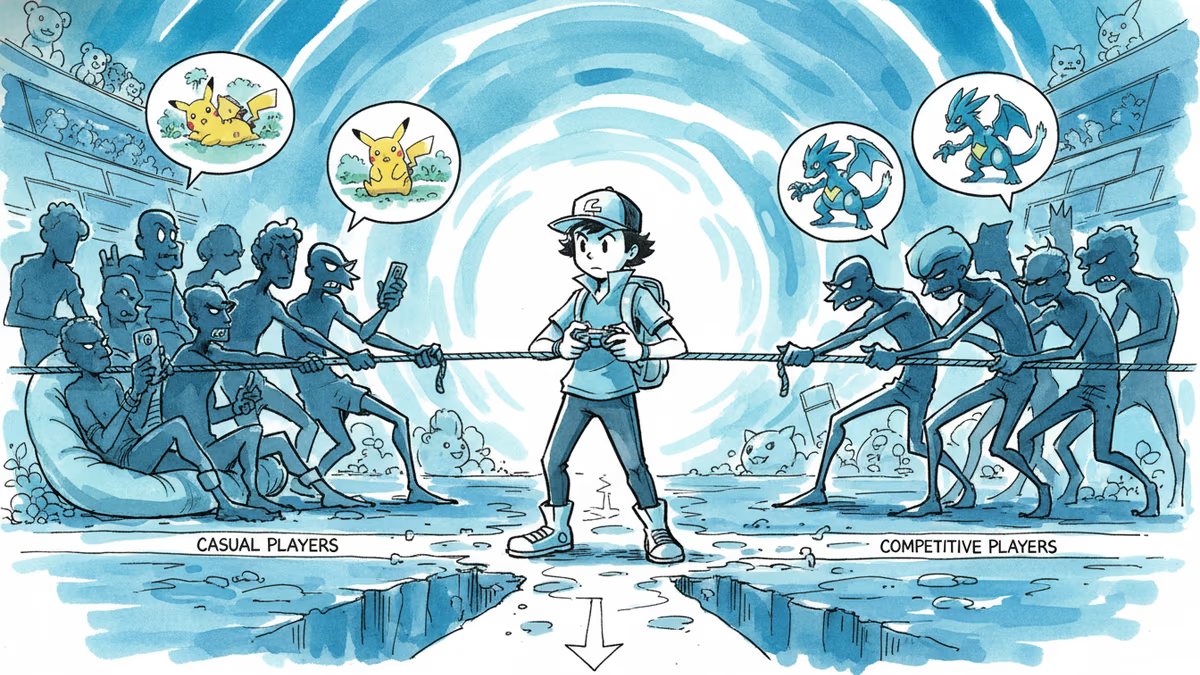
Pokémon Champions launched on Switch with bugs breaking core battle mechanics. But the deeper issue isn't the bugs — it's whether a game trying to please all players can satisfy any of them.
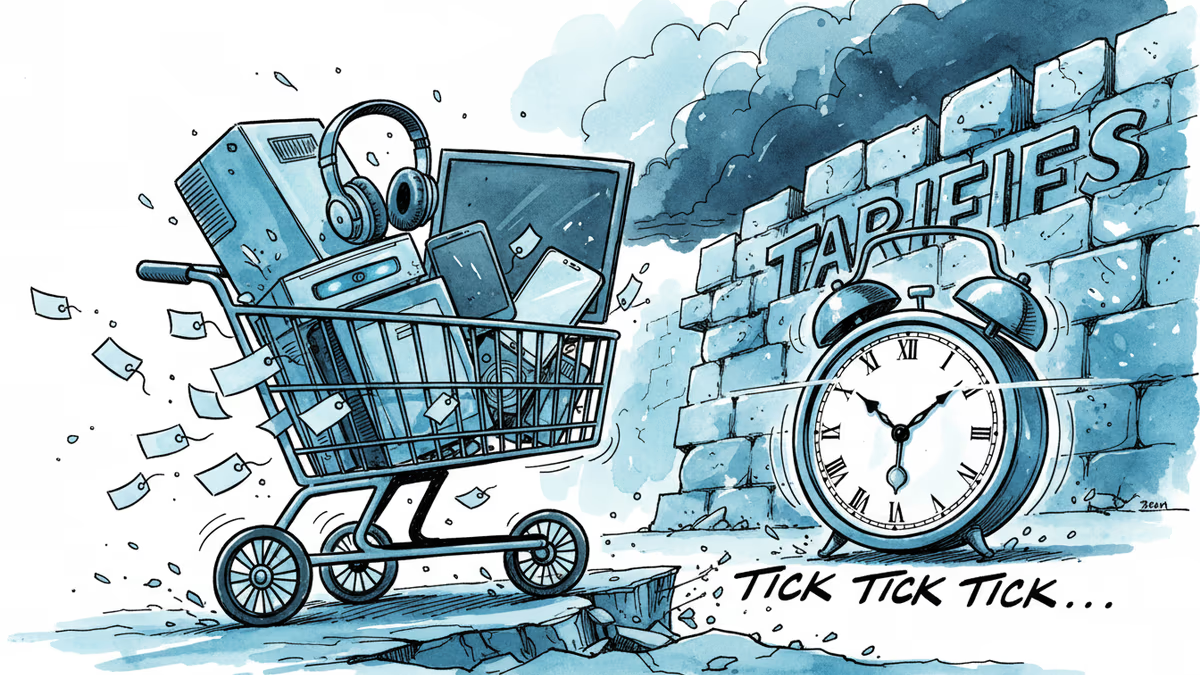
Amazon's Big Spring Sale runs through March 31st with record-low prices on robot vacuums, headphones, and smart home gear — but the real story is why it's happening now.
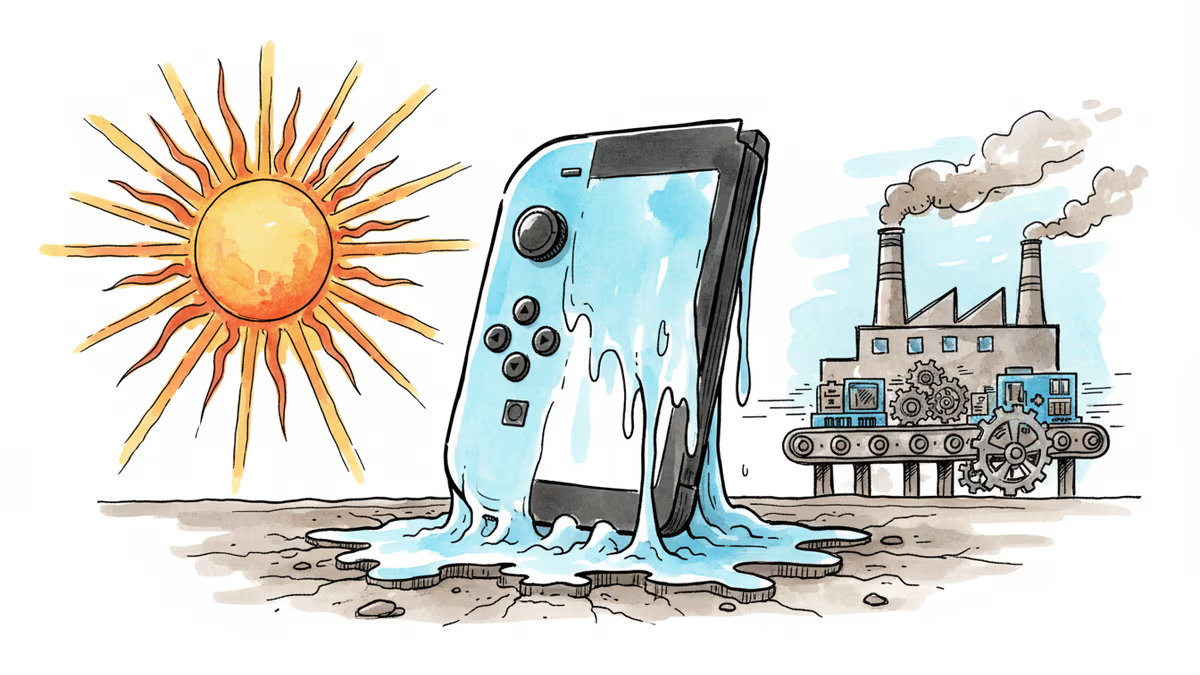
Nine months after a record-breaking launch, Nintendo is cutting Switch 2 production from 6 million to 4 million units per quarter. What went wrong, and what does it signal for the console market?
Nintendo Switch 2 requires expensive microSD Express cards instead of regular microSD. 4.4x faster speeds come with 2x higher prices - what this means for gamers and the industry.
Pokémon Champions launched on Switch with bugs breaking core battle mechanics. But the deeper issue isn't the bugs — it's whether a game trying to please all players can satisfy any of them.
Amazon's Big Spring Sale runs through March 31st with record-low prices on robot vacuums, headphones, and smart home gear — but the real story is why it's happening now.
Nine months after a record-breaking launch, Nintendo is cutting Switch 2 production from 6 million to 4 million units per quarter. What went wrong, and what does it signal for the console market?
Nintendo Switch 2 requires expensive microSD Express cards instead of regular microSD. 4.4x faster speeds come with 2x higher prices - what this means for gamers and the industry.
Thoughts
Share your thoughts on this article
Sign in to join the conversation