
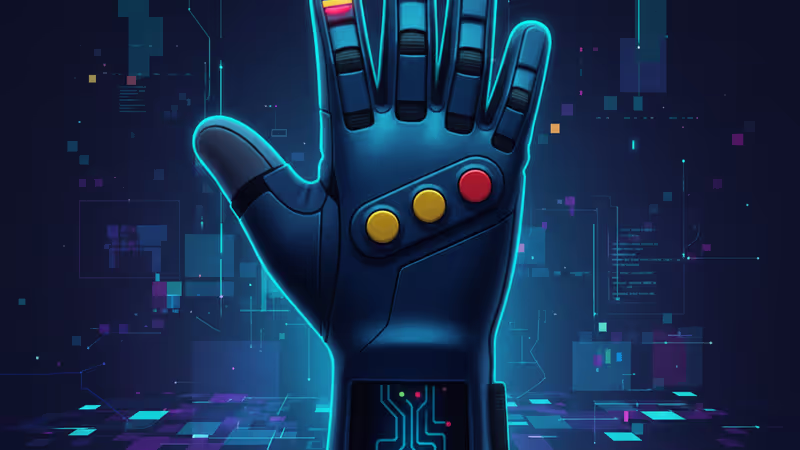
Nintendo Power Glove History: The Ambitious 1989 Failure That Changed Everything
Explore the Nintendo Power Glove history from 1989. Despite its technical flaws, this ambitious device paved the way for modern motion control and VR technology.
The future arrived 30 years too early, and it was barely functional. The Nintendo Power Glove wasn't just a peripheral; it was a statement. Released in the {stat: late 1980s, it promised to liberate gamers from buttons and d-pads, allowing them to control digital worlds with a wave of a hand. While it was technically 'not good,' its influence on the industry remains undeniable.
The Nintendo Power Glove History: Ambition vs. Reality
Surprisingly, the Power Glove didn't start its life in a Nintendo lab. It began as a research lark that evolved into a toy before eventually bearing the Nintendo brand in 1989. At a time when Nintendo was the dominant force in home entertainment, the glove was marketed as the ultimate tool for the future of fun.

The reality, however, was far from the marketing hype. The technology relied on ultrasonic sensors that were notoriously difficult to calibrate. Players found themselves struggling to perform basic actions, leading to widespread frustration. Yet, this very 'not-good-ness' is why the device occupies such a sacred place in tech history—it was a bold leap into the unknown.
Paving the Way for Modern Motion Control
Every time you use a Meta Quest controller or a Nintendo Wii remote, you're experiencing the legacy of the Power Glove. It was the first mainstream device to introduce the concept of motion control to the masses, proving that even a failure can set the stage for a revolution.
Authors
Related Articles
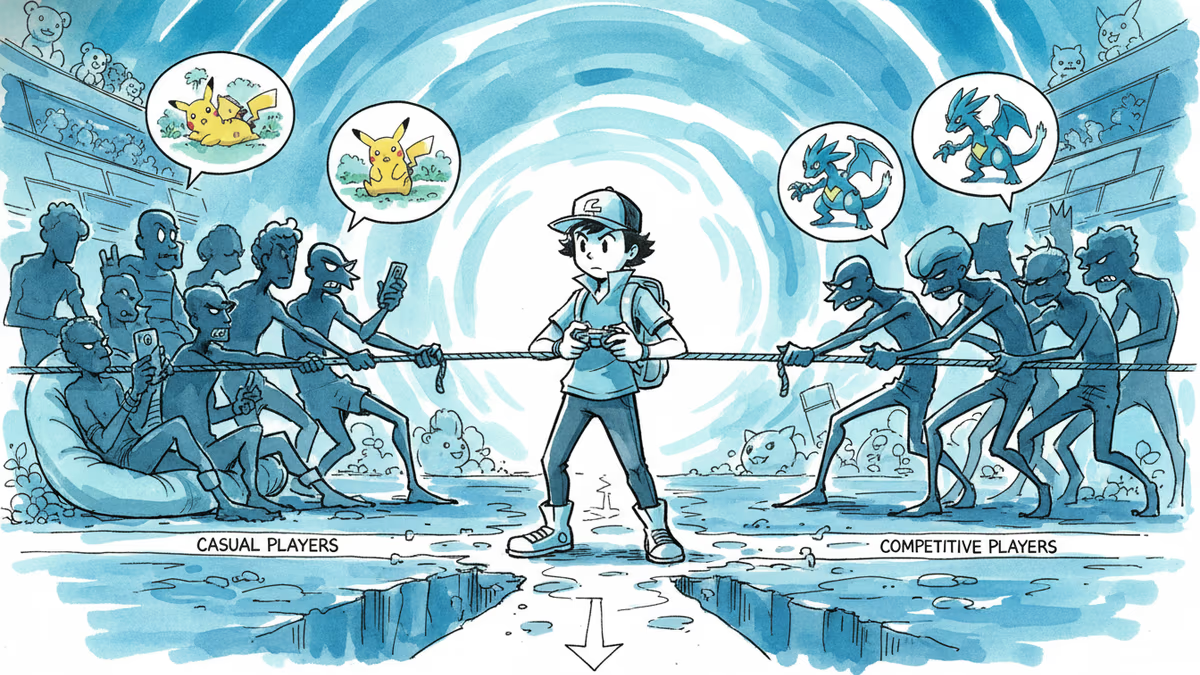
Pokémon Champions launched on Switch with bugs breaking core battle mechanics. But the deeper issue isn't the bugs — it's whether a game trying to please all players can satisfy any of them.
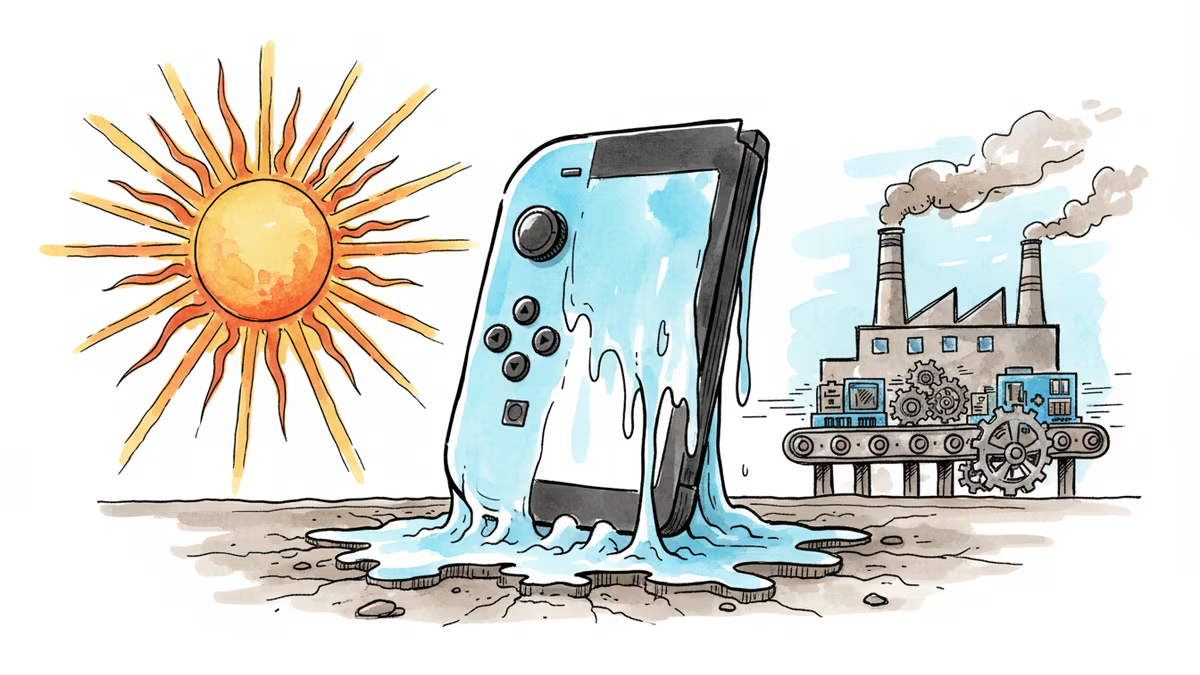
Nine months after a record-breaking launch, Nintendo is cutting Switch 2 production from 6 million to 4 million units per quarter. What went wrong, and what does it signal for the console market?
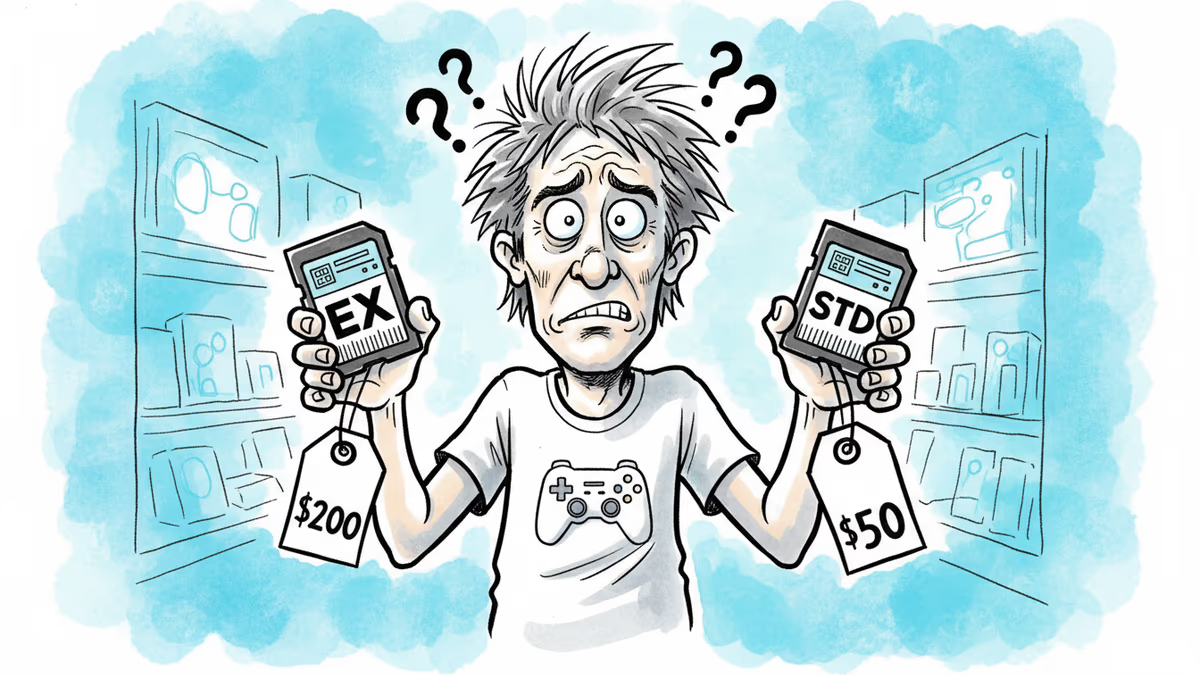
Nintendo Switch 2 requires expensive microSD Express cards instead of regular microSD. 4.4x faster speeds come with 2x higher prices - what this means for gamers and the industry.

Nintendo joins 1,000+ companies suing the US government for tariff refunds after Supreme Court ruling. The legal battle reveals deeper tensions over presidential trade powers.
Pokémon Champions launched on Switch with bugs breaking core battle mechanics. But the deeper issue isn't the bugs — it's whether a game trying to please all players can satisfy any of them.
Nine months after a record-breaking launch, Nintendo is cutting Switch 2 production from 6 million to 4 million units per quarter. What went wrong, and what does it signal for the console market?
Nintendo Switch 2 requires expensive microSD Express cards instead of regular microSD. 4.4x faster speeds come with 2x higher prices - what this means for gamers and the industry.
Nintendo joins 1,000+ companies suing the US government for tariff refunds after Supreme Court ruling. The legal battle reveals deeper tensions over presidential trade powers.
Thoughts
Share your thoughts on this article
Sign in to join the conversation