
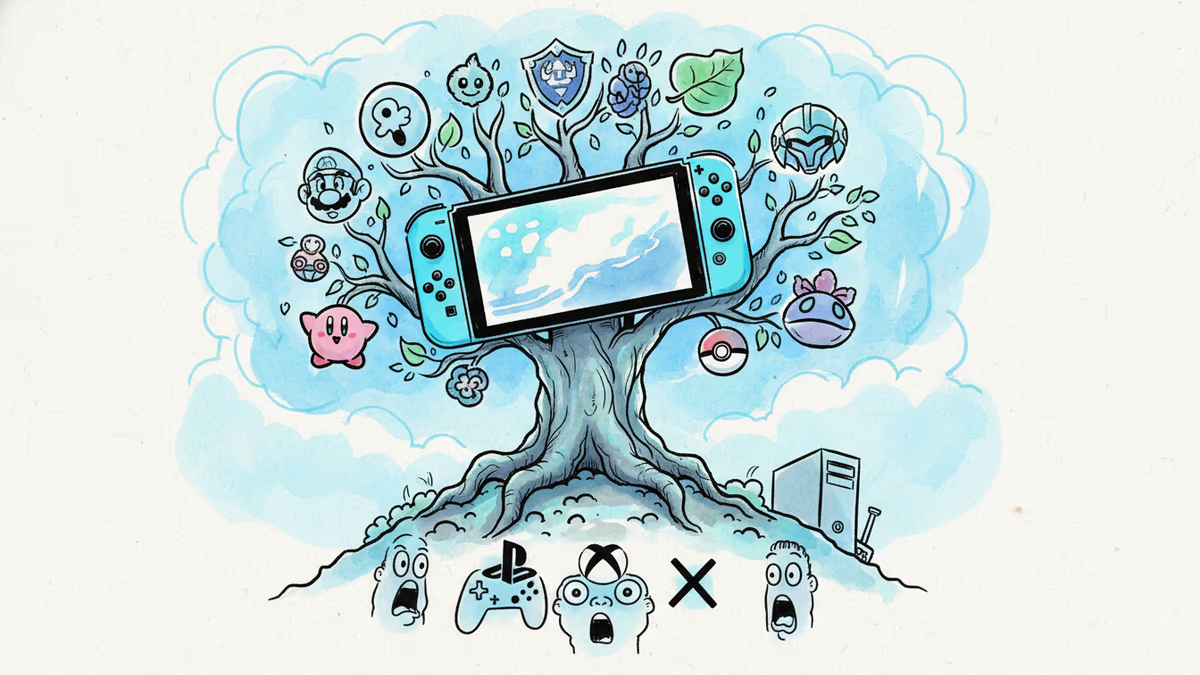
Switch 2's Secret Weapon Isn't What You Think
Nintendo Switch 2's surprisingly strong game lineup could reshape console competition. Analysis of how diverse titles beyond Mario and Zelda might change the gaming landscape.
The 140 Million Question
When Nintendo sells you a console, you know exactly what you're getting: Super Mario, Pokémon, The Legend of Zelda, and maybe some Animal Crossing or Mario Kart on the side. The "other stuff"? That's always been the wild card. But with the Switch 2, that uncertainty might finally be over.
The original Switch sold 140 million units not just because of Mario's mustache, but because it cracked a code no other console could: true portability without sacrificing quality. Now, as the Switch 2 looms on the horizon, early indicators suggest Nintendo has learned something crucial about what makes a platform truly irresistible.
Small Games, Big Ambitions
Take this week's Mario Tennis Fever. It's exactly what you'd expect—arcade tennis with Mario characters, about as realistic as Mario Kart is to actual racing. But here's what's different: it doesn't feel like filler content anymore.
Nintendo's smaller releases are getting the attention they deserve. Where previous "B-tier" Nintendo games felt like placeholders between major releases, titles like Mario Tennis Fever now feel purposeful, polished, and genuinely entertaining. This shift signals something bigger: Nintendo is building an ecosystem, not just releasing individual games.
For developers, this means opportunity. Third-party studios are taking notice as Nintendo demonstrates that there's room for more than just tentpole franchises on their platforms.
The Console War Gets Complicated
Sony and Microsoft have long operated under a comfortable assumption: Nintendo owns the family market, we own the serious gamers. The Switch began to blur those lines, but the Switch 2 might erase them entirely.

Consider the implications. If Nintendo can deliver both the nostalgic charm of Mario and the depth that hardcore gamers crave, what's left for the competition? The PlayStation 5 and Xbox Series X have raw power, but power alone doesn't win console generations—ask the Dreamcast.
The real threat isn't Nintendo's hardware specs (though they're improving). It's the breadth of experiences they're promising. When your console can seamlessly transition from Breath of the Wild to FIFA to indie darlings, you're not just competing with other consoles—you're competing with smartphones, PCs, and streaming services.
The Indie Game Gold Rush
Here's where things get interesting for smaller developers. The Switch proved that indie games could thrive on Nintendo platforms—titles like Hollow Knight, Celeste, and Hades found massive audiences. The Switch 2 promises to amplify this trend.
For independent studios, this represents a golden opportunity. Nintendo's improved third-party support, combined with a potentially larger install base, could make the Switch 2 the most developer-friendly Nintendo console ever. The question isn't whether indie games will succeed on Switch 2—it's which ones will become the next breakout hits.
This ecosystem approach benefits everyone. Gamers get more variety, developers get more opportunities, and Nintendo gets a more robust platform that doesn't rely solely on first-party titles.
The Price-Performance Tightrope
Of course, Nintendo faces challenges. The Switch 2 needs to hit that sweet spot between affordability and capability. Price it too high, and you lose the mass market appeal that made the original Switch successful. Price it too low, and you might compromise on the performance improvements that justify an upgrade.
Then there's the technical balancing act. Better graphics and faster processing are great, but not if they come at the cost of battery life or generate excessive heat. The Switch's portability is non-negotiable—it's the feature that differentiated it from every other console on the market.
Beyond the Hardware Hype
What makes the Switch 2 potentially game-changing isn't its processor or screen resolution—it's Nintendo's apparent commitment to building a more diverse gaming ecosystem. The company seems to understand that modern gamers don't want just Mario; they want Mario and everything else.
This shift could reshape how we think about console generations. Instead of dramatic hardware leaps every five to seven years, we might see more iterative improvements focused on expanding game libraries and improving user experiences.
Authors
Related Articles
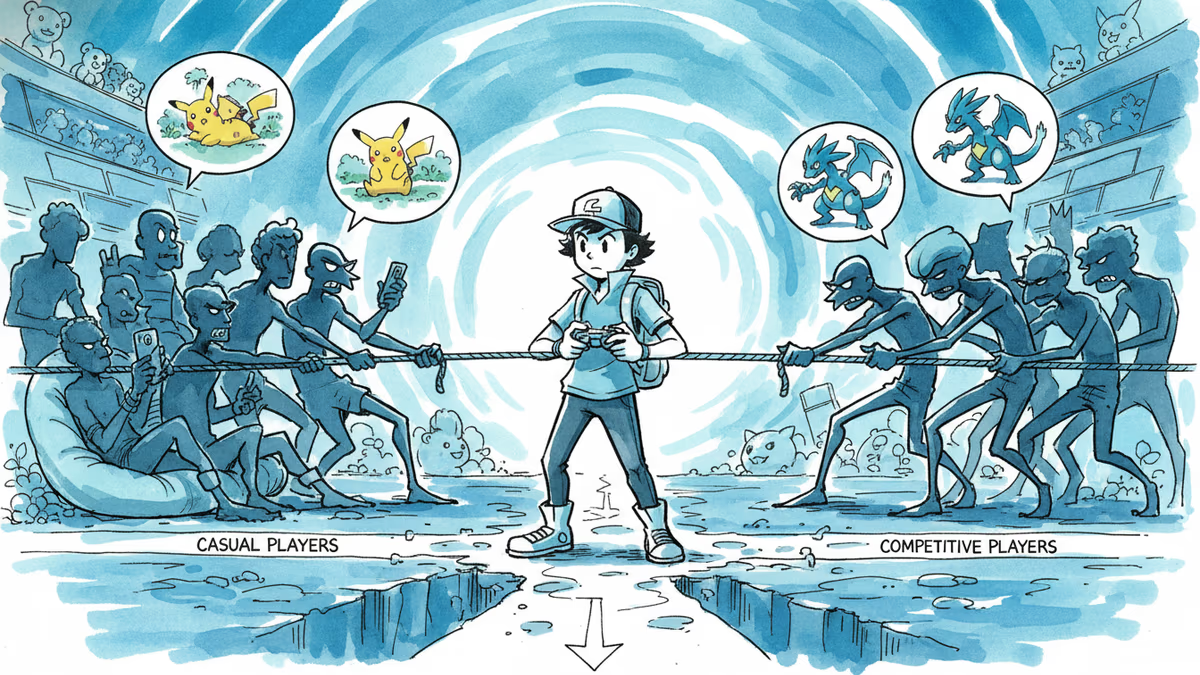
Pokémon Champions launched on Switch with bugs breaking core battle mechanics. But the deeper issue isn't the bugs — it's whether a game trying to please all players can satisfy any of them.
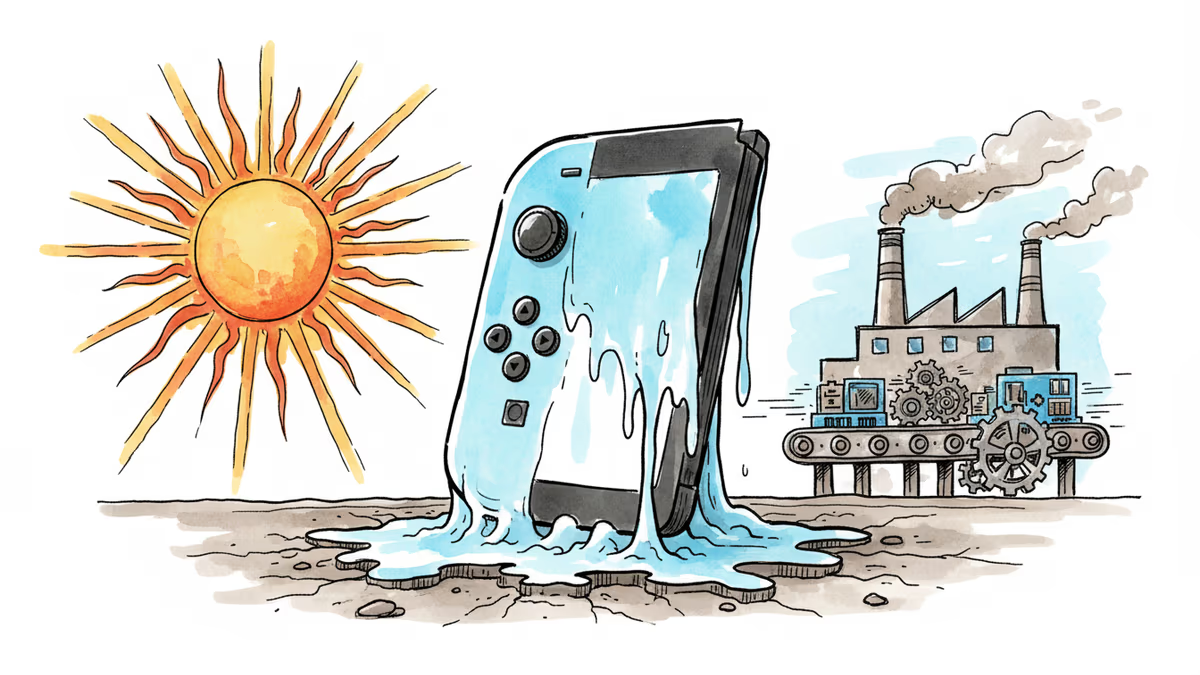
Nine months after a record-breaking launch, Nintendo is cutting Switch 2 production from 6 million to 4 million units per quarter. What went wrong, and what does it signal for the console market?
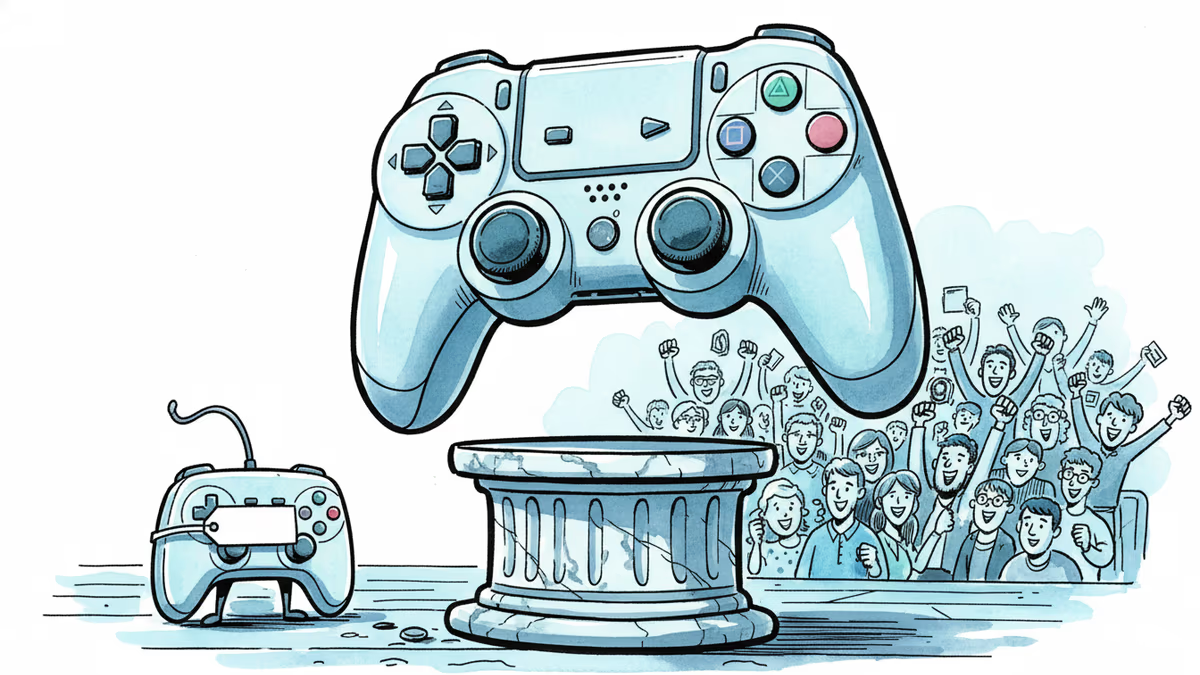
The EasySMX S10 Lite challenges Nintendo's official Switch 2 Pro Controller at less than half the price. What happens when third-party gear outperforms the original?
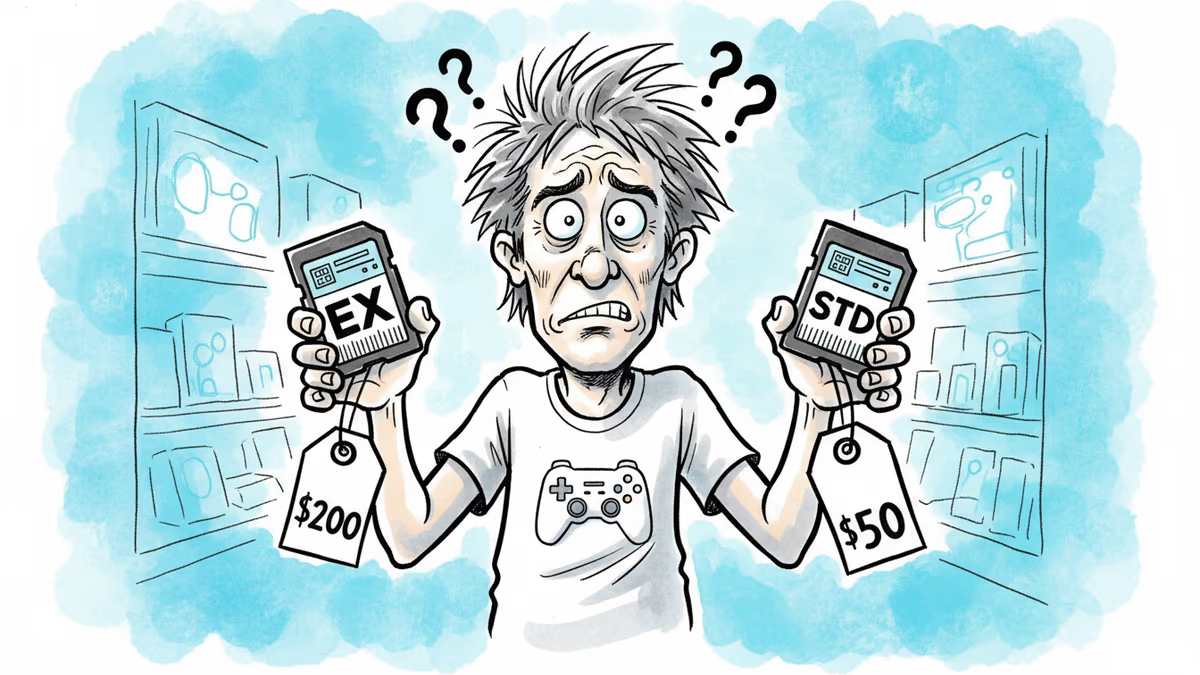
Nintendo Switch 2 requires expensive microSD Express cards instead of regular microSD. 4.4x faster speeds come with 2x higher prices - what this means for gamers and the industry.
Pokémon Champions launched on Switch with bugs breaking core battle mechanics. But the deeper issue isn't the bugs — it's whether a game trying to please all players can satisfy any of them.
Nine months after a record-breaking launch, Nintendo is cutting Switch 2 production from 6 million to 4 million units per quarter. What went wrong, and what does it signal for the console market?
The EasySMX S10 Lite challenges Nintendo's official Switch 2 Pro Controller at less than half the price. What happens when third-party gear outperforms the original?
Nintendo Switch 2 requires expensive microSD Express cards instead of regular microSD. 4.4x faster speeds come with 2x higher prices - what this means for gamers and the industry.
Thoughts
Share your thoughts on this article
Sign in to join the conversation