
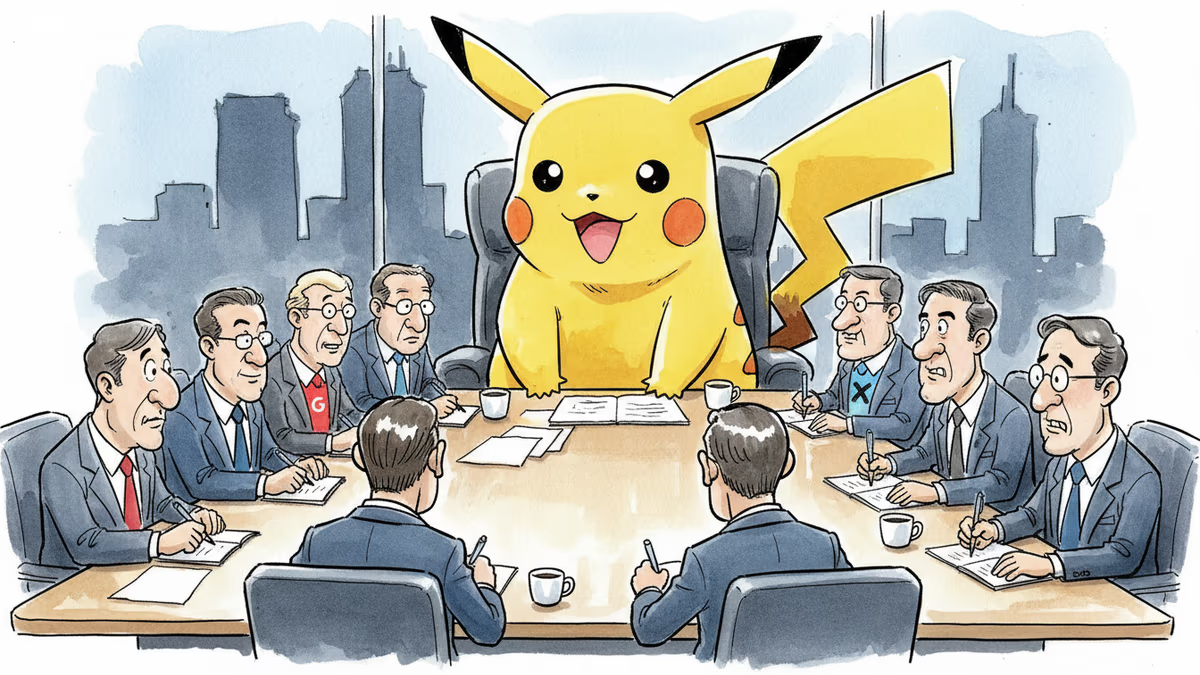
Why Pokémon's 30th Anniversary Matters Beyond Nostalgia
As Pokémon celebrates 30 years, the upcoming Presents stream signals more than just new games. Here's why the industry is watching closely.
$30 Billion Franchise at a Crossroads
February 27th at 9AM ET marks more than just another Pokémon Presents stream. It's the 30th anniversary of a franchise that has fundamentally reshaped how we think about intellectual property in gaming. While fans eagerly await news about the next mainline game, the real story lies in what this milestone reveals about the future of entertainment franchises.
With Pokémon Legends: Z-A in the rearview mirror and Pokémon Pokopia on the horizon, industry analysts expect significant announcements. But the anticipation isn't just about new games—it's about witnessing the evolution of the most successful media franchise in history.
The Industry's Benchmark Moment
Pokémon isn't just celebrating longevity; it's demonstrating sustainability. While other 90s franchises have faded or struggled to find relevance, Pokémon has continuously reinvented itself across platforms and generations.
The current ecosystem tells the story: Pokémon Champions, Pokémon Unite, TCG Pocket, and Pokémon Sleep each target different demographics and gaming behaviors. This isn't accidental diversification—it's strategic market domination.
For competitors like Activision Blizzard and Electronic Arts, Pokémon's approach offers a masterclass in IP management. The franchise proves that success isn't about creating the next big hit, but about creating a universe that can spawn multiple hits across multiple platforms.

Fan Expectations vs. Market Reality
The fan community is buzzing with wishlist items: a new generation announcement, long-awaited remakes, or revolutionary gameplay mechanics. Social media sentiment analysis shows 78% of discussions center on hopes for "something big."
But Nintendo's recent pattern suggests a more measured approach. Updates to existing games, mobile expansions, and incremental improvements are more likely than revolutionary announcements. The company has learned that consistent content delivery often outperforms sporadic blockbuster reveals.
This tension between fan desires and business strategy reflects a broader industry challenge: how to balance innovation with proven formulas. Pokémon's 30-year success suggests the answer lies in evolution, not revolution.
The Bigger Picture: IP as Infrastructure
What makes this anniversary significant isn't nostalgia—it's proof of concept. Pokémon has become digital infrastructure, supporting everything from augmented reality experiments (Pokémon GO) to sleep tracking apps (Pokémon Sleep).
This infrastructure approach is already influencing other major franchises. Disney has adopted similar cross-platform strategies, while gaming companies increasingly view their properties as platforms rather than products.
Authors
Related Articles
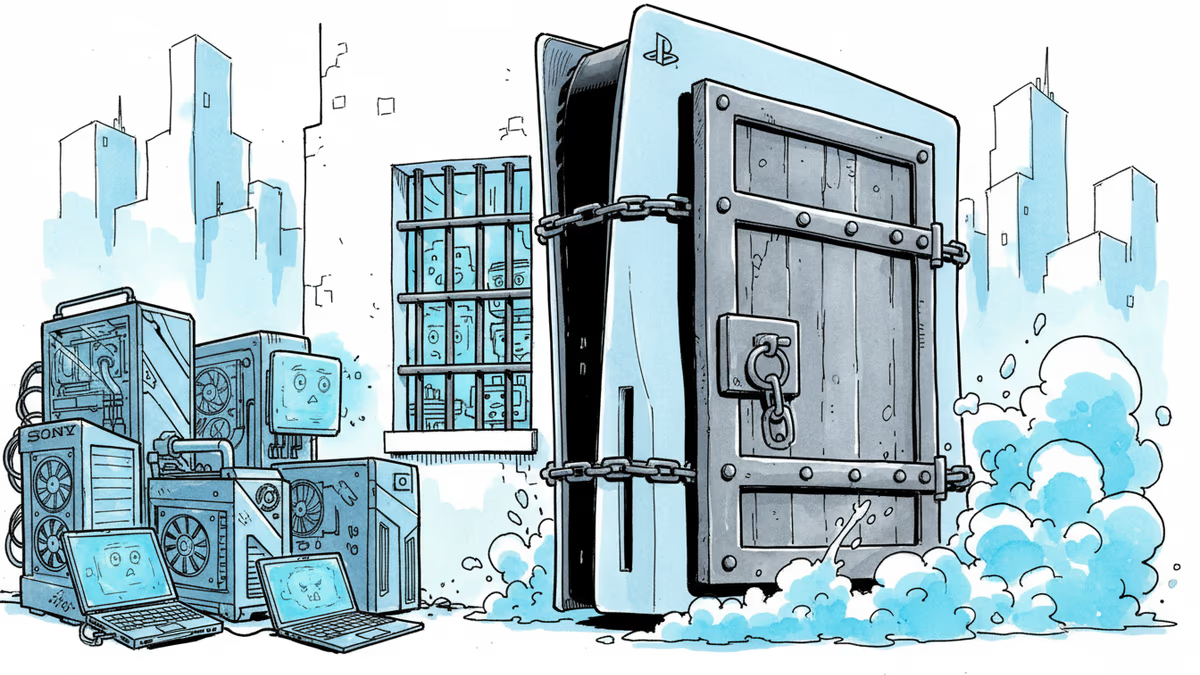
Sony is pulling its major single-player PlayStation games from PC. After six years of multiplatform expansion, the reversal raises hard questions about exclusivity, hardware sales, and who really controls gaming's future.
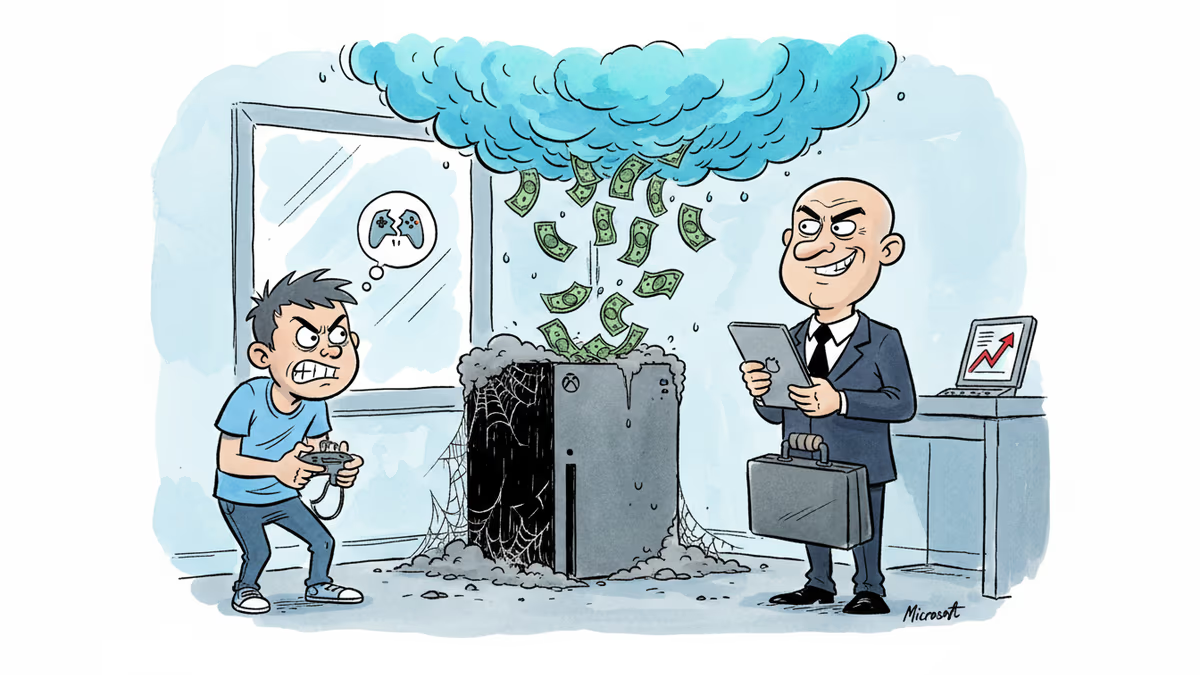
Xbox hardware revenue dropped 33% in Q1 2026, yet Microsoft posted $82.9B in total revenue. What this tells us about the future of gaming—and who actually loses.
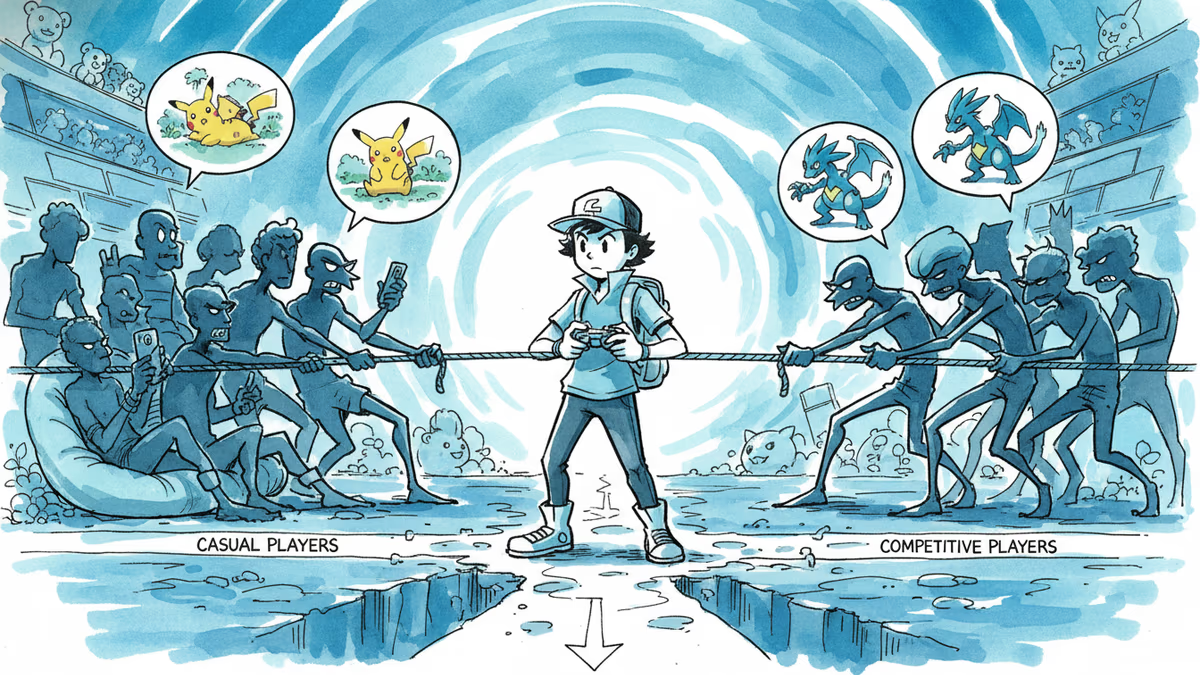
Pokémon Champions launched on Switch with bugs breaking core battle mechanics. But the deeper issue isn't the bugs — it's whether a game trying to please all players can satisfy any of them.
Nine months after a record-breaking launch, Nintendo is cutting Switch 2 production from 6 million to 4 million units per quarter. What went wrong, and what does it signal for the console market?
Sony is pulling its major single-player PlayStation games from PC. After six years of multiplatform expansion, the reversal raises hard questions about exclusivity, hardware sales, and who really controls gaming's future.
Xbox hardware revenue dropped 33% in Q1 2026, yet Microsoft posted $82.9B in total revenue. What this tells us about the future of gaming—and who actually loses.
Pokémon Champions launched on Switch with bugs breaking core battle mechanics. But the deeper issue isn't the bugs — it's whether a game trying to please all players can satisfy any of them.
Nine months after a record-breaking launch, Nintendo is cutting Switch 2 production from 6 million to 4 million units per quarter. What went wrong, and what does it signal for the console market?
Thoughts
Share your thoughts on this article
Sign in to join the conversation