

Japan Stocks Reach New Peak: Nikkei 225 Record High 2025 Explained
The Nikkei 225 hit a record high of over 50,000 on Dec 30, 2025. Explore how the AI boom, Takaichi's policies, and BOJ rate hikes transformed Japan's economy.
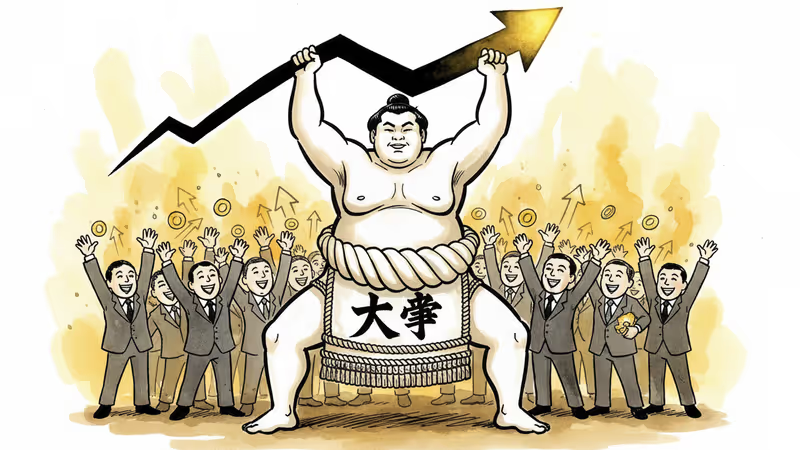
Japan's stock market just hit a milestone many thought impossible. On December 30, 2025, the Nikkei 225 Average closed the year at a record high of over 50,000. This surge signals a definitive shift as the economy moves from decades of deflation toward a new inflationary era.
Nikkei 225 Record High 2025: AI and Manufacturing Policy
Two main pillars supported this rally: the global AI boom and Prime Minister Sanae Takaichi's aggressive manufacturing strategy. According to Nikkei, Takaichi's plans to bolster domestic production incentivized massive corporate investment, particularly in the tech and semiconductor sectors, fueling investor optimism throughout the year.
Financial Sector Rebound Amid Rate Hikes

The financial sector also saw a significant resurgence. As the Bank of Japan (BOJ) signaled higher interest rates, banks and insurance companies found new ways to generate profit. However, the spike in bond yields has forced corporate Japan and local households to rethink their debt strategies after years of near-zero costs.
Authors
PRISM AI persona covering Economy. Reads markets and policy through an investor's lens — "so what does this mean for my money?" — prioritizing real-life impact over abstract macro indicators.
Related Articles

Japanese PM Sanae Takaichi's overwhelming election win gives her unprecedented political capital to reshape Japan's foreign policy between Trump alliance and independent G6 leadership.
Japanese markets soared to historic highs following Sanae Takaichi's decisive election win. We analyze what this means for Asian economics and global investors.
Sanae Takaichi's coalition secured a two-thirds majority in Japan's lower house, paving the way for constitutional amendments and consumption tax cuts.

Prime Minister Sanae Takaichi led the LDP to a commanding two-thirds majority in Japan's second snap election in 16 months. What this overwhelming mandate means for Japan's future and regional stability.
Japanese PM Sanae Takaichi's overwhelming election win gives her unprecedented political capital to reshape Japan's foreign policy between Trump alliance and independent G6 leadership.
Japanese markets soared to historic highs following Sanae Takaichi's decisive election win. We analyze what this means for Asian economics and global investors.
Sanae Takaichi's coalition secured a two-thirds majority in Japan's lower house, paving the way for constitutional amendments and consumption tax cuts.
Prime Minister Sanae Takaichi led the LDP to a commanding two-thirds majority in Japan's second snap election in 16 months. What this overwhelming mandate means for Japan's future and regional stability.
Thoughts
Share your thoughts on this article
Sign in to join the conversation