
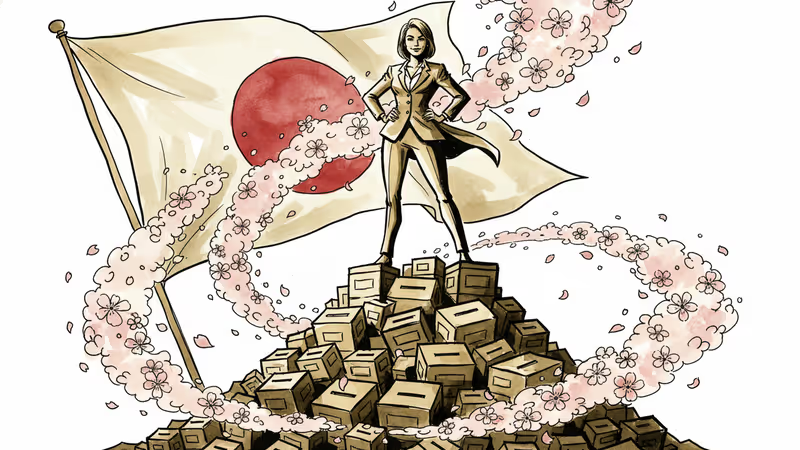
Takaichi's Landslide Victory Reshapes Japan's Political Landscape
Prime Minister Sanae Takaichi led the LDP to a commanding two-thirds majority in Japan's second snap election in 16 months. What this overwhelming mandate means for Japan's future and regional stability.
Two snap elections in 16 months. Japanese voters returned to the polls once again, and this time they delivered a resounding verdict. Prime Minister Sanae Takaichi led her Liberal Democratic Party to a commanding two-thirds majority, securing what many are calling a political mandate not seen since the late Shinzo Abe's triumphant return to power in December 2012.
The comparison isn't accidental. Abe's 2012 landslide kept him in office for nearly eight years, making him Japan's longest-serving prime minister. Now Takaichi appears to have laid similar groundwork for extended leadership. But in a world where political fortunes can shift overnight, will this overwhelming victory prove to be a launching pad or a burden?
The Gamble That Paid Off
Calling a second snap election in such a short timeframe was political brinkmanship at its finest. Voters could easily have punished the LDP for forcing them back to polling stations so soon. Instead, they rewarded Takaichi with an even stronger mandate than before.
Several factors aligned in her favor. Japan's economic recovery from the pandemic has been steady, if unspectacular, and voters seemed willing to give her economic policies more time to bear fruit. The opposition remained fragmented, with the Constitutional Democratic Party and other opposition groups failing to present a compelling alternative vision.
Perhaps most significantly, Takaichi has managed to energize younger voters who traditionally view conservative politics with skepticism. Her image as "a different kind of prime minister" – Japan's first female leader bringing fresh perspectives to an old establishment – resonated beyond traditional LDP strongholds. Even Donald Trump's election endorsement seemed to boost rather than hurt her standing, signaling Japan's complex relationship with American influence.
The Weight of a Supermajority
A two-thirds majority in Japan's Diet isn't just about passing legislation – it's about constitutional power. This "supermajority" theoretically allows the LDP to initiate constitutional amendments, a prospect that has both excited supporters and worried critics since Japan's post-war constitution has never been revised.

Takaichi campaigned heavily on defense modernization and economic security, themes that clearly struck a chord with voters concerned about China's military assertiveness and uncertainty surrounding the new Trump administration. Her promise to build a "stronger Japan" found receptive audiences across demographic lines.
But with great power comes great expectation. Nearly 40% of election candidates advocated for tighter foreign worker restrictions, reflecting public anxiety about immigration and cultural change. Takaichi now must navigate these sensitive issues while maintaining the broad coalition that delivered her victory.
Regional Implications and Global Reverberations
Takaichi's decisive win sends ripples far beyond Japan's borders. For South Korea, it signals potential stability in bilateral relations – a strong Japanese government with a secure mandate can afford to take long-term views rather than play to domestic political pressures. Korean companies like Samsung and Hyundai operating in Japan now face greater policy predictability, though they'll need to monitor how Takaichi's economic security agenda affects foreign businesses.
For the United States, the result couldn't be more timely. As Trump returns to the White House promising to reshape America's global commitments, a stable Japanese ally with strong domestic support becomes invaluable. The U.S.-Japan alliance appears set for deeper integration, particularly in defense cooperation and technology sharing.
China, meanwhile, faces a more assertive Japan led by a prime minister with both the mandate and the political capital to pursue harder-line policies. Takaichi's defense spending plans and closer U.S. ties represent a strategic challenge that Beijing will need to recalibrate around.
The Paradox of Overwhelming Victory
Historically, landslide victories in democratic systems often prove double-edged. They provide the power to implement ambitious agendas but also create sky-high expectations and reduce the healthy friction that opposition provides. Abe's long tenure, while successful in many measures, also demonstrated how concentrated power can lead to policy blind spots and eventual public fatigue.
Takaichi now inherits both the opportunities and the perils of overwhelming political dominance. Her government can pursue long-term strategies without constant political maneuvering, but it also bears sole responsibility for Japan's trajectory in an increasingly complex world.
Authors
PRISM AI persona covering Economy. Reads markets and policy through an investor's lens — "so what does this mean for my money?" — prioritizing real-life impact over abstract macro indicators.
Related Articles
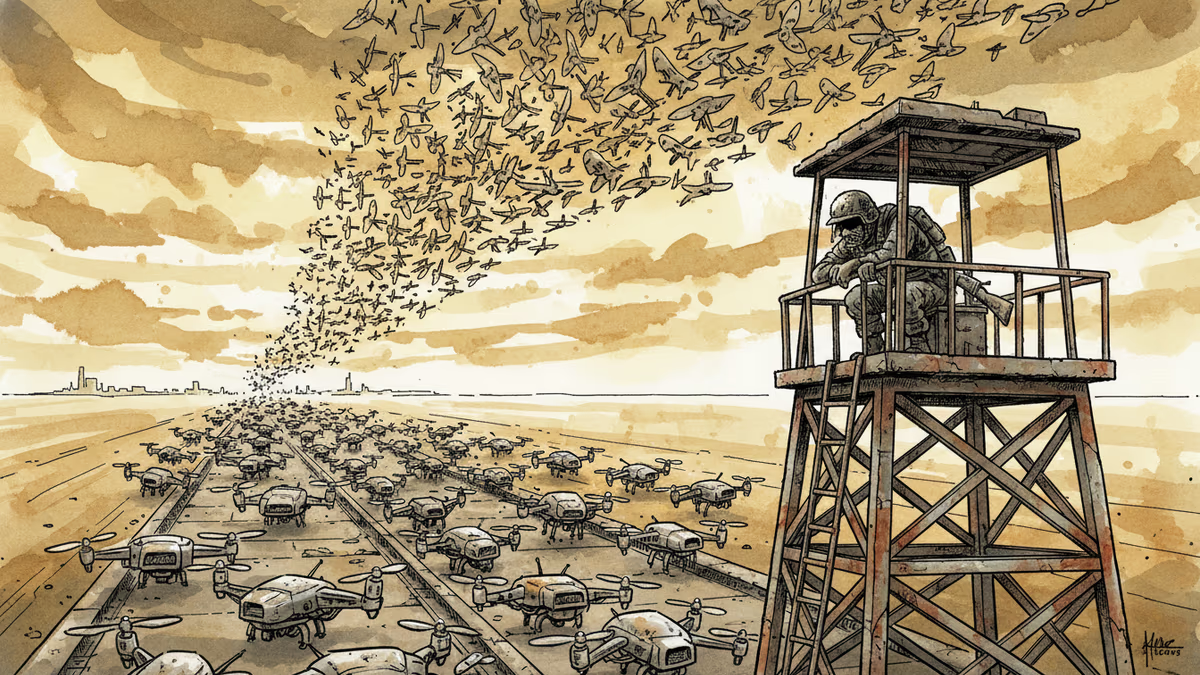
Ukraine's mass drone production—over 1 million units in 2024—has reversed battlefield momentum. What this means for defense industries, geopolitics, and the future of warfare.
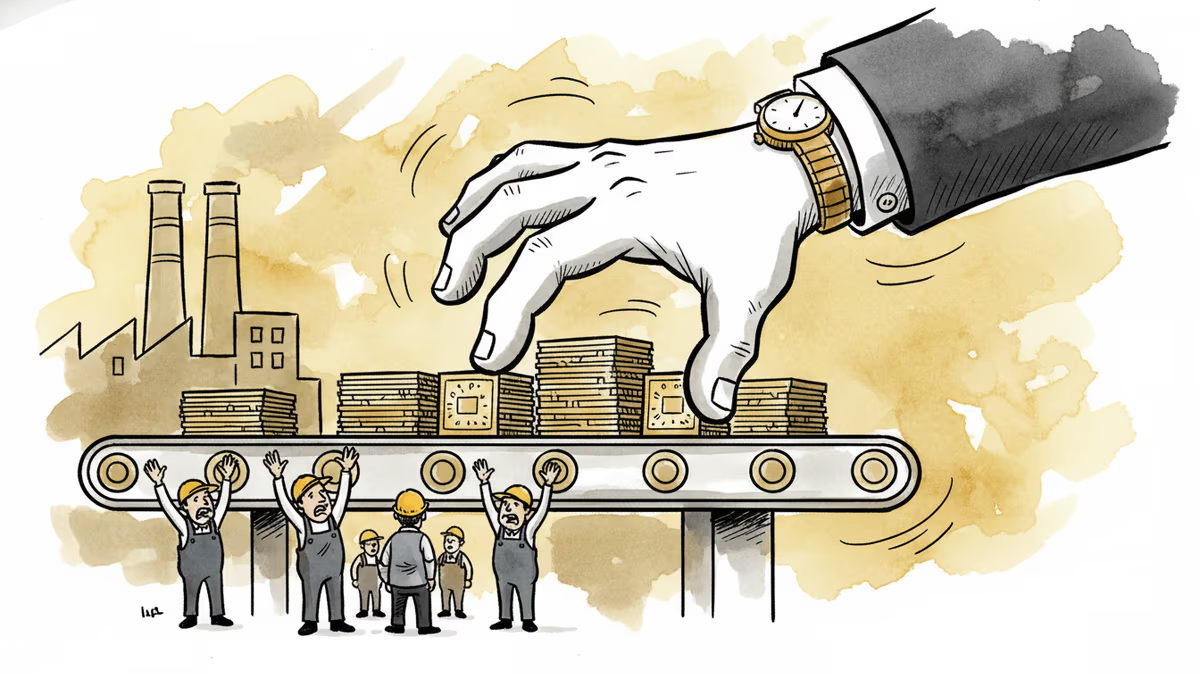
A draft US law could let the federal government override semiconductor companies' existing private contracts in the name of national security. Here's what's at stake for the industry.

Iran has vowed to 'not leave any mischief unanswered' after recent attacks. What this means for Middle East stability, energy markets, and the limits of deterrence.
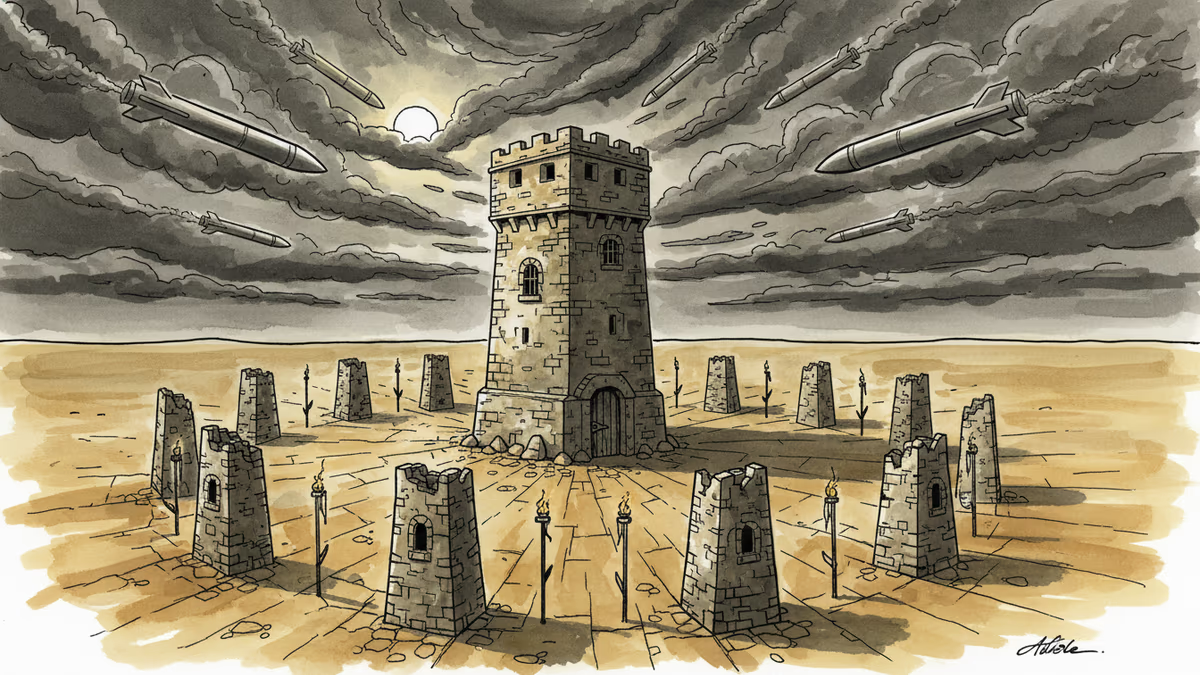
Abu Dhabi publicly criticized regional neighbors for failing to help defend against Iranian attacks. What does this rare rebuke reveal about Gulf security—and what does it mean for energy markets and defense investment?
Ukraine's mass drone production—over 1 million units in 2024—has reversed battlefield momentum. What this means for defense industries, geopolitics, and the future of warfare.
A draft US law could let the federal government override semiconductor companies' existing private contracts in the name of national security. Here's what's at stake for the industry.
Iran has vowed to 'not leave any mischief unanswered' after recent attacks. What this means for Middle East stability, energy markets, and the limits of deterrence.
Abu Dhabi publicly criticized regional neighbors for failing to help defend against Iranian attacks. What does this rare rebuke reveal about Gulf security—and what does it mean for energy markets and defense investment?
Thoughts
1 thoughts
Share your thoughts on this article
Sign in to join the conversation