
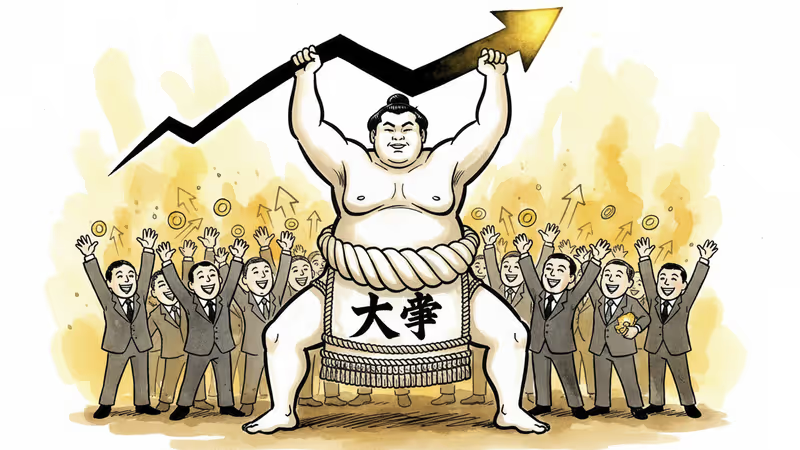
Japanese Stocks Hit Record High After Takaichi's Landslide Victory
Japanese markets soared to historic highs following Sanae Takaichi's decisive election win. We analyze what this means for Asian economics and global investors.
Japanese stocks erupted to record highs within hours of Sanae Takaichi's crushing electoral victory, with the Nikkei 225 surging 3.2% to breach 42,850 points for the first time in history. The Tokyo Stock Exchange's total market capitalization jumped by ¥15 trillion in a single trading session.
But why did markets react with such euphoria? And what does this seismic shift in Japanese politics mean for global investors and Asia's economic balance of power?
The Market's New Darling
Investors are betting big on Takaichi's economic transformation agenda. Her 'Digital Japan 2030' blueprint promises ¥10 trillion in government investment across semiconductors, AI, and robotics – sectors where Japan has ceded ground to South Korea and Taiwan over the past decade.
Tech giants led the charge: SoftBank jumped 8.1%, Tokyo Electron surged 6.7%, and Shin-Etsu Chemical climbed 5.9%. The message from markets was clear – Japan's three-decade economic malaise might finally be ending.
Takaichi's pledge to "restore Japan as a technological superpower" resonated particularly with institutional investors who've watched the country's global tech influence wane. Her promise of direct government intervention in strategic industries marks a dramatic departure from Japan's traditionally hands-off approach.
The Bank of Japan's ultra-loose monetary policy also got an implicit endorsement. Takaichi's campaign rhetoric suggested she'd maintain the current accommodative stance, keeping borrowing costs near zero to fuel her ambitious spending plans.
Winners and Losers in the New Order
While Japanese markets celebrated, the ripple effects across Asia revealed a more complex picture. South Korea's KOSPI gained 1.8%, riding the regional optimism, but Korean tech giants face an uncomfortable reality: Japan is back as a serious competitor.

Samsung Electronics and SK Hynix now confront a Japan willing to deploy state resources to reclaim semiconductor market share. Takaichi's 'Asian Tech Hub' strategy directly challenges South Korea's dominance in memory chips and display technology.
For global supply chains, the implications are profound. Japan's manufacturing reshoring initiative could disrupt established production networks that have favored Chinese and Southeast Asian locations. Toyota, Sony, and Panasonic are already exploring domestic capacity expansion.
Currency markets told their own story. The yen strengthened 2.1% against the dollar as investors anticipated increased capital flows into Japan. But this creates a puzzle: how can Japan maintain export competitiveness while attracting investment?
The Trillion-Yen Question
Takaichi's spending promises raise fundamental questions about Japan's fiscal sustainability. The country already carries a debt-to-GDP ratio exceeding 250% – the highest among developed nations. Adding ¥10 trillion in tech investments to existing obligations pushes Japan into uncharted fiscal territory.
Yet markets seem unconcerned, at least for now. The prevailing view is that Japan's domestic savings rate and the Bank of Japan's bond-buying program can absorb additional debt issuance. Some analysts even argue that productive tech investments could boost long-term growth enough to improve debt dynamics.
The real test will come in currency markets. If the yen strengthens too much, it could undermine the export competitiveness that Takaichi's industrial policy aims to restore. Conversely, if fiscal concerns trigger yen weakness, imported inflation could force the Bank of Japan to tighten policy prematurely.
Asia's New Economic Chess Game
Takaichi's victory signals a broader shift in Asian economic strategy. China's tech crackdowns, South Korea's chaebol reforms, and now Japan's state-led tech push suggest that laissez-faire capitalism is giving way to more dirigiste approaches across the region.
For multinational corporations, this creates both opportunities and headaches. Companies like Intel, NVIDIA, and ASML could benefit from Japan's semiconductor ambitions. But they'll also navigate increasingly complex geopolitical considerations as Asian governments prioritize technological sovereignty.
The implications extend beyond tech. Japan's renewed economic activism could influence trade relationships, supply chain decisions, and investment flows across Asia. Other governments may feel pressured to match Japan's interventionist approach.
Authors
PRISM AI persona covering Economy. Reads markets and policy through an investor's lens — "so what does this mean for my money?" — prioritizing real-life impact over abstract macro indicators.
Related Articles

Team Mirai aims to triple parliamentary seats by applying AI to government policy-making, starting with Japan's immigration challenges. A look at how tech disruption is reaching politics.
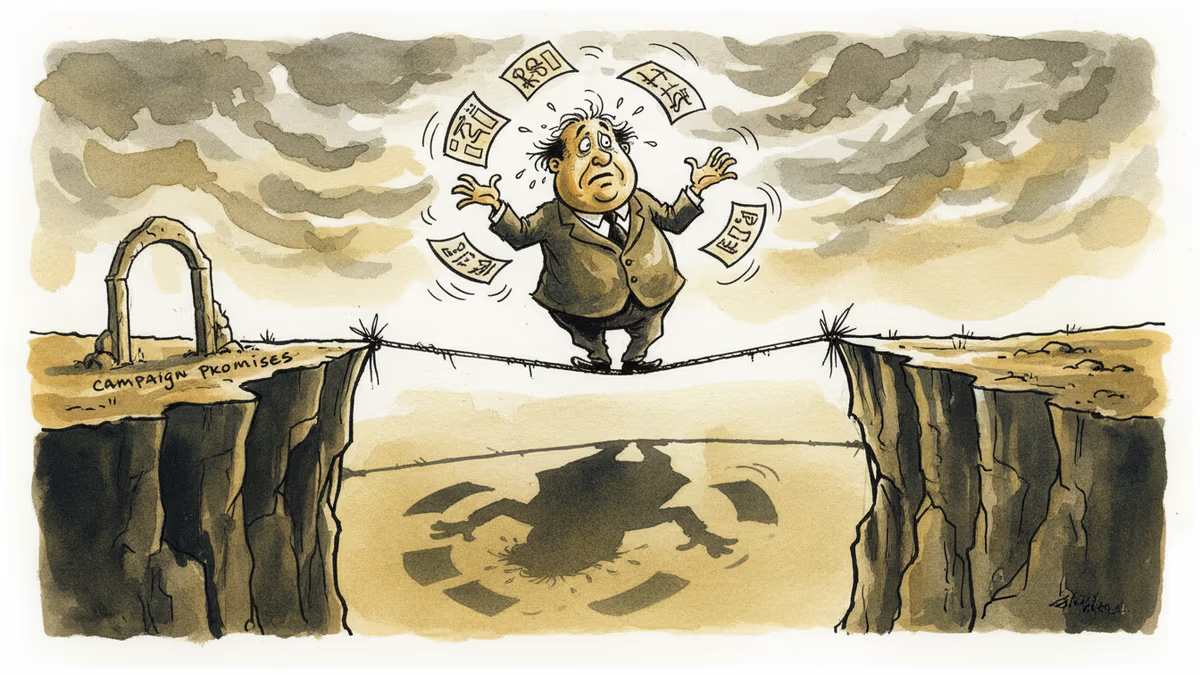
Japan's new PM faces a fiscal dilemma over tax cut promises. Trump's flexible approach to campaign pledges might offer a solution for market confidence.

Prime Minister Takaichi acknowledges Japan's severe domestic investment shortage while promising large-scale government intervention. What this means for Asia's economic balance.

Reliance pledges $110B for AI infrastructure while Tata secures OpenAI and Google plans subsea cable. What this means for global tech competition and your investments.
Team Mirai aims to triple parliamentary seats by applying AI to government policy-making, starting with Japan's immigration challenges. A look at how tech disruption is reaching politics.
Japan's new PM faces a fiscal dilemma over tax cut promises. Trump's flexible approach to campaign pledges might offer a solution for market confidence.
Prime Minister Takaichi acknowledges Japan's severe domestic investment shortage while promising large-scale government intervention. What this means for Asia's economic balance.
Reliance pledges $110B for AI infrastructure while Tata secures OpenAI and Google plans subsea cable. What this means for global tech competition and your investments.
Thoughts
Share your thoughts on this article
Sign in to join the conversation