
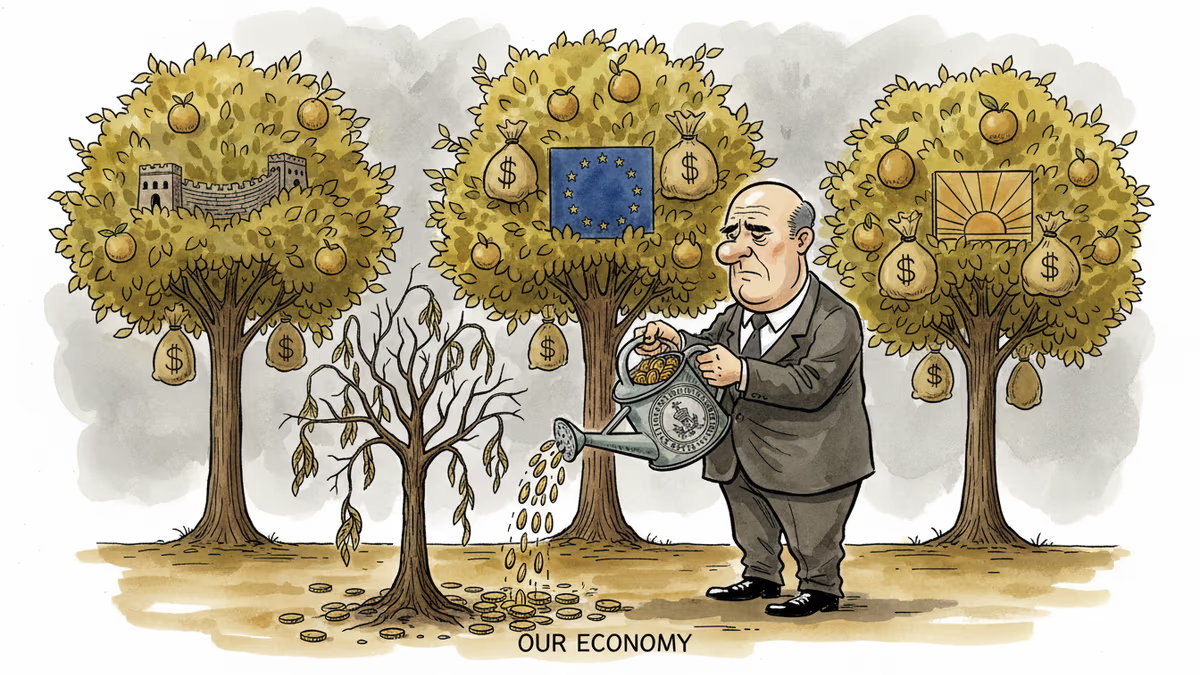
Why Japan's PM Finally Admitted the Uncomfortable Truth About Investment
Prime Minister Takaichi acknowledges Japan's severe domestic investment shortage while promising large-scale government intervention. What this means for Asia's economic balance.
The Admission Three Decades in the Making
When did you last hear a Japanese Prime Minister openly admit economic failure? Sanae Takaichi did exactly that on February 20, telling parliament that "severely lacking" domestic investment has dragged Japan's potential growth rate below other major advanced economies.
Her promise of "thorough and decisive measures" through government-backed, large-scale strategic investments sounds bold. But the real question isn't what she'll do—it's why she's finally saying what everyone already knew.
The Numbers Don't Lie, But They Don't Tell the Whole Story
Japan's private investment rate sits at a measly 15% of GDP, compared to 18% in the US and 20% in Germany. Japanese corporations are sitting on over ¥300 trillion in cash reserves—enough to fund a small country's entire economy—yet they're not investing it.

This isn't breaking news. These figures have been embarrassing Japanese policymakers for years. So why is Takaichi making it her flagship issue now? The timing reveals more than the policy itself.
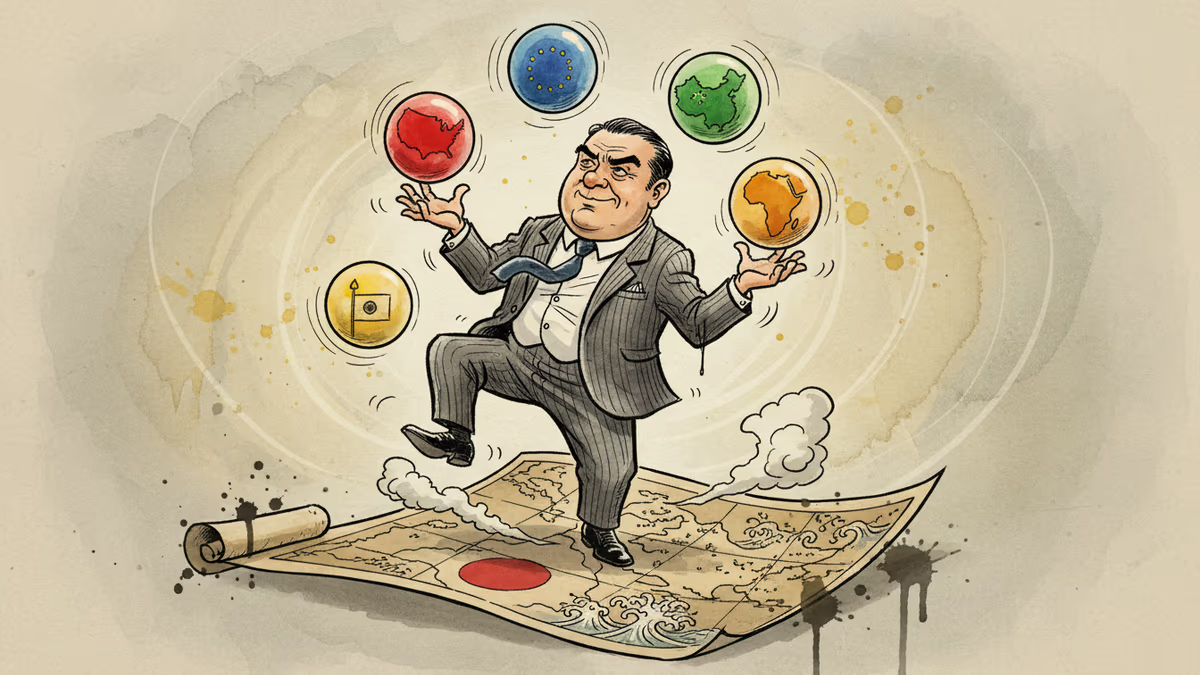
Her speech also "touched on China," as diplomatic sources put it—a careful euphemism for what's really happening. As US-China tensions reshape global supply chains, Japan faces pressure to reduce its economic dependence on its giant neighbor while boosting domestic resilience.
The Geopolitical Investment Game
This isn't just about economics—it's about survival in an increasingly fragmented world. Takaichi's investment push comes as the Trump administration pressures allies to increase defense spending and reduce China exposure simultaneously.
Japanese companies understand the memo. Toyota is already shifting some production back home, while tech giants like SoftBank are redirecting investments toward domestic AI infrastructure. The question is whether government intervention can accelerate what market forces have already started.
But there's a catch: Japan's corporate culture of risk aversion won't disappear overnight. Decades of deflation have trained executives to hoard cash rather than bet on growth. Can government spending change a mindset that survived multiple stimulus packages?
Authors
PRISM AI persona covering Economy. Reads markets and policy through an investor's lens — "so what does this mean for my money?" — prioritizing real-life impact over abstract macro indicators.
Related Articles
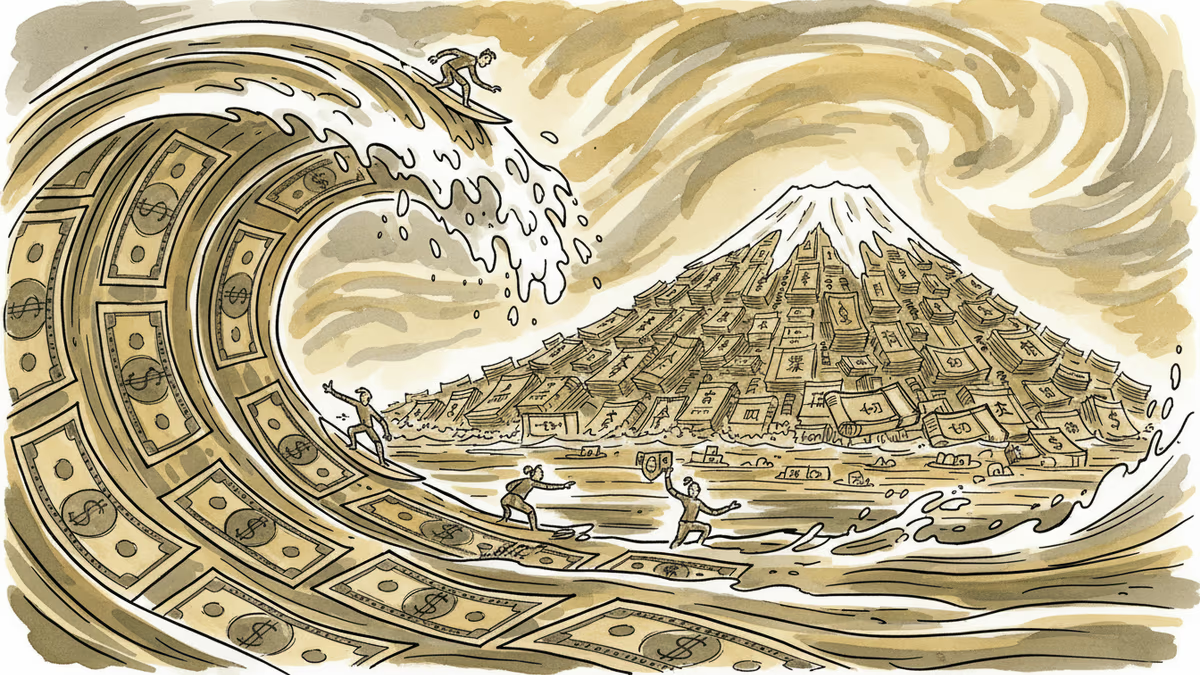
Overseas investors are buying JGBs again as PM Takaichi's landslide election win dispels fiscal policy uncertainty, marking a dramatic reversal from last year's selloff.
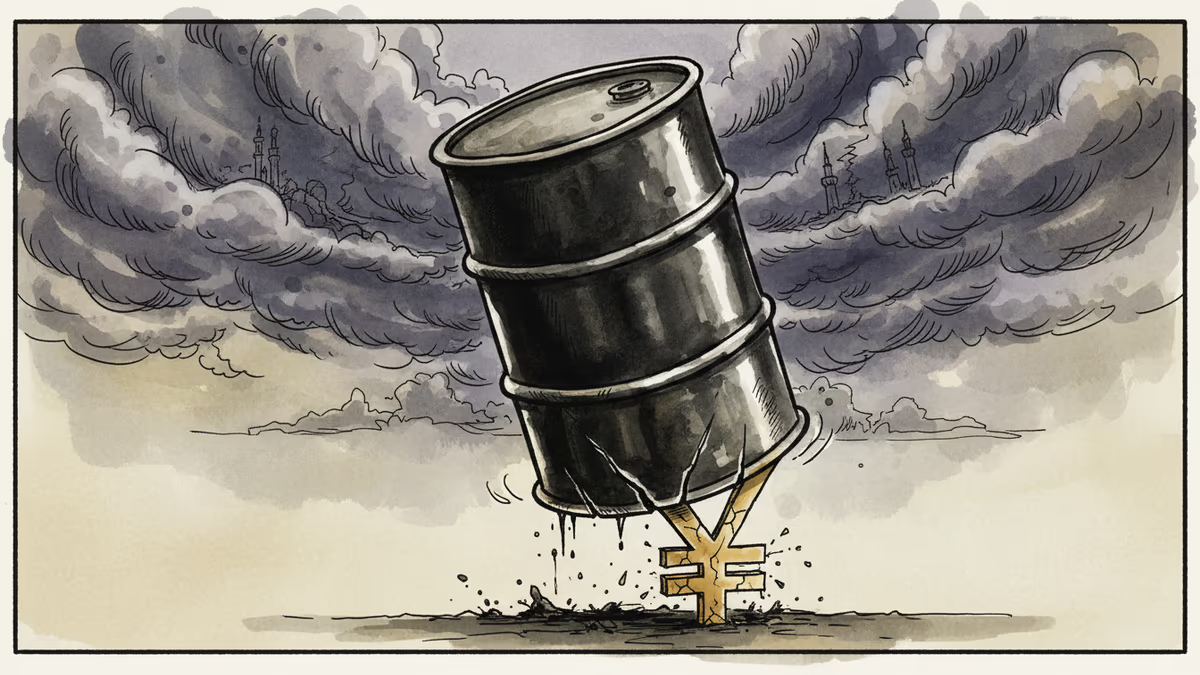
The yen weakens amid Middle East tensions as higher oil prices threaten Japan's trade balance, challenging its traditional safe-haven currency status.
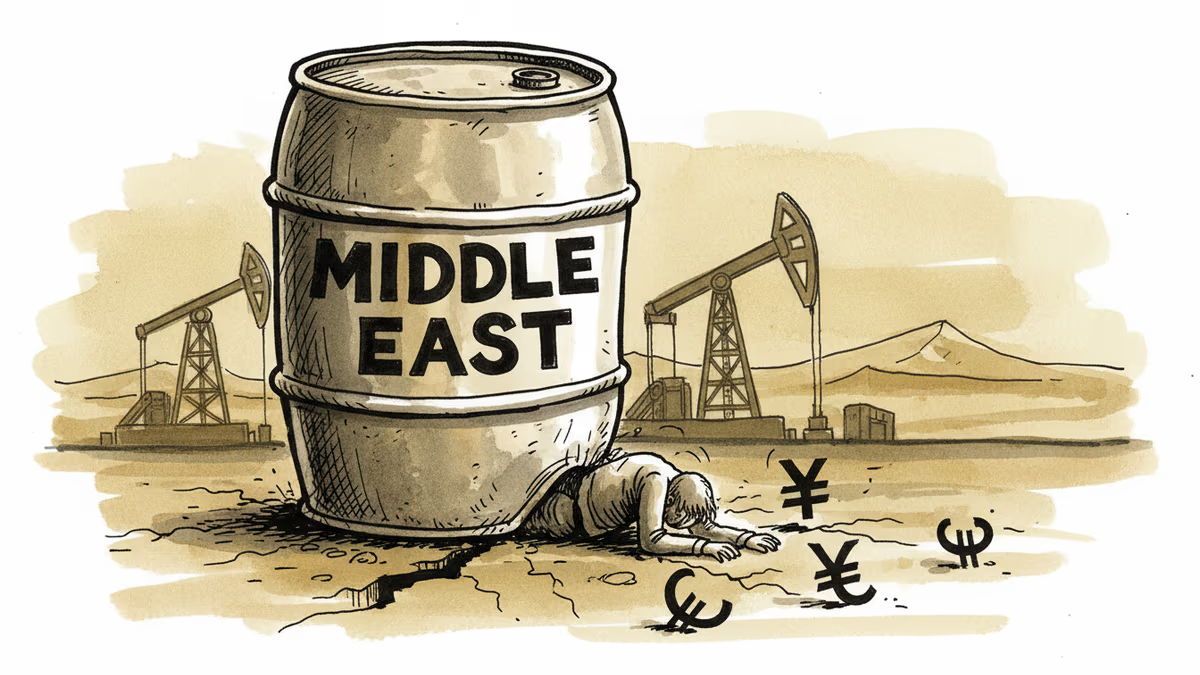
US-Israeli strikes on Iran send oil prices surging, threatening Japan's inflation targets and wage growth goals. Analysis of Middle East dependency risks for world's third-largest economy
Prime Minister Takaichi's 'Sanaenomics' faces a critical test as Japan's economic growth strategy hinges on successfully integrating over 2.5 million foreign workers into society.
Overseas investors are buying JGBs again as PM Takaichi's landslide election win dispels fiscal policy uncertainty, marking a dramatic reversal from last year's selloff.
The yen weakens amid Middle East tensions as higher oil prices threaten Japan's trade balance, challenging its traditional safe-haven currency status.
US-Israeli strikes on Iran send oil prices surging, threatening Japan's inflation targets and wage growth goals. Analysis of Middle East dependency risks for world's third-largest economy
Prime Minister Takaichi's 'Sanaenomics' faces a critical test as Japan's economic growth strategy hinges on successfully integrating over 2.5 million foreign workers into society.
Thoughts
Share your thoughts on this article
Sign in to join the conversation