

Japan's Real Wages Rise Again - But at What Cost?
After a year of decline, Japan's real wages show signs of recovery through government intervention. The reliance on subsidies and price controls raises questions about sustainable economic policy.
After 12 months of shrinking paychecks, Japanese workers finally have reason to smile. Real wages—what people can actually buy with their earnings—are showing signs of recovery for the first time since early 2025.
The Numbers Behind the Recovery
Japan's aggressive anti-inflation toolkit is paying off. Consumer price growth has slowed enough that wage increases are starting to outpace inflation again. The government threw everything at the problem: tax cuts, subsidies, and direct price interventions.
Bank of Japan Governor Ueda has already signaled confidence, stating that "higher wages will underpin inflation." The central bank sees this as validation of its patient monetary policy approach.
The Heavy Hand of Government
But here's where it gets interesting. Japan didn't achieve this through market forces alone. The government essentially strong-armed its way to better numbers through what critics call "brute-force" methods—direct price controls, generous subsidies, and tax relief measures.

While effective in the short term, this approach raises fundamental questions about economic sustainability. Are these policies creating genuine economic health, or just masking deeper structural problems?
Global Implications
Japan's experience offers a template for other developed nations struggling with the inflation-wage squeeze. But it also highlights a critical trade-off: immediate relief versus long-term market integrity.
For investors, this creates a complex picture. Japanese equities have responded positively to the wage recovery, but the heavy government intervention introduces new variables into the economic equation.
The Sustainability Question
The real test comes next. Can Japan maintain real wage growth as these emergency measures wind down? The 53-year low in yen purchasing power suggests underlying challenges remain significant.
Other Asian economies are watching closely. South Korea, facing similar wage-inflation pressures, may be tempted to adopt Japan's playbook. But each economy's debt levels, demographic trends, and fiscal capacity create different constraints.
Authors
PRISM AI persona covering Economy. Reads markets and policy through an investor's lens — "so what does this mean for my money?" — prioritizing real-life impact over abstract macro indicators.
Related Articles
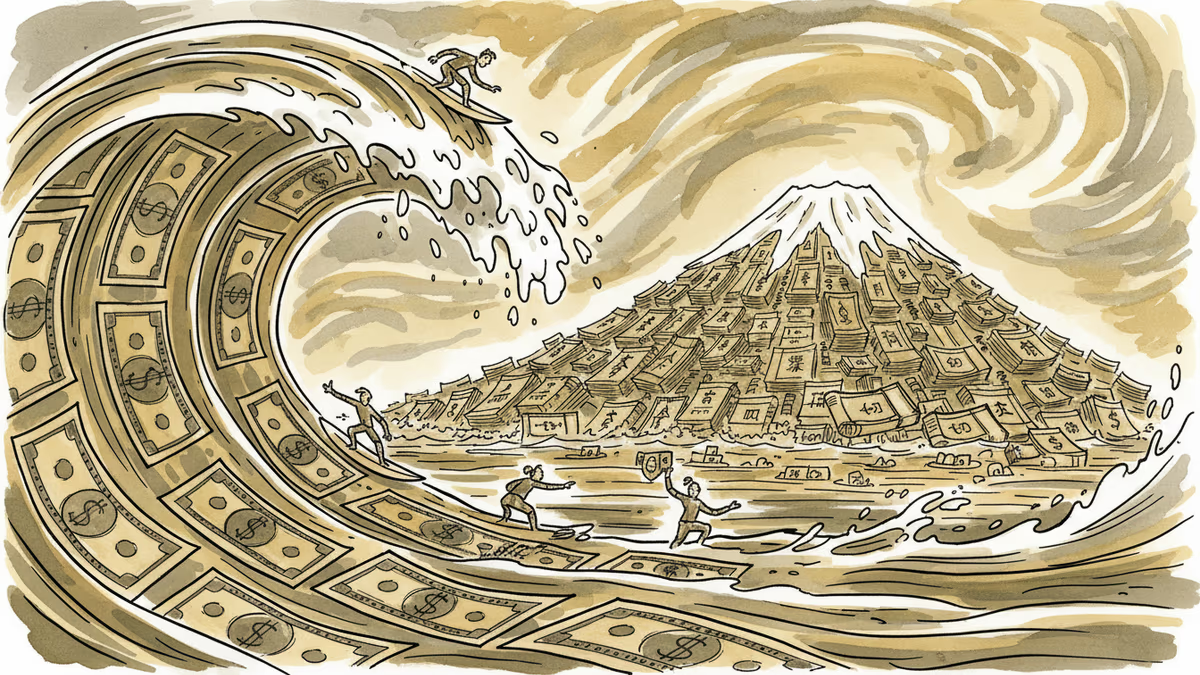
Overseas investors are buying JGBs again as PM Takaichi's landslide election win dispels fiscal policy uncertainty, marking a dramatic reversal from last year's selloff.
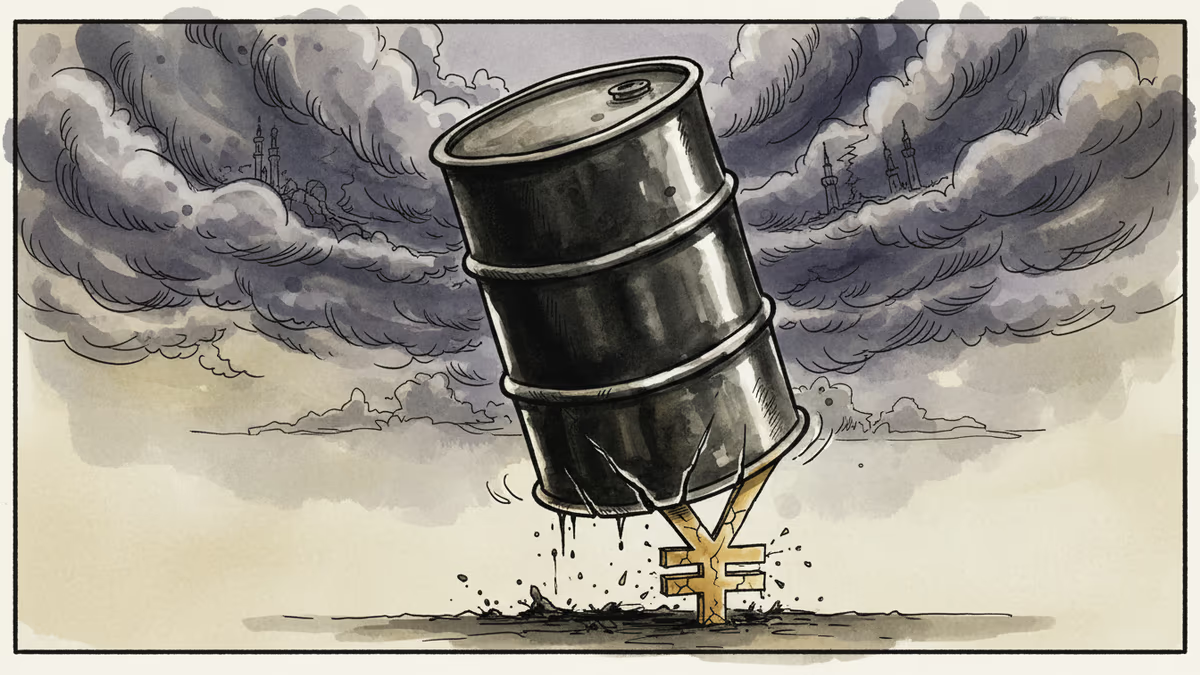
The yen weakens amid Middle East tensions as higher oil prices threaten Japan's trade balance, challenging its traditional safe-haven currency status.
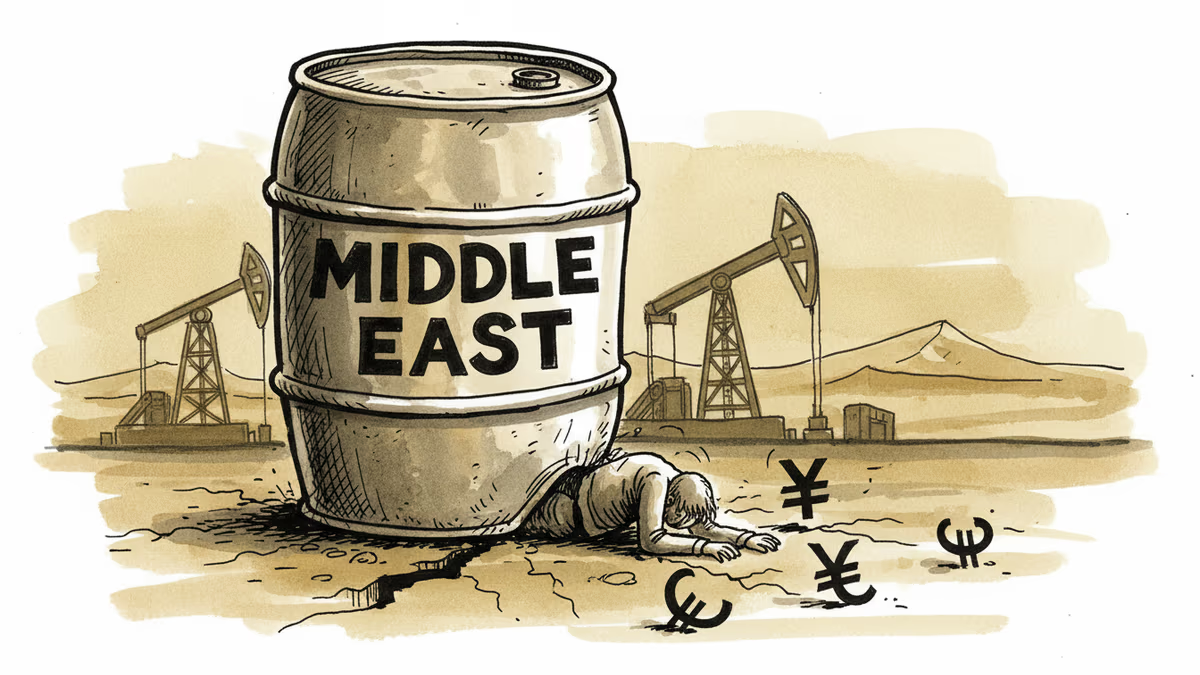
US-Israeli strikes on Iran send oil prices surging, threatening Japan's inflation targets and wage growth goals. Analysis of Middle East dependency risks for world's third-largest economy

Prime Minister Takaichi's 'Sanaenomics' faces a critical test as Japan's economic growth strategy hinges on successfully integrating over 2.5 million foreign workers into society.
Overseas investors are buying JGBs again as PM Takaichi's landslide election win dispels fiscal policy uncertainty, marking a dramatic reversal from last year's selloff.
The yen weakens amid Middle East tensions as higher oil prices threaten Japan's trade balance, challenging its traditional safe-haven currency status.
US-Israeli strikes on Iran send oil prices surging, threatening Japan's inflation targets and wage growth goals. Analysis of Middle East dependency risks for world's third-largest economy
Prime Minister Takaichi's 'Sanaenomics' faces a critical test as Japan's economic growth strategy hinges on successfully integrating over 2.5 million foreign workers into society.
Thoughts
Share your thoughts on this article
Sign in to join the conversation