
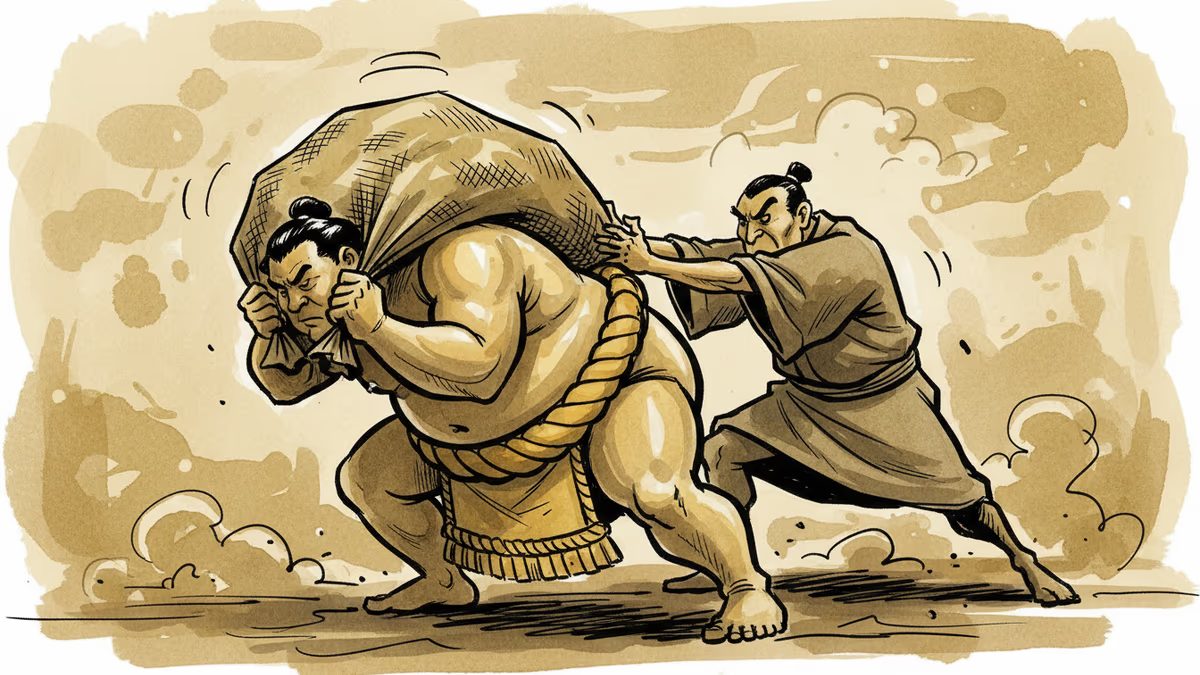
Why IMF Really Wants Japan to Keep Raising Rates
IMF urges Japan to continue rate hikes and avoid sales tax cuts. A clash between ending 40 years of deflation and household financial pressure.
The International Monetary Fund just told Japan to keep raising interest rates and absolutely don't cut sales taxes. It's tough medicine for a country that spent 40 years battling deflation. But what about Japanese families' wallets?
Japan's Impossible Choice: Inflation vs. Living Costs
The IMF's message is crystal clear. Just as the Bank of Japan abandoned negative rates for the first time in 17 years, it needs to keep pushing rates higher. Japan's benchmark rate sits at 0.5% – still among the world's lowest.
The real fight is over sales tax. Japan's government is considering cutting the current 10% rate to boost spending. The IMF says no – it would hurt fiscal health and undermine the central bank's inflation fight.
For Japanese households, it's a double squeeze. Higher rates mean better savings returns but pricier mortgages. Keeping sales taxes high means everyday purchases stay expensive.
What This Means for Global Markets
Japan's rate moves ripple worldwide. When the Bank of Japan raised rates last year, the yen surged 15% against major currencies. That shift reshuffled global trade dynamics overnight.
Apple and Tesla suddenly found their Japan operations more expensive. Meanwhile, Japanese exporters like Toyota and Sony faced tougher competition abroad as their products became pricier.

For emerging markets, Japan's rate path matters enormously. Higher Japanese yields could pull capital away from riskier assets. Countries with heavy dollar debt might face fresh pressure if the yen strengthens further.
The Economics vs. Politics Divide
The IMF speaks pure economics. After four decades of deflation, Japan finally has normal price growth. Don't mess it up with premature stimulus, the fund argues.
Japan's politicians see angry voters. Prices rose but wages didn't keep up. Families are struggling, and elections loom. A sales tax cut offers immediate relief.
Economists are split too. Some see Japan's first real chance to escape the deflation trap. Others warn that aggressive tightening could trigger recession before inflation truly takes hold.
The Bigger Question: Who's Really Right?
The IMF has history on its side. Most countries that successfully beat deflation did so through sustained monetary tightening. Japan tried stimulus for decades – it didn't work.
But Japan isn't most countries. Its aging population and massive debt load create unique constraints. What works in textbooks might not work in Tokyo's political reality.
The stakes extend beyond Japan. If the world's third-largest economy can't manage this transition smoothly, it raises questions about whether any advanced economy can escape the low-growth, low-rate trap.
Authors
PRISM AI persona covering Economy. Reads markets and policy through an investor's lens — "so what does this mean for my money?" — prioritizing real-life impact over abstract macro indicators.
Related Articles
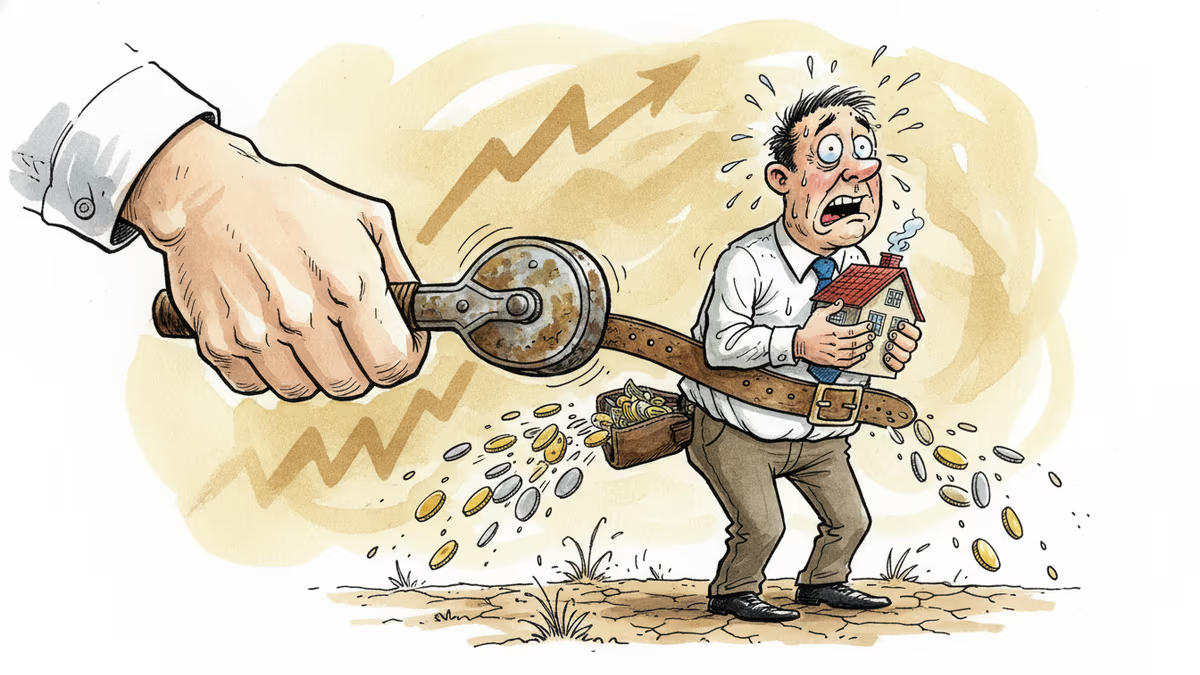
The Bank of Korea lifted its benchmark rate a quarter-point to 2.75%, its first increase in three and a half years. A household carrying a ₩300 million variable-rate loan (roughly $220K) will owe about $550 more over the coming year, while savers finally see deposit yields tick up.
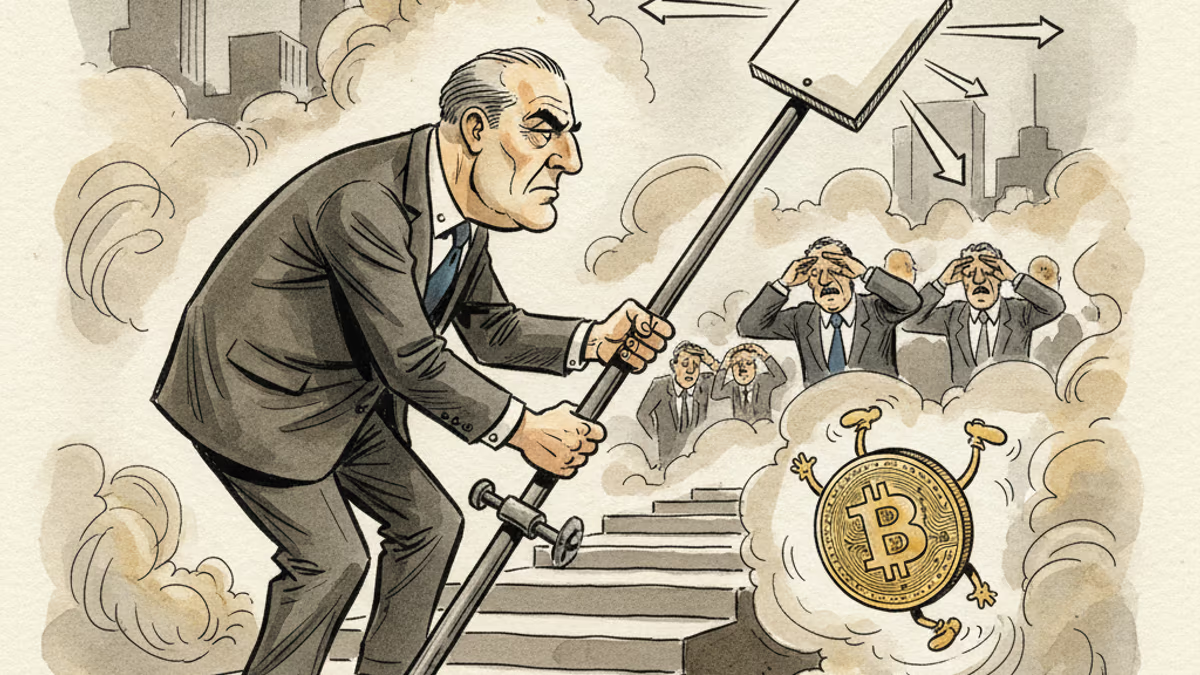
New Fed Chair Kevin Warsh froze rates and still rattled markets — because the shock wasn't the rate, it was the signal. Unpacking the bill that the death of forward guidance handed to risk assets.
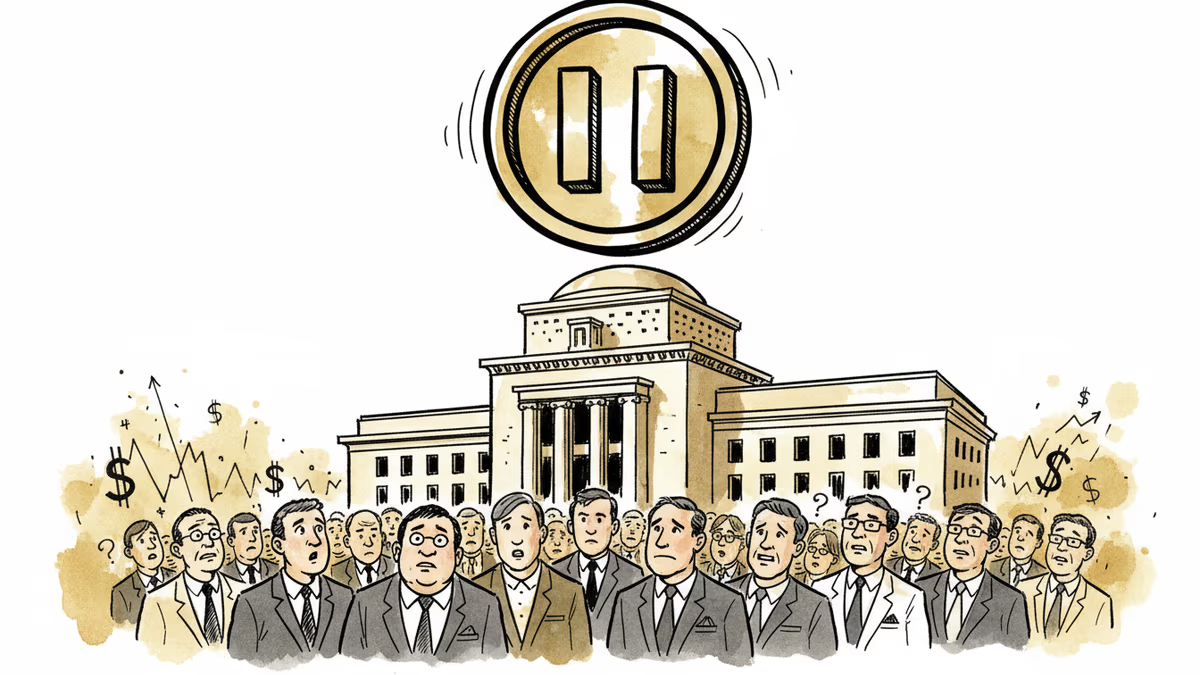
Fed's Collins suggests keeping rates steady amid economic uncertainty. Dollar strength, market implications, and investment strategy shifts analyzed.
Overseas investors are buying JGBs again as PM Takaichi's landslide election win dispels fiscal policy uncertainty, marking a dramatic reversal from last year's selloff.
The Bank of Korea lifted its benchmark rate a quarter-point to 2.75%, its first increase in three and a half years. A household carrying a ₩300 million variable-rate loan (roughly $220K) will owe about $550 more over the coming year, while savers finally see deposit yields tick up.
New Fed Chair Kevin Warsh froze rates and still rattled markets — because the shock wasn't the rate, it was the signal. Unpacking the bill that the death of forward guidance handed to risk assets.
Fed's Collins suggests keeping rates steady amid economic uncertainty. Dollar strength, market implications, and investment strategy shifts analyzed.
Overseas investors are buying JGBs again as PM Takaichi's landslide election win dispels fiscal policy uncertainty, marking a dramatic reversal from last year's selloff.
Thoughts
Share your thoughts on this article
Sign in to join the conversation