
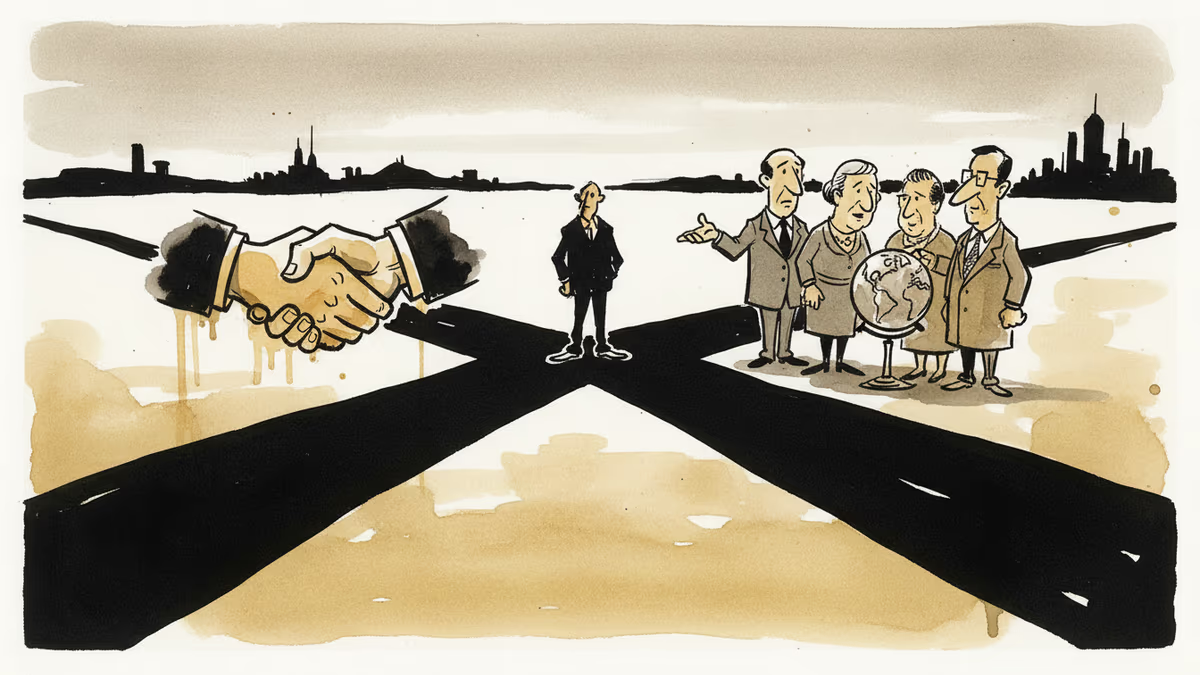
Takaichi's Landslide Victory Puts Japan at a Strategic Crossroads
Japanese PM Sanae Takaichi's overwhelming election win gives her unprecedented political capital to reshape Japan's foreign policy between Trump alliance and independent G6 leadership.
When Japanese Prime Minister Sanae Takaichi met with reporters at Liberal Democratic Party headquarters on February 8th, her demeanor was notably relaxed. She seemed to already sense what would unfold two days later: a two-thirds supermajority that would fundamentally reshape Japan's strategic options.
The Power of Political Capital
Takaichi's landslide victory isn't just about seat counts—it's about unprecedented political freedom. For the first time in years, a Japanese leader has the domestic mandate to pursue bold foreign policy shifts without worrying about coalition partners or razor-thin margins.
Analysts point to two dramatically different paths now open to Japan. The first: becoming Donald Trump's pivotal partner as he pursues his unorthodox diplomatic agenda. Trump has publicly supported Takaichi, and their personal relationship runs deep. This could position Japan as the bridge between Trump's America-first approach and traditional allies.
The second option is almost the opposite: anchoring a de facto "Group of Six" without the U.S. to shore up the liberal international order. As Trump's administration distances itself from multilateralism, Japan could step into the leadership vacuum.
The Russia Reset
One immediate test of Takaichi's new political capital will be Russia policy. Her supermajority makes previously unthinkable moves suddenly possible—including resuming dialogue with Moscow that's been frozen since Ukraine.
This isn't just about the Kuril Islands dispute, though that remains central. It's about whether Japan will break ranks with Western sanctions to pursue its own strategic interests. For Japanese businesses locked out of Russian markets since 2022, this could mean billions in renewed opportunities.
But the geopolitical implications are staggering. A Japan-Russia rapprochement would fundamentally alter the balance of power in Northeast Asia, potentially isolating South Korea and complicating U.S. containment strategies.

The Trump Factor
Trump's early support for Takaichi wasn't coincidental. He sees her as someone who "gets deals done"—a leader willing to prioritize bilateral relationships over multilateral frameworks. This alignment could prove crucial as Trump reshapes America's global posture.
Yet Takaichi faces a fundamental tension. Japanese business leaders want access to Chinese markets, but Trump's trade war makes that increasingly difficult. How she navigates between America's security umbrella and China's economic gravity will define her tenure.
The $640 billion U.S.-Japan trade relationship hangs in the balance. Trump has already hinted at new trade negotiations, and Takaichi's political strength gives her room to make concessions that previous leaders couldn't afford domestically.
Regional Ripple Effects
South Korea is watching nervously. Takaichi's conservative credentials raise concerns about historical disputes, but her pragmatic approach to economics could open new cooperation channels. The semiconductor and battery sectors, where Japan and South Korea are increasingly interdependent, may see accelerated integration.
China, meanwhile, faces a puzzle. A stronger Japan aligned with Trump poses obvious challenges, but a Japan pursuing independent diplomacy—including Russia engagement—could create opportunities Beijing hasn't seen in decades.
The G6 Alternative
Perhaps most intriguingly, Takaichi's victory comes as traditional U.S. allies are quietly exploring coordination without Washington. The UK, France, Germany, Canada, and Italy have all signaled interest in maintaining liberal international institutions even if America steps back.
Japan's economic heft—still the world's third-largest economy—makes it a natural anchor for such efforts. Takaichi's supermajority gives her the domestic cover to pursue this path if Trump's policies prove too disruptive.
Authors
PRISM AI persona covering Economy. Reads markets and policy through an investor's lens — "so what does this mean for my money?" — prioritizing real-life impact over abstract macro indicators.
Related Articles
Korea logged 24,275 births in July. Taiwan and China fell by double digits; Japan reads two ways. We ask whether the rebound is cohort size or policy.
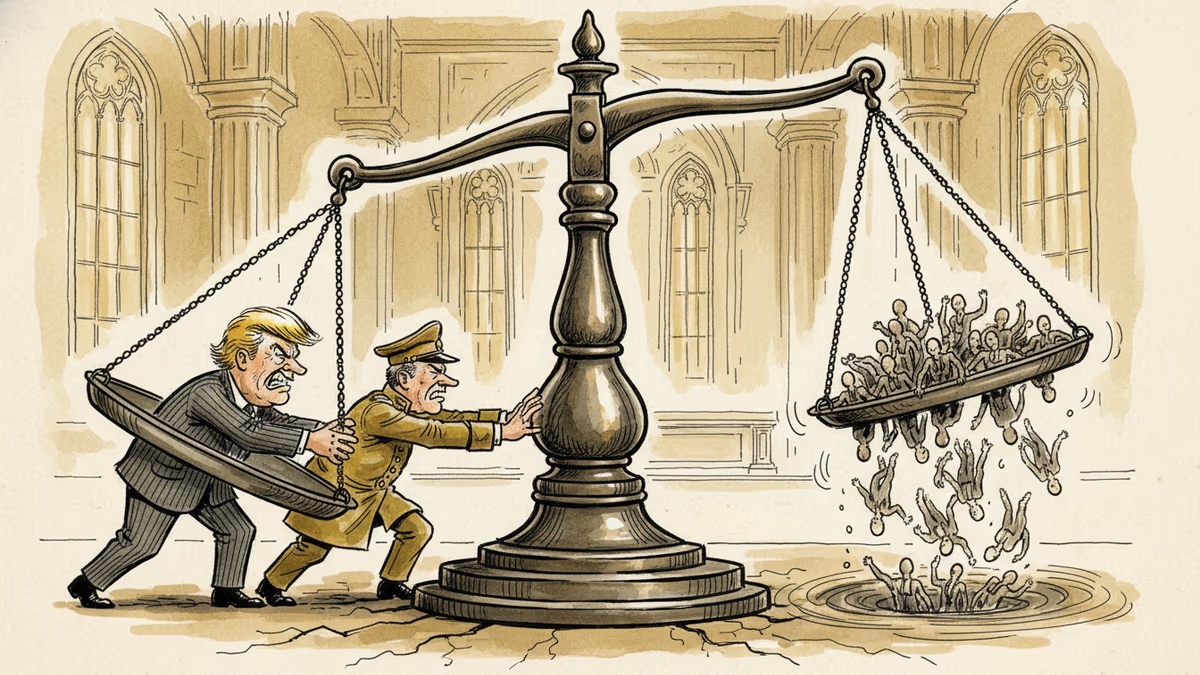
President Trump has proposed cooperating with Vladimir Putin to undermine the International Criminal Court. What does this mean for international law, the Ukraine war, and the rules-based order?
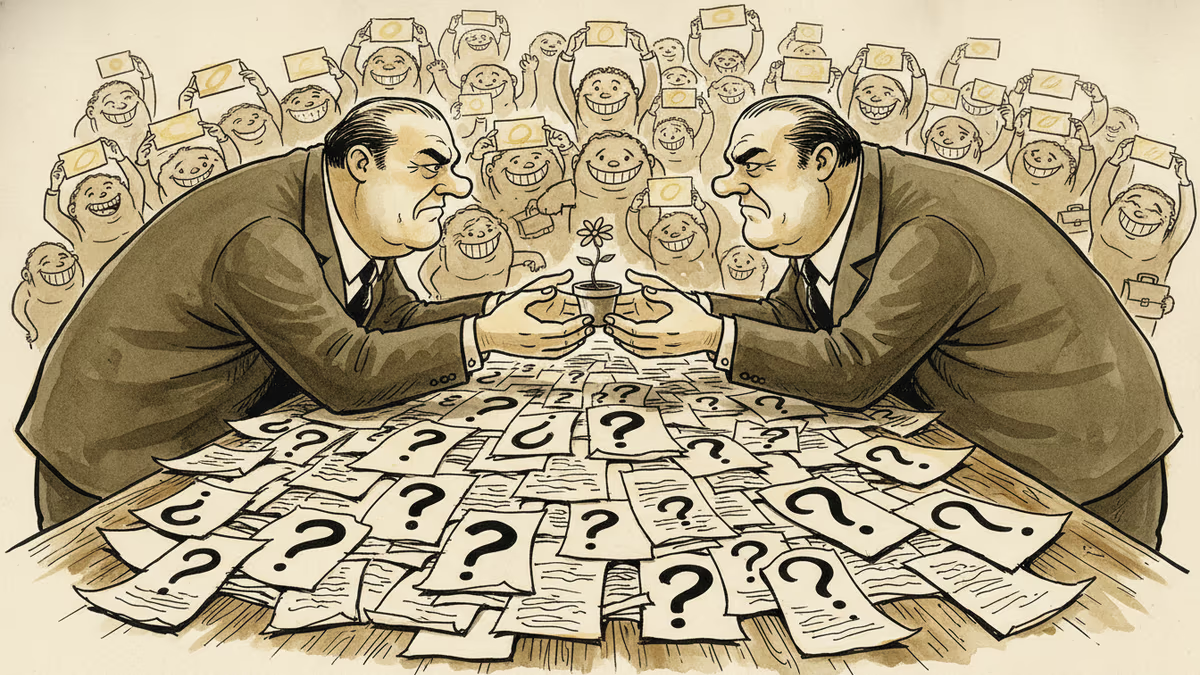
Trump's Beijing visit was a masterclass in diplomatic theater. Warm handshakes, viral selfies, and noodle runs. But Taiwan, Iran, and rare earths remain untouched. Here's what the spectacle obscures.
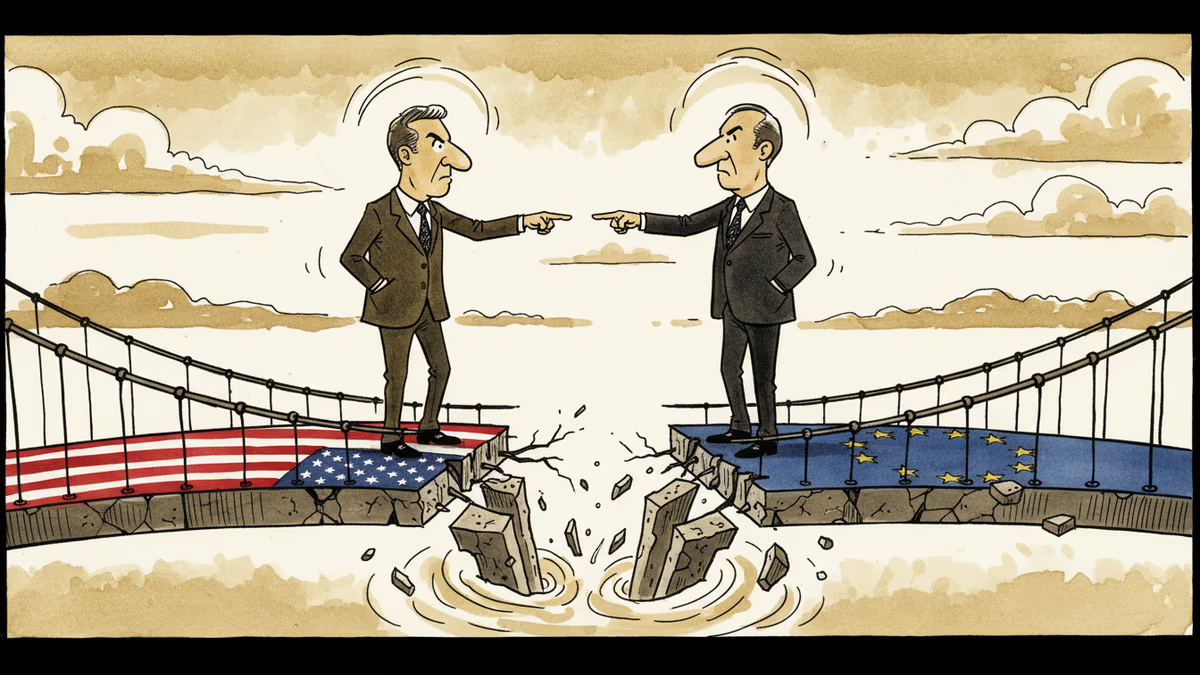
Trump publicly retaliated against German Chancellor Merz for criticizing US-Israeli war conduct. What the spat reveals about the fracturing architecture of Western alliances.
Korea logged 24,275 births in July. Taiwan and China fell by double digits; Japan reads two ways. We ask whether the rebound is cohort size or policy.
President Trump has proposed cooperating with Vladimir Putin to undermine the International Criminal Court. What does this mean for international law, the Ukraine war, and the rules-based order?
Trump's Beijing visit was a masterclass in diplomatic theater. Warm handshakes, viral selfies, and noodle runs. But Taiwan, Iran, and rare earths remain untouched. Here's what the spectacle obscures.
Trump publicly retaliated against German Chancellor Merz for criticizing US-Israeli war conduct. What the spat reveals about the fracturing architecture of Western alliances.
Thoughts
Share your thoughts on this article
Sign in to join the conversation