
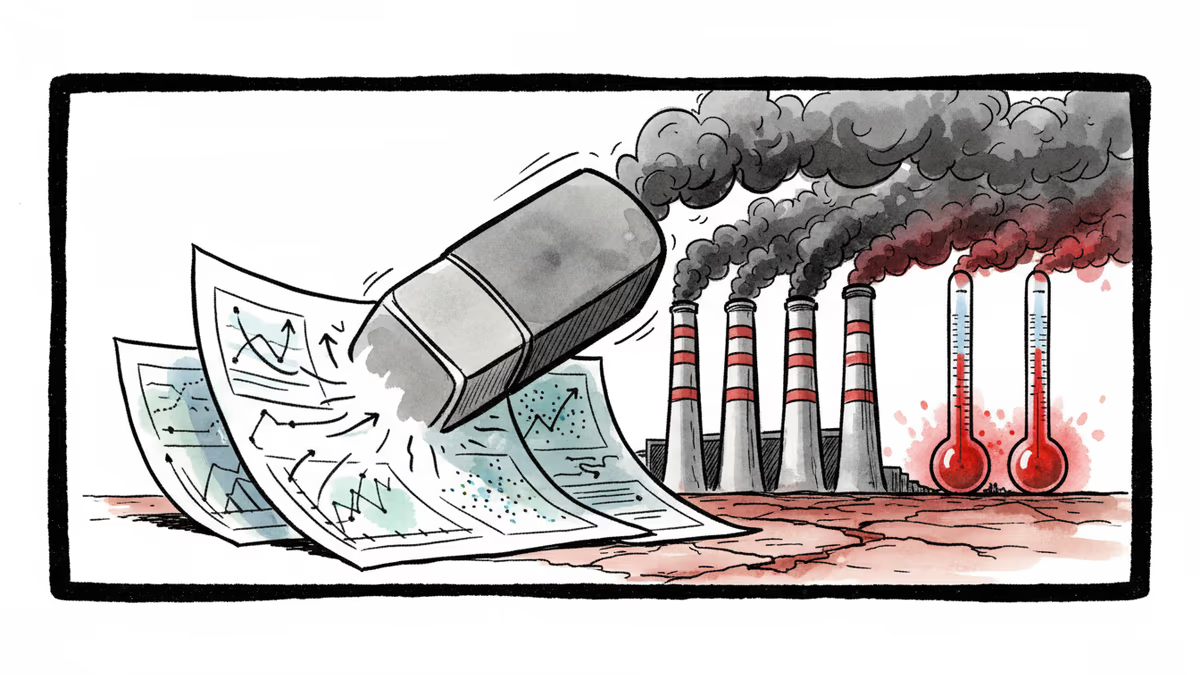
When America Abandons Climate Science
Trump administration set to revoke EPA's 17-year scientific finding on greenhouse gas dangers, dismantling legal foundation for climate action amid record-breaking heat and extreme weather costs.
The Science That's About to Disappear
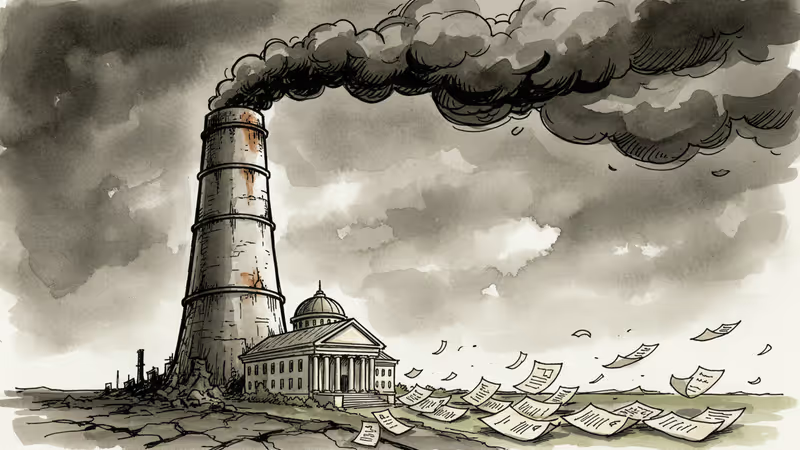
For 17 years, the U.S. Environmental Protection Agency has held one scientific conclusion as gospel: greenhouse gases endanger public health and welfare. This week, that finding—the legal bedrock of America's climate policy—will be officially erased.
EPA Administrator Lee Zeldin will stand alongside President Trump at a Wednesday event promoting coal use while simultaneously repealing mercury and air toxics standards. It's the opening act for what Trump ordered on Day One of his presidency: eliminate the government's role in controlling greenhouse gas pollution.
The timing couldn't be more striking. We're coming off three of the warmest years on record. Scientists are sounding alarms about climate tipping points. States and cities are hemorrhaging money from extreme weather and intensifying wildfires.
And now America is walking away from the table.
The Legal Domino Effect
This isn't just policy theater. By revoking the endangerment finding, the EPA is demolishing its own authority to regulate carbon emissions under the Clean Air Act. Every climate rule, every emission standard, every green initiative—all of it loses its legal foundation.
Think of it as pulling the keystone from an arch. The entire structure of federal climate action comes tumbling down.
But here's the paradox: while Washington retreats from climate science, the physical world doesn't pause for politics. The atmosphere doesn't care about election cycles.

Corporate America's Uncomfortable Reality
Wall Street is watching nervously. Coal companies are celebrating, but they're a shrinking minority. Most of corporate America has already placed its bets on the energy transition.
Tesla isn't suddenly going to stop making electric cars. Google won't abandon its carbon-neutral commitments. Microsoft won't scrap its climate investments. The market momentum toward clean energy has its own logic now, separate from government mandates.
Yet uncertainty breeds caution. Will companies slow their green investments? Will they hedge their bets by keeping fossil fuel options open? The mixed signals create a strategic nightmare for long-term planning.
The Global Chessboard Shifts
China is watching with keen interest. While America retreats from climate leadership, Beijing continues its renewable energy dominance. Chinese companies already control most of the world's solar panel and battery supply chains.
Europe, meanwhile, is doubling down. The EU's carbon border tax moves forward regardless of U.S. policy. American exporters will still face carbon costs when selling to European markets.
This creates a strange bifurcated world: U.S. companies operating under relaxed domestic rules but still needing to meet international climate standards for global trade.
The Innovation Paradox
Here's what makes this moment historically unique: technology may have outpaced policy. Solar and wind are now the cheapest forms of electricity in most markets. Electric vehicle sales continue growing. Energy storage costs keep falling.
The question isn't whether the energy transition will happen—it's whether America will lead it or watch from the sidelines.
Silicon Valley venture capitalists aren't suddenly pulling funding from climate tech startups. The private sector sees opportunities that transcend political cycles.
Authors
Related Articles
After Trump administration officials publicly promoted leucovorin as a potential autism treatment, new prescriptions for children surged 71% in three months. What happens when government rhetoric moves faster than science?
The Trump administration's attempt to overturn 17 years of climate science collapsed under the weight of evidence. What this means for policy and business.
Trump administration eliminates EPA's endangerment finding that enabled greenhouse gas regulations since 2009, potentially reshaping climate policy across all sectors
EPA enforcement cases drop 76% in Trump's second term first year, falling far below even his first presidency. What this means for corporate accountability and environmental protection.
After Trump administration officials publicly promoted leucovorin as a potential autism treatment, new prescriptions for children surged 71% in three months. What happens when government rhetoric moves faster than science?
The Trump administration's attempt to overturn 17 years of climate science collapsed under the weight of evidence. What this means for policy and business.
Trump administration eliminates EPA's endangerment finding that enabled greenhouse gas regulations since 2009, potentially reshaping climate policy across all sectors
EPA enforcement cases drop 76% in Trump's second term first year, falling far below even his first presidency. What this means for corporate accountability and environmental protection.
Thoughts
Share your thoughts on this article
Sign in to join the conversation