
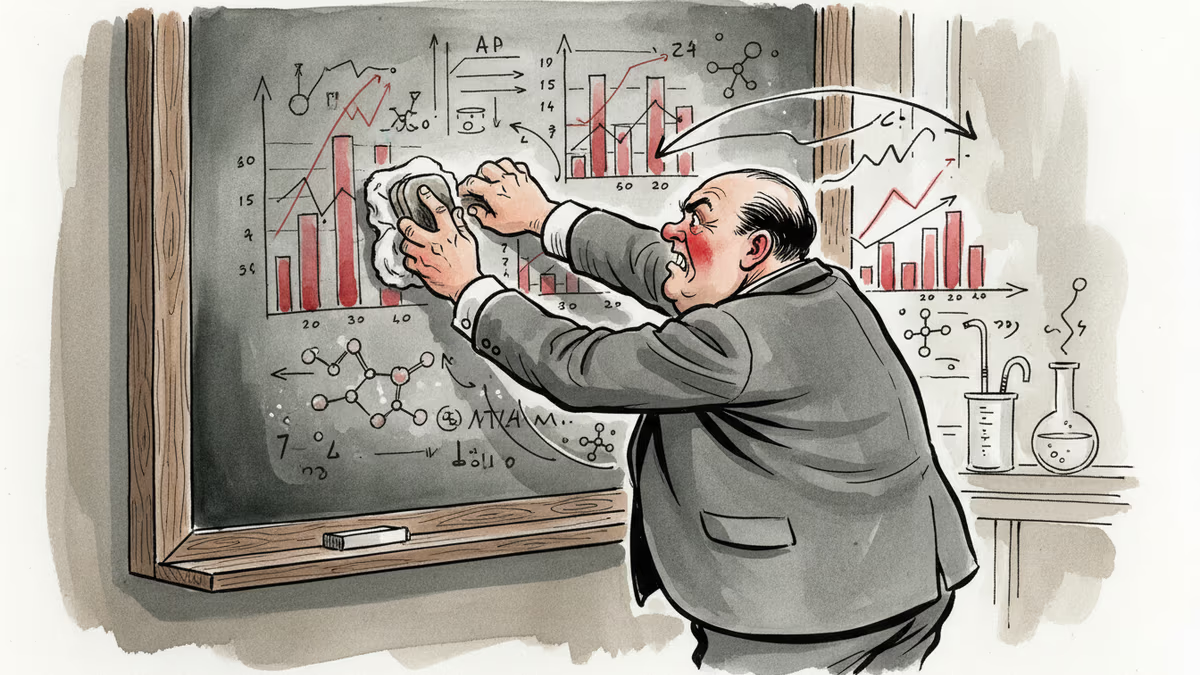
Trump's War on Climate Science Ends in Spectacular Defeat
The Trump administration's attempt to overturn 17 years of climate science collapsed under the weight of evidence. What this means for policy and business.
The $2 Trillion Question That Wouldn't Go Away
The Environmental Protection Agency just tried to erase 17 years of climate science. It didn't work. In what experts are calling a "spectacular miscalculation," the Trump administration's frontal assault on the endangerment finding—the scientific foundation for all US greenhouse gas regulations—collapsed under the weight of evidence.
This wasn't just another policy reversal. The endangerment finding, mandated by the Supreme Court in 2007 and completed under Obama, has theoretically underpinned every carbon regulation since. But here's the twist: even Trump 1.0 left it alone. Why? Because challenging rock-solid science is harder than simply writing weak regulations around it.
When Politics Meets Physics
Trump 2.0 decided to go nuclear. The administration assembled a team of climate contrarians to produce a report questioning the basic science of human-caused climate change. The goal was ambitious: overturn nearly two decades of accumulated evidence linking greenhouse gases to global warming.
The result? What one legal expert called "a face-plant of historic proportions." The scientific community didn't just reject the report—they systematically dismantled it. Meanwhile, courts signaled they weren't buying the administration's arguments either.

Corporate America's Mixed Signals
Here's where it gets interesting. While some traditional energy companies cheered the deregulation attempt, many major corporations were quietly horrified. General Motors, Apple, and Microsoft have invested hundreds of billions in carbon-neutral strategies. Sudden policy whiplash threatens these investments.
The auto industry exemplifies this tension. Companies like Ford and GM have committed to electric vehicle transitions that extend far beyond any single administration. They need regulatory predictability, not political theater.
The Global Reality Check
While Washington played politics with science, the rest of the world moved on. The European Union tightened emissions standards. China accelerated renewable energy deployment. American companies operating globally found themselves caught between domestic policy chaos and international climate commitments.
This disconnect creates a fascinating paradox: US climate policy may be politically volatile, but American businesses increasingly operate under global carbon constraints regardless of what happens in DC.
Authors
Related Articles
Josh D'Amaro took over Disney with a bold Disney Plus vision. Days later, he's in a First Amendment fight with the Trump administration over The View. What does this mean for media freedom?
A gunman attacked a Secret Service checkpoint at the White House Correspondents' Dinner. Trump's first public reaction wasn't about security. It was about his $400M ballroom project.
Scientists warn a strong El Niño could push Earth past the 1.5°C warming threshold within 12-18 months. What that means for weather, food, energy—and the politics of climate action.
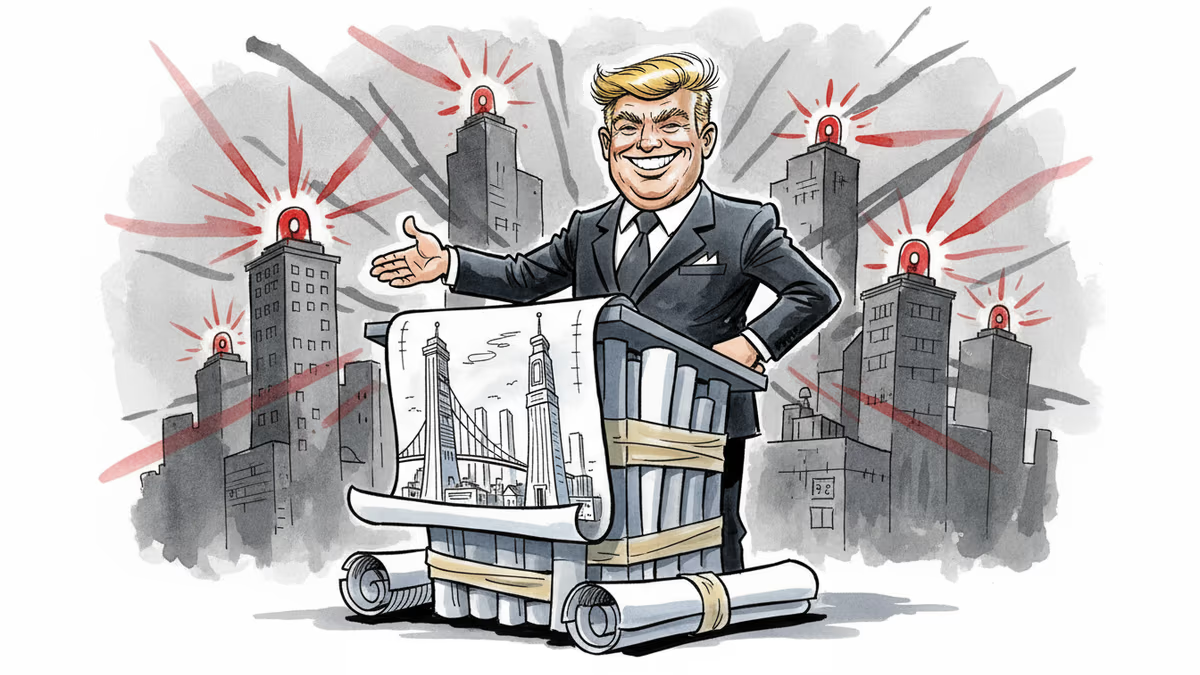
Hours after an armed suspect attempted to breach the White House Correspondents Dinner, Trump used the security scare to publicly defend his White House ballroom project. What does that tell us?
Josh D'Amaro took over Disney with a bold Disney Plus vision. Days later, he's in a First Amendment fight with the Trump administration over The View. What does this mean for media freedom?
A gunman attacked a Secret Service checkpoint at the White House Correspondents' Dinner. Trump's first public reaction wasn't about security. It was about his $400M ballroom project.
Scientists warn a strong El Niño could push Earth past the 1.5°C warming threshold within 12-18 months. What that means for weather, food, energy—and the politics of climate action.
Hours after an armed suspect attempted to breach the White House Correspondents Dinner, Trump used the security scare to publicly defend his White House ballroom project. What does that tell us?
Thoughts
Share your thoughts on this article
Sign in to join the conversation