
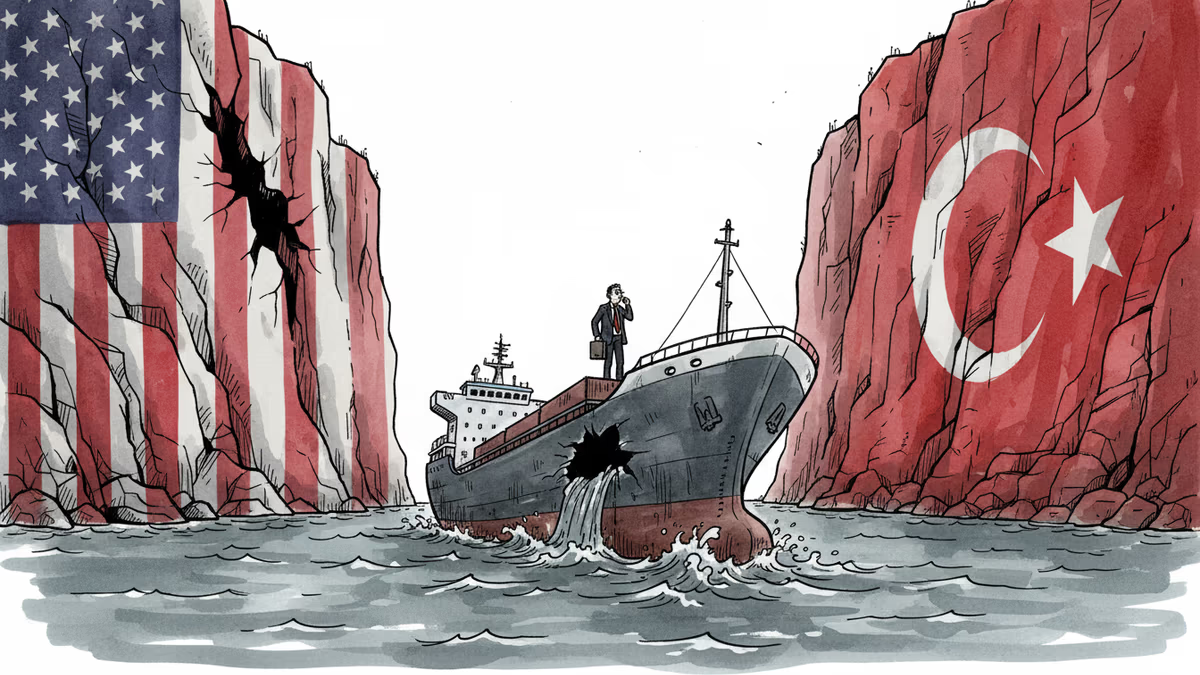
Seoul's Hormuz Moment: Neutrality Under Fire
A confirmed missile strike on South Korean-operated HMM Namu in the Strait of Hormuz is forcing Seoul to reconsider its carefully maintained strategic ambiguity on U.S.-led maritime security operations.
A 7-meter hole in a cargo ship's hull has opened an equally wide gap in South Korea's foreign policy posture.
On May 5, two unidentified flying objects struck the HMM Namu — a Panama-flagged cargo vessel operated by South Korean shipping giant HMM Co. — in the Strait of Hormuz. The strikes triggered an explosion and fire that left the ship crippled. All 24 crew members, including 6 South Koreans, escaped unharmed. The vessel was towed to Dubai's Drydocks World port, where a seven-member South Korean government investigation team completed its on-site assessment by May 10.
The conclusion was unambiguous: an external strike. The perpetrator was not.
What the Investigation Found — and Didn't
Seoul's Foreign Ministry confirmed that two projectiles hit the Namu in sequence, leaving the hull ruptured and the interior scorched. But the ministry stopped short of identifying the exact type of weapon used, citing "limitations" in its forensic capabilities. More pointedly, it declined to name a responsible party, stating it would not "prejudge" the matter pending further analysis.
That restraint is deliberate. President Trump moved faster, publicly asserting that Iran had "taken some shots" at the vessel and immediately pressing Seoul to join coalition efforts to keep the strait open. South Korea's response was measured: Foreign Ministry spokesperson Park Il confirmed that a "close review is under way" on joining U.S. plans, including the Maritime Freedom Construct (MFC) — a framework combining intelligence sharing, diplomatic coordination, and military presence in the strait.
The MFC is Washington's current vehicle for building a multilateral security architecture around the Hormuz chokepoint. Seoul has, until now, kept conspicuously quiet about it.
Why Seoul Has Hesitated

South Korea's caution is not indifference — it's geometry. The country sits at the intersection of competing pressures that make any Hormuz commitment politically and diplomatically costly.
First, there's the Iran dimension. Before U.S. sanctions, South Korea was one of Iran's largest oil customers. Even after sanctions took hold, frozen Iranian assets held in South Korean banks amounted to roughly $7 billion — a figure that became a diplomatic flashpoint and was only partially resolved through a 2023 prisoner exchange deal brokered partly through Seoul's intermediary role. Publicly blaming Tehran for the Namu strike, or deploying forces under a U.S.-led banner, risks closing that diplomatic channel entirely.
Second, the Korean Peninsula calculus is ever-present. South Korea's defense ministry explicitly listed "security conditions on the Korean Peninsula" as one of the factors it must weigh before any deployment decision. Stretching military assets to the Persian Gulf — roughly 7,000 kilometers from Seoul — while North Korea continues to develop its arsenal is not a trivial trade-off.
Third, there's domestic law. Any deployment of the Cheonghae Unit — South Korea's destroyer-based anti-piracy force currently operating in the Gulf of Aden — to the Strait of Hormuz would require National Assembly approval. Given the current political climate in Seoul, that process is unlikely to be swift.
The Strategic Stakes for Everyone Watching
For Washington, the Namu incident is a pressure point arriving at a convenient moment. The Trump administration has been consistent in demanding that allies bear more of the cost of shared security arrangements. A South Korean ship getting hit in a waterway that Seoul depends on for energy imports — approximately 70% of South Korea's crude oil transits through the Strait of Hormuz — makes the ask harder to deflect.
For Tehran, the ambiguity is an asset. As long as attribution remains unconfirmed, Iran retains deniability and avoids the diplomatic fallout of a formal accusation from Seoul, a country it has historically preferred to keep in a neutral posture.
For regional observers — particularly Gulf states like the UAE, where the Namu is now docked — South Korea's response will be read as a signal of how far Seoul is willing to extend its security commitments beyond the Korean Peninsula. Korea Aerospace Industries and Hanwha have defense export relationships across the Gulf; those commercial ties exist within a broader security ecosystem that Seoul's Hormuz stance will inevitably affect.
For the shipping industry, the incident is a reminder that the strait's vulnerability is not hypothetical. Roughly 20% of global seaborne oil passes through Hormuz. Insurance premiums for vessels transiting the strait have already been elevated for years. A confirmed strike on a vessel operated by one of Asia's largest shipping companies will not go unnoticed in freight markets.
This content is AI-generated based on source articles. While we strive for accuracy, errors may occur. We recommend verifying with the original source.
Related Articles

Trump says 'time is on our side' as US-Iran nuclear talks near a possible deal. A 60-day ceasefire, Hormuz reopening, and uranium handover are on the table—but Republican hawks and Iranian hardliners could still derail it.
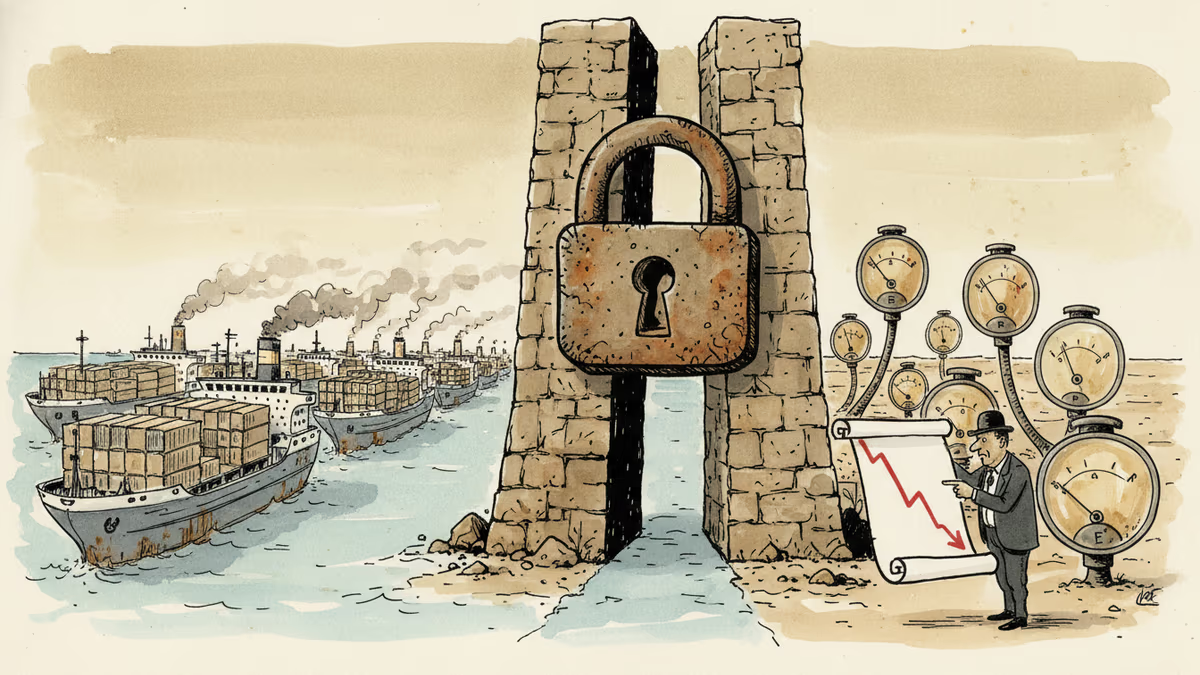
The UN has cut its 2026 global growth forecast to 2.5%, citing the Iran war's disruption of Hormuz shipping. Even after a ceasefire, only 10 ships a day pass where 130 once did.
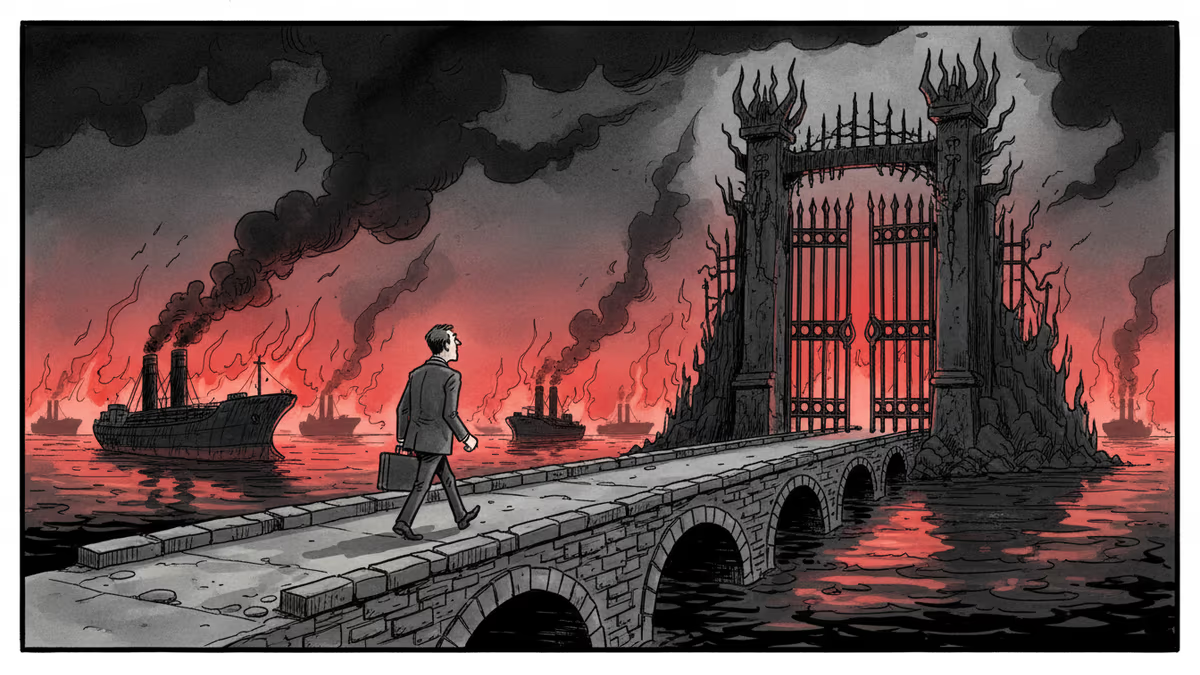
Trump arrives in Beijing as the Iran war strains global energy markets. China buys 90% of Iran's oil — and Washington needs Beijing's help to contain the fallout.
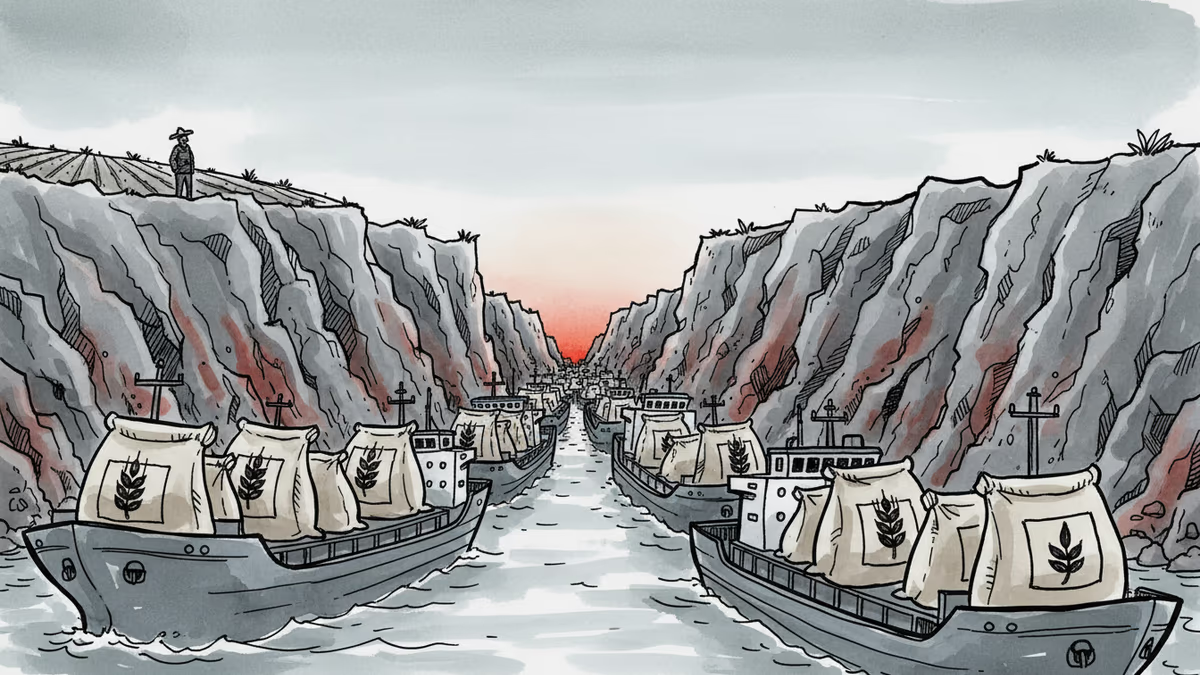
A US-Israeli blockade of the Strait of Hormuz since February 2026 is threatening the global fertilizer supply chain. With planting season approaching, the UN warns of cascading food security shocks.
Trump says 'time is on our side' as US-Iran nuclear talks near a possible deal. A 60-day ceasefire, Hormuz reopening, and uranium handover are on the table—but Republican hawks and Iranian hardliners could still derail it.
The UN has cut its 2026 global growth forecast to 2.5%, citing the Iran war's disruption of Hormuz shipping. Even after a ceasefire, only 10 ships a day pass where 130 once did.
Trump arrives in Beijing as the Iran war strains global energy markets. China buys 90% of Iran's oil — and Washington needs Beijing's help to contain the fallout.
A US-Israeli blockade of the Strait of Hormuz since February 2026 is threatening the global fertilizer supply chain. With planting season approaching, the UN warns of cascading food security shocks.
Thoughts
Share your thoughts on this article
Sign in to join the conversation