
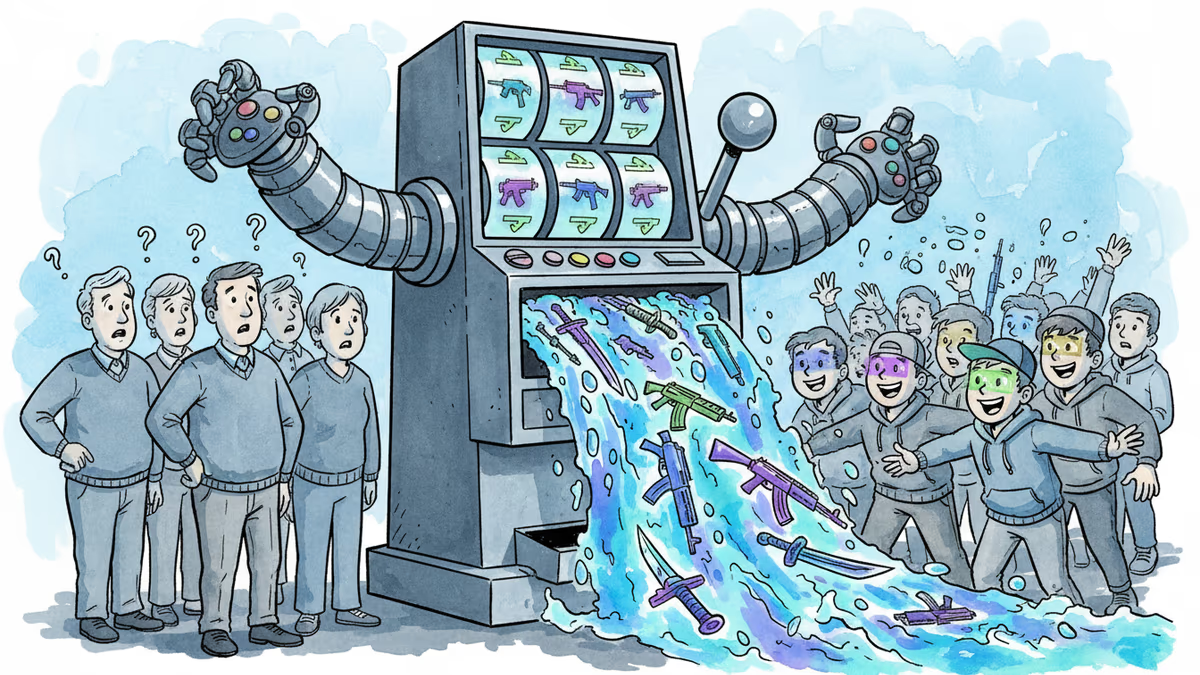
When Your Game Becomes a Casino: Valve Faces Gambling Lawsuit
New York sues Valve over loot boxes in Counter-Strike 2 and other games, claiming they constitute illegal gambling due to real-money trading capabilities
$3 Billion Gaming Giant Accused of Running Illegal Casino
New York state just dropped a legal bombshell on Valve Corporation: you're not a game company, you're an unlicensed gambling operation. The lawsuit targets loot boxes in Counter-Strike 2, Team Fortress 2, and Dota 2, claiming they violate gambling laws because players can sell their virtual winnings for real money.
This isn't your typical loot box controversy. While most game items stay locked within their digital worlds, Valve's system connects directly to real-world economics. Players can trade rare weapon skins worth thousands of dollars through Steam's marketplace or third-party sites.
The legal theory is straightforward: if you're "charging someone for a chance to win something valuable based on luck alone," that's gambling. And gambling requires licenses, age verification, and regulatory oversight that Valve doesn't have.
The Steam Wallet Loophole
Here's where it gets interesting. When players sell skins, they receive Steam Wallet funds that "have equivalent purchasing power as cash" on the platform, according to the lawsuit. Want actual cash? New York investigators showed how easy it is: buy a Steam Deck with wallet funds, then resell it for real money.
This creates what legal experts call a "conversion mechanism" – a way to turn gambling winnings into spendable cash. It's the difference between winning tickets at Chuck E. Cheese (stuck in their ecosystem) and winning chips at a casino (convertible to cash).
The numbers are staggering. While most skins sell for pennies, rare items can fetch $10,000 or more. That's not Monopoly money – that's mortgage payment money.
Parents, Players, and Prosecutors Clash

The gaming community is split. Hardcore players argue this is about choice and skill, not addiction. "I know the odds, I make informed decisions," says one Counter-Strike veteran. "This is like saying trading cards are gambling."
But parents see something darker. These games carry M for Mature ratings, yet there's no age gate for loot box purchases. Kids with access to mom's credit card can essentially gamble without stepping foot in a casino.
Regulators worldwide have been watching. Belgium banned loot boxes as gambling in 2018. The Netherlands followed suit. But the U.S. has been slower to act – until now.
The Billion-Dollar Question
This lawsuit could reshape the entire gaming industry. If New York wins, other states might follow. Game companies could face a choice: eliminate real-money trading or accept gambling regulations.
For Valve, the stakes are enormous. Steam generated an estimated $6.6 billion in revenue in 2023, with a significant chunk coming from marketplace transactions. Losing this case could force a complete business model overhaul.
Competitors are watching nervously. Electronic Arts, Activision Blizzard, and others operate similar systems. A legal precedent here could trigger a domino effect across the industry.
Beyond Gaming: The Digital Economy on Trial
This case touches something bigger than gaming. We're living through the birth of digital ownership, where virtual items have real value. NFTs, virtual real estate, cryptocurrency – the lines between digital and "real" economics are blurring everywhere.
The question isn't just whether loot boxes are gambling. It's whether our 20th-century laws can handle 21st-century digital economies. Should virtual items be treated like physical property? Do digital marketplaces need the same regulations as Wall Street?
Authors
Related Articles
Tesla expanded its driverless robotaxi to Dallas and Houston, even after reporting 14 crashes in Austin. What does this tell us about how autonomous vehicles actually get built?
Pokémon Champions launched on Switch with bugs breaking core battle mechanics. But the deeper issue isn't the bugs — it's whether a game trying to please all players can satisfy any of them.
The Netherlands became the first European country to officially approve Tesla's FSD Supervised. With EU's type-approval framework, this could ripple across 27 member states fast.
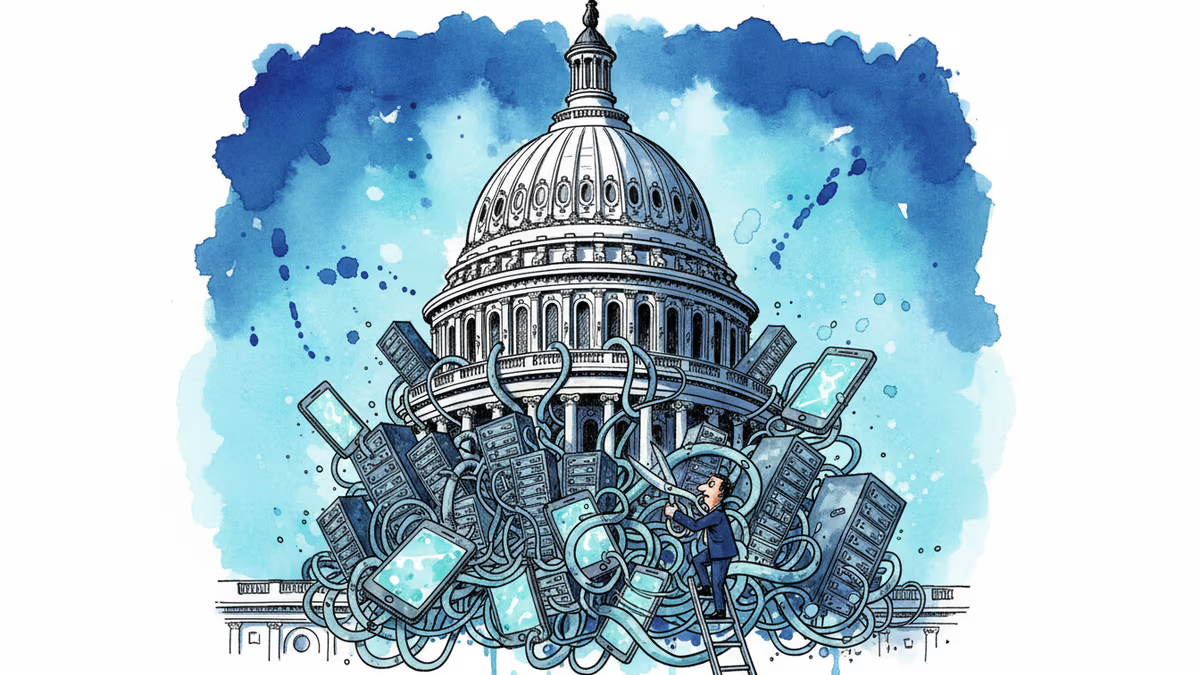
As Washington D.C. enters another political spring, the battle over Big Tech regulation is heating up — and the stakes extend far beyond Silicon Valley.
Tesla expanded its driverless robotaxi to Dallas and Houston, even after reporting 14 crashes in Austin. What does this tell us about how autonomous vehicles actually get built?
Pokémon Champions launched on Switch with bugs breaking core battle mechanics. But the deeper issue isn't the bugs — it's whether a game trying to please all players can satisfy any of them.
The Netherlands became the first European country to officially approve Tesla's FSD Supervised. With EU's type-approval framework, this could ripple across 27 member states fast.
As Washington D.C. enters another political spring, the battle over Big Tech regulation is heating up — and the stakes extend far beyond Silicon Valley.
Thoughts
Share your thoughts on this article
Sign in to join the conversation