
Microsoft's New Gaming CEO Promises No 'AI Slop' Flood
Microsoft shakes up gaming leadership with AI expert Asha Sharma replacing Phil Spencer. She vows to integrate AI without flooding the ecosystem with soulless content.
16 years. That's how long Phil Spencer steered Microsoft's gaming ship before his sudden Friday departure shook the industry. His replacement? Asha Sharma, a former Instacart and Meta executive whose most recent role was president of Microsoft's CoreAI product. The message couldn't be clearer: AI is coming to Xbox, whether gamers like it or not.
When AI Experts Take the Gaming Wheel
Sharma's appointment isn't random. Microsoft has been quietly experimenting with AI-gaming fusion—developing AI gaming companions and releasing a buggy, AI-generated Quake II level that players largely ignored. The results have been mixed at best, disastrous at worst.
In her internal memo leaked by The Verge, Sharma outlined an ambitious vision: "We will invent new business models and new ways to play." She explicitly linked "monetization and AI" as forces that will shape gaming's future. Translation: expect more AI-driven revenue streams.
The 'No Slop' Promise
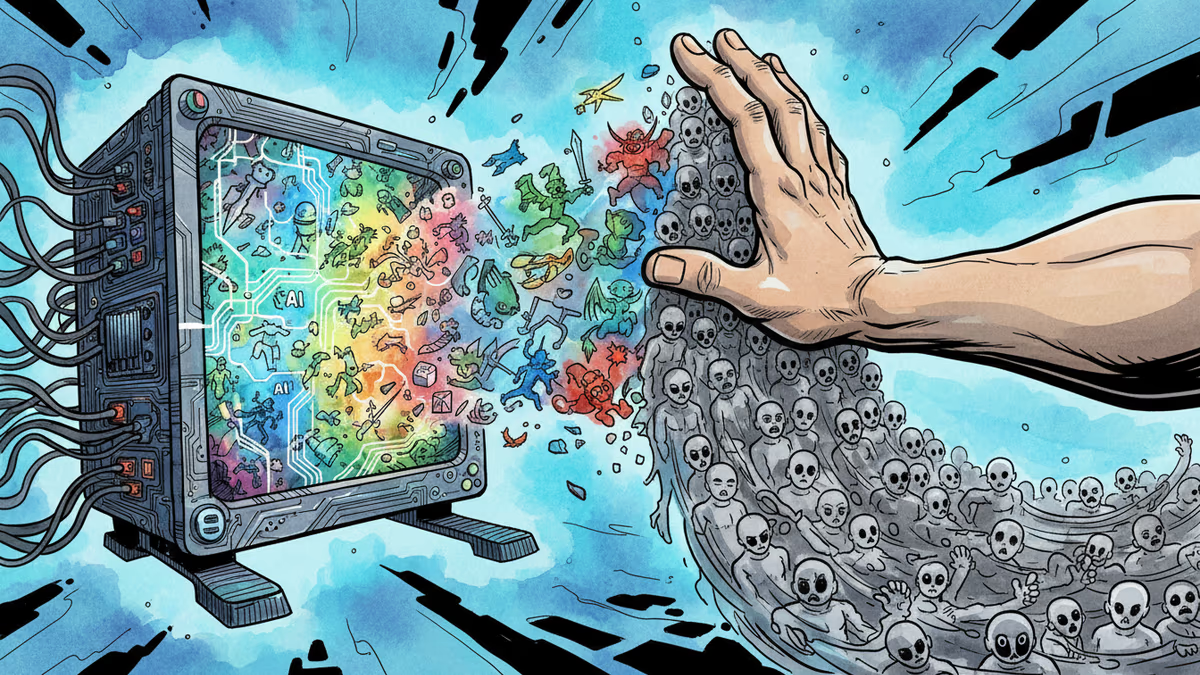
But Sharma also drew a line in the sand. "We will not chase short-term efficiency or flood our ecosystem with soulless AI slop," she wrote. "Games are and always will be art, crafted by humans."

This isn't just corporate speak—it's damage control. The gaming community has grown increasingly hostile toward AI-generated content. Ubisoft faced backlash for AI-generated NPC dialogue. Electronic Arts stumbled with AI sports commentary. Players can smell artificial content from miles away, and they don't like it.
The Developer Dilemma
Game developers find themselves caught between efficiency and authenticity. AI can slash production costs and accelerate development cycles. But it can also strip away the human creativity that makes games memorable. Indie developers particularly worry about competing against AI-generated content factories.
Sharma's three commitments—great games, Xbox prioritization, and human-crafted art—sound reassuring. But they also reveal the tension at Microsoft's core: how to leverage AI's power without alienating the very audience that makes gaming profitable.
Industry Ripple Effects
This leadership change signals broader industry shifts. Sony, Nintendo, and Valve are all watching Microsoft's AI integration closely. Early movers risk backlash, but late adopters might miss competitive advantages.
Investors seem optimistic—Microsoft's gaming division stock rose 3.2% following the announcement. They're betting Sharma can thread the needle between innovation and authenticity.
Authors
Related Articles

Samsung and SK unveiled a chip and AI investment package worth thousands of trillions of won on June 29. The headline number swings wildly by outlet, but the real contest isn't capital — it's water and power.

Viral videos show 2026 graduates jeering executives who praise AI at commencement ceremonies. It's not just rudeness — it's a signal about who pays for technological optimism.

GitHub confirmed hackers stole data from 3,800 internal repositories via a poisoned VS Code extension. Here's why developer tools are now the most dangerous attack surface in tech.

Filipino virtual assistants using AI to ghost-manage LinkedIn profiles for executives is now a structured industry. 30 comments a day, fake engagement rings, and a platform struggling to tell real from fabricated.
Samsung and SK unveiled a chip and AI investment package worth thousands of trillions of won on June 29. The headline number swings wildly by outlet, but the real contest isn't capital — it's water and power.
Viral videos show 2026 graduates jeering executives who praise AI at commencement ceremonies. It's not just rudeness — it's a signal about who pays for technological optimism.
GitHub confirmed hackers stole data from 3,800 internal repositories via a poisoned VS Code extension. Here's why developer tools are now the most dangerous attack surface in tech.
Filipino virtual assistants using AI to ghost-manage LinkedIn profiles for executives is now a structured industry. 30 comments a day, fake engagement rings, and a platform struggling to tell real from fabricated.
Thoughts
Share your thoughts on this article
Sign in to join the conversation