
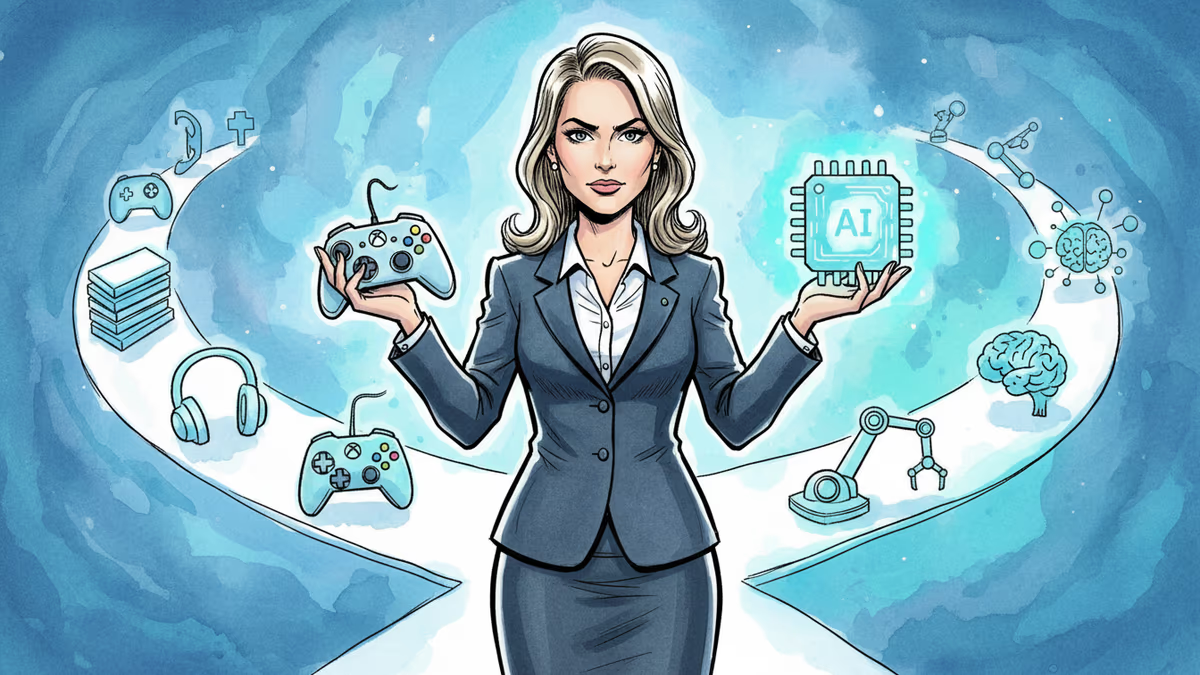
Microsoft's Gaming Shake-Up: AI Expert Asha Sharma Takes Xbox Helm with 'Return' Promise
Phil Spencer steps down after 12 years leading Xbox. AI specialist Asha Sharma becomes new Microsoft Gaming CEO, promising Xbox's return with new market strategy
After 12 years steering Xbox through subscription services, massive acquisitions, and console wars, Phil Spencer is stepping down from Microsoft Gaming. His replacement? Asha Sharma, an AI enterprise specialist who's never worked in gaming. Her first memo promises "the return of Xbox." But what does that actually mean?
The AI Executive Takes Gaming's Biggest Job
Sharma's appointment isn't your typical gaming industry promotion. She comes from leading Microsoft's AI enterprise development teams, with previous stints as Instacart's COO for three years and four years managing Meta's messaging apps. Zero gaming credentials, but plenty of experience scaling tech platforms.
Spencer, meanwhile, spent nearly 40 years at Microsoft total, transforming Xbox from a console maker into a services-first gaming ecosystem. Under his watch, Game Pass reached over 25 million subscribers, and Microsoft acquired Activision Blizzard for $69 billion. Yet Xbox still trails PlayStation in console sales by significant margins.
"Return of Xbox" – Acknowledging Defeat?
Sharma's internal memo talks about games in "new categories and markets where we can add real value." Translation: Microsoft's admitting the console war strategy isn't working. While Sony's PlayStation 5 has sold over 30 million units, Xbox Series X/S sits around 21 million.
The "return" language suggests Xbox lost something it once had. But what exactly? Market leadership? Cultural relevance? Or simply the ability to define gaming's future? Spencer's Xbox was already pivoting away from console exclusivity, putting Microsoft games on PlayStation and Nintendo Switch.

AI Meets Gaming: Natural Evolution or Risky Gamble?
Sharma's AI background isn't coincidental. Gaming's already being transformed by artificial intelligence – from NVIDIA's DLSS upscaling to AI-generated game content. Major publishers are experimenting with AI-driven NPCs, procedural world generation, and even AI-assisted game development.
But gaming isn't enterprise software. Players want emotional experiences, compelling narratives, and social connections. They're notoriously resistant to changes that feel corporate or calculated. Remember the backlash against NFTs in gaming? AI could face similar skepticism if not handled carefully.
Beyond Consoles: The Platform-Agnostic Future
Sharma's "new markets" likely means doubling down on Microsoft's multiplatform strategy. Game Pass is already available on PC, mobile (via cloud), and smart TVs. The company's clearly betting that subscription services and cloud gaming matter more than console sales.
This shift reflects broader industry trends. Netflix entered gaming. Apple launched Apple Arcade. Gaming's becoming less about hardware and more about access and content libraries. But it also means Microsoft's essentially conceding the living room battle to Sony and Nintendo.
The Stakeholder Split
Gamers remain divided. Xbox loyalists worry about losing exclusive content. Developers appreciate Game Pass's guaranteed revenue but question long-term sustainability. Investors like the services model's recurring revenue potential. Meanwhile, competitors are watching closely – will this AI-first approach actually work?
Industry analysts see this as Microsoft's acknowledgment that gaming's future lies in AI-enhanced experiences rather than traditional console competition. But there's risk in appointing someone without gaming industry relationships or cultural understanding.
Authors
Related Articles
GitHub confirmed hackers stole data from 3,800 internal repositories via a poisoned VS Code extension. Here's why developer tools are now the most dangerous attack surface in tech.
Sony is pulling its major single-player PlayStation games from PC. After six years of multiplatform expansion, the reversal raises hard questions about exclusivity, hardware sales, and who really controls gaming's future.
Emails revealed in the Musk v. Altman trial show Microsoft executives were deeply skeptical of OpenAI in 2017–2018. What actually changed their minds?
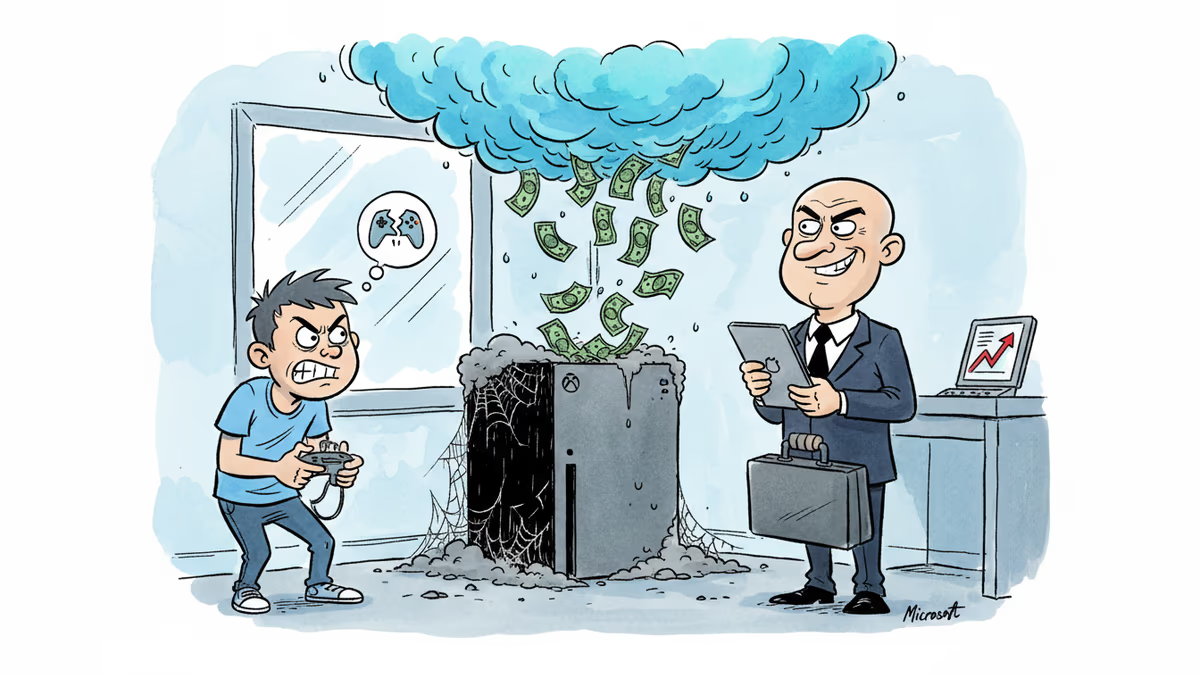
Xbox hardware revenue dropped 33% in Q1 2026, yet Microsoft posted $82.9B in total revenue. What this tells us about the future of gaming—and who actually loses.
GitHub confirmed hackers stole data from 3,800 internal repositories via a poisoned VS Code extension. Here's why developer tools are now the most dangerous attack surface in tech.
Sony is pulling its major single-player PlayStation games from PC. After six years of multiplatform expansion, the reversal raises hard questions about exclusivity, hardware sales, and who really controls gaming's future.
Emails revealed in the Musk v. Altman trial show Microsoft executives were deeply skeptical of OpenAI in 2017–2018. What actually changed their minds?
Xbox hardware revenue dropped 33% in Q1 2026, yet Microsoft posted $82.9B in total revenue. What this tells us about the future of gaming—and who actually loses.
Thoughts
Share your thoughts on this article
Sign in to join the conversation