
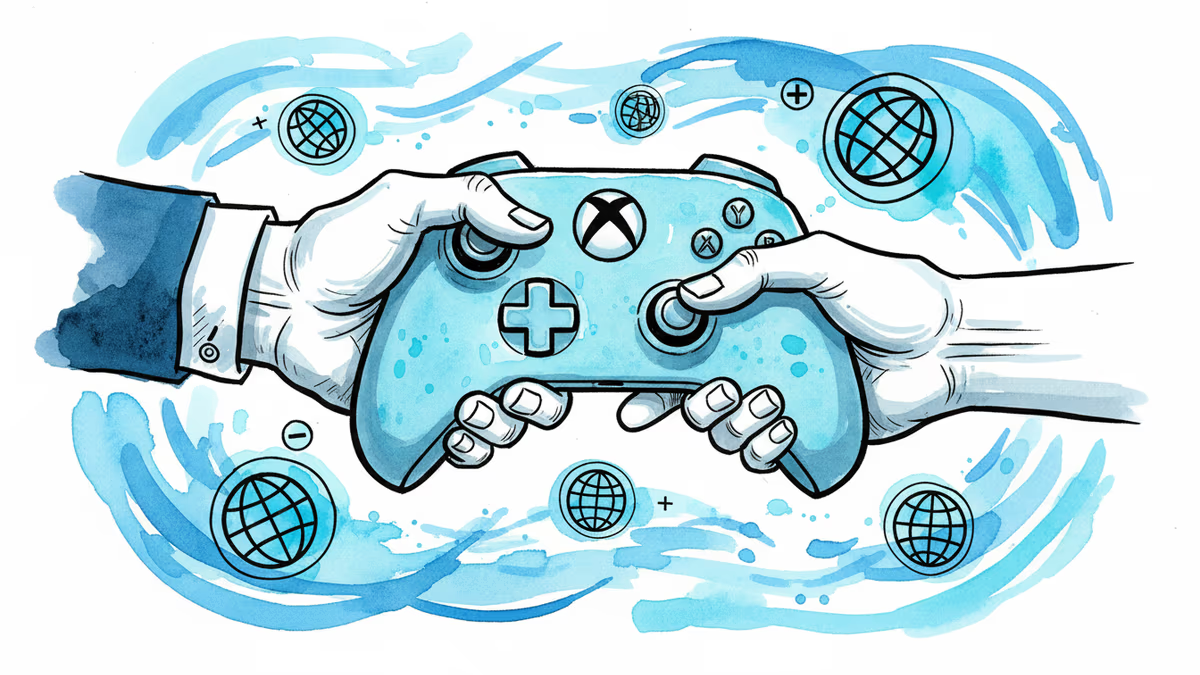
Xbox Boss Phil Spencer Exits Microsoft After Nearly 40 Years
Xbox chief Phil Spencer and president Sarah Bond are leaving Microsoft in a major gaming leadership shakeup. What does this mean for the future of Xbox?
The $75 billion gaming bet just got new management
After nearly four decades at Microsoft, Xbox chief and Gaming CEO Phil Spencer is stepping down, along with Xbox president Sarah Bond. The announcement came February 20th in a memo from CEO Satya Nadella, who revealed that Spencer made his retirement decision "last year" – despite Microsoft denying retirement rumors just last summer.
The timing isn't coincidental. Microsoft's gaming division, fresh off the $68.7 billion Activision Blizzard acquisition, is being handed to Asha Sharma, previously head of CoreAI. An AI executive now runs gaming. That's not a random choice.
From AI Labs to Game Studios
Sharma's appointment signals Microsoft's vision: gaming isn't just entertainment anymore, it's a platform for AI integration. Matt Booty moves up to EVP and chief content officer, but the real story is what Sharma brings from Microsoft's AI division.
Consider the implications. Game Pass has 25 million subscribers generating predictable revenue. Cloud gaming removes hardware barriers. AI can personalize experiences, generate content, and optimize engagement. Sharma isn't just inheriting Xbox – she's inheriting the future of interactive entertainment.
Gamers React: Relief or Concern?

The gaming community's response splits three ways. Spencer loyalists credit him with Game Pass innovation and the Activision deal. Critics point to studio layoffs and exclusive game droughts. A third group wonders if this signals Xbox's evolution beyond traditional consoles.
"Phil saved Xbox from irrelevance, but maybe it's time for fresh blood," posted one Reddit user with 2,400 upvotes. The sentiment reflects broader industry uncertainty about where gaming heads next.
What This Means for Developers
Indie developers and major studios are watching closely. Spencer championed developer-friendly policies and Game Pass partnerships. Will Sharma continue that approach, or will AI integration become the new priority?
Early signals suggest both. Microsoft's recent job postings mention "AI-powered game development tools" and "machine learning for player engagement." The company isn't abandoning developers – it's giving them new capabilities.
The Bigger Gaming Shift
This leadership change reflects gaming's broader transformation. Traditional console wars matter less when games stream to any device. Hardware sales become secondary to subscription retention. Player data becomes more valuable than physical sales.
Sony and Nintendo are watching. If Microsoft successfully merges AI with gaming under Sharma's leadership, competitors will need their own response. The industry's center of gravity is shifting from Japan to Redmond.
Authors
Related Articles
GitHub confirmed hackers stole data from 3,800 internal repositories via a poisoned VS Code extension. Here's why developer tools are now the most dangerous attack surface in tech.
Emails revealed in the Musk v. Altman trial show Microsoft executives were deeply skeptical of OpenAI in 2017–2018. What actually changed their minds?
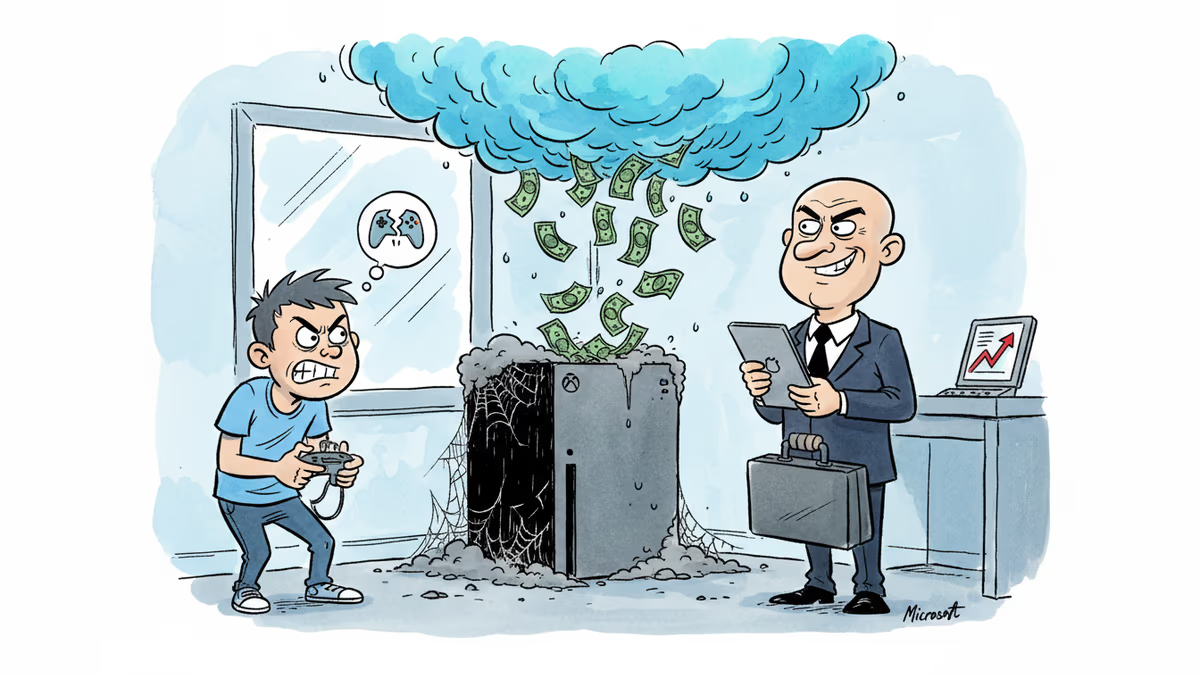
Xbox hardware revenue dropped 33% in Q1 2026, yet Microsoft posted $82.9B in total revenue. What this tells us about the future of gaming—and who actually loses.
Microsoft is letting Windows users delay updates indefinitely — 35 days at a time, as many times as they want. A long-overdue fix, or a security risk hiding in plain sight?
GitHub confirmed hackers stole data from 3,800 internal repositories via a poisoned VS Code extension. Here's why developer tools are now the most dangerous attack surface in tech.
Emails revealed in the Musk v. Altman trial show Microsoft executives were deeply skeptical of OpenAI in 2017–2018. What actually changed their minds?
Xbox hardware revenue dropped 33% in Q1 2026, yet Microsoft posted $82.9B in total revenue. What this tells us about the future of gaming—and who actually loses.
Microsoft is letting Windows users delay updates indefinitely — 35 days at a time, as many times as they want. A long-overdue fix, or a security risk hiding in plain sight?
Thoughts
Share your thoughts on this article
Sign in to join the conversation