
Why Six US States Are Hitting the Brakes on Data Centers
New York joins five other states proposing data center moratoriums as bipartisan concerns mount over AI's hidden costs - soaring energy bills, grid strain, and environmental impact.
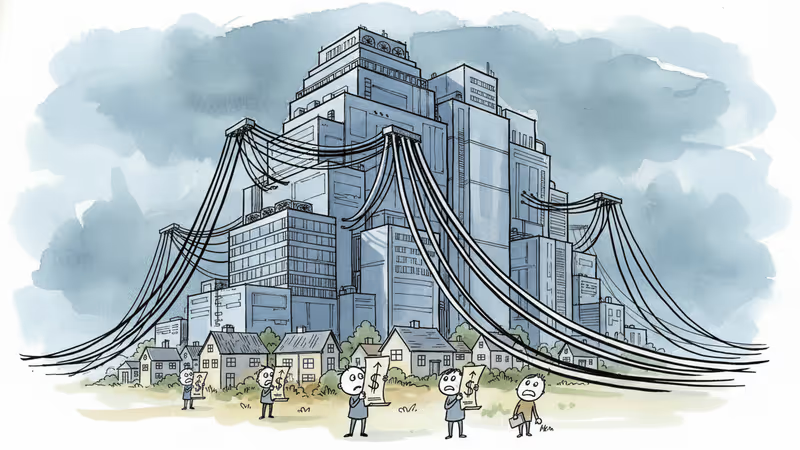
10 gigawatts of electric demand. That's what one New York utility says is currently waiting to connect to the grid—mostly from data centers. To put that in perspective, it's enough power for roughly 10 million homes. And that demand tripled in just one year.
On Friday, New York lawmakers announced they're introducing a bill to impose a three-year moratorium on data center development. This makes New York at least the sixth state to push for such legislation in recent weeks, joining Georgia, Maryland, Oklahoma, Vermont, and Virginia in what's becoming a bipartisan backlash against the AI boom's hidden infrastructure costs.
When Republicans and Democrats Agree
What's striking is how this resistance crosses party lines. While Democrats are leading efforts in Georgia, Vermont, and Virginia, Republicans sponsored the bills in Oklahoma and Maryland. Florida's Ron DeSantis recently slammed data centers at an AI policy roundtable, saying "I don't think there's very many people who want to have higher energy bills just so some chatbot can corrupt some 13-year-old kid online."
Bernie Sanders became the first national politician to call for a blanket data center moratorium in December, arguing it would "ensure that the benefits of technology work for all of us, not just the 1 percent."
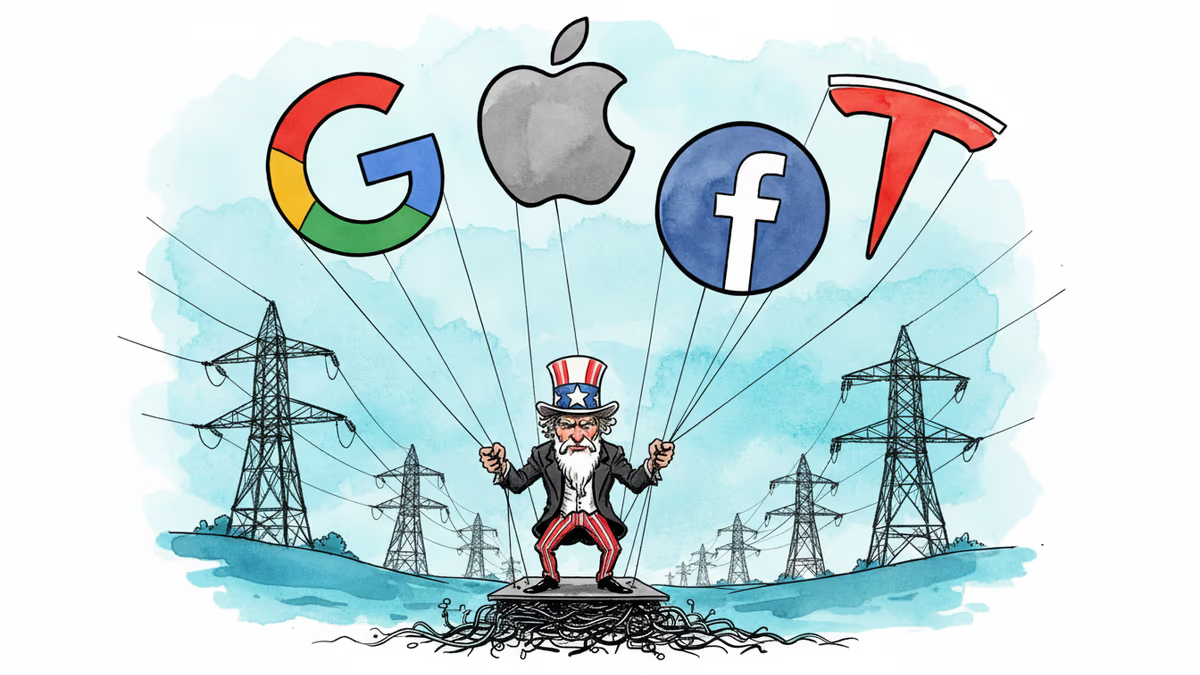
This unusual bipartisan alignment stems from three converging concerns: strain on the electrical grid, environmental impact, and the prospect of consumers footing the bill for AI companies' massive power needs.
The Grid Reality Check
The numbers tell the story. New York currently operates more than 130 data centers, with major projects like a 450-megawatt facility planned for an old coal plant site. That's enough power to run a mid-sized city.
AI's appetite for electricity is voracious. Some estimates suggest a single ChatGPT conversation uses 10 times more power than a Google search. The problem isn't just the scale—it's the speed of growth. What took decades to develop in traditional computing is happening in months with AI.

Governor Kathy Hochul responded last month by launching an initiative requiring data centers to "pay their fair share" of grid upgrades. It's a recognition that the current system—where utilities and ratepayers subsidize infrastructure for private AI companies—isn't sustainable.
Environmental Groups Sound the Alarm
In December, more than 200 environmental groups coordinated by Food and Water Watch sent a letter to Congress calling data center expansion "one of the biggest environmental and social threats of our generation." They're demanding a national moratorium.
Eric Weltman, who helped craft the New York bill, says existing regulatory approaches aren't adequate. "There are a lot of extraordinarily well-intentioned bills that have been introduced to attempt to address the many impacts that data centers have," he explains. "Our concern was, and remains, that they're not adequate."
The New York bill would pause new permits for three years while state agencies study data centers' public and environmental impacts and develop new regulations.
Industry Pushback and Adaptation
The data center industry is starting to respond. Microsoft, with White House backing, recently announced commitments to be a "good neighbor" in communities where it builds facilities. The Data Center Coalition tells WIRED it "recognizes the importance of continued efforts to better educate and inform the public about the industry."
But the legislative momentum is building. Virginia delegate Josh Thomas, who's led the charge for data center limits, says his coalition of "reformers" grew from three lawmakers in 2024 to 12 or 13 this year. More than 60 data center bills have been proposed in Virginia's legislature alone.
Thomas is optimistic that newly elected Governor Abigail Spanberger, who campaigned on making data centers "pay their own way," will be more receptive than her predecessor, who vetoed similar legislation.
The Bigger Questions
These moratoriums reflect deeper tensions about who benefits from AI advancement and who bears the costs. Tech companies promise AI will revolutionize everything from healthcare to education, but the infrastructure requirements are landing in local communities that may see little direct benefit.
Some states pushing moratoriums have relatively few data centers—Vermont has just two. But others like Georgia and Virginia are major data center hubs, suggesting the resistance isn't just NIMBY-ism but genuine concern about sustainable development.
Authors
Related Articles
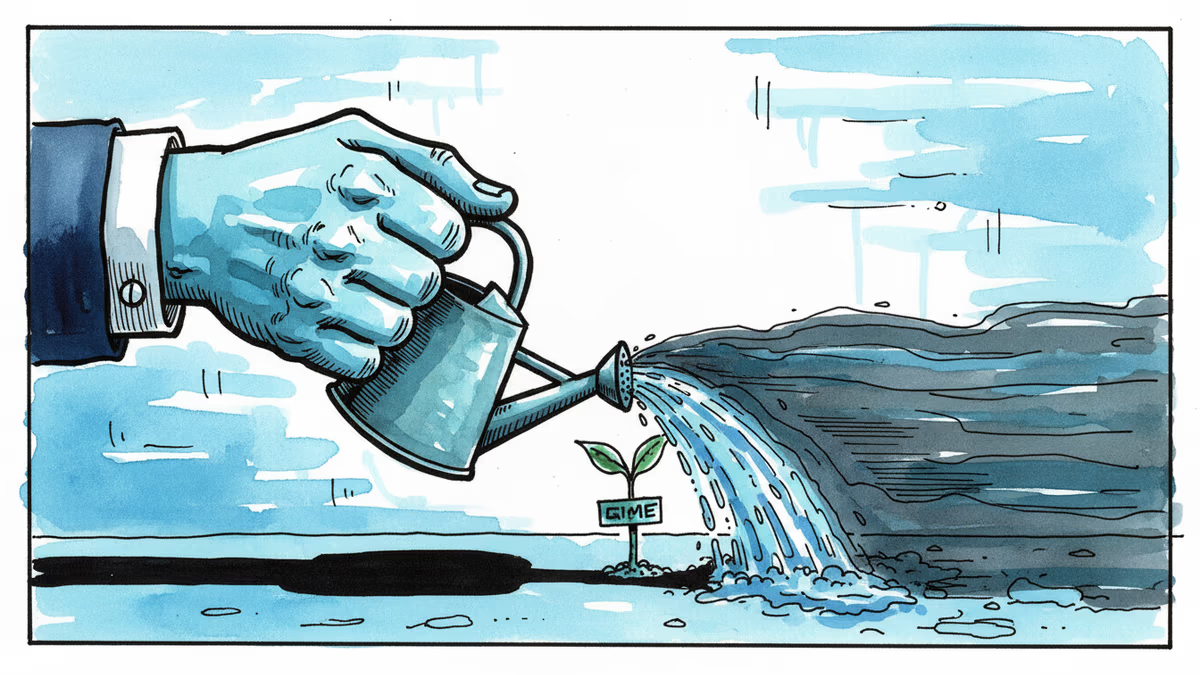
Google is committing up to $40 billion to Anthropic, a direct AI competitor. The deal reveals how the real AI arms race isn't about models — it's about who controls the infrastructure beneath them.
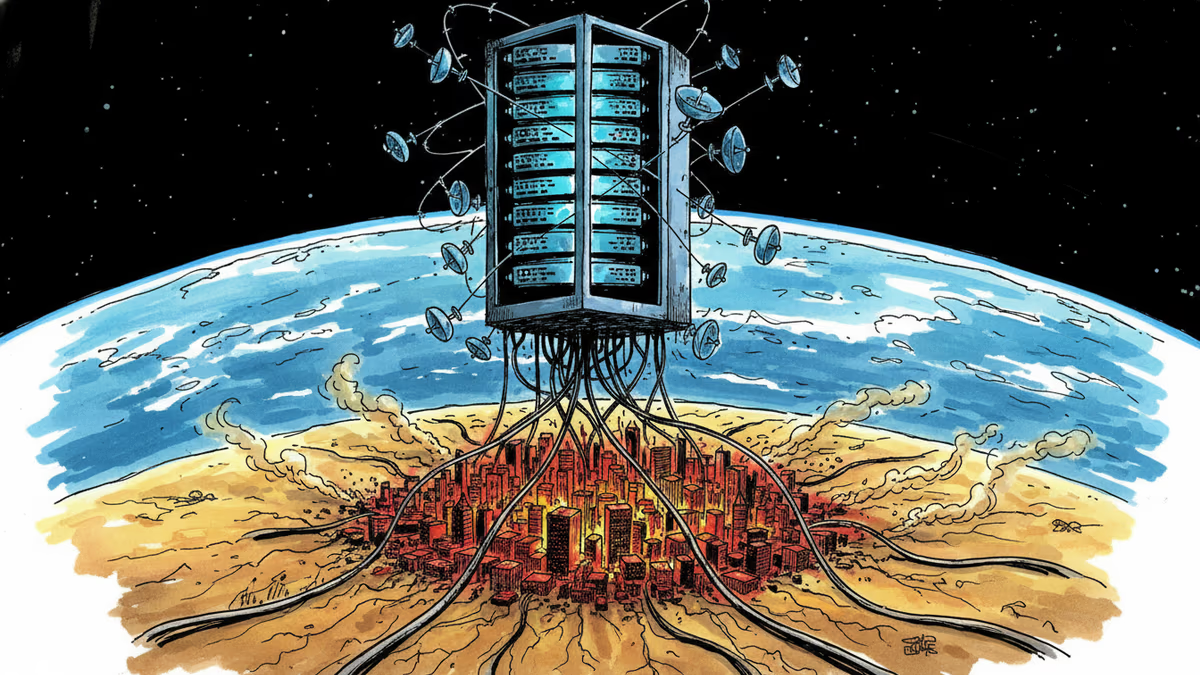
SpaceX wants to launch a million orbital data centers to power AI without draining Earth. The vision is compelling. The physics, economics, and debris math are not.
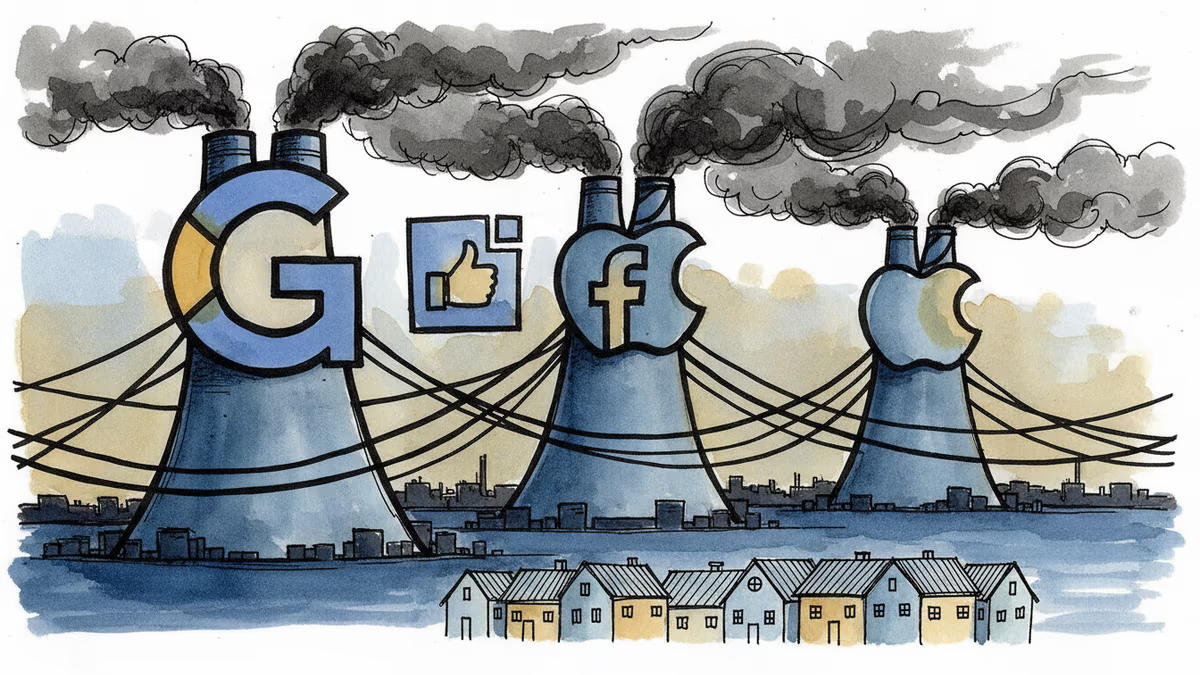
Amazon, Google, Meta and others pledge to pay for their data centers' power infrastructure, but the agreement lacks enforcement and ignores basic economics
Trump administration secures nonbinding pledge from tech giants to protect consumers from data center electricity costs, but experts doubt meaningful impact
Google is committing up to $40 billion to Anthropic, a direct AI competitor. The deal reveals how the real AI arms race isn't about models — it's about who controls the infrastructure beneath them.
SpaceX wants to launch a million orbital data centers to power AI without draining Earth. The vision is compelling. The physics, economics, and debris math are not.
Amazon, Google, Meta and others pledge to pay for their data centers' power infrastructure, but the agreement lacks enforcement and ignores basic economics
Trump administration secures nonbinding pledge from tech giants to protect consumers from data center electricity costs, but experts doubt meaningful impact
Thoughts
Share your thoughts on this article
Sign in to join the conversation