
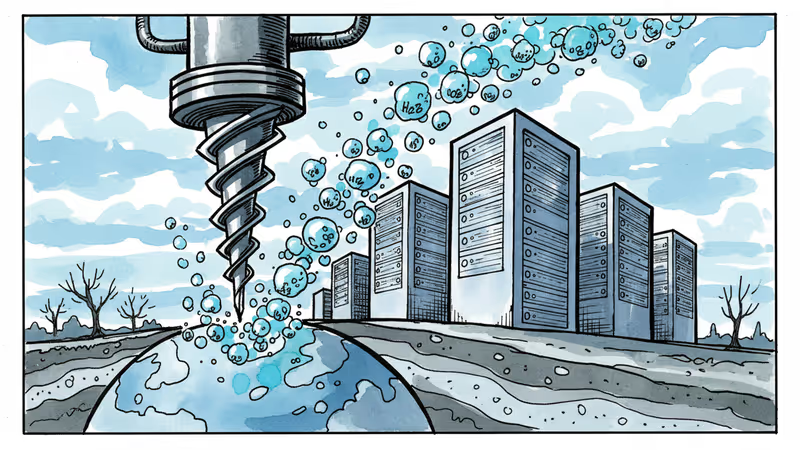
Underground Hydrogen Could Power the Data Center Revolution
Canadian startup Vema Hydrogen extracts hydrogen from iron-rich rocks deep underground, targeting data centers with production costs below $1 per kilogram
While automakers struggle with hydrogen adoption, data centers might crack the code first. Vema Hydrogen, a Canadian startup, just completed a pilot project that extracts hydrogen from 800 meters underground—and it could reshape how we power our digital infrastructure.
Turning Rocks Into Fuel
The concept sounds almost too simple: drill into iron-rich rock formations, add water, heat, pressure, and catalysts, then harvest the hydrogen gas that bubbles up. Vema's first pilot well produces several tons daily, with plans for commercial drilling next year.
"To supply the Quebec local market, which is about 100,000 tons per year, you would need 3 square kilometers, which is nothing," CEO Pierre Levin told TechCrunch. That's a fraction of the space required for traditional hydrogen production facilities.
The company already inked a deal with California data centers in December and expects to produce hydrogen from initial wells for less than $1 per kilogram—a critical benchmark for clean hydrogen economics.
The Current Hydrogen Economics Problem
Most hydrogen today comes from steam methane reformation (SMR), where natural gas gets broken down using steam. It's energy-intensive and carbon-heavy. The International Energy Agency pegs SMR costs at 70 cents to $1.60 per kilogram. Add carbon capture? That's another 50% on top.
The cleanest option—using zero-carbon electricity for electrolysis—costs several times more. This cost gap explains why hydrogen hasn't taken off despite decades of hype.
Vema's underground extraction promises to undercut everyone. Once they refine their techniques, Levin expects production costs below 50 cents per kilogram. If true, that's cheaper than any hydrogen source on the market.

California's Geological Advantage
Here's where geology becomes destiny. California sits on massive ophiolite formations—iron-rich rocks pushed up from ocean floors by tectonic activity. These formations are exactly what Vema needs for hydrogen extraction.
"You have a ton of data centers who are trying to get some baseline, decarbonized electricity," Levin explained. "We have very strong traction with them."
Data centers face mounting pressure to decarbonize as AI drives explosive power demand. Traditional renewables can't provide 24/7 baseload power. Hydrogen offers a potential solution—if the economics work.
Beyond the Automotive Obsession
The automotive industry's hydrogen struggles have overshadowed industrial applications where the fuel makes more sense. Data centers need reliable, carbon-free power. Industrial facilities require high-temperature heat that's hard to electrify.
Unlike cars, these applications don't need extensive refueling infrastructure. Hydrogen can be produced on-site or nearby, eliminating transportation costs that plague other hydrogen projects.
Vema's approach flips the traditional model. Instead of building massive centralized facilities, they'll drill wells close to customers. This distributed production model could solve hydrogen's biggest economic challenge: getting it from where it's made to where it's needed.
The Regulatory and Investment Landscape
Clean hydrogen enjoys strong policy support. The U.S. Inflation Reduction Act offers $3 per kilogram in tax credits for the cleanest hydrogen. Europe's pushing similar incentives.
But investors remain skeptical after years of hydrogen hype cycles. Vema will need to prove their technology works at scale before attracting major funding. The Quebec pilot is just the beginning.
Regulators will also scrutinize environmental impacts. While Vema claims their process is clean, any large-scale underground operation raises questions about water use, seismic activity, and long-term geological effects.
Authors
Related Articles
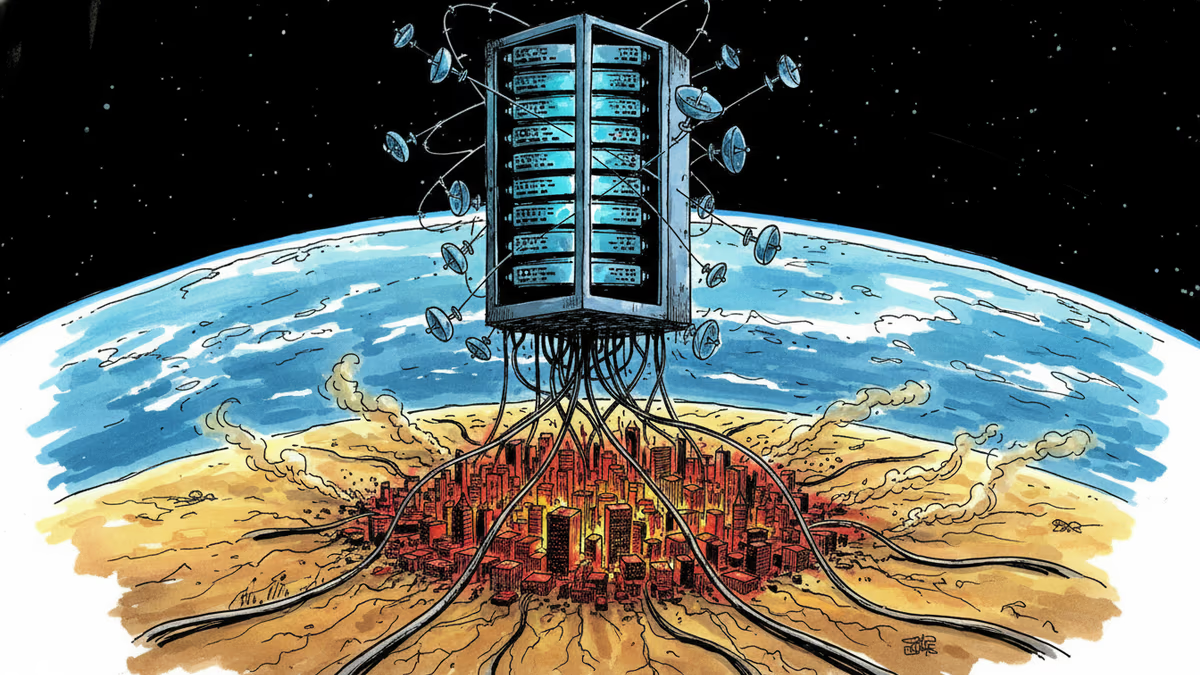
SpaceX wants to launch a million orbital data centers to power AI without draining Earth. The vision is compelling. The physics, economics, and debris math are not.
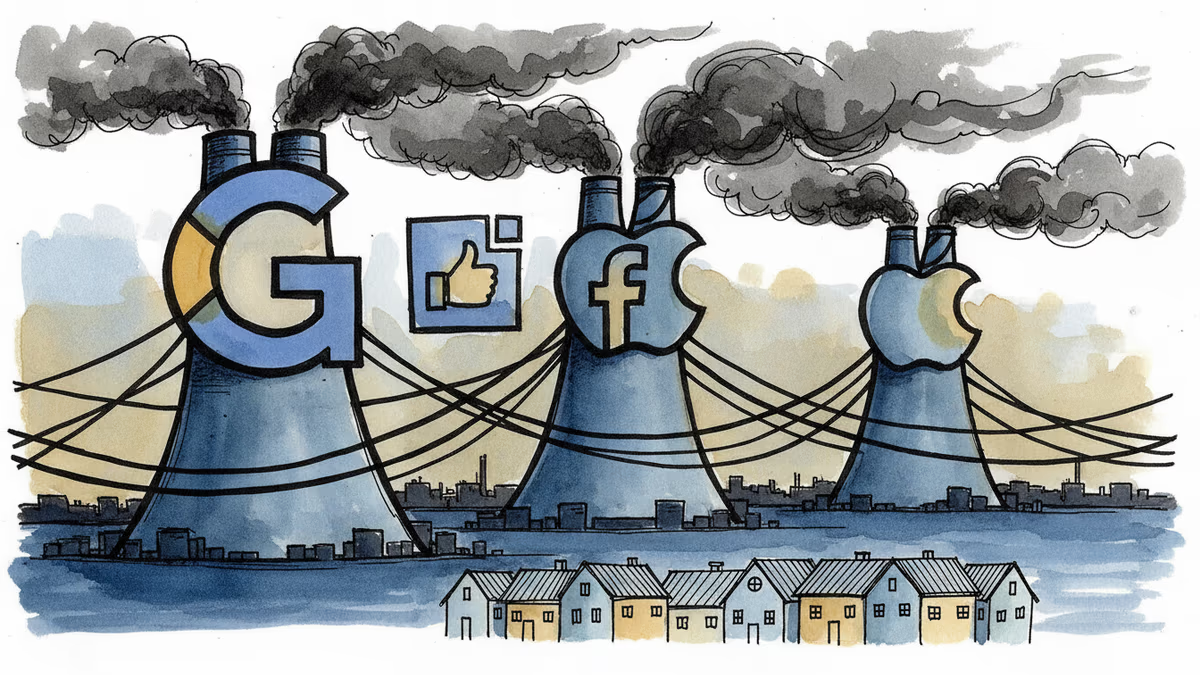
Amazon, Google, Meta and others pledge to pay for their data centers' power infrastructure, but the agreement lacks enforcement and ignores basic economics
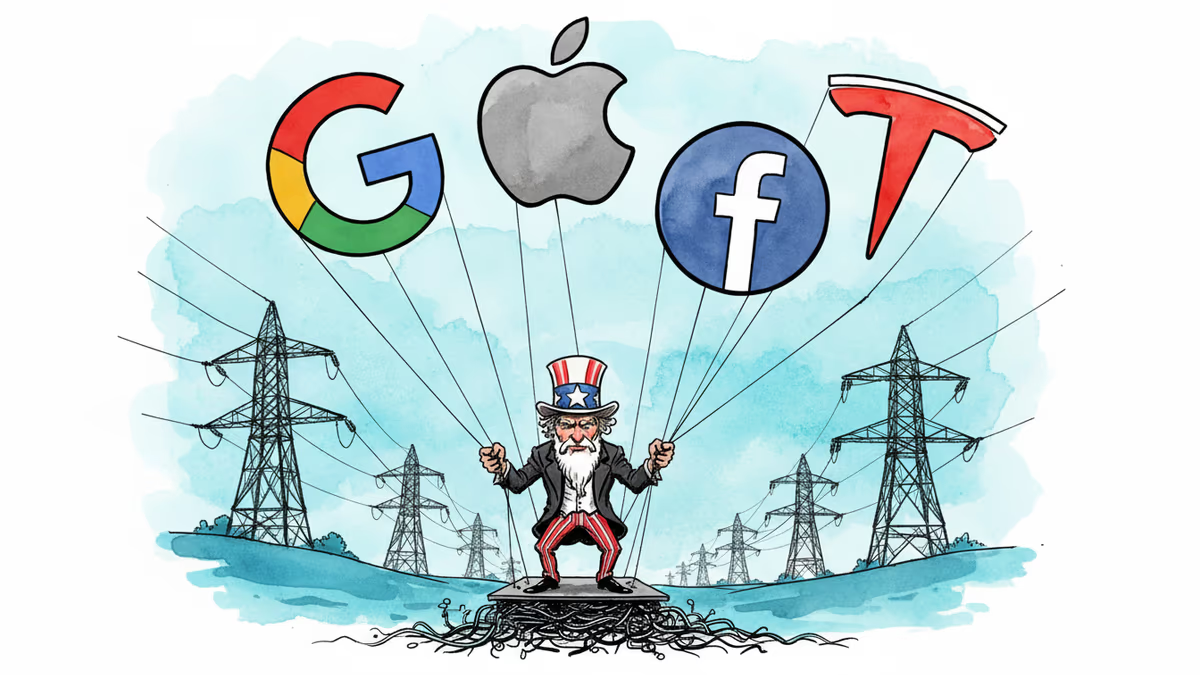
Trump administration secures nonbinding pledge from tech giants to protect consumers from data center electricity costs, but experts doubt meaningful impact
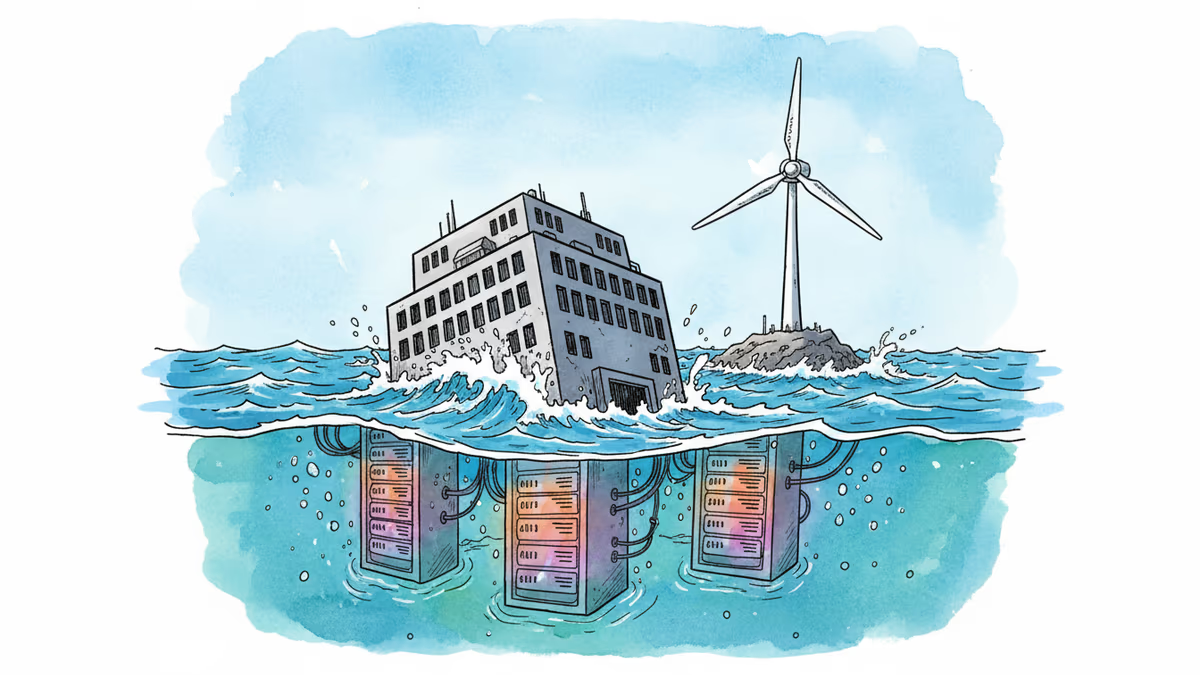
A Norwegian startup plans to submerge data centers offshore, powered by wind turbines. Could this solve AI's massive energy appetite, or create new problems? We examine multiple perspectives.
SpaceX wants to launch a million orbital data centers to power AI without draining Earth. The vision is compelling. The physics, economics, and debris math are not.
Amazon, Google, Meta and others pledge to pay for their data centers' power infrastructure, but the agreement lacks enforcement and ignores basic economics
Trump administration secures nonbinding pledge from tech giants to protect consumers from data center electricity costs, but experts doubt meaningful impact
A Norwegian startup plans to submerge data centers offshore, powered by wind turbines. Could this solve AI's massive energy appetite, or create new problems? We examine multiple perspectives.
Thoughts
Share your thoughts on this article
Sign in to join the conversation