
When the White House Uses Call of Duty to Sell Real Warfare
The White House sparked controversy by opening an Iran strike video with Call of Duty footage. Examining the gamification of government communication and its implications.
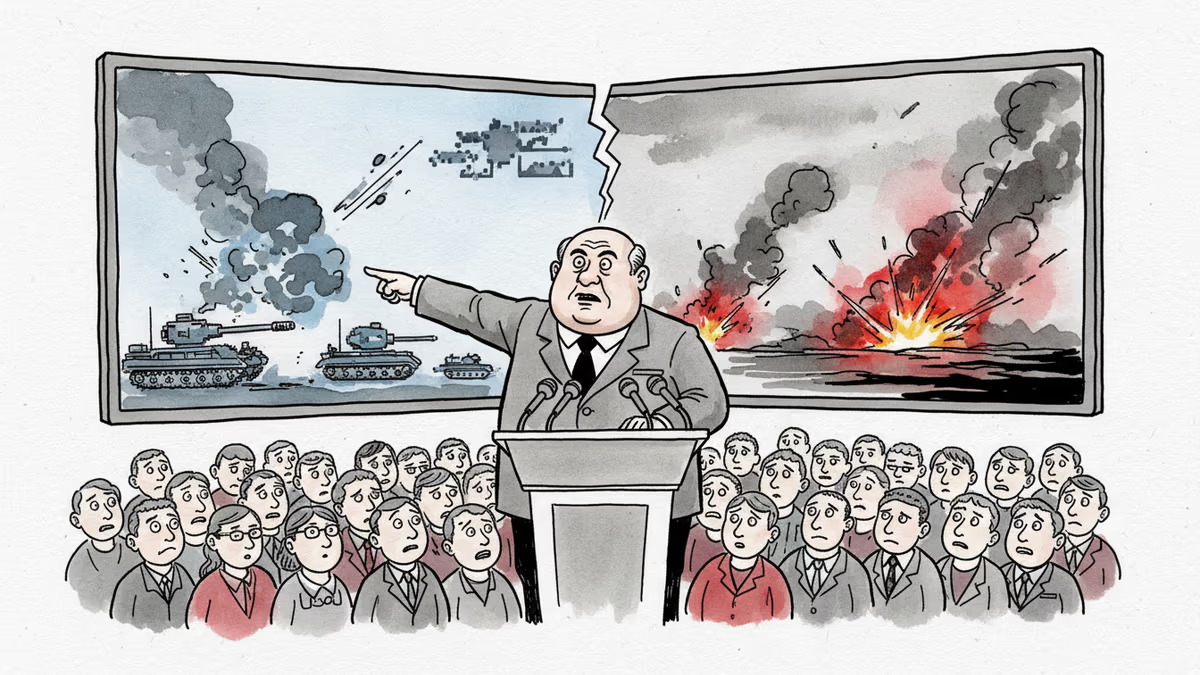
The White House just blurred the line between Call of Duty and actual duty. On March 4th, they released a video promoting military strikes on Iran that opened with footage from Call of Duty: Modern Warfare III before transitioning to real combat footage.
The 48-second clip, posted on X with the caption "Courtesy of the Red, White & Blue," starts with what appears to be a player activating a special ability in the popular video game, then cuts to actual missiles hitting Iranian targets.
Gaming the Message
The Washington Post's Drew Harwell was among the first to spot the gaming footage embedded in official government communication. The animation sequence is instantly recognizable to anyone who's played the franchise—it's the visual effect that appears when players trigger certain in-game abilities.
This isn't an isolated incident. The Trump administration has repeatedly used this highlight-reel style for military communications, with similar videos appearing on the U.S. Central Command's social media accounts.
But using actual game footage to introduce real warfare footage crosses a new threshold. It's one thing to adopt gaming aesthetics; it's another to literally splice entertainment content into military propaganda.
The TikTok-ification of War
Why would the White House choose this approach? The answer lies in audience demographics. Call of Duty boasts over 400 million players globally, with its core audience spanning ages 16-34—precisely the demographic that traditional government communications struggle to reach.

This represents what communication scholars call "ludic governance"—using game mechanics and aesthetics to make political messaging more palatable to digital natives. It's the same logic behind government TikTok accounts and meme-based policy explanations.
From one perspective, it's smart adaptation. Why shouldn't government communication evolve with media consumption habits? If young Americans get their news through gaming streams and social clips, meeting them where they are makes strategic sense.
The Ethics of Gamified Warfare
But critics see something more troubling: the trivialization of actual conflict through entertainment framing. When real military strikes are packaged like gaming highlights, what does that say about how we process violence and international relations?
Game developers themselves are divided. Some worry about their creative work being co-opted for political purposes without consent. Others see it as validation of gaming's cultural mainstream status.
The concern isn't just aesthetic—it's cognitive. Research suggests that gaming metaphors can influence how people process complex political situations, potentially reducing nuanced geopolitical conflicts to win-lose scenarios.
Beyond the Controversy
This incident reflects broader shifts in how governments communicate in the digital age. Traditional press releases and formal statements compete with viral content and visual storytelling for public attention.
Other democracies are watching. How far should official communications go in adopting entertainment formats? Where's the line between accessibility and trivialization?
The White House's choice also highlights gaming's unique cultural position. Unlike movies or TV shows, games are interactive experiences that blur the line between observer and participant. Using gaming footage for military communications taps into that participatory psychology.
Authors
Related Articles
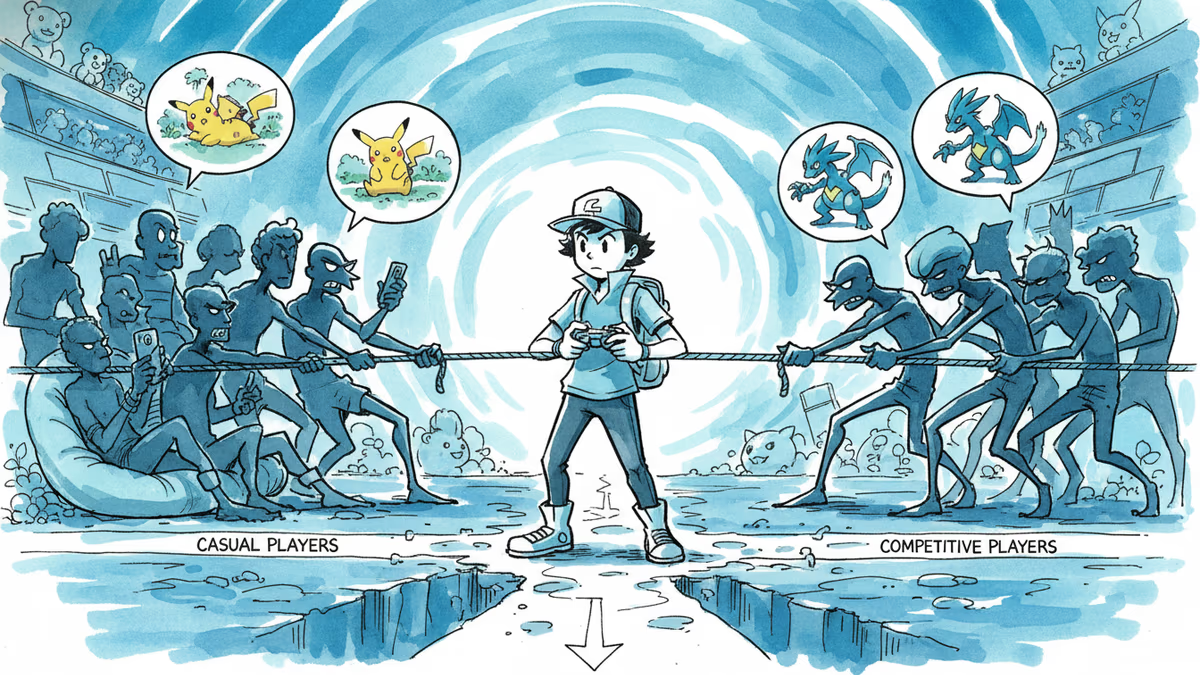
Pokémon Champions launched on Switch with bugs breaking core battle mechanics. But the deeper issue isn't the bugs — it's whether a game trying to please all players can satisfy any of them.
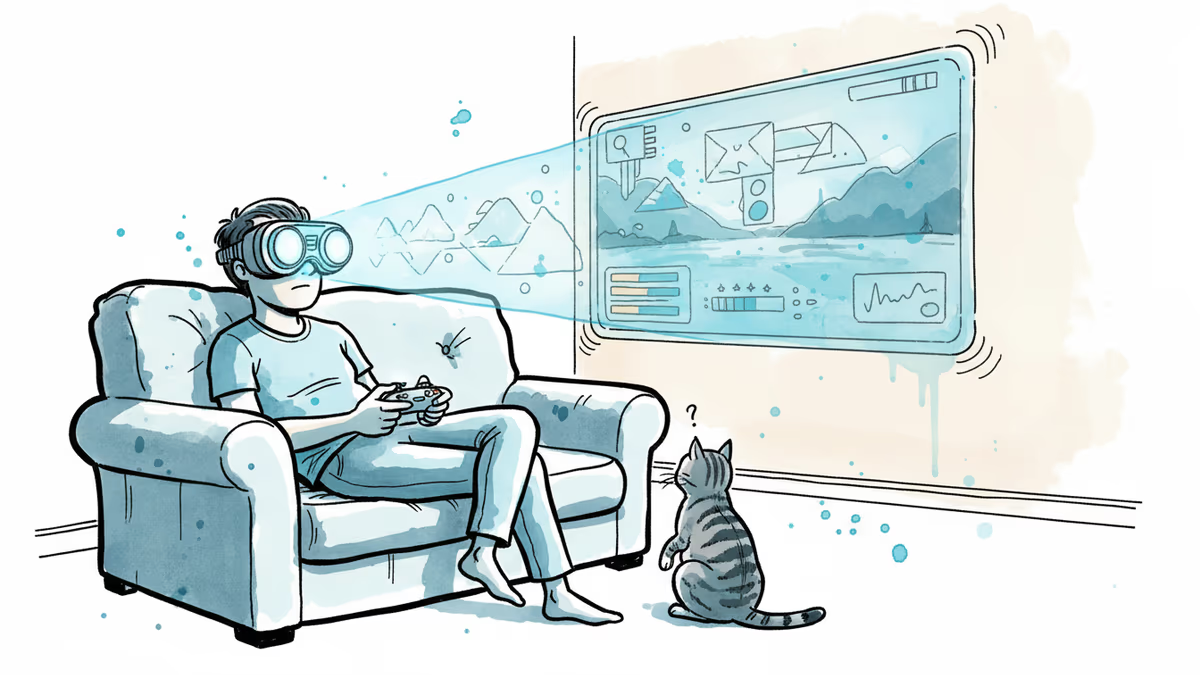
Xreal and Viture's latest AR glasses all do a few things well and a few things poorly. Here's what the best pair would look like — and why none of them are there yet.
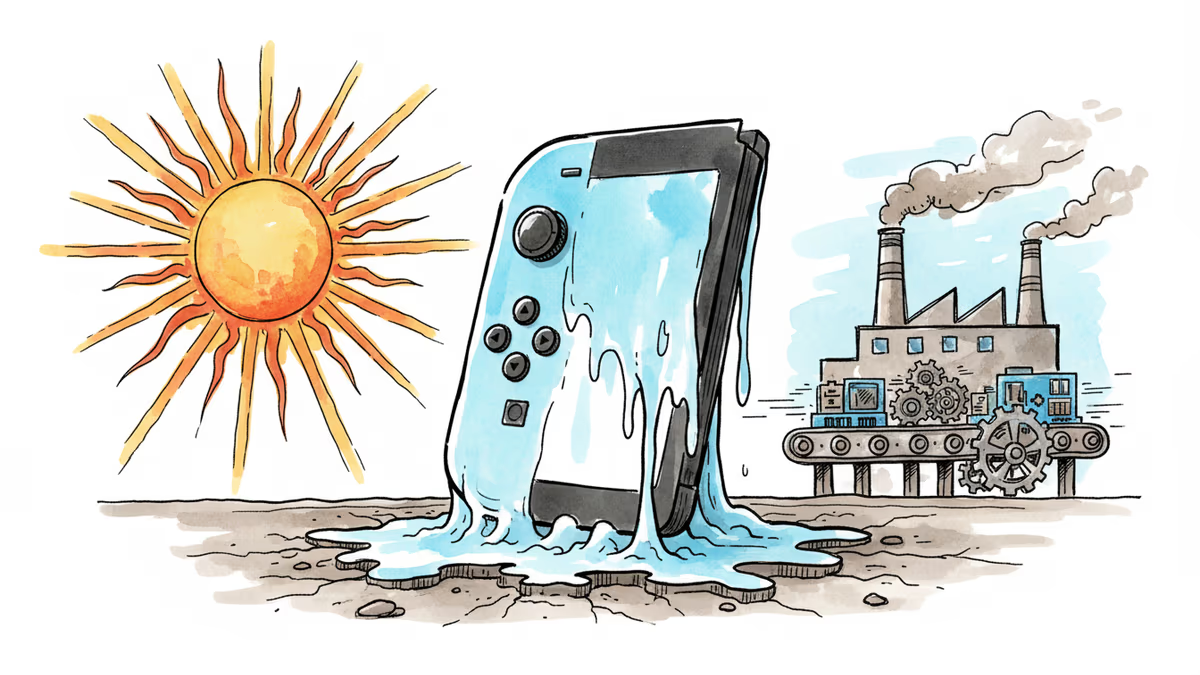
Nine months after a record-breaking launch, Nintendo is cutting Switch 2 production from 6 million to 4 million units per quarter. What went wrong, and what does it signal for the console market?

Generative AI tools dominated GDC 2026 — but most developers aren't shipping them in real games. What's holding the industry back, and what does that gap reveal?
Pokémon Champions launched on Switch with bugs breaking core battle mechanics. But the deeper issue isn't the bugs — it's whether a game trying to please all players can satisfy any of them.
Xreal and Viture's latest AR glasses all do a few things well and a few things poorly. Here's what the best pair would look like — and why none of them are there yet.
Nine months after a record-breaking launch, Nintendo is cutting Switch 2 production from 6 million to 4 million units per quarter. What went wrong, and what does it signal for the console market?
Generative AI tools dominated GDC 2026 — but most developers aren't shipping them in real games. What's holding the industry back, and what does that gap reveal?
Thoughts
Share your thoughts on this article
Sign in to join the conversation