
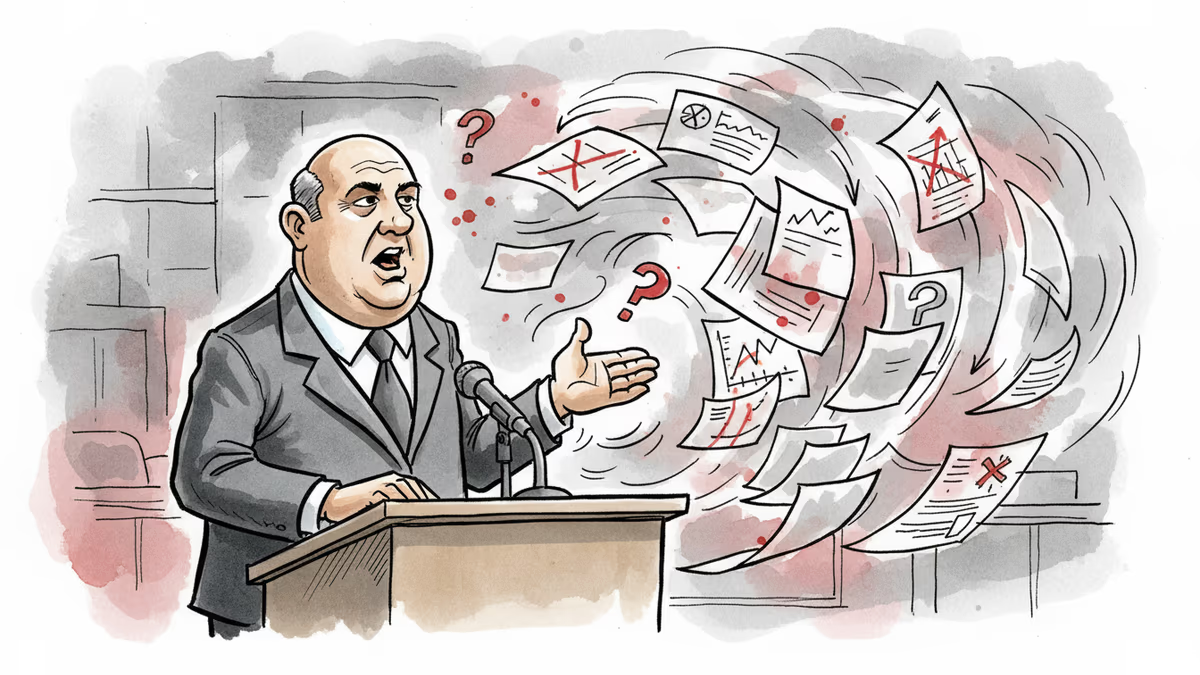
Meta's Internal Documents vs Public Claims: A $100B Liability Test
New Mexico's lawsuit reveals stark contradictions between Meta's public safety statements and internal research about teen harm on Facebook and Instagram.
When Public Relations Meets Private Research
New Mexico's courtroom became ground zero this week for a question that could reshape how we think about corporate accountability in the digital age: Can tech giants be held liable when their public statements contradict their private knowledge?
The state opened its case against Meta on Monday with a simple but devastating argument. While Mark Zuckerberg and other executives publicly championed user safety, internal company documents allegedly told a different story—one of prioritizing profits over protecting the millions of teenagers using Facebook and Instagram.
The Tale of Two Metas
According to New Mexico attorney Don Migliori, Meta's public face bore little resemblance to its private deliberations. The company's executives regularly made statements about platform safety that directly contradicted their own internal research about harm to young users.
This isn't just about corporate spin—it's about whether Meta knowingly misled parents, regulators, and the public while being fully aware of potential dangers. The state argues that Meta's commitment to "free expression" became a convenient shield for business decisions that put teen mental health at risk.
Meta's defense, led by attorney Kevin Huff, will likely argue that the company has consistently worked to improve safety features and that correlation doesn't equal causation when it comes to social media and teen mental health issues.

Beyond the Courtroom Drama
What makes this case particularly significant isn't just the potential financial penalty—though with Meta's $117 billion in 2023 revenue, even a substantial fine might feel manageable. It's the precedent it could set for how we evaluate corporate responsibility in the age of algorithmic influence.
The lawsuit arrives at a moment when parents, educators, and policymakers are grappling with rising teen mental health concerns. Whether social media platforms bear direct responsibility remains hotly debated, but the question of corporate transparency feels more clear-cut.
For Meta, the stakes extend beyond New Mexico. Similar lawsuits are pending in other states, and the outcome here could influence everything from regulatory approaches to investor confidence. The company's stock has remained relatively stable during the proceedings, suggesting markets may be betting on Meta's ability to weather this storm.
The Broader Accountability Question
This case reflects a larger tension in how we regulate digital platforms. Traditional product liability laws weren't designed for algorithms that learn and evolve, or for platforms where user-generated content creates the primary experience.
Privacy advocates see this as a long-overdue reckoning with Big Tech's tendency to minimize risks while maximizing engagement. Tech industry defenders worry about setting precedents that could stifle innovation or create unrealistic expectations for predicting complex social phenomena.
Parents and educators watching this case aren't necessarily looking for someone to blame—many just want clearer information about what platforms know about their effects on young users.
Authors
Related Articles
A law firm marketing itself on AI-powered legal success submitted fake citations in a federal appeal. Now its lawyers face sanctions — and the broader AI legal industry faces a credibility crisis.
Five major publishers and author Scott Turow have filed a class action lawsuit against Meta, alleging the company used illegal pirate sites like LibGen to train its Llama AI models without permission.
New Mexico already won $375 million from Meta. Now it wants something harder to give: a court order forcing Facebook, Instagram, and WhatsApp to redesign themselves. A three-week trial starts Monday.
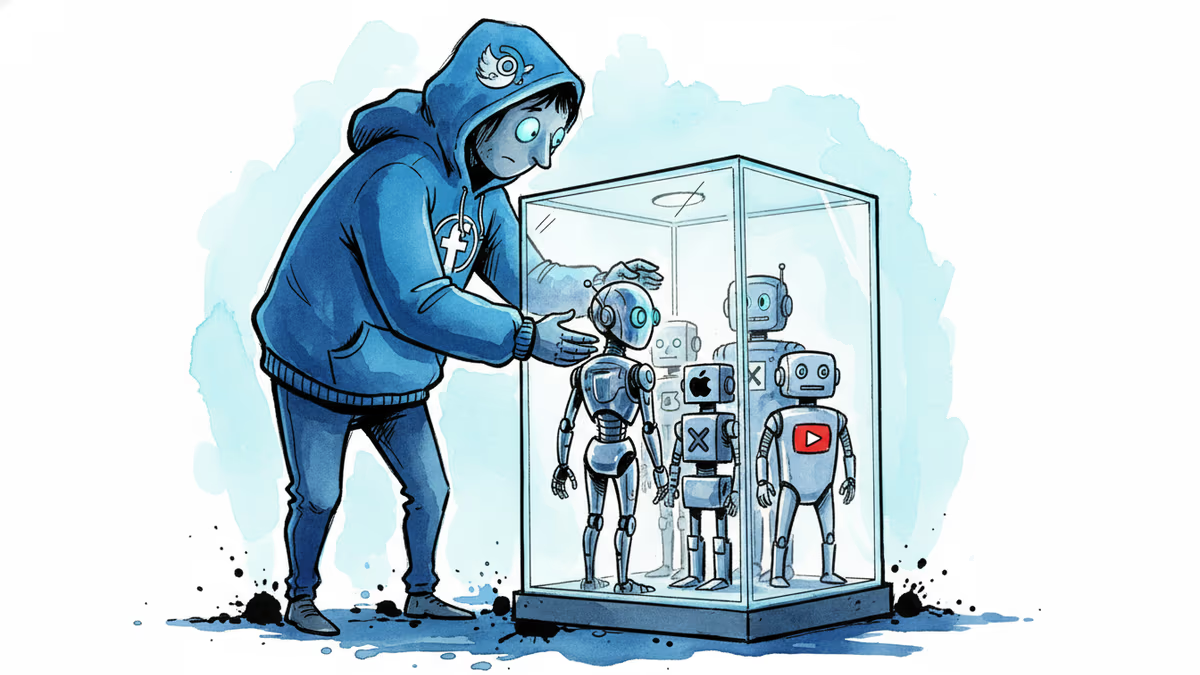
Meta acquired humanoid robotics startup ARI, adding to a Big Tech arms race in physical AI. The real prize isn't a robot product — it's a new way to train intelligence.
A law firm marketing itself on AI-powered legal success submitted fake citations in a federal appeal. Now its lawyers face sanctions — and the broader AI legal industry faces a credibility crisis.
Five major publishers and author Scott Turow have filed a class action lawsuit against Meta, alleging the company used illegal pirate sites like LibGen to train its Llama AI models without permission.
New Mexico already won $375 million from Meta. Now it wants something harder to give: a court order forcing Facebook, Instagram, and WhatsApp to redesign themselves. A three-week trial starts Monday.
Meta acquired humanoid robotics startup ARI, adding to a Big Tech arms race in physical AI. The real prize isn't a robot product — it's a new way to train intelligence.
Thoughts
Share your thoughts on this article
Sign in to join the conversation