
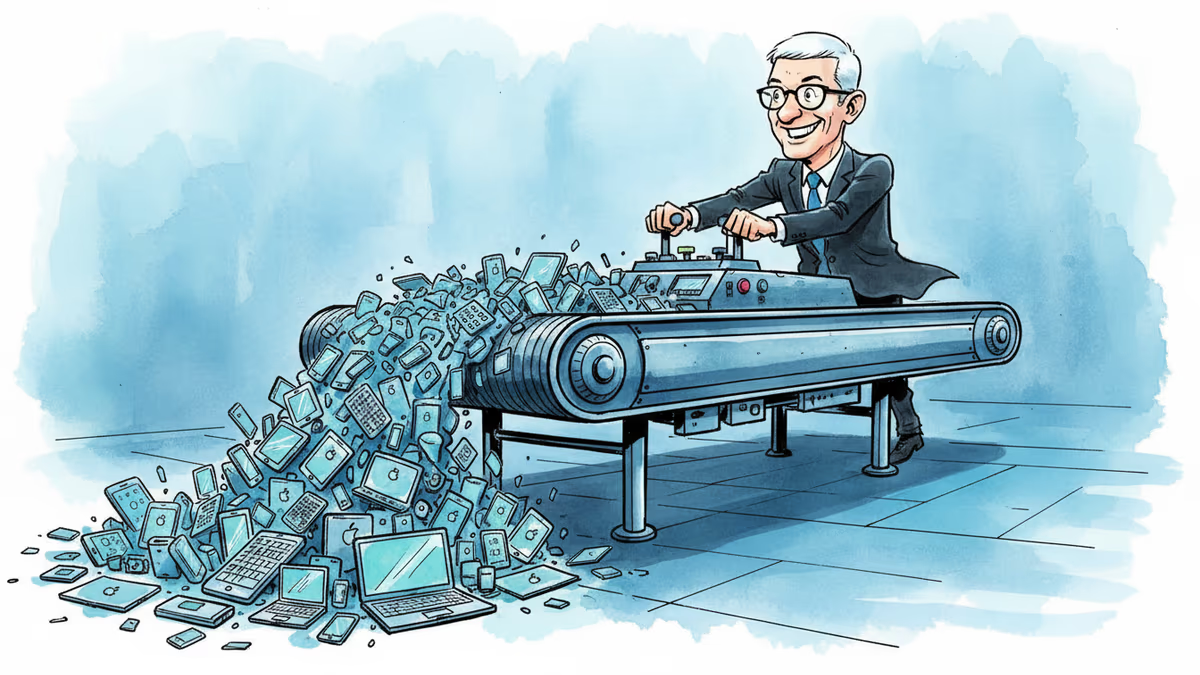
Apple's March Blitz: Why iPhone Chips in MacBooks?
Apple floods March with iPhone 17E, M5 MacBooks, and hints at MacBook Neo with iPhone chips. A strategic shift or desperate move for market share?
Seven products in five days. Apple's March announcement spree isn't just unusual—it's unprecedented. But while the $599 iPhone 17E and M5 MacBooks grabbed headlines, the real story lies in what Apple accidentally revealed: the MacBook Neo.
The Daily Drop Strategy
Apple typically saves announcements for grand events. This time, they're doing the opposite. March 2nd brought the iPhone 17E with 256GB base storage and MagSafe support. March 3rd delivered M5-powered MacBooks and a Mini LED Studio Display. Each day, another product.
Why the drip-feed approach? It's classic Tim Cook efficiency. Individual products get focused attention, while building anticipation for the March 4th "special Apple experience" in New York, London, and Shanghai.
But there's a deeper strategy at play. Apple is testing market reactions to different price points and positioning before the main event.
iPhone Chips in MacBooks: Genius or Desperation?
The leaked MacBook Neo represents Apple's boldest move yet. Instead of M-series processors, it'll reportedly use iPhone chips—likely the A18 Pro that already powers the iPhone 16 Pro.
Technically, it makes sense. The A18 Pro, built on 3nm technology, delivers performance comparable to the M3 chip. The difference? Cost. Using existing iPhone silicon could bring MacBook prices down to $700-800 range—Chromebook territory.

For consumers, it's a win. For Apple's premium positioning? That's the $10 billion question.
The Chromebook Threat Nobody Talks About
While tech media obsesses over MacBook vs. Surface battles, the real competition comes from below. Chromebooks captured 11% of global laptop sales in 2025, particularly in education and emerging markets.
Apple's response? Fight fire with fire. The MacBook Neo could offer macOS experience at Chromebook prices, while maintaining ecosystem lock-in through iCloud, iPhone integration, and the App Store.
It's a risky move. Cannibalization of higher-end MacBooks is inevitable. But Apple may have calculated that market expansion outweighs margin compression.
What Wall Street Isn't Seeing
Investors focused on the M5 chip announcements missed the bigger picture. Apple isn't just refreshing products—they're restructuring their entire silicon strategy.
By using iPhone chips in MacBooks, Apple creates economies of scale that competitors can't match. Intel and AMD sell chips to multiple manufacturers. Apple manufactures for one customer: themselves.
This vertical integration advantage becomes even more pronounced at lower price points, where every dollar matters.
Authors
Related Articles
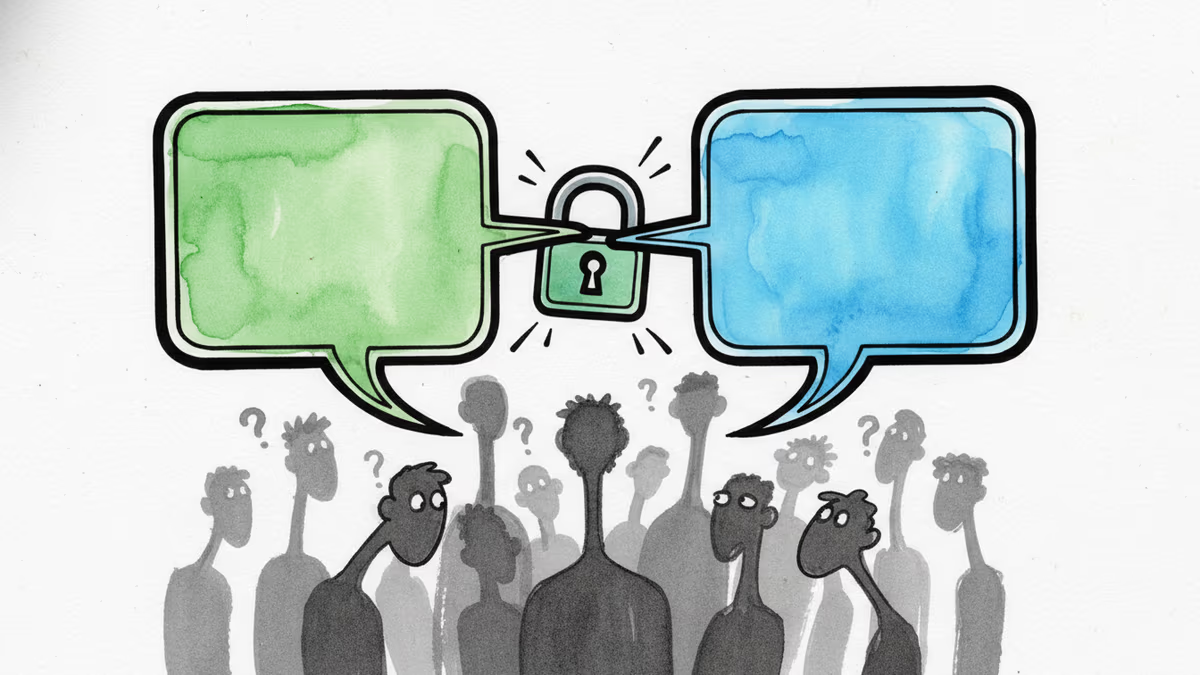
After 15 years of fragmented mobile messaging, Apple and Google are rolling out end-to-end encrypted RCS messaging between iPhones and Android devices. Here's what changed, why it took so long, and what it means for your privacy.
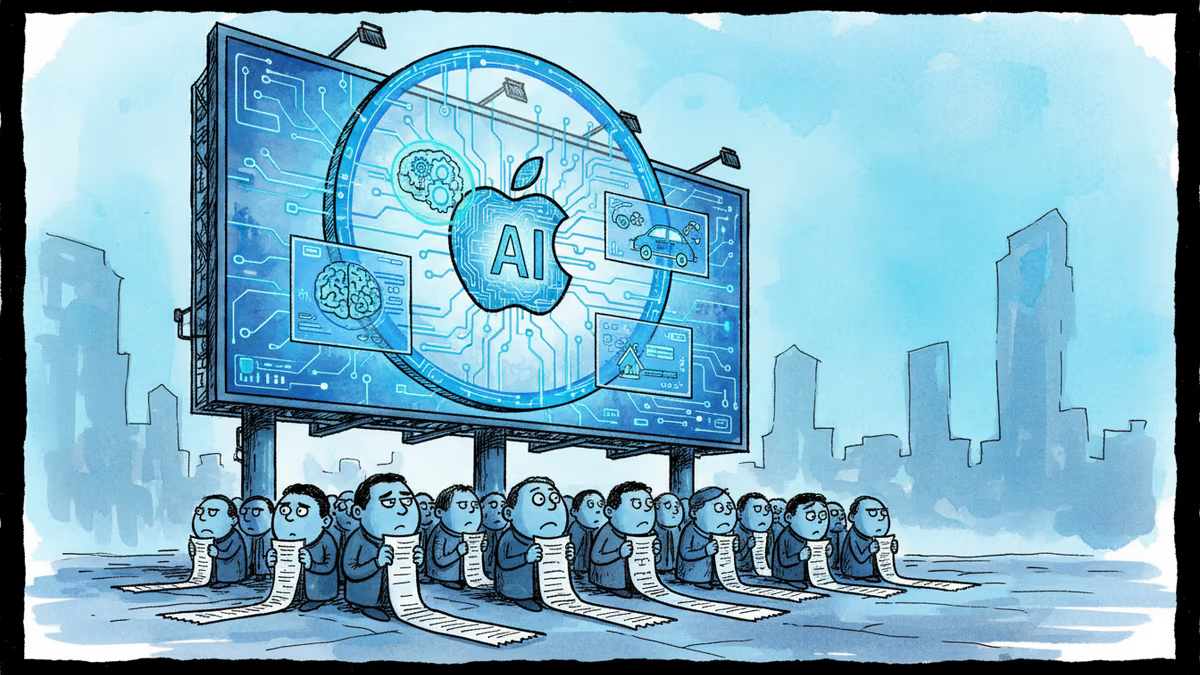
Apple agreed to pay $250 million to settle claims it misled iPhone 16 buyers about Apple Intelligence features. What this means for consumers, Big Tech marketing, and the AI industry.
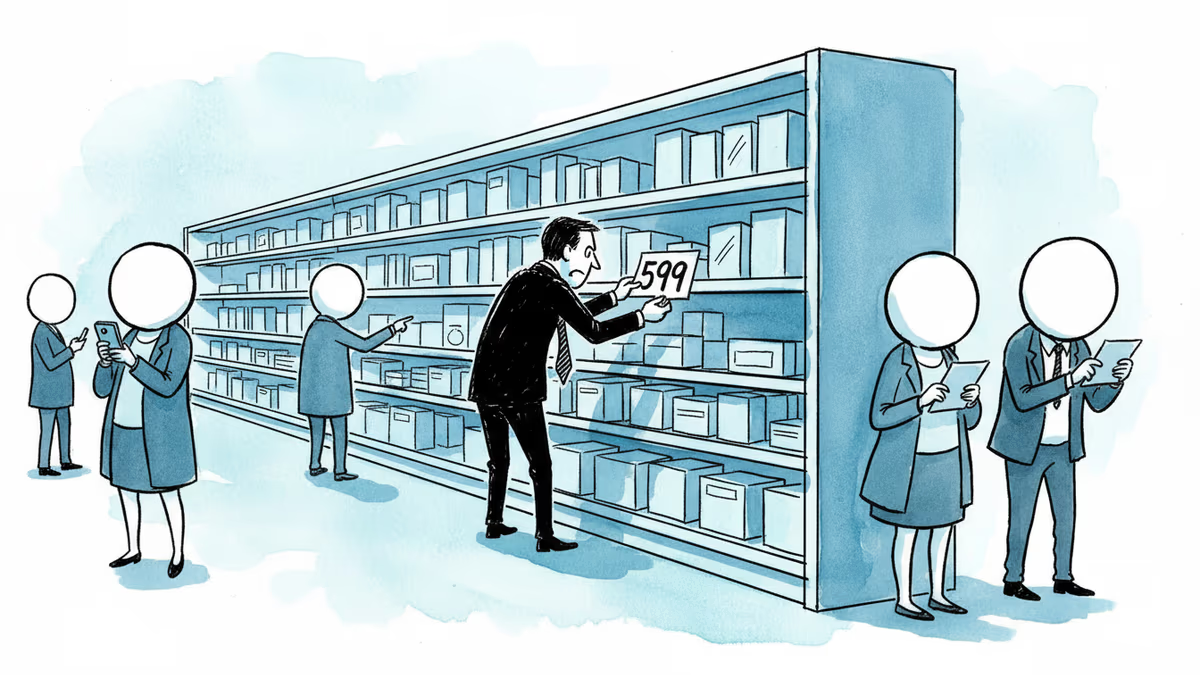
Apple quietly removed the entry-level $599 Mac Mini, raising the starting price to $799 — just one day after Tim Cook warned of chip supply constraints on the earnings call.

Apple names John Ternus, its hardware engineering chief, as the next CEO. The shift from operator to product person signals where Apple thinks its next decade of growth will come from — and raises real questions about what comes next.
After 15 years of fragmented mobile messaging, Apple and Google are rolling out end-to-end encrypted RCS messaging between iPhones and Android devices. Here's what changed, why it took so long, and what it means for your privacy.
Apple agreed to pay $250 million to settle claims it misled iPhone 16 buyers about Apple Intelligence features. What this means for consumers, Big Tech marketing, and the AI industry.
Apple quietly removed the entry-level $599 Mac Mini, raising the starting price to $799 — just one day after Tim Cook warned of chip supply constraints on the earnings call.
Apple names John Ternus, its hardware engineering chief, as the next CEO. The shift from operator to product person signals where Apple thinks its next decade of growth will come from — and raises real questions about what comes next.
Thoughts
Share your thoughts on this article
Sign in to join the conversation