
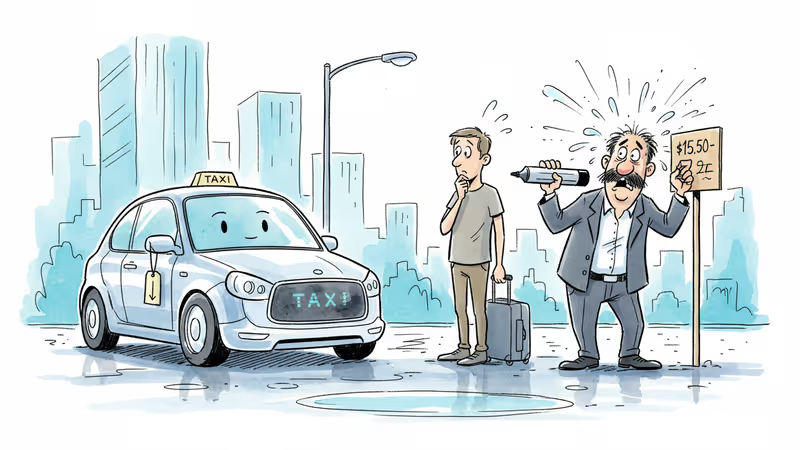
The Robotaxi Race Gets Real as Prices Converge
Waymo's robotaxi service is closing the price and wait time gap with Uber and Lyft in San Francisco, while Tesla takes a different approach with rock-bottom pricing and human drivers.
13 percent. That's how much more expensive a Waymo ride costs compared to Uber in San Francisco today. It might not sound revolutionary, but consider this: just last spring, that gap was 30 to 40 percent.
This dramatic price convergence, revealed in new analysis from ride-hail aggregator Obi, suggests we're witnessing a pivotal moment in transportation. The novelty phase of robotaxis—where tourists took joy rides and locals stuck with human drivers—appears to be ending.
Waymo now charges 13 percent more than Uber and 27 percent more than Lyft, according to Obi's November and December 2025 data. For longer trips, the gap shrinks even further. On rides between 2.6 and 5.8 miles, Waymo charges $3.67 per kilometer compared to Uber's $3.60 and Lyft's $3.14.
Wait Times Tell the Real Story
Perhaps more significant than pricing is Waymo's improvement in wait times. Last spring, the self-driving service consistently took longer to arrive than human-driven alternatives. Now, Waymo's estimated arrival times are consistently shorter than Uber's and competitive with Lyft's.
"Consumers don't like to wait. It's an on-demand service for a reason," explains Obi CEO Ashwini Anburajan. "Seeing wait times come down creates a more equal playing field between all three."
There's a notable exception: Waymo still struggles during the 4-6 PM rush hour window, when both wait times and prices spike. Even the most advanced autonomous systems aren't immune to traffic reality.

Tesla's Contrarian Bet
Then there's Tesla, playing an entirely different game. Operating fewer than 200 vehicles across the Bay Area's roughly 400-square-mile service area, Tesla's "robotaxi" service isn't actually autonomous—human drivers remain behind the wheel, using the company's Full Self-Driving (Supervised) feature.
What Tesla lacks in automation, it makes up for in pricing aggression. Average rides cost $7.50 to $8.00, evoking nostalgia for the ZIRP-era ride-hail prices of the early 2010s. The trade-off? Wait times average 15 minutes, significantly longer than competitors.
"This is a smart move on Tesla's part to quickly build brand awareness," notes Anburajan. The strategy appears designed to get consumers comfortable with opening the Tesla app when they need a ride, betting that actual robotaxis—and a viable business model—will eventually follow.
The Economics of Disruption
What we're witnessing isn't just technological progress—it's the economics of disruption playing out in real time. Waymo's improving competitiveness suggests autonomous vehicle operations are achieving the scale and efficiency needed to challenge traditional ride-hailing.
This has profound implications beyond San Francisco. If robotaxis can match human-driven services on price and convenience, the entire transportation industry faces restructuring. Millions of ride-hail and taxi drivers worldwide could find their livelihoods at risk.
Yet questions remain. Can autonomous systems handle the complexity of rush hour traffic as effectively as they manage off-peak rides? Will regulatory approval keep pace with technological capability? And perhaps most importantly: are consumers ready to fully embrace a driverless future?
Authors
Related Articles
Rivian targets 20,000 R2 SUV sales in six months, matching Tesla Model Y's pace. But can it succeed without federal tax credits in a challenging EV market?
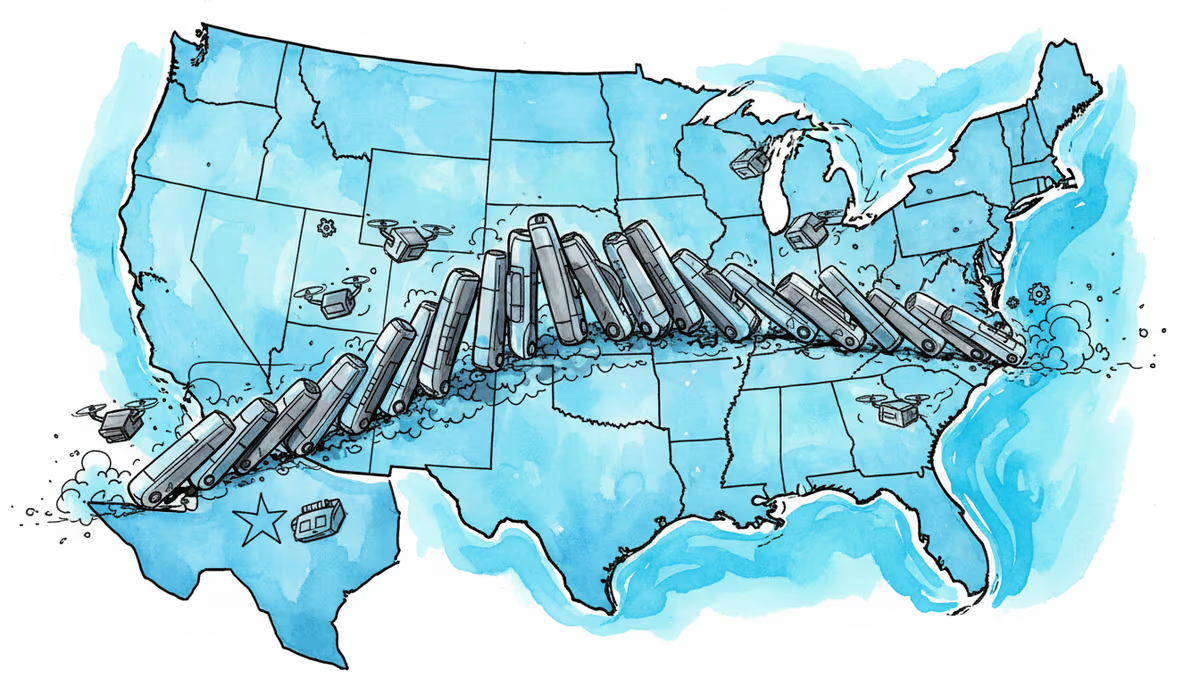
Waymo launches robotaxi services in Dallas, Houston, San Antonio, and Orlando simultaneously, expanding from 3 to 10 cities in just one year. Analyzing the strategy behind this aggressive rollout and what it means for the autonomous vehicle industry.
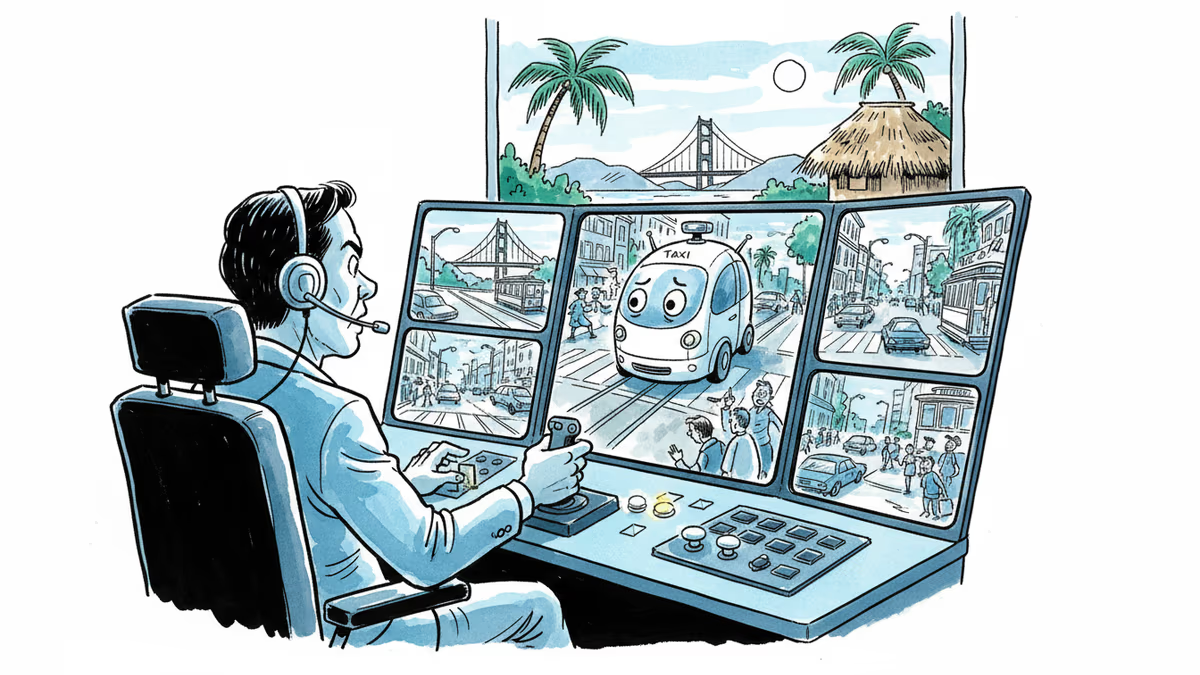
Waymo and Tesla reveal details about remote assistance programs, including Filipino contractors helping San Francisco robotaxis navigate complex situations.
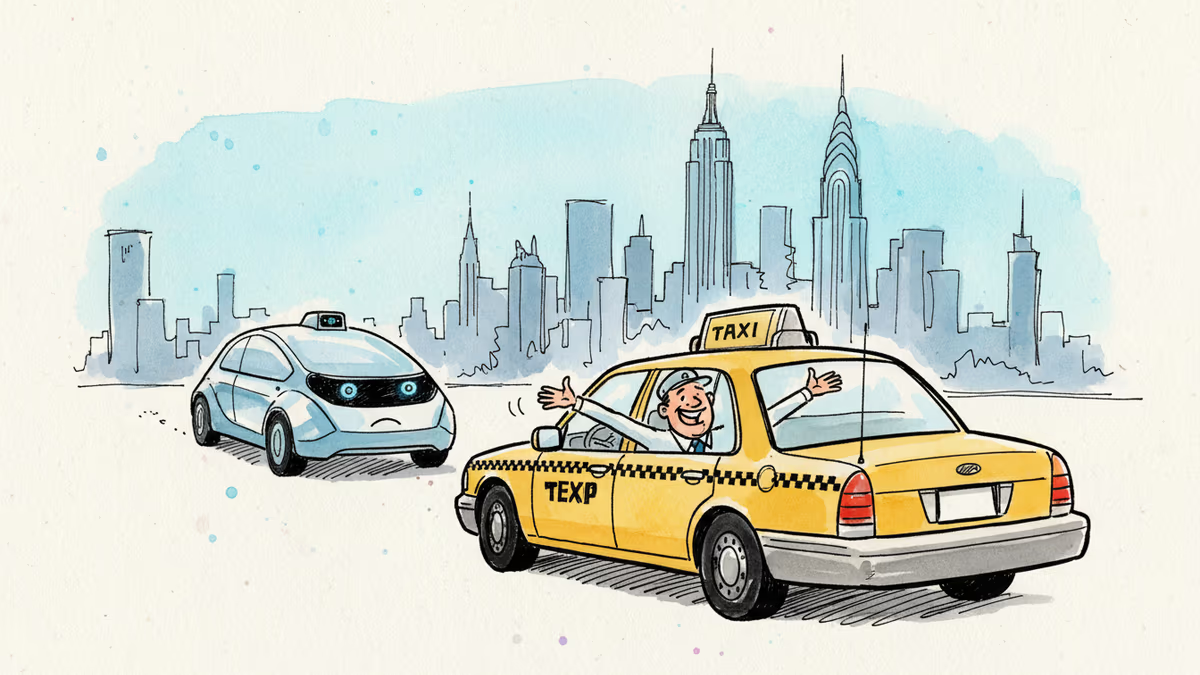
New York Governor drops robotaxi plan due to legislative opposition. A major setback for Waymo and autonomous vehicle companies eyeing the lucrative NYC market.
Rivian targets 20,000 R2 SUV sales in six months, matching Tesla Model Y's pace. But can it succeed without federal tax credits in a challenging EV market?
Waymo launches robotaxi services in Dallas, Houston, San Antonio, and Orlando simultaneously, expanding from 3 to 10 cities in just one year. Analyzing the strategy behind this aggressive rollout and what it means for the autonomous vehicle industry.
Waymo and Tesla reveal details about remote assistance programs, including Filipino contractors helping San Francisco robotaxis navigate complex situations.
New York Governor drops robotaxi plan due to legislative opposition. A major setback for Waymo and autonomous vehicle companies eyeing the lucrative NYC market.
Thoughts
Share your thoughts on this article
Sign in to join the conversation