

Elon Musk’s 2026 Vision: Neuralink to Start High-Volume Brain Implant Production
Neuralink aims for high-volume brain implant production by 2026. Elon Musk reveals plans to scale BCI technology for commercial use.
The era of brain-to-computer connectivity is shifting from a lab experiment to an assembly line. Elon Musk has signaled that Neuralink is gearing up for high-volume production of its brain implants by 2026.
Scaling Neuralink Brain Implant Mass Production
According to Reuters, Musk confirmed the company's ambition to transition into a massive manufacturing phase. This isn't just about making more chips; it’s about establishing a global supply chain for Brain-Computer Interfaces (BCI) that could eventually serve millions.

Currently, Neuralink has focused on human trials, with the first participants demonstrating the ability to control digital cursors with their thoughts. High-volume production by 2026 suggests a confidence in the hardware's stability and a move toward broad commercial availability.
The Challenge of Precision at Scale
Manufacturing a medical device that resides inside the human skull requires unparalleled precision. Critics point out that Neuralink must still navigate rigorous FDA approvals for large-scale use. Ensuring the long-term biocompatibility of the threads while ramping up production to thousands of units per year will be the ultimate test for Musk's engineering team.
Authors
Related Articles
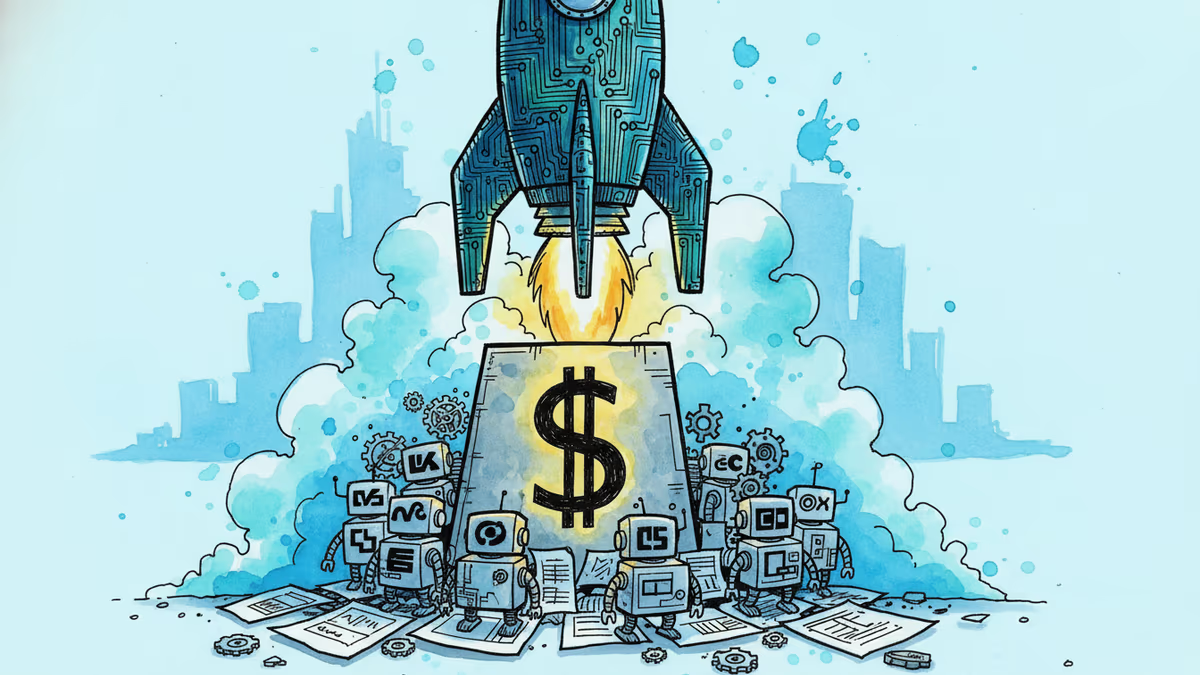
SpaceX's IPO filing puts AI at the center, claiming a $26.5 trillion market opportunity. But can Grok compete with OpenAI and Anthropic for enterprise customers?
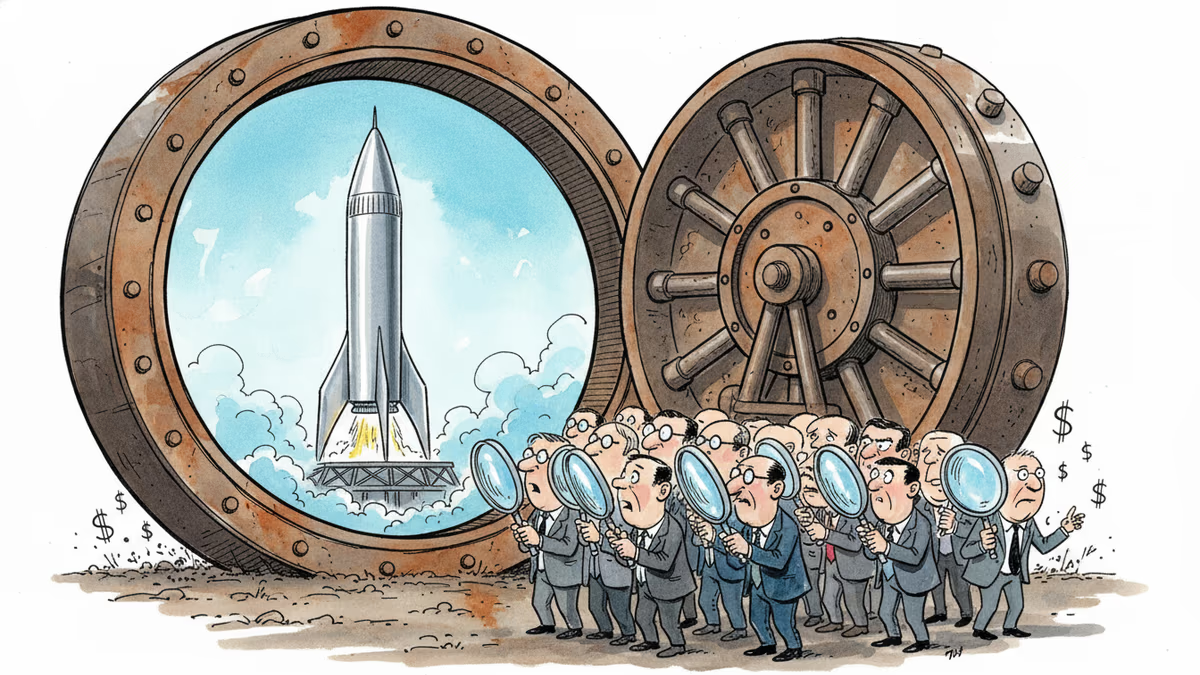
SpaceX filed a nearly 400-page S-1 with the SEC, targeting an IPO as early as June 12. Here's what the filing reveals—and what it doesn't.
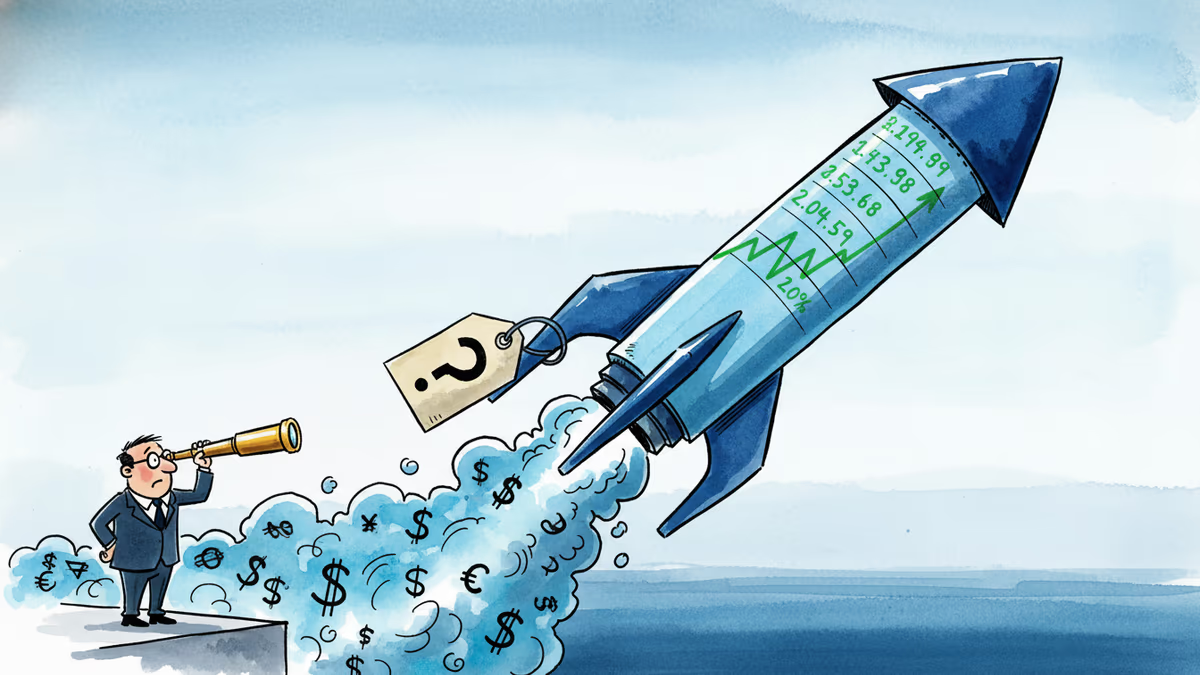
SpaceX has filed its S-1 with the SEC, targeting the Nasdaq under ticker SPCX. With $18.67B in revenue but a $4.9B loss, the IPO forces investors to answer one hard question.
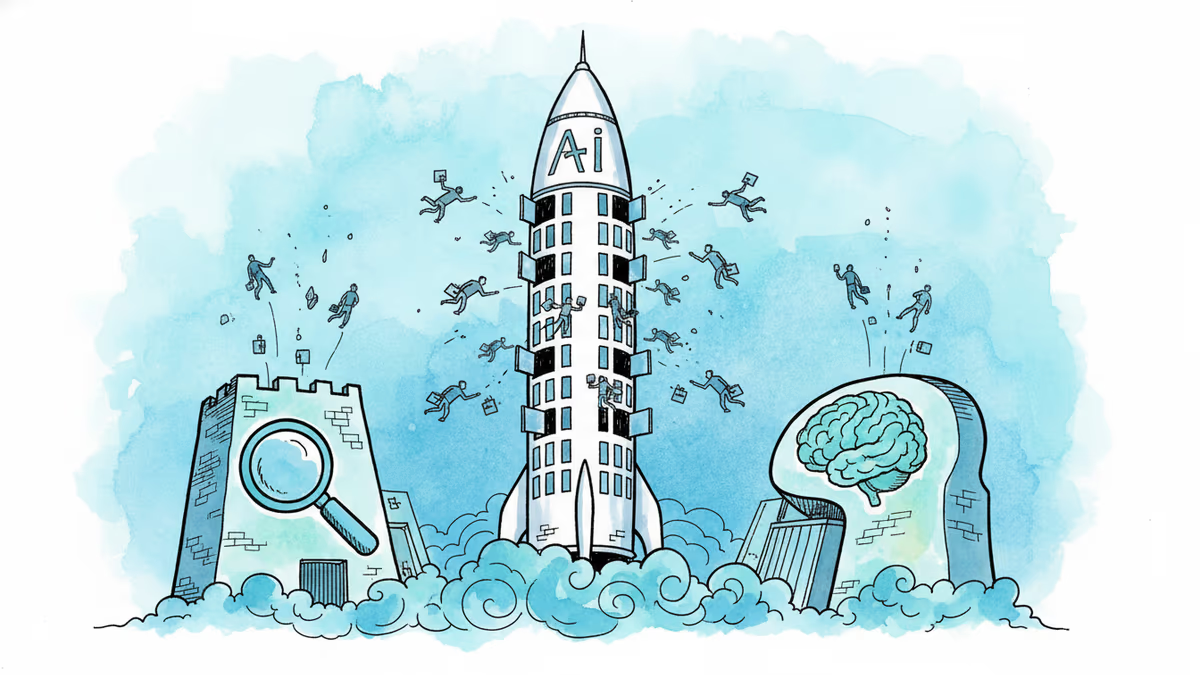
Over 50 researchers and engineers have left SpaceXAI since February's merger. With the pre-training team nearly gutted, questions mount about whether Musk's AI ambitions can survive his management style.
SpaceX's IPO filing puts AI at the center, claiming a $26.5 trillion market opportunity. But can Grok compete with OpenAI and Anthropic for enterprise customers?
SpaceX filed a nearly 400-page S-1 with the SEC, targeting an IPO as early as June 12. Here's what the filing reveals—and what it doesn't.
SpaceX has filed its S-1 with the SEC, targeting the Nasdaq under ticker SPCX. With $18.67B in revenue but a $4.9B loss, the IPO forces investors to answer one hard question.
Over 50 researchers and engineers have left SpaceXAI since February's merger. With the pre-training team nearly gutted, questions mount about whether Musk's AI ambitions can survive his management style.
Thoughts
Share your thoughts on this article
Sign in to join the conversation