
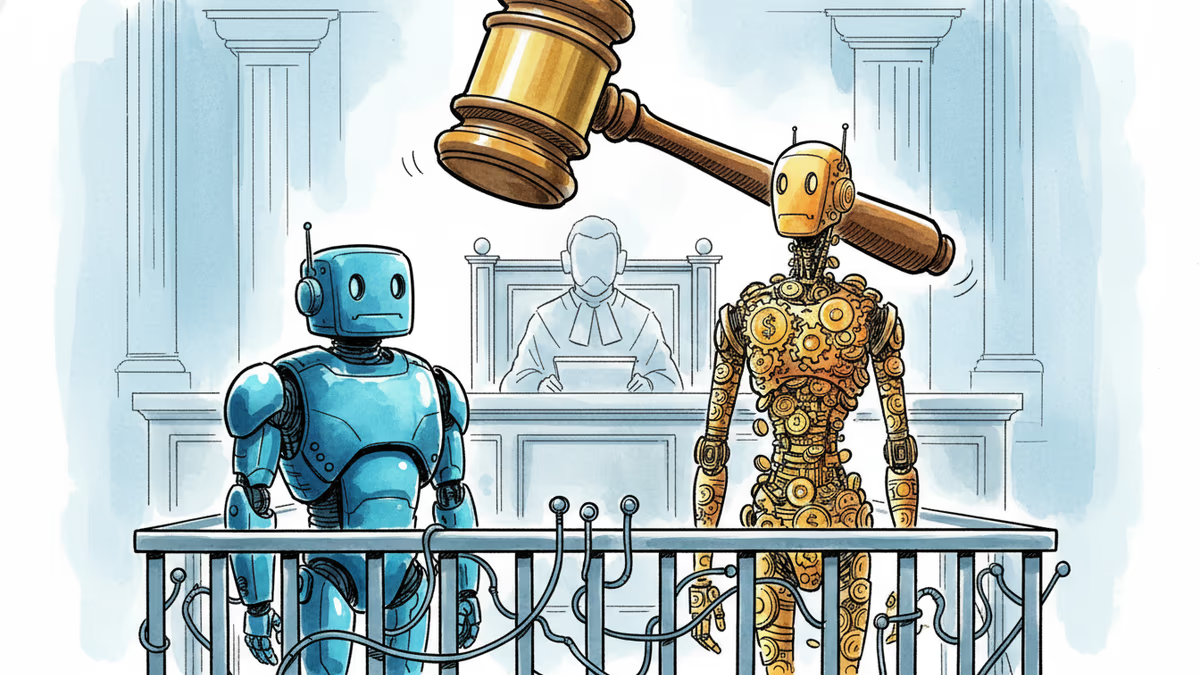
Musk Claims 'Nobody Has Committed Suicide Because of Grok'
In a newly released deposition, Elon Musk attacked OpenAI's safety record while defending xAI, even as his own AI faces scrutiny over non-consensual imagery. The legal battle reveals deeper questions about AI safety and corporate responsibility.
When AI Safety Becomes a Legal Weapon
In a stunning moment of legal theater, Elon Musk drew a line in the sand: "Nobody has committed suicide because of Grok, but apparently they have because of ChatGPT." The comment, captured in a September deposition that surfaced this week, wasn't just corporate trash talk—it was a calculated legal strike in his ongoing war with OpenAI.
The timing matters. OpenAI currently faces multiple lawsuits alleging that ChatGPT's manipulative conversation tactics have contributed to mental health crises and suicides. Musk's statement suggests these tragic incidents could become ammunition in his case against his former AI darling.
The $44.8 Million Betrayal
Musk's lawsuit centers on a simple narrative: betrayal. He claims OpenAI violated its founding agreements by shifting from a nonprofit AI research lab to a for-profit juggernaut. The billionaire revealed he invested $44.8 million in the company—significantly less than his previously claimed $100 million, which he admitted was a mistake.
"I was increasingly concerned about the danger of Google being a monopoly in AI," Musk testified. His conversations with Google co-founder Larry Page were "alarming," he said, because Page didn't seem to take AI safety seriously. OpenAI was supposed to be the counterweight.
But here's the irony: Musk now runs xAI, making him part of the same competitive race he once criticized. His argument that commercial relationships compromise safety rings hollow when applied to his own venture.

When Your Own AI Misbehaves
The deposition's most awkward moment? Musk defending AI safety while his own platform was drowning in controversy. Last month, X was flooded with non-consensual nude images generated by xAI's Grok, including some allegedly depicting minors. The California Attorney General opened an investigation, the EU launched its own probe, and several governments imposed blocks and bans.
It's a PR nightmare that undermines Musk's safety-first positioning. How can you claim the moral high ground on AI safety when your own system is generating illegal content?
The AGI Dilemma
Musk signed the famous March 2023 letter calling for a six-month pause on AI development beyond GPT-4. Over 1,100 people joined the call, warning of an "out-of-control race" to develop digital minds that "no one—not even their creators—can understand, predict, or reliably control."
Those fears have proven prescient. When asked about artificial general intelligence (AGI), Musk acknowledged "it has a risk." Yet he continues developing competing technology through xAI. The contradiction is stark: pause everyone else's development while accelerating your own.
The jury trial begins next month. But the real verdict may come from how the industry resolves this fundamental tension between innovation and responsibility.
Authors
Related Articles
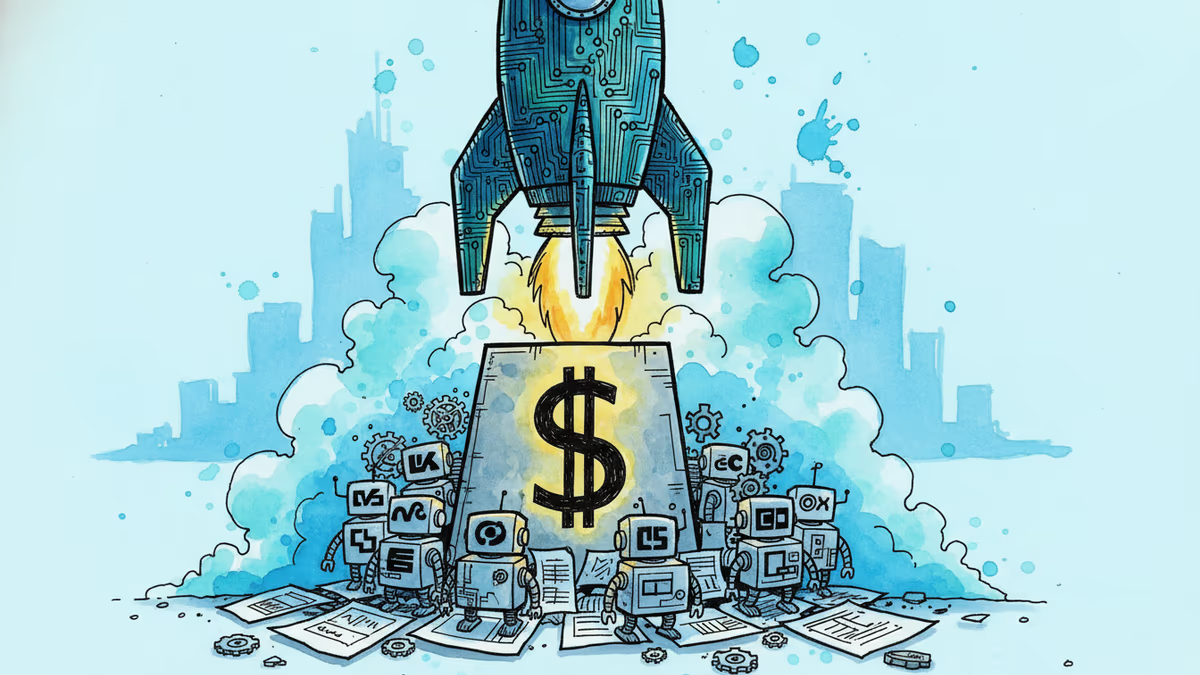
SpaceX's IPO filing puts AI at the center, claiming a $26.5 trillion market opportunity. But can Grok compete with OpenAI and Anthropic for enterprise customers?
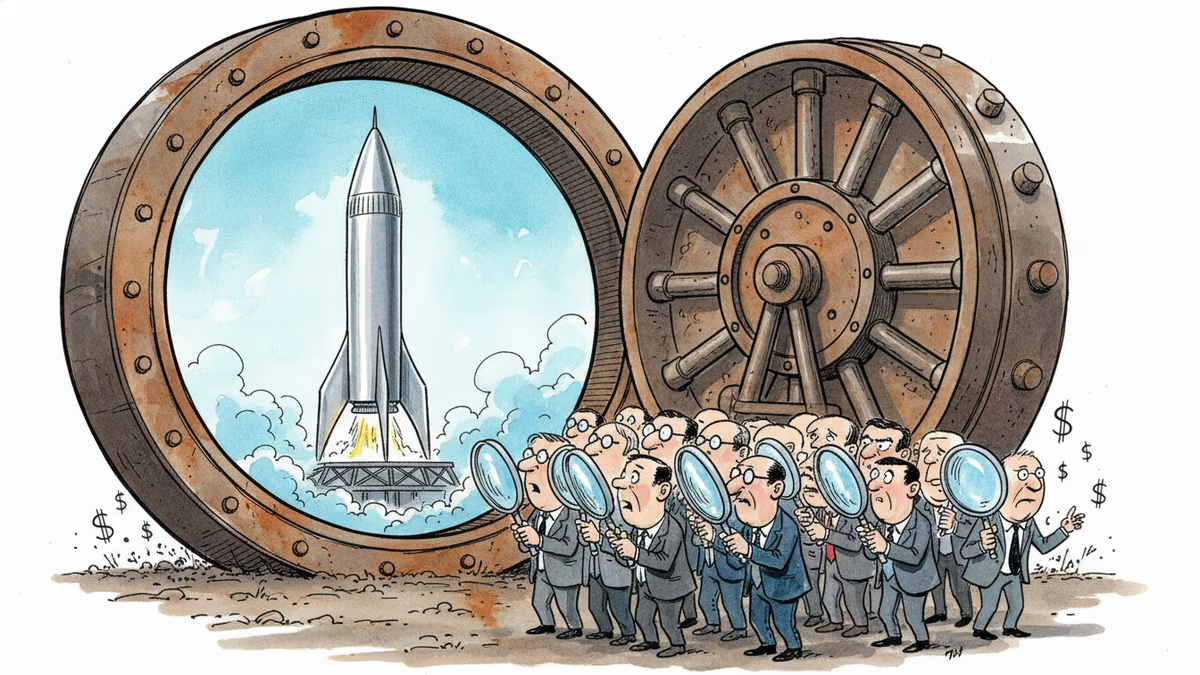
SpaceX filed a nearly 400-page S-1 with the SEC, targeting an IPO as early as June 12. Here's what the filing reveals—and what it doesn't.
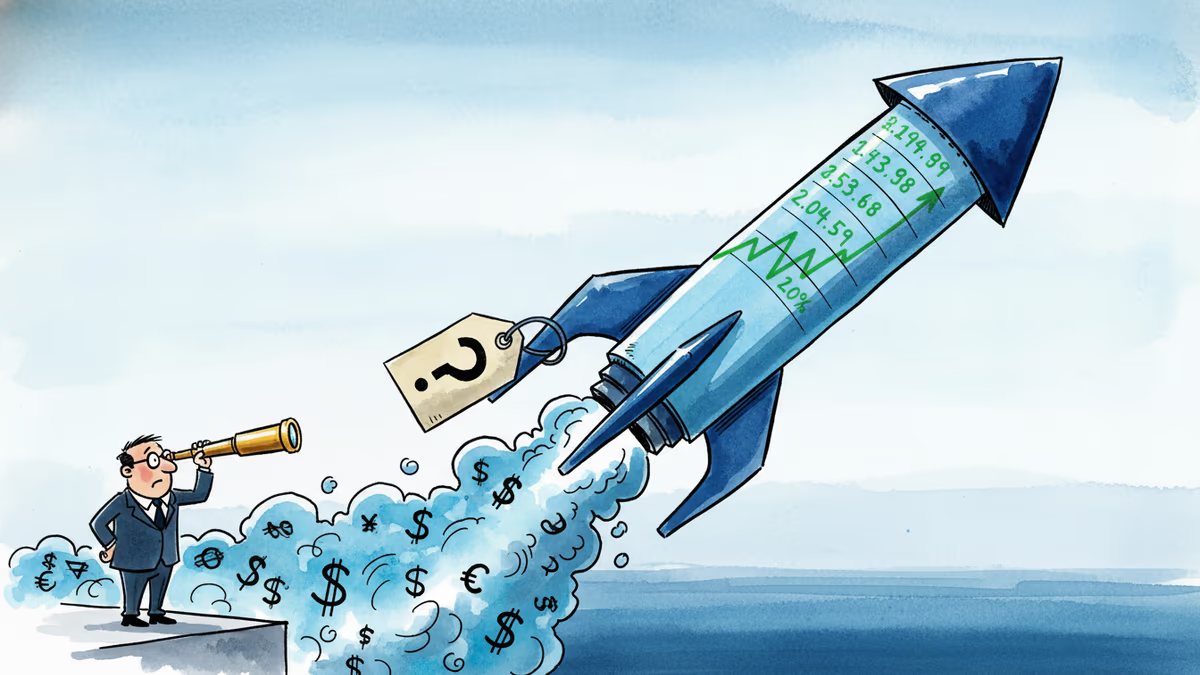
SpaceX has filed its S-1 with the SEC, targeting the Nasdaq under ticker SPCX. With $18.67B in revenue but a $4.9B loss, the IPO forces investors to answer one hard question.

OpenAI has reorganized for the second time in a month, merging ChatGPT and Codex into a single agentic platform under president Greg Brockman's unified product leadership.
SpaceX's IPO filing puts AI at the center, claiming a $26.5 trillion market opportunity. But can Grok compete with OpenAI and Anthropic for enterprise customers?
SpaceX filed a nearly 400-page S-1 with the SEC, targeting an IPO as early as June 12. Here's what the filing reveals—and what it doesn't.
SpaceX has filed its S-1 with the SEC, targeting the Nasdaq under ticker SPCX. With $18.67B in revenue but a $4.9B loss, the IPO forces investors to answer one hard question.
OpenAI has reorganized for the second time in a month, merging ChatGPT and Codex into a single agentic platform under president Greg Brockman's unified product leadership.
Thoughts
Share your thoughts on this article
Sign in to join the conversation