
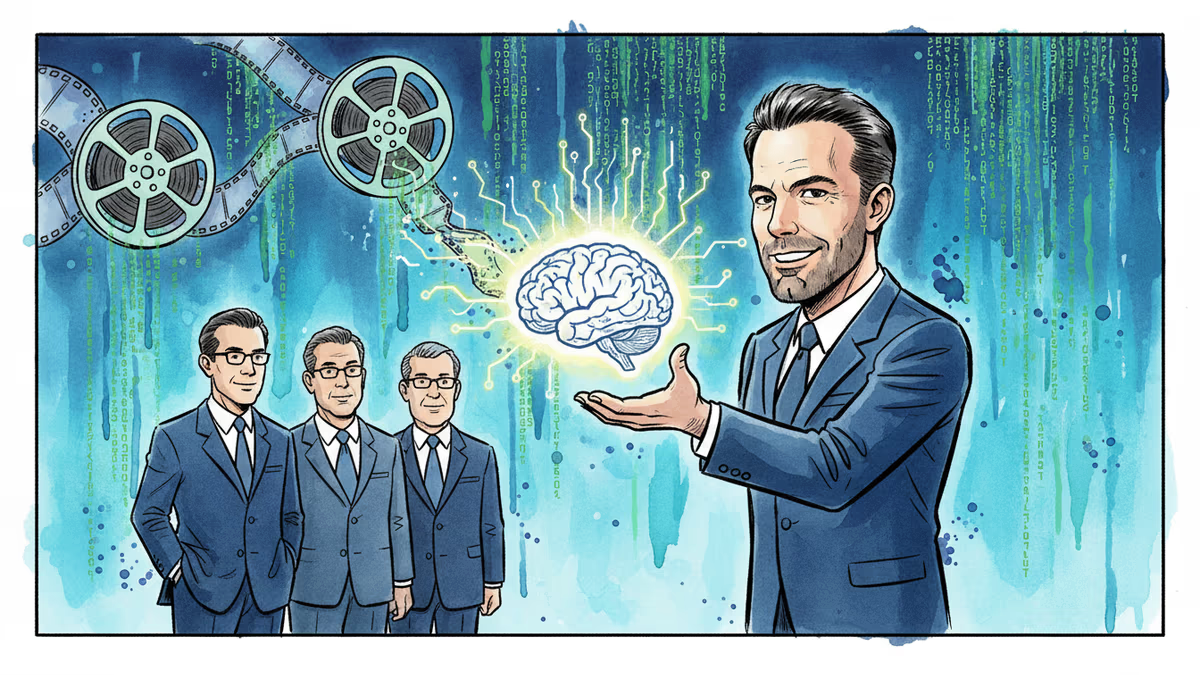
Why Netflix Just Bought Ben Affleck's AI Startup (It's Not What You Think)
Netflix acquired Ben Affleck's AI company InterPositive, signaling a major shift in how streaming giants plan to revolutionize content production and compete in Hollywood.
$300 Million Per Movie Is Unsustainable
Netflix just announced it's acquiring InterPositive, Ben Affleck's AI startup that builds tools for film and TV production. All 16 engineers and researchers are joining the streaming giant, with Affleck becoming a senior adviser. The deal might seem small, but it signals Netflix's boldest bet yet on the future of entertainment.
Here's the reality: Hollywood's economics are broken. Blockbuster budgets have exploded to $300 million per film, premium series cost $100 million per season, and Netflix spent $17 billion on content last year alone. Something has to give.
InterPositive, founded in 2022, specializes in AI tools for production workflows. Affleck said he was "inspired to get into the tech space after observing the early rise of AI in production." Translation: he saw the writing on the wall before most of Hollywood did.
The Warner Bros. Loss That Led to This Win
Netflix recently lost the bidding war for Warner Bros. Discovery. But this acquisition reveals a different strategy entirely. Instead of buying legacy studios, Netflix is betting on reinventing how content gets made.
The timing isn't coincidental. While traditional studios cling to expensive, antiquated production methods, Netflix is positioning itself as the tech-forward alternative. InterPositive's tools promise to streamline everything from script analysis to post-production, potentially cutting costs while maintaining quality.
For context: Netflix's content spending has plateaued as subscriber growth slows. The company needs to either produce more efficiently or accept shrinking profit margins. This acquisition suggests they've chosen efficiency.

Hollywood's Mixed Reaction
The entertainment industry's response has been... complicated. Writers and actors unions struck last year partly over AI concerns, fearing technology would replace human creativity. Many see this acquisition as validation of their worst fears.
But some creators are cautiously optimistic. Independent filmmakers could access tools previously available only to major studios. International content creators might find it easier to compete globally. The democratization argument has merit—if the technology truly empowers rather than replaces.
Meanwhile, Netflix's competitors are scrambling. Disney, Amazon, and Apple have their own AI initiatives, but Netflix just acquired a team with specific entertainment industry expertise. That head start could prove decisive.
What This Means for Your Netflix Experience
As a subscriber, you might not notice immediate changes. But the long-term implications are significant. AI-optimized production could mean:
- More content variety as production costs decrease
- Faster turnaround times for new seasons
- Potentially formulaic storytelling if algorithms drive creative decisions
Netflix already uses AI for recommendations. Now they're applying it to content creation itself. The question isn't whether this will change what you watch—it's how much.
The company's data advantage becomes even more powerful when combined with production AI. They know what audiences want and now have tools to create it more efficiently. That's either exciting or terrifying, depending on your perspective.
Authors
Related Articles
SpaceX's IPO filing puts AI at the center, claiming a $26.5 trillion market opportunity. But can Grok compete with OpenAI and Anthropic for enterprise customers?
AI is everywhere now—but is it helping or hurting? MIT Technology Review diagnoses a new mood: not excitement, not panic, just a creeping, uncomfortable uncertainty.
Netflix has hiked prices across all plans, including its ad-supported tier, just 14 months after its last increase. What this means for subscribers, competitors, and the future of streaming economics.
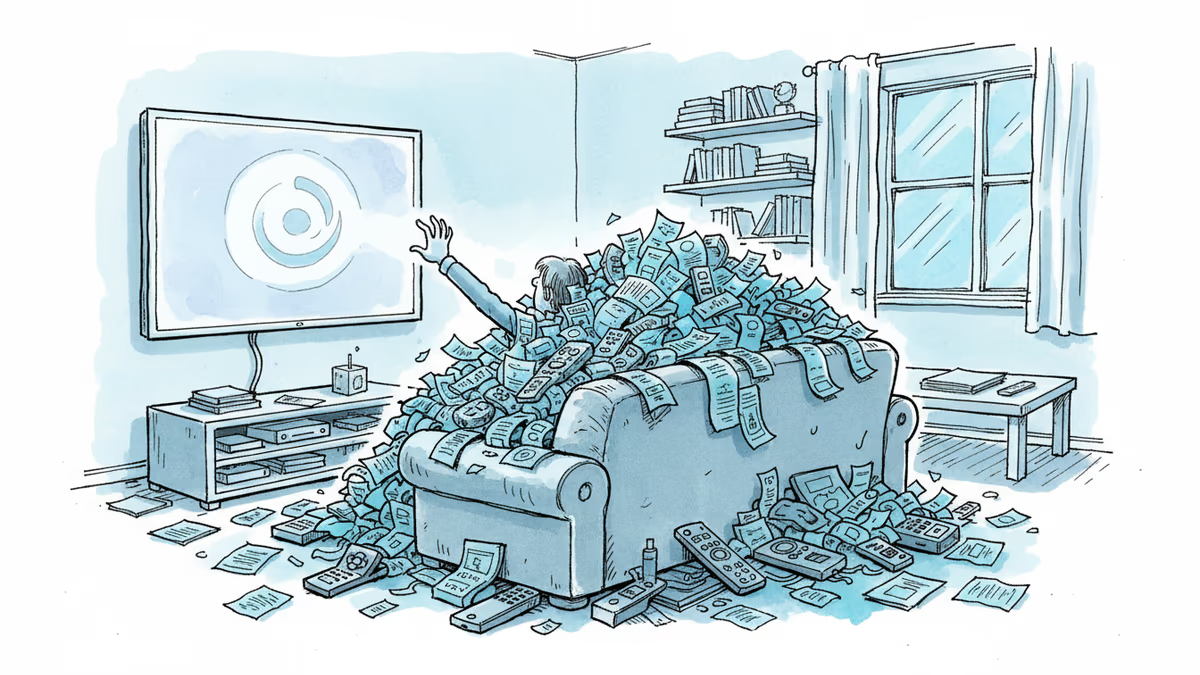
Streaming prices have doubled in a decade. Netflix, Disney, HBO Max — every platform is charging more and adding ads. Here's why, and what it means for you.
SpaceX's IPO filing puts AI at the center, claiming a $26.5 trillion market opportunity. But can Grok compete with OpenAI and Anthropic for enterprise customers?
AI is everywhere now—but is it helping or hurting? MIT Technology Review diagnoses a new mood: not excitement, not panic, just a creeping, uncomfortable uncertainty.
Netflix has hiked prices across all plans, including its ad-supported tier, just 14 months after its last increase. What this means for subscribers, competitors, and the future of streaming economics.
Streaming prices have doubled in a decade. Netflix, Disney, HBO Max — every platform is charging more and adding ads. Here's why, and what it means for you.
Thoughts
Share your thoughts on this article
Sign in to join the conversation